
Clinical Efficacy and Safety of Fluvoxamine in COVID-19 Patients: An Umbrella Review of Systematic Reviews and Meta-Analyses
DOI:
https://doi.org/10.71079/ASIDE.IM.07172586Abstract
Introduction: Fluvoxamine is an agonist for the sigma-1 receptor, through which it controls inflammation. It helps reduce the cytokine storm associated with the COVID-19 virus by regulating the production of IL-6 and gene expression. This review of systematic reviews (SRs) aims to summarize the effects of fluvoxamine in treatment of COVID-19.
Methods: This umbrella review (CRD42025592203) of SRs and meta-analyses investigated the safety and efficacy of fluvoxamine for treatment in COVID-19 patients, irrespective of disease severity and age. Comprehensive searches were conducted from inception to December 12, 2024, covering PubMed, Cochrane CENTRAL, Google Scholar, and Cochrane COVID-19 resources. A qualitative synthesis of evidence was performed. The AMSTAR2 tool was used to assess the methodological quality of the included SRs.
Results: Eleven reviews published in 12 publications that reported the use of fluvoxamine in COVID-19 patients were finally included as part of the synthesis. The studies reported a lower mortality rate with fluvoxamine than with placebo, but only four studies reported statistical significance. Five reported a statistically significant reduction in hospitalization risk for patients treated with fluvoxamine compared to controls. Only one review evaluated COVID-19 progression, reporting a non-significant decrease in the risk of disease progression with fluvoxamine compared to placebo. Higher dosages of fluvoxamine compared to lower doses yielded better outcomes.
Conclusion: Although fluvoxamine may have potential benefits in reducing COVID-19-associated mortality and hospitalization, our findings do not support a significant role in preventing disease progression or clinical deterioration. Further research is needed to compare the efficacies of different dosages.
Keywords:
Fluvoxamine, COVID-19, Cytokine storm, IL-6, Hospitalization, Disease progressionFull Text
Introduction
The coronavirus disease 2019 (COVID-19) infection caused by severe acute respiratory syndrome coronavirus 2 (SARS-CoV-2) is an acute respiratory syndrome that rapidly escalated into a global pandemic after first appearing in Wuhan, China, during late December 2019 [1]. Due to its highly contagious and severe nature, it has had a catastrophic impact, resulting in more than 6 million deaths globally [1]. To minimize its spread, various vaccines, including mRNA and inactivated vaccines, were developed in addition to preventive measures such as social distancing [2].
Supportive care, along with close monitoring of high-risk patients, remains the primary treatment approach for individuals with COVID-19 [3]. Antivirals and antimicrobials have also been considered as part of treatment plans; however, their effectiveness remains uncertain, as studies have shown mixed results [4].
Repurposed drugs are medications already approved by the Food and Drug Administration (FDA) for other indications that may be used in the management of COVID-19. Fluvoxamine is one of four FDA-approved medications being tested in the ACTIV-6 trial, owing to its affordability and accessibility, particularly in resource-limited settings [5]. Fluvoxamine is a selective serotonin reuptake inhibitor (SSRI), commonly used to treat depression, anxiety disorders, and obsessive-compulsive disorder (OCD). It is being investigated as a potential treatment option for COVID-19 due to its anti-inflammatory properties [6]. One proposed mechanism is through fluvoxamine’s interaction with the sigma-1 receptors (S1Rs). S1R is a multifunctional chaperone protein that plays an important role in cellular survival by mediating calcium influx into mitochondria during cellular stress, such as in viral infections [7]. Fluvoxamine is a ligand of S1R and plays a protective role in COVID-19 infection by reducing oxidative stress response and counteracting pro-apoptotic signals, consequently reducing the severity of infection [8]. Additionally, fluvoxamine is a lysosomotropic agent and inhibitor of acid sphingomyelinase in the lysosomes. This could inhibit the formation of viral replication complexes and negatively affect viral trafficking and budding, justifying its potential as a treatment option in COVID-19 [6]. Apart from its role as an antiviral, fluvoxamine also exhibits anti-inflammatory properties, which help reduce the severity of cytokine storms associated with COVID-19 infections. Mast cells possess ACE-2 receptors acting as hosts for SARS-CoV-2 and mediating the cytokine storm. SSRIs like fluvoxamine are known to decrease mRNA levels of protease-1 in mast cells, therefore, inhibiting the release of histamine from mast cells [9].
This overview of systematic reviews (SRs) and meta-analyses was conducted to compile and analyze existing evidence on the use of fluvoxamine in treating COVID-19. It also aims to assess its potential efficacy in terms of affordability and compare it with other available COVID-19 treatments.
Methods
The protocol for this review has been registered with PROSPERO (CRD42025592203) on January 7th, 2025. This overview adheres to the PRISMA 2020 standards for SRs. The results are reported following the PRISMA guidelines for SRs and meta-analyses that focus on healthcare interventions.
Objectives
This umbrella review of SRs and meta-analyses was conducted to qualitatively consolidate and analyze current evidence regarding the use of fluvoxamine in treating COVID-19. The findings will be crucial to gauge their potential effectiveness in comparison to the cost and accessibility challenges associated with other treatment options for COVID-19.
Eligibility Criteria
Inclusion criteria
We included SRs that examined both the effectiveness and safety of fluvoxamine in patients with COVID-19 without restrictions on patient age or disease severity. Reviews addressing COVID-19 at all stages, from asymptomatic cases to severe infections, and in all care settings (both outpatient and inpatient) were considered. Inclusion was not limited by the type of study designs included in the SRs.
Exclusion criteria
Reviews that were not SRs or meta-analyses, narrative reviews, editorials, conference abstracts, non-English publications, reviews focusing solely on other interventions without fluvoxamine data, and duplicate publications were excluded.
Information Sources and Search Strategy
Comprehensive search strategies were designed to identify relevant studies in the PubMed and Cochrane databases. The search was further supplemented by exploring additional literature sources, including the Cochrane COVID-19 resource and Google Scholar, as well as cross-referencing the SRs identified. Detailed search strategies for each electronic database are provided in Supplement 1. To avoid missing SRs that reported combined therapies, search terms were not limited to fluvoxamine-specific keywords. The electronic databases and other literature sources were initially searched for records published between January 1st, 2020, and July 30th, 2024. An updated supplemental literature search was conducted on December 12th, 2024. Only publications in the English language were included.
Screening and Selection
All retrieved records from the database search were assessed for relevance using predetermined inclusion criteria. Two reviewers independently screened the titles and abstracts, followed by a full-text review. Any disagreements between the reviewers were resolved through discussion and, if necessary, by consulting a third reviewer.
Data Collection, Extraction, and Quality Evaluation
Data from the SRs were gathered using a standardized extraction form. Extracted details included general characteristics of each review, descriptions of the target populations, dosing regimens, and frequency of fluvoxamine, comparators, outcome measures, and findings related to safety and effectiveness. The methodological quality of each included review was assessed using the AMSTAR2 tool. Reviews were categorized as high quality (no or one minor weakness), moderate quality (multiple minor weaknesses), low quality (one major flaw with or without minor weaknesses), or critically low (multiple major flaws). Two reviewers independently performed the full-text data extraction and quality evaluation.
Data Analysis
The findings from this umbrella review were summarized narratively only. Quantitative synthesis was not feasible due to the overlap of individual studies in the included SRs, heterogeneity in the inclusion criteria of the included SRs, and variation in the reporting of outcomes. This qualitative synthesis outlines the publication years of the SRs, the populations studied (including COVID-19 severity levels), the countries of origin, the outcomes measured, and the overall conclusions regarding fluvoxamine’s effectiveness and safety in managing COVID-19.
Results
Study Selection
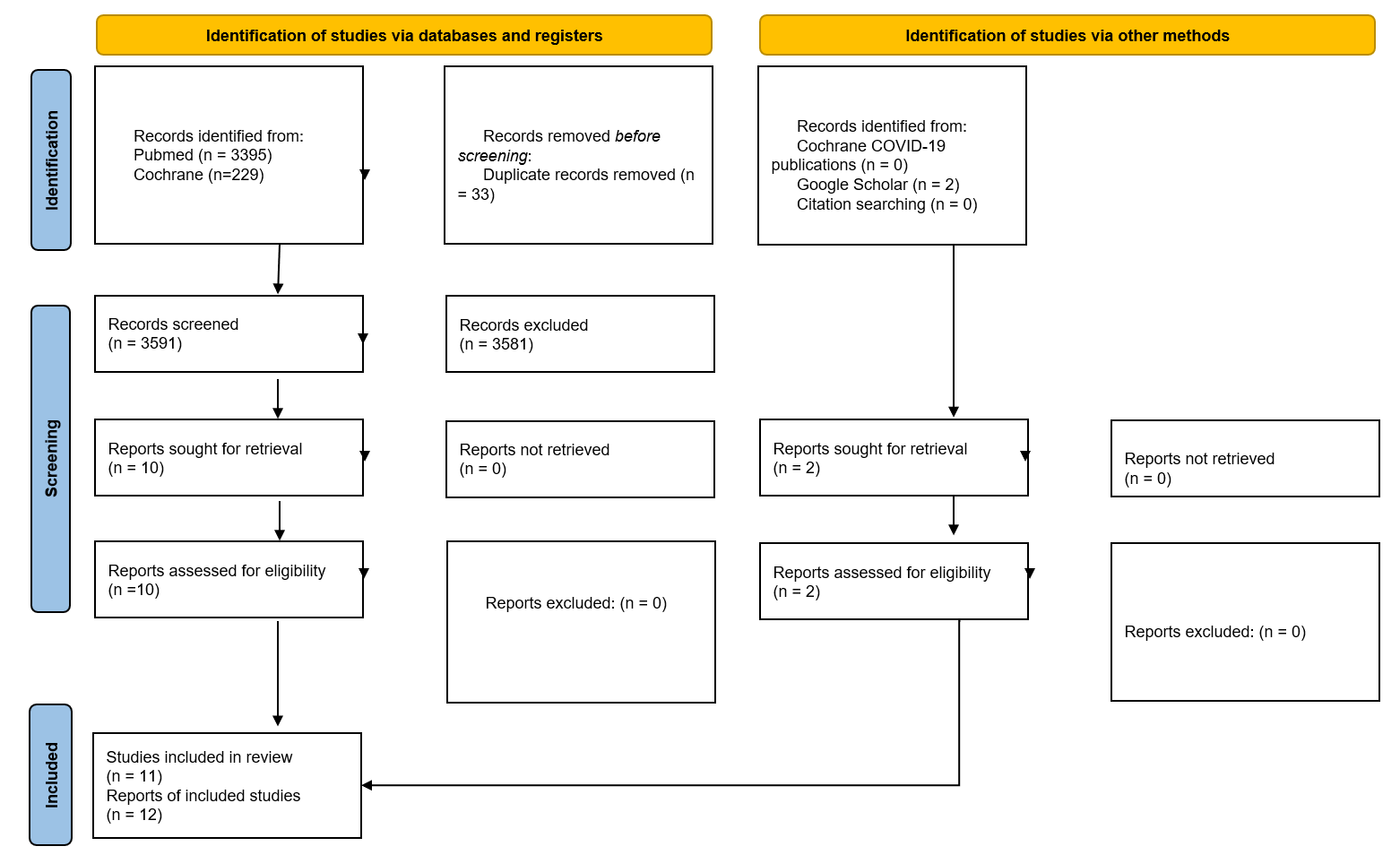
The initial systematic search identified 3,624 records from various databases. After removing duplicates, 3,591 records underwent title and abstract screening based on eligibility criteria. Of these, 3,581 records were excluded, leaving 10 records for full-text review. Additionally, two reviews were identified through additional literature searches. A total of 12 publications [10,11,12,13,14,15,16,17,18,19,20,21] were included: 11 original SRs and 1 updated review of a previously included SR [16]. The selection process is presented in Figure 1.
Characteristics of included SRs
The majority of included reviews were published in 2022 and 2023 (four each), with three reviews published in 2024. The most recent search in one of the reviews was conducted on January 31, 2024. All reviews, except one, included meta-analyses. Only one review involved pediatric populations. Severity levels across studies varied, covering both inpatient and outpatient cases, and included mild, moderate, and severe COVID-19 infections. One review also reported data on patients with underlying health conditions such as chronic kidney disease, cardiovascular disease, hypertension, smoking status, and obesity [11]. Further details on study characteristics are reported in Table 1.
Summary of the Effects and Safety of Interventions
Mortality
Nine of the reviews reported all-cause mortality as an outcome. All analyses revealed a lower mortality rate with fluvoxamine compared to placebo. However, the results reached statistical significance in only three of the included reports [12,13,18,20]. Effect estimates of primary outcomes are presented in (Table 2.). Four reviews published in 2022 reported mortality as an outcome, with three [10,15,17] reporting a non-significant reduction, while Zheng et al. [20] did not pool the study outcomes. In their review, Zheng et al. [20] concluded a reduced risk of mortality based on the estimates from individual studies. In contrast, other studies, such as Nyirenda et al. [17], reported a risk ratio (RR) of 0.69 (95% CI, 0.38-1.27; p = 0.24) with 1,649 participants, indicating a non-statistically significant difference. The certainty of the evidence was described as low in that study. Two reviews published in 2023 (Deng et al. [12] and Fico et al. [13]) reported mortality as an outcome, and both revealed a statistically significant decrease. Deng et al. [12] included six randomized controlled trials (RCTs) with 1,470 participants and found that fluvoxamine reduced mortality with an RR of 0.72 (95% CI, 0.63 to 0.82) among outpatients with COVID-19. Similarly, the pooled odds ratio (OR) for Fico 2023 was calculated to be 0.15 (95% CI, 0.02 to 0.95; p = 0.31) [13]. Finally, three reviews published in 2024 [11,18,21] reported mortality outcomes, with only Prasanth et al. [18] finding a significant reduction in mortality at doses ≥ 200 mg per day; log odds ratio 1.593 (95% CI 0.530 to 2.656; p = 0.003).
Hospitalization
Ten of the included reviews reported hospitalization outcomes, and five of these showed a statistically significant reduction in the risk of hospitalization with fluvoxamine compared to placebo [11,14,15,20,21]. Five reviews published in 2022 reported hospitalization rates [10,14,15,17,20]. The results from Cheema et al. [10] were updated with data from the TOGETHER trial in the review by Marcec et al. [16]. Lu et al. [15] (OR 0.69; 95% CI, 0.51 to 0.94; p = 0.02) and Marcec et al. [16] (RR 0.57; 95% CI, 0.34 to 0.95; p = 0.03) both demonstrated significantly lower hospitalization rates in the fluvoxamine group compared to control. Lee et al. [14] also reported a higher probability of reduced hospitalization rates in outpatient COVID-19 patients (RR: 0.75; 95% CI 0.58 to 0.97) using fluvoxamine. For Vatvani et al. [19], the hospitalization rate between the placebo and fluvoxamine groups was comparable (p = 0.09). Finally, two reviews published in 2024 by Deng et al. [11] and Zhou et al. [21] demonstrated a significantly lower risk of hospitalization with fluvoxamine compared to placebo. Deng et al. [11] reported a reduction in risk ratio (RR: 0.77; 95% CI (0.60 to 0.97); p = 0.03), while Zhou et al. [21] reported a decrease in risk ratio (RR 0.76; 95% CI, 0.59 to 0.99; p = 0.04), indicating decreased hospitalization rates in the intervention group in both cases.
COVID-19 Progression/Clinical Deterioration
One review [10] reported a non-significant decrease in the risk of disease progression in the fluvoxamine group compared to placebo (RR 0.74; 95% CI, 0.21 to 2.57; p = 0.64) [10]. Similarly, Vatvani et al. [19] also examined clinical deterioration and found that fluvoxamine did not offer a significant benefit over placebo (RR 0.83; 95% CI, 0.65 to 1.06; p = 0.14). However, Zheng et al. [20] found fluvoxamine to be associated with a lower likelihood
| Study (Author, Year) | Search Date | No. of Databases | Total Number Of Studies (N) And Study Designs Included | Total Number of Patients Included (N) | Countries | Interventions Assessed | Outcomes Assessed | Conclusion | AMSTAR 2 Rating |
|---|---|---|---|---|---|---|---|---|---|
| Cheema 2022 [7] | 2022 | 4 | N=8RCTs=5Prospective cohort=2Quasi-randomized trial=1 | 3,781MildModerateSevere (requiring ICU admission)OutpatientInpatient | USACanadaCroatiaKoreaHondurasBrazil | Fluvoxamine | Primary: all-cause mortalitySecondary: ROH, COVID-19 progression, incidence of AE | Fluvoxamine use showed a large but statistically non-significant reduction in mortality and hospitalization rates and no increase in incidence of AEs. It may be beneficial due to easy accessibility and affordable price. | Critically Low |
| Deng 2024 [8] | 2024 | 6 | N=27RCTs=9 | 5,861MildModerateOutpatient | USAEgyptSouth KoreaThailandBrazil | Fluvoxamine | Incidence of hospitalization, healthcare utilization (ER visits or hospitalization), mortality, supplemental oxygen and mechanical ventilation requirements, SAEs and non-adherence | Fluvoxamine twice a day may reduce ROH and healthcare utilization but absolute benefits are modest and associated with increased risk of treatment non-adherence. It’s a potential alternative due to low cost and wide availability. It reduced healthcare utilization in outpatients with obesity range BMI (≥30 kg/m²) but not in lower BMI patients. | Low |
| Deng 2023 [11] | 2023 | 7 | N=11RCTs=6Observational=5 | With Controls=5353Without Controls=2958Severe(ICU-hospitalized)InpatientsOutpatients | USACanadaBrazilCroatiaSouth KoreaHondurasHungary | Fluvoxamine | Mortality, hospitalization, composite of hospitalization/ERs visits, hypoxemia, requirement for supplemental oxygen, ventilator support, and SAEs | Fluvoxamine may reduce mortality and hospitalization. Medium-dose was associated with reduced mortality, hospitalization, and composite of hospitalization and ER visits but not low-dose. It was not associated with increased AEs. | Low |
| Study (Author, Year) | Search Date | No. of Databases | Total Number Of Studies (N) And Study Designs Included | Total Number of Patients Included (N) | Countries | Interventions Assessed | Outcomes Assessed | Conclusion | AMSTAR 2 Rating |
|---|---|---|---|---|---|---|---|---|---|
| Fico 2023 [12] | 2023 | 7 | N=9RCTs=2Cohort=5Retrospective Cross-sectional=6Case-control=2 | With Controls=215173MildModerateSevereInpatient | USABrazilEuropeSwedenUK | Psychotropic drugs in COVID-19 treatment: Anti-depressants (Fluvoxamine) Antipsychotics | Primary and Secondary outcomes (i.e., risk of SARS-CoV-2 infection, hospitalization rates, CD, risk of delirium, use of restraints, intubation or mechanical ventilation, mortality due to any cause), risk of severe COVID-19 (considered as risk of intubation or death), and mortality due to any cause among people diagnosed with COVID-19 | Preclinical evidence suggests antipsychotics and antidepressants may inhibit SARS-CoV-2 replication and modulate the immune response. Fluvoxamine may reduce severe COVID-19 outcomes and mortality, especially in early treatment to prevent psychiatric symptoms in long-COVID. The increased risk of severe COVID-19 and mortality with antipsychotics is not absolute and should be assessed on a case-by-case basis. Ongoing antipsychotic treatment should not be discontinued in psychiatric patients. | Critically Low |
| Lu 2022 [13] | 2022 | 7 | N=4RCTs=3Prospective Nonrandomized Cohort=1 | 1814Outpatient | BrazilUSASouth korea | Fluvoxamine | The primary outcome was ROH or ED visits. Secondary outcomes were requirement of mechanical ventilation, ICU admission, risk of mortality, and risk of AEs | Fluvoxamine use can help reduce the risk of hospitalization or ED visits for nonhospitalized patients. It’s use was associated with a similar risk of AEs as that observed in the control group. | Critically Low |
| Nyirenda 2022 [15] | 2022 | 7 | N=2RCT=2 | 1649MildOutpatient | BrazilUSA | Fluvoxamine | SAE, Quality of Life, Clinical status, Death, Adverse Event, Need for dialysis at up to day 28, Admission to the ICU at day 28, Duration of hospitalization, Viral clearance, assessed with RT-PCR test for SARS-CoV-2,Hospital-acquired infections up to day 28 | Fluvoxamine may reduce all-cause mortality at day 28, and the ROH or death in outpatients with mild COVID-19. However, there is uncertainty regarding the effect of fluvoxamine on AEs or SAEs. | Low |
| Study (Author, Year) | Search Date | No. of Databases | Total Number Of Studies (N) And Study Designs Included | Total Number of Patients Included (N) | Countries | Interventions Assessed | Outcomes Assessed | Conclusion | AMSTAR 2 Rating |
|---|---|---|---|---|---|---|---|---|---|
| Prasanth 2024 [16] | 2024 | 4 | N=14RCTs=7Retrospective cohort=1Real world studies=7 | 7153Varying degrees of severity | Not specified | Fluvoxamine | Primary outcome of this study was time to sustained recovery. Secondary outcomes such as hospitalization, clinical deterioration, and death | Fluvoxamine has shown some potential for treating COVID-19, preventing CD and mortality, with early treatment and higher doses being optimal. The results suggest that treatment within three days of infection is optimal in the prevention of CD and mortality. There is potential for the prevention of Long-covid symptoms in those initially treated for COVID-19 with fluvoxamine. | Critically Low |
| Vatvani 2023 [17] | 2023 | 4 | N=6RCTs | 4197Outpatient | South KoreaBrazilUSA | Fluvoxamine | Clinical deterioration, hospitalization rate, and mortality from Covid-19 | Fluvoxamine although safe is not effective as outpatient treatment as it does not reduce the ROH or CD rate. It did not offer any significant benefit when compared with placebo. This study did not encourage the use of fluvoxamine for patients with SARS-CoV-2 infection in outpatient settings. | Low |
| Zhou 2024 [18] | 2024 | 4 | N=6RCTs | 4,711- | USACanadaBrazilKorea | Fluvoxamine | The number of patients who experience clinical deterioration, the number of patients who require hospitalization, the number of patients who require mechanical breathing, and the length of time before clinical deterioration(included hypoxemia, a trip to the ED, an urgent care visit, a hospital stay, or death), AEs, SAEs, mortality | Fluvoxamine is a promising therapy for patients with COVID-19, especially those who take 200 mg or more daily, and is superior to the placebo group in reducing CD and hospitalization. It did not show any higher risk of AEs or SAEs. | Critically Low |
| Study (Author, Year) | Search Date | No. of Databases | Total Number Of Studies (N) And Study Designs Included | Total Number of Patients Included (N) | Countries | Interventions Assessed | Outcomes Assessed | Conclusion | AMSTAR 2 Rating |
|---|---|---|---|---|---|---|---|---|---|
| Zheng 2022 [9] | 2022 | 6 | N=7RCTs=2Retrospective=3Prospective Cohort=2 | 92,947InpatientsOutpatients | USA, Brazil, Croatia, France, Hungary | The efficacy and safety of antidepressants in treatment for COVID-19 patients | Primary outcome: clinical deterioration, hospitalizationAdditional outcomes: all-cause mortality, ADRs, and dropout rate | Antidepressants could reduce the risk of CD and hospitalization. Being a widely available and inexpensive SSRI, fluvoxamine has shown promise as an adjunct treatment for COVID-19. There is evidence for fluvoxamine in reducing the risk of mortality and the need for hospitalization but inconsistent evidence for the safety of adjunctive fluvoxamine for COVID-19 patients. | Critically Low |
| Lee 2022 [10] | 2022 | 2 | N=3RCTs=3 | 2196OutpatientsMild-to-moderate | USACanadaBrazil | Fluvoxamine | All-cause hospitalizationemergency department visits that were 24 hours or longer | The probability that fluvoxamine was associated with reduced hospitalization ranged from 94.1% to 98.6% and the probability of moderate association ranged from 81.6% to 91.8%. It could be recommended as a treatment option for patients without contraindication, particularly in resource-limited settings or for individuals without access to monoclonal antibodies or direct antivirals. | Critically Low |
RCT: Randomized Controlled Trials; mg: milligrams; AEs: Adverse events; SAEs: Serious adverse events; ADRs: adverse drug reactions; ICU: Intensive care units; BMI: Basal metabolic rate; SSRIs: Selective serotonin reuptake inhibitors;
ROH: Risk of hospitalization; CD: Clinical deterioration; ER: Emergency room; ED: Emergency department
| Study Name | Quality | All-cause mortality | Hospitalization in COVID-19 patients. | Covid 19 progression/ Clinical Deterioration | Risk of Serious Adverse Events |
|---|---|---|---|---|---|
| Deng 2024 [8] | Low | RR (0.73; 95%CI (0.42 to 1.28); p=0.99); N=8 | RR (0.77; 95%CI (0.60 to 0.97); p=0.03); N=9 | NA | RR (0.72; 95% CI (0.40 to 1.30); p=0.79); N=7 |
| Deng 2023 [11] | Low | RR (0.72; 95%CI (0.63 to 0.82)); N=6 | RR (0.79; 95%CI (0.64 to 0.99)); N=6 | NA | RR (0.77; 95%CI (0.34 to 1.71); N=5 |
| Nyirenda 2022 [15] | Low | RR (0.69; 95%CI (0.38 to 1.27); p=0.24); N=2 | Absolute Difference (‐4.21; 95%CI (‐13.22 to 2.04); N=1 | NA | RR (0.56; 95%CI (0.15 to 2.03) p=0.38); N=2 |
| Vatvani 2023 [17] | Low | NA | RR (0.80; 95% CI (0.62 to 1.04); P = 0.09); N=6 | RR (0.83; 95%CI (0.65 to 1.06); p = 0.14); N=6 | RR (0.82; 95%CI (0.63 to 1.06); p=0.12); N=4 |
| Fico 2023 [12] | Critically Low | OR (0.15; 95%CI (0.02 to 0.95); p=0.04); N=2 | NA | NA | NA |
| Lu 2022 [13] | Critically Low | OR (0.66; 95 % CI (0.36–1.21)); N= NA | OR (0.69; 95% CI (0.51 to 0.94); p=0.02); N=4 | NA | OR (0.47; 95%CI (0.09 to 2.54); p=0.38); N=3 |
| Prasanth 2024 [16] | Critically Low | LogOR (1.502; 95%CI (0.621 to 2.391); p < 0.001); N=5 | NA | LogOR (0.359; 95%CI (0.1111 to 0.5294); p=0.002); N=7 | NA |
| Cheema 2022 [7] | Critically Low | RR (0.49; 95%CI (0.21 to 1.17); p=0.11); N=3 | RR (0.46; 95% CI 0.21 to 1.02; p=0.05); N=5 | RR (0.74; 95%CI (0.21 to 2.57); p=0.64); N=3 | NA |
| Zhou 2024 [18] | Critically Low | RR (0.69; 95%CI (0.38 to 1.27); p=0.24); N=6 | RR (0.76; 95%CI (0.59 to 0.99); p=0.04); N=5 | RR (0.73; 95% CI (0.59 to 0.90); p = 0.004); N=6 | RR (0.97; 95%CI (0.59 to 1.60); p=0.91); N=6 |
| Zheng 2022 [9] | Critically Low | Meta-analysis not performed | Meta-analysis not performed | Meta-analysis not performed | Meta-analysis not performed |
| Lee 2022 [10] | Critically Low | NA | RR (0.75; 95% CI (0.58 to 0.97)); N=3 | NA | NA |
| Marcec 2023 [14] | Not Applicable | NA | RR (0.57; 95% CI (0.34 to 0.95); p = 0.03); N= 7 | NA | NA |
OR, Odds ratios; RR, Risk Ratios; CI, Confidence Intervals; NA, Not Available
of clinical deterioration based on one clinical trial. Likewise, Zhou et al. [21] also found that fluvoxamine provides reduced clinical deterioration than placebo (RR 0.73; 95% CI, 0.59 to 0.90; p = 0.004). Finally, Prasanth et al. also suggested that fluvoxamine provides reduced clinical deterioration (Log OR 0.359 (95% CI 0.1111 to 0.5294) (z = 3.103; p=0.002)).
Risk of Serious Adverse Events (SAEs)
Seven of the included reviews reported risks of SAEs in the fluvoxamine and placebo groups. In most cases, the risk of serious AEs was similar in both groups, with no statistically significant differences observed [10,11,12,15,17,19,21]. Zheng et al. [20] concluded there was “inconsistent evidence” regarding the safety of fluvoxamine for COVID-19.
Subgroup results
Age
The SRs included adult populations, with most studies specifying inclusion of patients aged 18 years or older. The mean age of patients per SR ranged from 46.2 to 52.3 years. No age-related effects were reported.
Disease severity
Most of the included SRs consisted of studies that recruited non-hospitalized patients. Cheema et al. [7] and Deng et al. [8] also included patients in the ICU and those hospitalized. Higher doses, including >200mg/day, were linked with a reduction in mortality and clinical deterioration in these patients.
Dosages
Subgroup analyses based on dosages were conducted by one SR published in 2023 and three reviews published in 2024 [11,12,18,21]. Improved efficacy outcomes were reported at higher dosages compared to lower dosages, with a comparable safety profile. For fluvoxamine 50 mg twice daily, as reported by Deng et al. [11] and Deng et al. [12] did not observe significant reductions in hospitalization or healthcare utilization. Furthermore, Deng et al. [12] reported no increase in SAEs for this dosage group compared to the placebo (RR 0.72; 95% CI 0.40 to 1.30). For 100 mg twice daily, Deng et al. [12] found significant reductions in hospitalization (RR 0.75; 95% CI 0.58–0.97) and healthcare use (RR 0.68; 95% CI 0.53–0.86], and Deng et al. [11] reported similar findings. However, Deng et al. [11] noted that this dosage group was not associated with reduced mortality from COVID-19. No increase in SAEs was observed at this dosage level in either study. For the 100 mg regimen administered three times a day, Deng et al. [12] reported no significant decrease in hospitalization, as reported in one study only. Furthermore, no increase in SAEs was observed with fluvoxamine compared to placebo. Prasanth et al. [18] stratified dosages into three groups: up to 100 mg/day, up to 200 mg/day, and up to 300 mg/day. For clinical deterioration, dosages of up to 200 mg/day and 300 mg/day demonstrated significant benefits (p < 0.05). For mortality, interventions of ≥200 mg per day were associated with statistically significant improvements (p < 0.001), whereas doses below 200 mg per day were not. Finally, Zhou et al. [21] classified dosages as low dose (<100 mg twice daily) and high dose (≥ 100 mg twice daily). Their findings indicated that the high dose of fluvoxamine significantly reduced hospitalization (RR 0.77; 95% CI 0.59 to 1.00; p = 0.05) and clinical deterioration rates (RR 0.69; 95% CI 0.55 to 0.87; p = 0.001), whereas low doses did not. Additionally, no statistically significant differences in adverse events were observed for either dosage level compared to placebo [21].
Methodological Quality (AMSTAR2) of Included SRs
The AMSTAR2 tool was used to assess the methodological quality of the 11 original SRs included in this study. Out of these, seven SRs were rated as critically low quality, while the remaining four were assessed as low quality. The most common reasons for downgrading quality were inappropriate methods of pooling the studies including inconsistent study designs, sample sizes being pooled together, failure to provide a list of excluded studies with justifications, lack of reporting on funding sources, not evaluating the impact of bias in individual studies on meta-analysis outcomes, and not investigating publication bias (small study effects). The complete AMSTAR2 grading results are provided in the Supplement.
Discussion
This umbrella review suggests that fluvoxamine may have potential in reducing COVID-19-related mortality and hospitalizations. Overall, the results indicate that fluvoxamine does not significantly prevent the progression or clinical worsening of the disease. However, most of the included SRs reported no major difference in adverse events between fluvoxamine and placebo, suggesting that fluvoxamine is generally safe. Notably, our analysis showed that higher doses of fluvoxamine were linked with greater benefits, including reductions in hospitalization rates, clinical deterioration, and possibly overall mortality [21].
Several studies support the idea that fluvoxamine can reduce mortality and decrease the risk of clinical deterioration and hospitalization, particularly by preventing the progression from mild to severe illness. For instance, one RCT reported that none of the patients treated with fluvoxamine experienced disease progression, compared to 8.3% in the placebo group [22]. Another meta-analysis of RCTs demonstrated a 30% reduction in hospitalization risk among high-risk patients, largely attributed to adherence to prescribed medication [23]. Additionally, another meta-analysis concluded that fluvoxamine, when combined with antiviral treatments, significantly reduces mortality and hospitalization in COVID-19 patients [11]. When compared with our findings, it appears that fluvoxamine’s effectiveness may be more pronounced at higher dosages, with limited positive outcomes observed at lower doses [21]. A recent meta-analysis of 7153 patients across 14 studies concluded that earlier treatment with higher doses was more effective than treatment with lower doses. They conducted a subgroup analysis, dividing the data into two groups: high (200 mg or more per day) and low dose (less than 200 mg). In the high-dose group, the average outcome differed significantly from zero (z=4.2882, p< 0.0001). However, in the low-dose group, the outcome did not differ significantly from zero (z=1.082, p=0.279)[18]. Fluvoxamine acts as an agonist for the sigma-1 receptor, through which it exerts anti-inflammatory effects. It has been shown to possess direct antiviral properties, regulate coagulation issues, and reduce the severity of cytokine storms [2]. The drug helps limit the inflammatory cytokine surge by reducing interleukin-6 (IL-6) production and regulating gene expression in cell models of inflammation. Fluvoxamine has demonstrated strong activity at the sigma-1 receptor, which functions as a chaperone protein within the endoplasmic reticulum, modulating both innate and adaptive immune responses. This mechanism may help reduce disease severity and progression in COVID-19 patients [22].
In reviewing prior trials, we noted significant variations in outcomes. For example, one clinical trial demonstrated that early treatment with combinations of fluvoxamine and bromhexine, fluvoxamine and cyproheptadine, or niclosamide and bromhexine led to no clinical worsening during the acute phase (28 days) compared to standard care. Furthermore, these combination therapies were more effective than fluvoxamine alone, as nine participants in the fluvoxamine-only group experienced clinical deterioration requiring low-flow oxygen between days 14 and 28 (post-treatment completion). Additionally, the early use of combination therapies in that trial was associated with a reduced burden of Post-Acute Sequelae of COVID-19 (PASC) symptoms in long-term follow-up. There is also evidence suggesting that sigma-1 receptor agonists, such as fluvoxamine, may help lower the risk of developing PASC symptoms [24].
Conversely, another trial by Bhimraj et al. [25) found that administering 50 mg of fluvoxamine twice daily for 10 days to outpatients with mild to moderate COVID-19 did not significantly improve the time to sustained recovery. In that trial, which included 1,288 participants, the median recovery time was 12 days in the fluvoxamine group compared to 13 days in the placebo group. No significant benefit was observed for the primary outcome, indicating that fluvoxamine may not be effective in treating mild to moderate COVID-19 [25].
Strengths and Limitations
This review included an extensive search for SRs from multiple sources, encompassing studies with both inpatient and outpatient populations. Additionally, the use of the AMSTAR2 tool ensured that rigorous quality assessment of included SRs was performed. Findings of this synthesis require caution due to certain limitations. Multiple SRs included the same primary studies, potentially leading to the overestimation of treatment effects in our narrative synthesis. Secondly, the included reviews covered different phases of the pandemic (2022-2024) with varying patient populations, vaccination rates, dominant virus variants, and standard care practices, limiting generalizability. Thirdly, the SRs reported different statistical measures (risk ratios vs. odds ratios), making direct comparison and synthesis of results across studies challenging. Most included SRs (7 out of 11) were rated as critically low quality using AMSTAR2, significantly limiting confidence in the findings. Furthermore, the SRs included mixed patient populations (inpatient vs. outpatient, varying severity levels, and different comorbidities) without adequate subgroup analysis. Lastly, a wide variation in fluvoxamine dosing regimens (50-300 mg daily) was observed across studies.
Implications for Clinical Practice
Fluvoxamine, an SSRI, has shown promise in managing severe COVID-19 symptoms due to its anti-inflammatory properties, particularly its ability to modulate cytokine production, such as IL-6, which plays a role in the cytokine storm [26]. Clinical trials like STOP-COVID and TOGETHER suggest that early use of fluvoxamine can help prevent disease progression, reducing severe outcomes, hospitalizations, and the need for mechanical ventilation [27]. As an affordable and widely accessible generic medication, fluvoxamine offers potential antiviral, anti-inflammatory, and anticoagulant effects [27]. It is easy to administer orally and has a generally favorable safety profile, with mild and transient side effects [28,29].
However, fluvoxamine also has limitations in treating COVID-19. Some studies have shown that it does not effectively prevent clinical deterioration in unvaccinated symptomatic outpatients [29]. While side effects like nausea, dizziness, and insomnia are usually mild and short-term, drug interactions with other medications can complicate its use in patients with multiple prescriptions [30]. Additionally, the long-term effects of fluvoxamine use in COVID-19 remain unclear due to limited data [31]. Our findings also suggest that higher doses of fluvoxamine may be more beneficial, but such dosing regimens could decrease patient adherence, similar to challenges observed in antibiotic treatments [31]. Given its affordability and accessibility, fluvoxamine could be a valuable treatment option, especially in resource-limited settings where other COVID-19 therapies are not readily available. When compared to lower doses, studies observed that higher daily dosages of fluvoxamine are superior to the placebo group in reducing clinical deterioration and hospitalization, with comparable safety concerns. Future studies should aim to determine the optimal dosage, identify patient populations most likely to benefit from fluvoxamine, and explore the role of fluvoxamine in combination therapies. Large-scale international trials are necessary to confirm the clinical utility of this treatment for COVID-19.
Conclusions
While the reductions in mortality and hospitalizations were observed in several included SRs, only a few demonstrated statistical significance, with all of them either of low or critically low quality. Mixed evidence was reported on COVID-19-related mortality, hospitalizations, disease progression, clinical deterioration, and the impact of dosage. In summary, while the anti-inflammatory effects of fluvoxamine offer a promising therapeutic rationale, the synthesized evidence is insufficient to fully justify its routine use as a therapeutic agent in COVID-19 patients. Although it is not currently part of standard COVID-19 treatment protocols, it is a promising candidate for early outpatient management. Further, larger RCTs are needed to clarify their role in COVID-19 treatment.
Key finding
Although fluvoxamine may have potential benefits in reducing COVID-19-associated mortality and hospitalization, our findings do not support a significant role in preventing disease progression or clinical deterioration. Further research is needed to compare the efficacies of different dosages.
From the authors' abstract.
中文摘要
Fluvoxamine在COVID-19患者中的临床疗效与安全性:系统综述与荟萃分析的荟萃综述
背景:Fluvoxamine是一种σ-1受体激动剂,通过该受体调控炎症。它通过调节IL-6的产生和基因表达,帮助降低与COVID-19病毒相关的细胞因子风暴。本系统综述(SRs)旨在总结Fluvoxamine在COVID-19治疗中的作用。
方法:本荟萃综述(CRD42025592203)对SRs和荟萃分析进行研究,探讨Fluvoxamine在COVID-19患者治疗中的安全性和疗效,无论疾病严重程度和年龄。自起始至2024年12月12日,全面检索PubMed、Cochrane CENTRAL、Google Scholar和Cochrane COVID-19资源。对证据进行定性综合。使用AMSTAR2工具评估纳入SRs的方法学质量。
结果:最终纳入12篇出版物中的11篇综述,报告了Fluvoxamine在COVID-19患者中的使用。研究显示Fluvoxamine组的死亡率低于安慰剂组,但仅有四项研究报告统计学显著性。五项研究报告Fluvoxamine治疗组的住院风险显著降低。仅有一项综述评估COVID-19进展,报告Fluvoxamine相较于安慰剂在疾病进展风险上无显著下降。较高剂量的Fluvoxamine相较于低剂量产生更佳结果。
结论:尽管Fluvoxamine可能在降低COVID-19相关死亡率和住院率方面具有潜在益处,但我们的发现并不支持其在预防疾病进展或临床恶化方面发挥显著作用。需要进一步研究比较不同剂量的疗效。
本中文摘要为机器辅助翻译,仅供参考;以英文摘要为准。 Machine-assisted Chinese translation of the English abstract; the English abstract is the version of record.
References
1. Cascella M, Rajnik M, Aleem A, Dulebohn SC, Di Napoli R. Features, Evaluation, and Treatment of Coronavirus (COVID-19). StatPearls. Treasure Island (FL): StatPearls Publishing; 2020.
2. Cai C, Peng Y, Shen E, Huang Q, Chen Y, Liu P, Guo C, Feng Z, Gao L, Zhang X, Gao Y, Liu Y, Han Y, Zeng S, Shen H. A comprehensive analysis of the efficacy and safety of COVID-19 vaccines. Mol Ther. 2021: 2794 [PMID: 34365034, https://doi.org/10.1016/j.ymthe.2021.08.001]
3. Pascarella G, Strumia A, Piliego C, Bruno F, Del Buono R, Costa F, Scarlata S, Agro FE. COVID-19 diagnosis and management: a comprehensive review. J Intern Med. 2020: 192 [PMID: 32348588, https://doi.org/10.1111/joim.13091]
4. Zhai P, Ding Y, Wu X, Long J, Zhong Y, Li Y. The epidemiology, diagnosis and treatment of COVID-19. Int J Antimicrob Agents. 2020: 105955 [PMID: 32234468, https://doi.org/10.1016/j.ijantimicag.2020.105955]
5. LaVange L, Adam SJ, Currier JS, Higgs ES, Reineck LA, Hughes EA, Read SW, Group AT-CW. Accelerating COVID-19 Therapeutic Interventions and Vaccines (ACTIV): Designing Master Protocols for Evaluation of Candidate COVID-19 Therapeutics. Ann Intern Med. 2021: 1293 [PMID: 34181444, https://doi.org/10.7326/M21-1269]
6. Sukhatme VP, Reiersen AM, Vayttaden SJ, Sukhatme VV. Fluvoxamine: A Review of Its Mechanism of Action and Its Role in COVID-19. Front Pharmacol. 2021: 652688 [PMID: 33959018, https://doi.org/10.3389/fphar.2021.652688]
7. Hayashi T, Su TP. Sigma-1 receptor chaperones at the ER-mitochondrion interface regulate Ca(2+) signaling and cell survival. Cell. 2007: 596 [PMID: 17981125, https://doi.org/10.1016/j.cell.2007.08.036]
8. Mahdi M, Herman L, Rethelyi JM, Balint BL. Potential Role of the Antidepressants Fluoxetine and Fluvoxamine in the Treatment of COVID-19. Int J Mol Sci. 2022: 3812 [PMID: 35409171, https://doi.org/10.3390/ijms23073812]
9. Arishi NA, Althomali NM, Dighriri IM, Alharthi MS, Alqurashi GB, Musharraf RA, Albuhayri AH, Almalki MK, Alnami SA, Mashraqi ZO. An Overview of Fluvoxamine and its Use in SARS-CoV-2 Treatment. Cureus. 2023: e34158 [PMID: 36843775, https://doi.org/10.7759/cureus.34158]
10. Cheema HA, Jafar U, Elrashedy AA, Shahid A, Awan RU, Ehsan M, Ayyan M, Sahra S. Efficacy and safety of fluvoxamine for the treatment of COVID-19 patients: A systematic review and meta-analysis. J Infect. 2022: 702 [PMID: 36244547, https://doi.org/10.1016/j.jinf.2022.10.012]
11. Deng J, Moskalyk M, Zuo QK, Garcia C, Abbas U, Ramaraju HB, Rayner D, Park YJ, Heybati K, Zhou F, Lohit S. Evaluating fluvoxamine for the outpatient treatment of COVID-19: A systematic review and meta-analysis. Rev Med Virol. 2024: e2501 [PMID: 38148036, https://doi.org/10.1002/rmv.2501]
12. Deng J, Rayner D, Ramaraju HB, Abbas U, Garcia C, Heybati K, Zhou F, Huang E, Park YJ, Moskalyk M. Efficacy and safety of selective serotonin reuptake inhibitors in COVID-19 management: a systematic review and meta-analysis. Clin Microbiol Infect. 2023: 578 [PMID: 36657488, https://doi.org/10.1016/j.cmi.2023.01.010]
13. Fico G, Isayeva U, De Prisco M, Oliva V, Sole B, Montejo L, Grande I, Arbelo N, Gomez-Ramiro M, Pintor L, Carpiniello B, Manchia M, Vieta E, Murru A. Psychotropic drug repurposing for COVID-19: A Systematic Review and Meta-Analysis. Eur Neuropsychopharmacol. 2023: 30 [PMID: 36399837, https://doi.org/10.1016/j.euroneuro.2022.10.004]
14. Lee TC, Vigod S, Bortolussi-Courval E, Hanula R, Boulware DR, Lenze EJ, Reiersen AM, McDonald EG. Fluvoxamine for Outpatient Management of COVID-19 to Prevent Hospitalization: A Systematic Review and Meta-analysis. JAMA Netw Open. 2022: e226269 [PMID: 35385087, https://doi.org/10.1001/jamanetworkopen.2022.6269]
15. Lu LC, Chao CM, Chang SP, Lan SH, Lai CC. Effect of fluvoxamine on outcomes of nonhospitalized patients with COVID-19: A systematic review and meta-analysis. J Infect Public Health. 2022: 1259 [PMID: 36272390, https://doi.org/10.1016/j.jiph.2022.10.010]
16. Marcec R, Dodig VM, Likic R. A meta-analysis regarding fluvoxamine and hospitalization risk of COVID-19 patients: TOGETHER making a difference. J Infect. 2023: 154 [PMID: 36403698, https://doi.org/10.1016/j.jinf.2022.11.011]
17. Nyirenda JL, Sofroniou M, Toews I, Mikolajewska A, Lehane C, Monsef I, Abu-Taha A, Maun A, Stegemann M, Schmucker C. Fluvoxamine for the treatment of COVID-19. Cochrane Database Syst Rev. 2022: CD015391 [PMID: 36103313, https://doi.org/10.1002/14651858.CD015391]
18. Prasanth MI, Wannigama DL, Reiersen AM, Thitilertdecha P, Prasansuklab A, Tencomnao T, Brimson S, Brimson JM. A systematic review and meta-analysis, investigating dose and time of fluvoxamine treatment efficacy for COVID-19 clinical deterioration, death, and Long-COVID complications. Sci Rep. 2024: 13462 [PMID: 38862591, https://doi.org/10.1038/s41598-024-64260-9]
19. Vatvani AD, Kurniawan A, Hariyanto TI. Efficacy and Safety of Fluvoxamine as Outpatient Treatment for Patients With Covid-19: A Systematic Review and Meta-analysis of Clinical Trials. Ann Pharmacother. 2023: 1389 [PMID: 37002592, https://doi.org/10.1177/10600280231162243]
20. Zheng W, Sun HL, Cai H, Zhang Q, Ng CH, Xiang YT. Antidepressants for COVID-19: A systematic review. J Affect Disord. 2022: 108 [PMID: 35339571, https://doi.org/10.1016/j.jad.2022.03.059]
21. Zhou Q, Zhao G, Pan Y, Zhang Y, Ni Y. The efficacy and safety of fluvoxamine in patients with COVID-19: A systematic review and meta-analysis from randomized controlled trials. PLoS One. 2024: e0300512 [PMID: 38753761, https://doi.org/10.1371/journal.pone.0300512]
22. Wen W, Chen C, Tang J, Wang C, Zhou M, Cheng Y, Zhou X, Wu Q, Zhang X, Feng Z, Wang M, Mao Q. Efficacy and safety of three new oral antiviral treatment (molnupiravir, fluvoxamine and Paxlovid) for COVID-19:a meta-analysis. Ann Med. 2022: 516 [PMID: 35118917, https://doi.org/10.1080/07853890.2022.2034936]
23. Guo CM, Harari O, Chernecki C, Thorlund K, Forrest JI. Fluvoxamine for the Early Treatment of COVID-19: A Meta-analysis of Randomized Clinical Trials. Am J Trop Med Hyg. 2022: 1315 [PMID: 35263710, https://doi.org/10.4269/ajtmh.21-1310]
24. Wannigama DL, Hurst C, Phattharapornjaroen P, Hongsing P, Sirichumroonwit N, Chanpiwat K, Rad SMA, Storer RJ, Ounjai P, Kanthawee P, Ngamwongsatit N, Kupwiwat R, Kupwiwat C, Brimson JM, Devanga Ragupathi NK, Charuluxananan S, Leelahavanichkul A, Kanjanabuch T, Higgins PG, Badavath VN, Amarasiri M, Verhasselt V, Kicic A, Chatsuwan T, Pirzada K, Jalali F, Reiersen AM, Abe S, Ishikawa H, Team CO-ET. Early treatment with fluvoxamine, bromhexine, cyproheptadine, and niclosamide to prevent clinical deterioration in patients with symptomatic COVID-19: a randomized clinical trial. EClinicalMedicine. 2024: 102517 [PMID: 38516100, https://doi.org/10.1016/j.eclinm.2024.102517]
25. Bhimraj A, Gallagher JC. Lack of Benefit of Fluvoxamine for COVID-19. JAMA. 2023: 291 [PMID: 36633871, https://doi.org/10.1001/jama.2022.23954]
26. Hashimoto Y, Suzuki T, Hashimoto K. Mechanisms of action of fluvoxamine for COVID-19: a historical review. Mol Psychiatry. 2022: 1898 [PMID: 34997196, https://doi.org/10.1038/s41380-021-01432-3]
27. Reiersen AM, Mattar C, Bender Ignacio RA, Boulware DR, Lee TC, Hess R, Lankowski AJ, McDonald EG, Miller JP, Powderly WG, Pullen MF, Rado JT, Rich MW, Schiffer JT, Schweiger J, Spivak AM, Stevens A, Vigod SN, Agarwal P, Yang L, Yingling M, Gettinger TR, Zorumski CF, Lenze EJ. The STOP COVID 2 Study: Fluvoxamine vs Placebo for Outpatients With Symptomatic COVID-19, a Fully Remote Randomized Controlled Trial. Open Forum Infect Dis. 2023: ofad419 [PMID: 37622035, https://doi.org/10.1093/ofid/ofad419]
28. Drugs.com. Can the antidepressant fluvoxamine (Luvox) be used to treat COVID-19? 2021.
29. Healthy Mind Lab. How a Medication for OCD Ended Up in a Covid-19 Trial. 2020.
30. Figgitt DP, McClellan KJ. Fluvoxamine. An updated review of its use in the management of adults with anxiety disorders. Drugs. 2000: 925 [PMID: 11085201, https://doi.org/10.2165/00003495-200060040-00006]
31. Claxton AJ, Cramer J, Pierce C. A systematic review of the associations between dose regimens and medication compliance. Clin Ther. 2001: 1296 [PMID: 11558866, https://doi.org/10.1016/s0149-2918(01)80109-0]
Data Availability Statement
All studies used in the research are available in various databases.
License
Copyright (c) 2025 Omar Irfan, Muhammad Jansher, Wania Moeen, Muhammad Sohaib Khan, Muhammad Bin Hammad, Rubaid Dhillon, Nabira Khan, Abia Abdullah, Mohammad Aadil Qamar, Ayesha Rashid, Javaid Ahmed Khan, Ali Bin Sarwar Zubairi

This work is licensed under a Creative Commons Attribution 4.0 International License.
Copyright and Licensing
All articles published in ASIDE Internal Medicine are open access and freely available online immediately upon publication, without embargo.
This journal applies the terms of the Creative Commons Attribution 4.0 International License (CC BY 4.0). Under this license, anyone may copy, redistribute, remix, transform, and build upon the material for any purpose, even commercially, provided that proper credit is given to the original author(s), a link to the license is provided, and any changes made are indicated.
-
License link: https://creativecommons.org/licenses/by/4.0/
-
Machine-readable license metadata is embedded in each article and its DOI record.
Copyright Holder
Copyright in all articles remains with the author(s). ASIDE Internal Medicine is published and owned by the American Society for Inclusion, Diversity, and Equity in Healthcare (ASIDE). By submitting a manuscript, authors agree to grant the publisher a non-exclusive license to publish, distribute, and archive the work under the terms of the CC BY 4.0 license.
Third-party Material
Any material (e.g., images, figures, or tables) not covered by CC BY 4.0 will be clearly indicated in the article. Users must obtain permission directly from the copyright holder for reuse of such third-party material.
Author Rights and Self-Archiving
Authors are permitted to deposit all versions of their work (preprint, author’s accepted manuscript, and version of record) in institutional or subject repositories of their choice immediately upon publication, without embargo, provided that the DOI and license information are included.
Additional Files
Published
Issue
Section
Categories
How to Cite
Article history
- Received
- 30 Apr 2025
- Received in revised form
- 18 Jun 2025
- Accepted
- 4 Jul 2025
- Published
- 17 Jul 2025