
Dexmedetomidine as an Adjuvant to Ropivacaine in Thoracic Paravertebral Block: A Systematic Review with Meta-analysis
DOI:
https://doi.org/10.71079/ASIDE.IM.111725246Abstract
Background: One of the ongoing challenges in thoracic surgeries, especially video-assisted thoracoscopic surgery (VATS), is effective postoperative pain management. The thoracic paravertebral block (TPVB) using ropivacaine provides targeted analgesia but suffers from a limited duration of effect. This meta-analysis aims to assess the safety of combining dexmedetomidine with ropivacaine in TPVB for thoracic procedures and to explore potential analgesic benefits suggested by individual trials.
Method: A systematic review and meta-analysis of randomized controlled trials were conducted to compare the combination of dexmedetomidine and ropivacaine (PRD) with ropivacaine alone (PR) in thoracic procedures. Outcomes assessed included adverse effects (bradycardia, dizziness, hypotension, nausea, and vomiting). Analgesic and opioid-sparing effects were reported narratively, as data were heterogeneous and unsuitable for pooled analysis.
Result: Five studies were included. No statistically significant differences were found between PRD and PR in the incidence of bradycardia (RR: 2.14; 95% CI: 0.71–6.40; p=0.1750), dizziness (RR: 1.52; 95% CI: 0.71–3.27; p=0.2833), hypotension (RR: 0.78; 95% CI: 0.40–1.53; p=0.4676), nausea (RR: 1.15; 95% CI: 0.65–2.03; p=0.6018), or vomiting (RR: 1.04; 95% CI: 0.54–2.02; p=0.9122). Some individual trials suggested reduced postoperative pain scores and opioid use with dexmedetomidine, but these findings could not be synthesized quantitatively.
Conclusion: Adding dexmedetomidine to ropivacaine in TPVB for thoracic surgery appears safe, with no significant increase in adverse effects. While some individual trials indicated potential analgesic and opioid-sparing benefits, these results remain heterogeneous and cannot be confirmed by pooled evidence. Further high-quality, standardized trials are needed.
Keywords:
Dexmedetomidine, Ropivacaine, Thoracic Surgery, Paravertebral Block, Postoperative Pain, Meta-analysisFull Text
Introduction
Video-assisted thoracoscopic surgery (VATS) is increasingly preferred over open approaches due to less invasiveness and faster recovery; nevertheless, postoperative pain remains clinically important. Despite that, postoperative pain from VATS is still concerning as it may be severe, especially during coughing and movement, leading to complications such as hypoventilation and delayed mobilization [1,2].
On the other hand, Effective pain control is still a critical issue for successful outcomes. Regional anesthesia techniques, particularly the thoracic paravertebral block (TPVB), have been widely employed in thoracic surgeries to offer focused, better, and dependable analgesia; however, its short duration is still a concerning matter [3,4].
Ropivacaine, a long-acting local anesthetic, is commonly used for TPVB due to its favorable safety profile and low cardiac and central nervous system toxicity. Despite its benefits, ropivacaine alone may have a short analgesic duration, prompting the development of supplementary drugs to improve and prolong its action [5].
At the same time, dexmedetomidine, a selective alpha-2 adrenergic receptor agonist, has shown promise when used in conjunction with local anesthetics in regional anesthesia to prolong its effects. Its analgesic, anxiolytic, and sympatholytic characteristics seem to help enhance postoperative outcomes. The use of dexmedetomidine as an adjuvant to ropivacaine in TPVB has gained popularity due to its ability to prolong sensory blocking, minimize narcotic needs, and enhance overall pain control [3,4].
Several randomized controlled trials investigated this combination in thoracic procedures, resulting in multiple observations: indicating improved early postoperative pain scores, a longer duration to initial rescue analgesia, and lower intraoperative and postoperative opioid use. When we take those factors at suitable levels, these advantages appear to be within our scope without significantly increasing the risk of side effects such as bradycardia or hypotension [1,5,4].
Research suggests that the combination of dexmedetomidine and ropivacaine in TPVB may affect both the acute and long-term pain outcomes significantly as the patients who received this combination experienced less pain while movement and coughing within the first 24 hours following surgery, which is clinically significant in thoracic situations where respiratory effort is essential for recovery and most of the time is a crucial factor to be put into consideration [6].
When we compare this to ropivacaine alone or other adjuvants, this pathway may result in increased patient satisfaction and more stable hemodynamic profiles. Despite encouraging findings, the therapeutic use of dexmedetomidine in TPVB is still diverse, with variations in doses, injection procedures, and evaluation metrics reported in our literature [7,6].
A systematic review of the current evidence is needed to determine the analgesic advantages, safety profile, and best use conditions for dexmedetomidine when combined with ropivacaine in TPVB for VATS procedures. The purpose of this review is to analyze the impact of this combination on postoperative pain control, time to rescue analgesia, and other factors. This review aims to provide a deeper understanding of whether dexmedetomidine offers a consistent and clinically meaningful advantage in enhancing thoracic paravertebral block outcomes by analyzing high-quality clinical data.
Methodology
We followed the Preferred Reporting Items of Systematic Reviews and Meta-Analysis (PRISMA statement) guidelines when reporting this manuscript [8]. This work was conducted in adherence to the Cochrane Handbook of Systematic Reviews of Interventions [9]. This study was prospectively registered in PROSPERO on 19 August 2025 (CRD42025111878).
Inclusion and exclusion criteria
Studies were included in this systematic review if they met the following criteria: adult patients who underwent thoracoscopic surgery, either video-assisted or conventional; interventions involving thoracic paravertebral block (TPVB) with a mixture of ropivacaine and dexmedetomidine; and a comparator group receiving TPVB with ropivacaine alone. Eligible studies were required to report at least one primary outcome—postoperative pain intensity, time to first rescue analgesia, or opioid consumption—and could also include secondary outcomes such as bradycardia, dizziness, hypotension, nausea, or vomiting. Only studies described as randomized controlled trials (RCTs) in which patients were randomly allocated to treatment groups were included. Exclusion criteria comprised non-randomized designs (including observational studies, cohort studies, case series, case reports, reviews, editorials, or study protocols); pediatric populations under 18 years of age; studies not involving adult patients undergoing video-assisted or conventional thoracoscopic surgery; studies with incomplete or unavailable data; publications not in English; non-human studies; duplicate data or secondary analyses of the same patient cohort, where only the most complete or recent report was retained; and studies that did not directly compare TPVB with ropivacaine plus dexmedetomidine versus TPVB with ropivacaine alone.
Literature search and keywords
We conducted a comprehensive literature search on August 20, 2025, using the following electronic databases: PubMed, Scopus, Web of Science, and Embase.
The search strategy combined terms related to the analgesic technique (“thoracic paravertebral nerve block” OR “TPVB” OR “Paravertebral block” OR “PVB” OR “Thoracic PVB”), the surgical procedure (“thoracoscopic surgery” OR “Thoracoscopies” OR “Endoscopy, Pleural” OR “Pleural Endoscopy” OR “Pleuroscopy” OR “Thoracoscopic Surgical Procedure” OR “Surgery, Thoracoscopic” OR “Thoracoscopic Surgical Procedures”), and our main intervention (“dexmedetomidine” OR “Dexmedetomidine Hydrochloride” OR “MPV-1440” OR “Precedex” OR “Igalmi” OR “Sedadex” OR “Sileo” OR “Cepedex” OR “Dexdor” OR “Dexdomitor”). Although our intervention involved a mixture of dexmedetomidine and ropivacaine, and the comparator was ropivacaine alone, we did not include separate terms for ropivacaine and bupivacaine.
Screening and study selection process
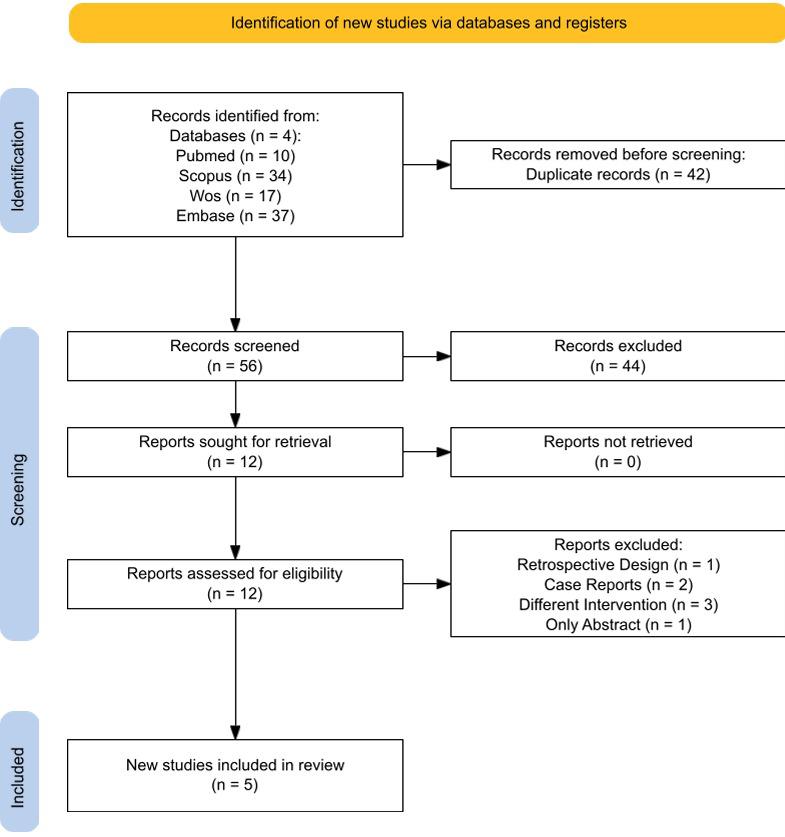
We used Rayyan for semi-automated screening of the literature search results according to our prespecified PICO. Studies were screened in two phases. The first phase was title/abstract screening to identify potentially relevant clinical studies. In the second phase, we retrieved the full-text articles of the selected abstracts for further eligibility screening.
Screening was conducted independently by three review authors (MA, AH, and AE). Any conflicts were resolved through discussion between the three reviewers.
Data extraction
For all included studies, data were extracted into a uniform online data extraction sheet. Extracted data were mainly divided into 3 domains: (1) study characteristics, (2) baseline and intervention, and (3) study outcomes.
The study characteristics domain encompassed the studies’ titles, countries, study designs, total sample sizes, sample sizes of each group, inclusion and exclusion criteria, follow-up durations, loss-to-follow-up rates, and outcome indicators.
Baseline and intervention domains include patient demographic variables (age, sex, height, weight, and body mass index), ASA physical status classification, and a prior history of thoracoscopic surgery. Baseline clinical and physiological parameters were also extracted, including pulmonary function tests (FEV and FEV/FVC ratios) and hemodynamic measurements (heart rate and mean arterial pressure). Intraoperative and surgical variables collected comprised total anesthesia time, total surgery time, and intraoperative opioid dose.
For the intervention domain, details of the block procedure were recorded, including the type of local anesthetic (ropivacaine), its concentration and volume, the addition and dosage of dexmedetomidine in the intervention arm, and the exact block technique used. These data ensured comparability between intervention and control groups and allowed for assessment of consistency across trials.
Regarding the studies’ outcome domains, we organized the extracted data into two separate sheets: one for dichotomous outcomes and one for continuous outcomes. The dichotomous outcomes include analgesic requests in the Post-Anesthesia Care Unit (PACU), Rescue Analgesic Requirements, Incidence of Chronic Neuropathic Pain, Hypotension, Dizziness, Bradycardia, Vomiting, and Nausea. The continuous outcomes include Coughing pain scores (NRS) over 24 hours, Cumulative fentanyl consumption, Dermatomal levels of sensory blockade, Postoperative Cumulative Opioid Consumption, Resting pain scores (NRS) over 24 hours, Total sufentanil consumption, and Length of hospital stay.
Risk of bias assessment
We assessed the risk of bias in the included studies using the Cochrane risk of bias 2 (ROB 2) tool after carefully revising the data presented in the published articles. The Cochrane ROB 2 tool examines the potential of bias in the five main study domains, including (1) Bias arising from the randomization process, (2) Bias due to deviations from intended interventions, (3) Bias in measurement of the outcome, (4) Bias due to missing outcome data, (5) Bias in selection of the reported result.
Effect Measures
In this meta-analysis, we assessed mainly dichotomous outcomes:
Continuous outcomes (efficacy)
We planned to assess continuous outcomes (e.g., postoperative pain intensity, time to first rescue analgesia, opioid consumption) using mean differences with 95% CIs. Pain scores measured on different scales would have been standardized to a 0–10 scale. However, because the data were not reported in a consistent or extractable form across included studies, we were unable to perform quantitative synthesis for these outcomes. Continuous efficacy outcomes were not meta-analyzed due to incompatible metrics and time points; only prespecified dichotomous safety outcomes were pooled.
Dichotomous outcomes (safety)
The incidence of bradycardia, dizziness, hypotension, nausea, and vomiting was summarized using risk ratios (RRs) with 95% CIs.
All effect estimates were calculated using a random-effects model to account for between-study heterogeneity. Statistical significance was set at p<0.05 for all analyses.
Result
Study characteristic
The meta-analysis included five randomized controlled trials [7,10,6,3,4] evaluating the combination of dexmedetomidine and ropivacaine (PRD) versus ropivacaine alone (PR) in thoracic surgeries. The sample populations were comparable across studies in terms of age, gender distribution, and height, weight, and ASA physical status classification. The mean age of participants ranged from 19.0 to 59.5 years in the intervention groups and from 19.0 to 59.2 years in the control groups. Both groups had a relatively balanced gender ratio, although one study (Hong 2019) included only male participants Table 2 Table 1.
| Variable | Group | Jianghui Xu 2017 | Jun Zha 2021 | Zheping Chen 2024 | Rong Tang 2025 | Boohwi Hong 2019 |
|---|---|---|---|---|---|---|
| Age (mean ± SD) | Intervention | 59.5 ± 9.7 | 48.1 ± 1.5 | 55.43 ± 11.68 | 56.23 ± 8.76 | 19.33 ± 3.87 |
| Control | 59.2 ± 9.7 | 47.1 ± 1.7 | 53.67 ± 8.38 | 58.40 ± 6.89 | 19.67 ± 3.1 | |
| Gender (M/F) | Intervention | 18/12 | — | 27/23 | 16/14 | 33/0 |
| Control | 17/13 | — | 19/34 | 15/15 | 33/0 | |
| Height (cm) | Intervention | 167.1 ± 9.3 | 164.6 ± 1.4 | 165.83 ± 7.63 | 166.73 ± 9.23 | 173.67 ± 6.74 |
| Control | 164.3 ± 7.6 | 165.9 ± 1.2 | 164.67 ± 7.62 | 166.53 ± 7.87 | 172.63 ± 8.99 | |
| Weight (kg) | Intervention | 61.2 ± 7.5 | 72.4 ± 2.1 | 65.67 ± 9.16 | 65.76 ± 7.85 | 58.2 ± 8.0 |
| Control | 61.2 ± 11.2 | 67.3 ± 2.3 | 66.83 ± 9.53 | 65.67 ± 7.72 | 57.8 ± 8.1 | |
| BMI (kg/m²) | Intervention | — | 24.1 ± 0.6 | 24.03 ± 2.67 | — | 19.2 ± 2.2 |
| Control | — | 23.4 ± 0.6 | 25.3 ± 2.82 | — | 19.3 ± 2.4 | |
| ASA (I/II/III) | Intervention | 14/16 | — | 3/37/10 | 11/19/0 | — |
| Control | 12/18 | — | 8/42/3 | 12/18/0 | — | |
| Previous VATS | Intervention | — | — | — | — | 7 (21.2%) |
| Control | — | — | — | — | 11 (33.3%) | |
| Total Anaesthesia Time (min) | Intervention | 183.0 ± 37.0 | 174 ± 6 | 150 ± 45.8 | 161.38 ± 31.55 | — |
| Control | 200.0 ± 43.1 | 168 ± 6 | 151.67 ± 49.53 | 165.83 ± 27.01 | — | |
| Total Surgery Time (min) | Intervention | 131.3 ± 33.6 | 132 ± 6 | 120.03 ± 36.26 | 130.50 ± 28.07 | — |
| Control | 146.0 ± 36.2 | 132 ± 6 | 126.67 ± 53.34 | 129.50 ± 23.94 | — | |
| Intraoperative Opioid Dose | Intervention | — | — | |||
| Control | — | — | ||||
| FEV (% predicted) | Intervention | — | — | — | — | |
| Control | — | — | — | — | ||
| FEV/FVC (%) | Intervention | — | — | — | — | |
| Control | 97.93 ± 47.64 | — | — | — | — | |
| Baseline HR (bpm) | Intervention | — | 84.8 ± 2.3 | — | — | — |
| Control | — | 82.3 ± 2.9 | — | — | — | |
| Baseline MAP (mmHg) | Intervention | — | 95.5 ± 1.9 | — | — | — |
| Control | — | 97.1 ± 1.5 | — | — | — |
BMI, Body Mass Index; ASA, American Society of Anesthesiologists Physical Status Classification; VATS, Video-Assisted Thoracoscopic Surgery; PVB, Paravertebral Block; TPVB, Thoracic Paravertebral Block; FEV₁, Forced Expiratory Volume in 1 second; FVC, Forced Vital Capacity; HR, Heart Rate; MAP, Mean Arterial Pressure; μg, Microgram; SD, Standard Deviation.
| Study ID | Country | Study Design | Sample Size (Intervention/Control) | Surgical Procedure | Anesthesia Type |
|---|---|---|---|---|---|
| Jianghui Xu 2017 | China | RCT | 33/32 | Video Assisted Thoracoscopic Surgery (VATS) lobectomy | General anesthesia plus ultrasound-guided multiple-level thoracic paravertebral block |
| Jun Zha 2021 | China | RCT | 20/20 | Video-assisted Thoracoscopic lobectomy (VATS) | General anesthesia + thoracic paravertebral block |
| Zheping Chen 2024 | China | RCT | 30/30 | Video-assisted Thoracoscopic surgery (VATS) | General anesthesia + thoracic paravertebral block |
| Rong Tang 2025 | China | RCT | 39/39 | Video-assisted Thoracoscopic surgery (VATS) | General anesthesia + ultrasound-guided PVB (T5) |
| Boohwi Hong 2019 | Korea | RCT | 33/33 | VATS wedge resection | General anesthesia with TPVB post-op |
CT, Randomized Controlled Trial; VATS, Video-Assisted Thoracoscopic Surgery; PVB, Paravertebral Block; TPVB, Thoracic Paravertebral Block.
Anesthesia and surgery-related variables were also collected to ensure comparability. The total anesthesia time ranged between approximately 125 and 200 minutes across studies, with no substantial difference between the groups. Similarly, total surgery time showed only slight variations, ranging from about 90 to 146 minutes. The intraoperative opioid doses, primarily measured in fentanyl equivalents, were nearly identical across intervention and control arms. Pulmonary function, measured by FEV and FEV/FVC ratios, showed similar values in both groups, indicating comparable respiratory baselines. Additionally, baseline hemodynamic parameters such as heart rate (HR) and mean arterial pressure (MAP) were closely matched, further supporting the internal validity of the pooled analysis.
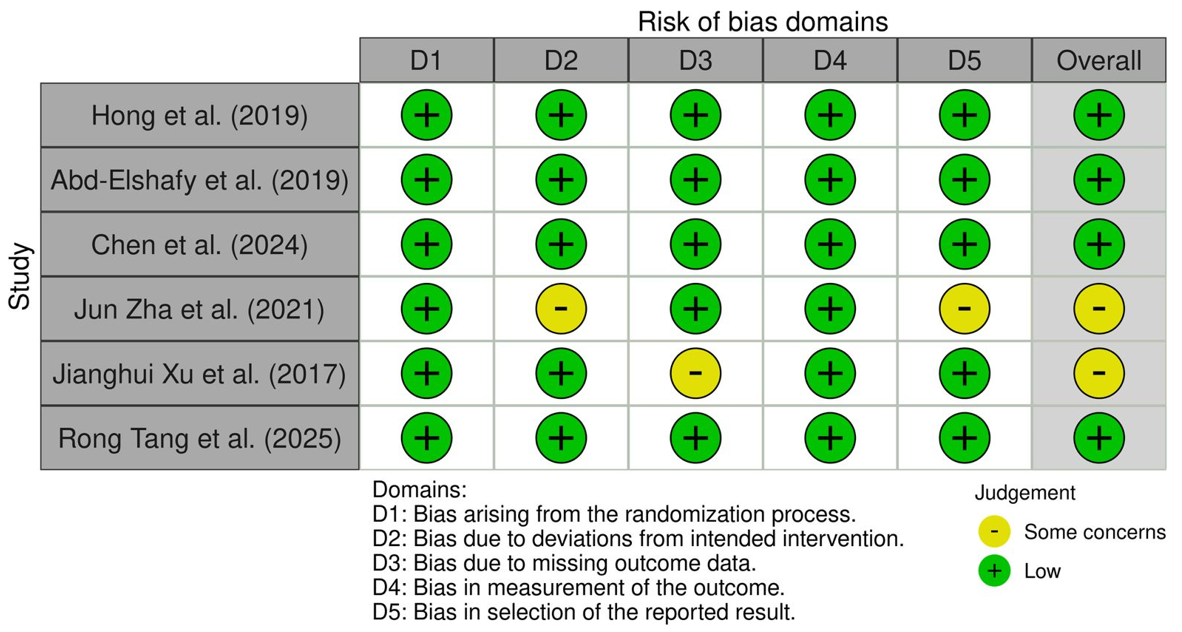
All studies were rated as having a low risk in all five ROB2 domains, including missing outcome data, measurement of outcomes, and selection of the reported result. Only Jun Zha et al. (2021) and Jianghui Xu et al. (2017) raised concerns in one or more domains, primarily related to deviations from the intended intervention and the selection of reported results.
Outcome
Bradycardia
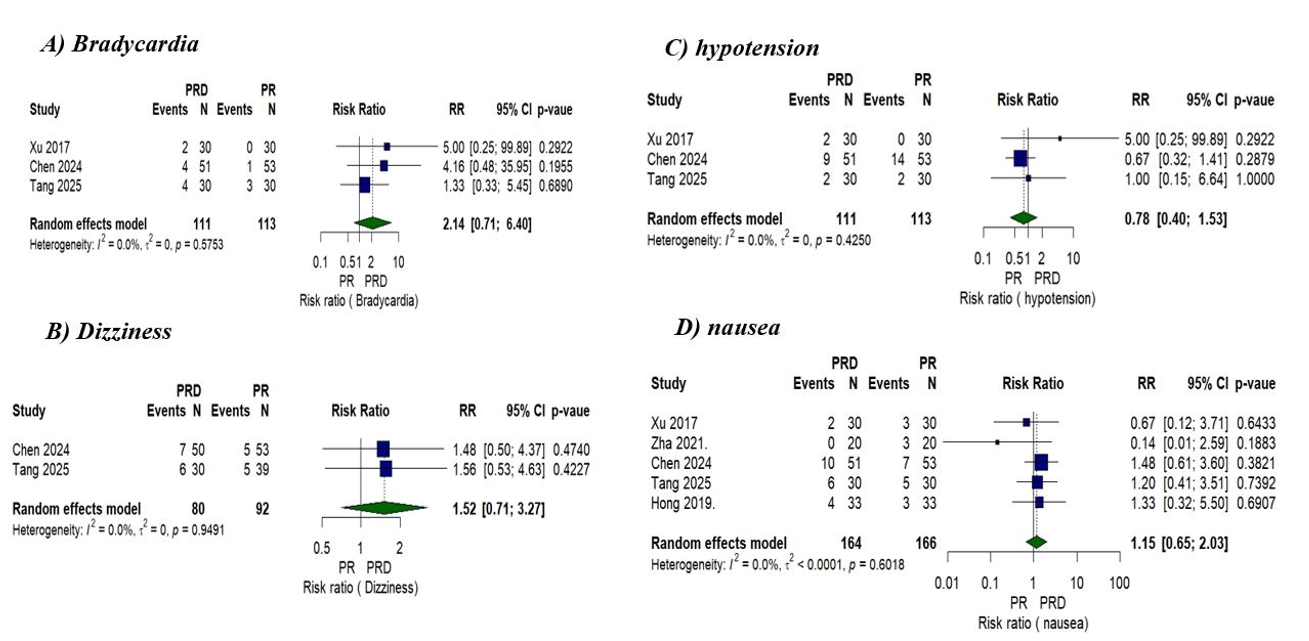
There was no statistically significant difference in the incidence of bradycardia between patients receiving dexmedetomidine added to ropivacaine (PRD group) and those receiving ropivacaine alone (PR group) in thoracic surgeries (RR = 2.14; 95% CI: 0.71–6.40; p = 0.1750). (Figure 2; A)
Dizziness
There is no statistically significant difference in the incidence of dizziness in patients receiving dexmedetomidine added to ropivacaine (PRD group) and those receiving ropivacaine alone (PR group). The pooled risk ratio (RR = 1.52; 95% CI: 0.71–3.27; p = 0.2833). Although the point estimate suggests a slightly higher risk of dizziness in the PRD group, the result is not statistically meaningful, and the confidence interval crosses 1. Therefore, no firm conclusion can be drawn regarding the effect of PRD on dizziness. (Figure 2; B)
Hypotension
There is no statistically significant difference in the risk of hypotension between patients receiving dexmedetomidine added to ropivacaine (PRD group) and those receiving ropivacaine alone (PR group). The pooled risk ratio (RR: 0.78, 95% CL: [0.40, 1.53], p = 0.4676), (Figure 2; C)
Nausea
There is no statistically significant difference in the incidence of nausea between patients receiving dexmedetomidine added to ropivacaine (PRD group) and those receiving ropivacaine alone (PR group). The pooled risk ratio (RR: 1.15; 95% CI: [0.65, 2.03]; p = 0.6018). (Figure 3; D)
Vomiting
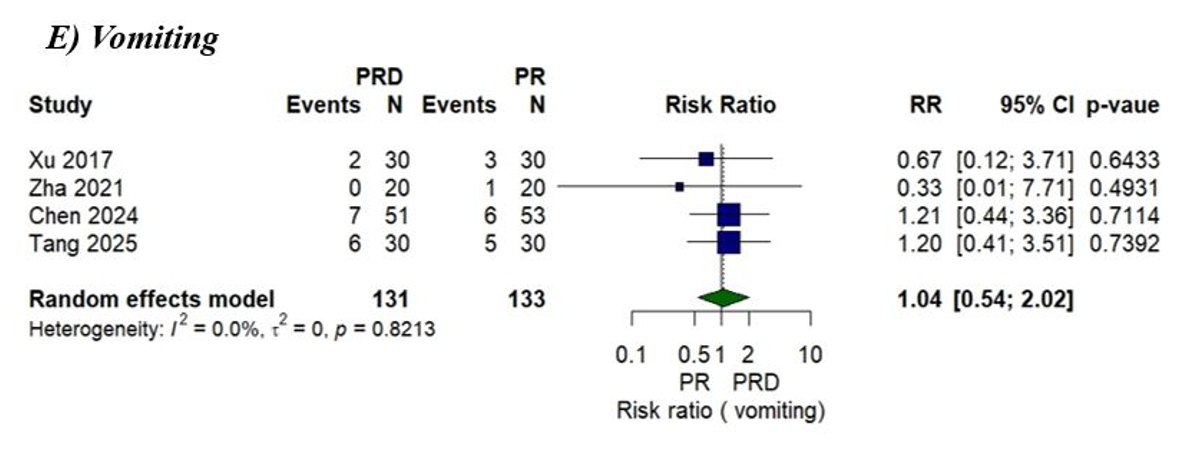
There is no statistically significant difference in the incidence of vomiting between patients receiving dexmedetomidine added to ropivacaine (PRD group) and those receiving ropivacaine alone (PR group). The pooled risk ratio (RR: 1.04; 95% CI: [0.54, 2.02]; p = 0.9122). (Figure 3; E)
Discussion
In this systematic review and meta-analysis of randomized controlled trials, the addition of dexmedetomidine to ropivacaine in thoracic surgical settings was found to be safe, with no statistically significant increase in adverse events, including bradycardia, hypotension, dizziness, nausea, or vomiting.
Several of the included trials suggested that dexmedetomidine may enhance analgesia, prolong the duration of nerve blocks, and reduce opioid consumption. However, due to heterogeneity in study design, outcome definitions, and incomplete reporting, we were unable to perform a quantitative synthesis of these efficacy outcomes. Therefore, these potential benefits should be interpreted with caution. The current evidence base is insufficient to draw definitive conclusions regarding analgesic or opioid-sparing effects.
Our findings are consistent with previous reports that dexmedetomidine, when used as an adjuvant to local anesthetics, has the potential to improve block quality and prolong analgesia. We support the safety of dexmedetomidine as an adjuvant to ropivacaine in thoracic anesthesia. However, the efficacy claims suggested in individual studies require further verification through larger, well-designed randomized trials with standardized reporting of pain and opioid-related outcomes. Hong et al. demonstrated significantly lower cumulative opioid consumption over 24 h and better pain with coughing, with no patient requiring atropine despite lower heart rates. Similar improvements in analgesia, sedation scores, and hemodynamic stability were also observed in trials using thoracic trunk plane blocks (TTPB), with no increase in adverse reactions, except for potential drowsiness [10].
Our findings fit into a broader, somewhat mixed, evidence base. Multiple systematic reviews and meta-analyses have consistently demonstrated that dexmedetomidine as a perineural or neuraxial adjuvant prolongs sensory and motor block duration, delays first analgesic request, and reduces postoperative opioid consumption when combined with local anesthetics such as ropivacaine. For example, pooled data across RCTs show clinically meaningful prolongation of analgesia and block duration when dexmedetomidine is added to ropivacaine.
Bradycardia has been reported as the main safety concern in some earlier reviews of neuraxial and perineural dexmedetomidine. These studies advised caution, especially when higher doses are used or when the drug may be absorbed into the bloodstream. In neuraxial administration, one major meta-analysis found a higher rate of bradycardia and recommended close monitoring [11,12]. The accumulated evidence supports that adding dexmedetomidine to ropivacaine reliably improves block quality and prolongs analgesia, which is attractive in thoracic surgery, where effective regional analgesia reduces opioid needs and pulmonary complications. At the same time, clinicians should recognize the potential for bradycardia; our pooled estimate suggests an increased risk, although it was not statistically significant.
Zhang et al. found no difference in dizziness incidence between dexmedetomidine–local anesthetic combinations and controls across various block types [13,14].In contrast, Sun et al. reported similarly non-significant results but noted a slight, clinically mild increase in sedation-related symptoms—particularly at perineural doses exceeding 100 µg [15]. In line with these reports, our pooled estimate aligns with this finding. Similarly, our findings for hypotension showed no significant difference between groups, which aligns with earlier systematic reviews in both thoracic and non-thoracic regional anesthesia settings. For instance, Liu et al. reported that the incidence of hypotension was comparable between the dexmedetomidine-local anesthetic groups and controls in peripheral nerve blocks, emphasizing that patient comorbidities and intraoperative management played a larger role in determining hemodynamic changes. In contrast, meta-analyses of neuraxial dexmedetomidine, such as the one by Sun et al., have observed a higher rate of hypotension, likely attributable to combined sympathetic blockade and systemic absorption [16]. Our results are more consistent with the peripheral and paravertebral block literature, in which hypotension has been an infrequent event and generally unrelated to the use of dexmedetomidine at moderate perineural doses. Taken together, these findings suggest that, within the dosing range and techniques applied in the included trials, dexmedetomidine does not appear to significantly increase the risk of hypotension in thoracic surgery patients.
In summary, this meta-analysis provides evidence that the addition of dexmedetomidine to ropivacaine for thoracic paravertebral block offers enhanced analgesic benefits without a corresponding increase in adverse events. This supports the thesis that dexmedetomidine is a safe and effective adjuvant in thoracic anesthesia.
However, our analysis was limited to safety and adverse outcomes as the included studies demonstrated considerable heterogeneity in dosing strategies and methods of outcome reporting. We recommend that more homogeneous trials are needed to better define optimal dosing, clarify the specific analgesic benefits, long-term safety outcomes, and the impact on a patient’s quality of life.
Limitations
This review has several important limitations. First, the number of thoracic-specific randomized controlled trials was small, which limits the strength and generalizability of our conclusions. Second, heterogeneity in dosing regimens, block techniques, and outcome reporting across included studies restricted the feasibility of quantitative synthesis for efficacy outcomes such as pain scores and opioid consumption. As a result, only safety outcomes could be reliably pooled, representing a deviation from our original protocol. Third, publication bias could not be formally assessed (e.g., using funnel plots or Egger’s test) due to the small number of included studies, which increases the risk that the available evidence may overrepresent positive findings. Finally, the varied definitions of adverse outcomes (e.g., bradycardia, hypotension) and the limited event counts further constrain interpretability. Future large, multicenter trials with standardized definitions, uniform reporting of analgesic and opioid-related endpoints, and adequate statistical power are needed to confirm both the efficacy and safety profile of dexmedetomidine as an adjuvant in thoracic paravertebral block. Our findings are consistent with the broader literature showing that dexmedetomidine prolongs sensory and motor block duration when combined with local anesthetics in various regional techniques (e.g., neuraxial, brachial plexus). However, these data are not specific to thoracic TPVB and are cited here for contextual background only. Within thoracic TPVB itself, the limited available RCTs show similar qualitative trends, though without sufficient homogeneity for quantitative confirmation.
Conclusions
Across five small RCTs, pooled safety outcomes did not differ; efficacy effects remain uncertain due to inconsistent reporting that precluded quantitative synthesis. The addition of dexmedetomidine to ropivacaine in thoracic surgeries did not demonstrate any significant differences compared with ropivacaine alone across all evaluated adverse outcomes, including bradycardia, dizziness, hypotension, nausea, and vomiting. Although some outcomes showed a slight tendency toward higher incidence in the dexmedetomidine group, these trends were not consistent or conclusive. Overall, the findings suggest that dexmedetomidine can be used as an adjuvant without a clear increase in common adverse effects, but continued vigilance and further high-quality research are warranted to confirm its safety profile in this setting.
Conflicts of Interest
The authors declare no competing interests.
Funding Source
No financial support was received for the study.
Acknowledgments
None
Institutional Review Board (IRB)
This article is based on previously conducted studies and does not contain any new studies with human participants or animals performed by any of the authors.
Large Language Model
None
Authors Contribution
MW conceived the study idea, designed the methodology and data analysis, and wrote the original draft. AA.M. (Second author) contributed to data collection and statistical analysis. AA.M. (third author) participated in data acquisition and interpretation. MAN assisted in methodology design and manuscript drafting. ZEF contributed to data validation and critical revision of the manuscript, and screening. AAE participated in the literature review and data curation. AWK assisted with manuscript preparation and visualization. MAM contributed to data interpretation, visualization, and final approval of the manuscript, and supervised the project.
Data Availability
All data generated or analyzed during this study are included in this published article.
References
- Agzarian John, Shargall Yaron. Open thoracic surgery: video-assisted thoracoscopic surgery (VATS) conversion to thoracotomy. Shanghai Chest. 2017;1:31-31. doi:10.21037/shc.2017.08.03
- Mehrotra M., D'Cruz J. R., Bishop M. A., et al. Video-Assisted Thoracoscopy [Internet]. 2024.
- Xu J., Yang X., Hu X., Chen X., Zhang J., Wang Y.. Multilevel Thoracic Paravertebral Block Using Ropivacaine With/Without Dexmedetomidine in Video-Assisted Thoracoscopic Surgery. J Cardiothorac Vasc Anesth. 2018;32(1):318-324. doi:10.1053/j.jvca.2017.06.023 PMID: 29191649
- Zha J., Ji S., Wang C., Yang Z., Qiao S., An J.. Thoracic Paravertebral Nerve Block with Ropivacaine and Adjuvant Dexmedetomidine Produced Longer Analgesia in Patients Undergoing Video-Assisted Thoracoscopic Lobectomy: A Randomized Trial. J Healthc Eng. 2021;2021:1846886. doi:10.1155/2021/1846886 PMID: 34540184 PMCID: PMC8443377
- Qureshi F., Meena S. C., Kumar V., Jain K., Chauhan R., Luthra A.. Influence of Epidural Ropivacaine with or without Dexmedetomidine on Postoperative Analgesia and Patient Satisfaction after Thoraco-Lumbar Spine Instrumentation: A Randomized, Comparative, and Double-Blind Study. Asian Spine J. 2021;15(3):324-332. doi:10.31616/asj.2020.0072 PMID: 32872755 PMCID: PMC8217855
- Tang R., Lu W. S., Zhong H. L., Wu F., Liu Y. Q.. Comparison of different adjuvant analgesia for paravertebral block in video-assisted thoracoscopic surgery: A double-blind randomized controlled trial. PLoS One. 2025;20(5):e0322589. doi:10.1371/journal.pone.0322589 PMID: 40315237 PMCID: PMC12047843
- Chen Z., Gao C., Zhang Y., Gao Y., Zhang L., Zhao S., Zhang H., Zhao X., Jin Y.. Effects of Ultrasound-Guided Thoracic Paravertebral Nerve Block Combined with Perineural or IV Dexmedetomidine on Acute and Chronic Pain After Thoracoscopic Resection of Lung Lesions: A Double-Blind Randomized Trial. Drug Des Devel Ther. 2024;18:2089-2101. doi:10.2147/DDDT.S457334 PMID: 38882043 PMCID: PMC11177863
- Page M. J., McKenzie J. E., Bossuyt P. M., Boutron I., Hoffmann T. C., Mulrow C. D., Shamseer L., Tetzlaff J. M., Akl E. A., Brennan S. E., Chou R., Glanville J., Grimshaw J. M., Hrobjartsson A., Lalu M. M., Li T., Loder E. W., Mayo-Wilson E., McDonald S., McGuinness L. A., Stewart L. A., Thomas J., Tricco A. C., Welch V. A., Whiting P., Moher D.. The PRISMA 2020 statement: an updated guideline for reporting systematic reviews. Rev Esp Cardiol (Engl Ed). 2021;74(9):790-799. doi:10.1016/j.rec.2021.07.010 PMID: 34446261
- Sterne J. A. C., Savovic J., Page M. J., Elbers R. G., Blencowe N. S., Boutron I., Cates C. J., Cheng H. Y., Corbett M. S., Eldridge S. M., Emberson J. R., Hernan M. A., Hopewell S., Hrobjartsson A., Junqueira D. R., Juni P., Kirkham J. J., Lasserson T., Li T., McAleenan A., Reeves B. C., Shepperd S., Shrier I., Stewart L. A., Tilling K., White I. R., Whiting P. F., Higgins J. P. T.. RoB 2: a revised tool for assessing risk of bias in randomised trials. BMJ. 2019;366:l4898. doi:10.1136/bmj.l4898 PMID: 31462531
- Hong B., Lim C., Kang H., Eom H., Kim Y., Cho H. J., Han W., Lee S., Chung W., Kim Y. H.. Thoracic Paravertebral Block with Adjuvant Dexmedetomidine in Video-Assisted Thoracoscopic Surgery: A Randomized, Double-Blind Study. J Clin Med. 2019;8(3). doi:10.3390/jcm8030352 PMID: 30871093 PMCID: PMC6462904
- Jeon Soeun, Kim Eunsoo, Lee Sun Hack, Paek Sung In, Ri Hyun-Su, Lee Dowon. Development of severe junctional bradycardia after dexmedetomidine infusion in a polypharmacy patient: a case report and literature review. Kosin Medical Journal. 2023;38(1):50-55. doi:10.7180/kmj.22.113
- Li Y., Gao J., Jiang L., Sun C., Hong H., Yu D.. Severe Hypertensive Response to Atropine Therapy for Bradycardia Associated with Dexmedetomidine: Case Report and Literature Review. Clin Pharmacol. 2024;16:27-31. doi:10.2147/CPAA.S436188 PMID: 38225988 PMCID: PMC10789565
- Zhang P., Liu S., Zhu J., Rao Z., Liu C.. Dexamethasone and dexmedetomidine as adjuvants to local anesthetic mixture in intercostal nerve block for thoracoscopic pneumonectomy: a prospective randomized study. Reg Anesth Pain Med. 2019. doi:10.1136/rapm-2018-100221 PMID: 31399540
- Zhang Y., Wang C. S., Shi J. H., Sun B., Liu S. J., Li P., Li E. Y.. Perineural administration of dexmedetomidine in combination with ropivacaine prolongs axillary brachial plexus block. Int J Clin Exp Med. 2014;7(3):680-5. PMID: 24753763 PMCID: PMC3992408
- Sun S., Wang J., Bao N., Chen Y., Wang J.. Comparison of dexmedetomidine and fentanyl as local anesthetic adjuvants in spinal anesthesia: a systematic review and meta-analysis of randomized controlled trials. Drug Des Devel Ther. 2017;11:3413-3424. doi:10.2147/DDDT.S146092 PMID: 29238167 PMCID: PMC5716323
- Liu Q. F., Shi C. N., Tong J. H., Li K. P., Yang J. J., Ji M. H., Liu Q. R.. Dexmedetomidine and Dexamethasone as Adjuvants to the Local Anesthetic Mixture in Rhomboid Intercostal and Sub-Serratus Block for Video-Assisted Thoracoscopic Surgery: A Randomized, Double-Blind, Controlled Trial. Drug Des Devel Ther. 2024;18:4485-4496. doi:10.2147/DDDT.S476929 PMID: 39399123 PMCID: PMC11468391
References
1. Agzarian J, Shargall Y. Open thoracic surgery: video-assisted thoracoscopic surgery (VATS) conversion to thoracotomy. Shanghai Chest. 2017: 31 https://doi.org/10.21037/shc.2017.08.03]
2. Mehrotra M, D'Cruz JR, Bishop MA, others. Video-Assisted Thoracoscopy [Internet]. 2024.
3. Xu J, Yang X, Hu X, Chen X, Zhang J, Wang Y. Multilevel Thoracic Paravertebral Block Using Ropivacaine With/Without Dexmedetomidine in Video-Assisted Thoracoscopic Surgery. J Cardiothorac Vasc Anesth. 2018: 318 [PMID: 29191649, https://doi.org/10.1053/j.jvca.2017.06.023]
4. Zha J, Ji S, Wang C, Yang Z, Qiao S, An J. Thoracic Paravertebral Nerve Block with Ropivacaine and Adjuvant Dexmedetomidine Produced Longer Analgesia in Patients Undergoing Video-Assisted Thoracoscopic Lobectomy: A Randomized Trial. J Healthc Eng. 2021: 1846886 [PMID: 34540184, https://doi.org/10.1155/2021/1846886]
5. Qureshi F, Meena SC, Kumar V, Jain K, Chauhan R, Luthra A. Influence of Epidural Ropivacaine with or without Dexmedetomidine on Postoperative Analgesia and Patient Satisfaction after Thoraco-Lumbar Spine Instrumentation: A Randomized, Comparative, and Double-Blind Study. Asian Spine J. 2021: 324 [PMID: 32872755, https://doi.org/10.31616/asj.2020.0072]
6. Tang R, Lu WS, Zhong HL, Wu F, Liu YQ. Comparison of different adjuvant analgesia for paravertebral block in video-assisted thoracoscopic surgery: A double-blind randomized controlled trial. PLoS One. 2025: e0322589 [PMID: 40315237, https://doi.org/10.1371/journal.pone.0322589]
7. Chen Z, Gao C, Zhang Y, Gao Y, Zhang L, Zhao S, Zhang H, Zhao X, Jin Y. Effects of Ultrasound-Guided Thoracic Paravertebral Nerve Block Combined with Perineural or IV Dexmedetomidine on Acute and Chronic Pain After Thoracoscopic Resection of Lung Lesions: A Double-Blind Randomized Trial. Drug Des Devel Ther. 2024: 2089 [PMID: 38882043, https://doi.org/10.2147/DDDT.S457334]
8. Page MJ, McKenzie JE, Bossuyt PM, Boutron I, Hoffmann TC, Mulrow CD, Shamseer L, Tetzlaff JM, Akl EA, Brennan SE, Chou R, Glanville J, Grimshaw JM, Hrobjartsson A, Lalu MM, Li T, Loder EW, Mayo-Wilson E, McDonald S, McGuinness LA, Stewart LA, Thomas J, Tricco AC, Welch VA, Whiting P, Moher D. The PRISMA 2020 statement: an updated guideline for reporting systematic reviews. Rev Esp Cardiol (Engl Ed). 2021: 790 [PMID: 34446261, https://doi.org/10.1016/j.rec.2021.07.010]
9. Sterne JAC, Savovic J, Page MJ, Elbers RG, Blencowe NS, Boutron I, Cates CJ, Cheng HY, Corbett MS, Eldridge SM, Emberson JR, Hernan MA, Hopewell S, Hrobjartsson A, Junqueira DR, Juni P, Kirkham JJ, Lasserson T, Li T, McAleenan A, Reeves BC, Shepperd S, Shrier I, Stewart LA, Tilling K, White IR, Whiting PF, Higgins JPT. RoB 2: a revised tool for assessing risk of bias in randomised trials. BMJ. 2019: l4898 [PMID: 31462531, https://doi.org/10.1136/bmj.l4898]
10. Hong B, Lim C, Kang H, Eom H, Kim Y, Cho HJ, Han W, Lee S, Chung W, Kim YH. Thoracic Paravertebral Block with Adjuvant Dexmedetomidine in Video-Assisted Thoracoscopic Surgery: A Randomized, Double-Blind Study. J Clin Med. 2019: [PMID: 30871093, https://doi.org/10.3390/jcm8030352]
11. Jeon S, Kim E, Lee SH, Paek SI, Ri H-S, Lee D. Development of severe junctional bradycardia after dexmedetomidine infusion in a polypharmacy patient: a case report and literature review. Kosin Medical Journal. 2023: 50 https://doi.org/10.7180/kmj.22.113]
12. Li Y, Gao J, Jiang L, Sun C, Hong H, Yu D. Severe Hypertensive Response to Atropine Therapy for Bradycardia Associated with Dexmedetomidine: Case Report and Literature Review. Clin Pharmacol. 2024: 27 [PMID: 38225988, https://doi.org/10.2147/CPAA.S436188]
13. Zhang P, Liu S, Zhu J, Rao Z, Liu C. Dexamethasone and dexmedetomidine as adjuvants to local anesthetic mixture in intercostal nerve block for thoracoscopic pneumonectomy: a prospective randomized study. Reg Anesth Pain Med. 2019: [PMID: 31399540, https://doi.org/10.1136/rapm-2018-100221]
14. Zhang Y, Wang CS, Shi JH, Sun B, Liu SJ, Li P, Li EY. Perineural administration of dexmedetomidine in combination with ropivacaine prolongs axillary brachial plexus block. Int J Clin Exp Med. 2014: 680 [PMID: 24753763,
15. Sun S, Wang J, Bao N, Chen Y, Wang J. Comparison of dexmedetomidine and fentanyl as local anesthetic adjuvants in spinal anesthesia: a systematic review and meta-analysis of randomized controlled trials. Drug Des Devel Ther. 2017: 3413 [PMID: 29238167, https://doi.org/10.2147/DDDT.S146092]
16. Liu QF, Shi CN, Tong JH, Li KP, Yang JJ, Ji MH, Liu QR. Dexmedetomidine and Dexamethasone as Adjuvants to the Local Anesthetic Mixture in Rhomboid Intercostal and Sub-Serratus Block for Video-Assisted Thoracoscopic Surgery: A Randomized, Double-Blind, Controlled Trial. Drug Des Devel Ther. 2024: 4485 [PMID: 39399123, https://doi.org/10.2147/DDDT.S476929]
Data Availability Statement
All data generated or analyzed during this study are included in this published article.
License
Copyright (c) 2025 Mohamed Wagdy, Abdelrahman Abdalla Mohamed, Abdalla Ahmed Mohamed, Ziad ElDosoky Farouk, Mahmoud Abd El-Nasser, Abdelrahman A. Ebaid, Abdelrhman Waleed Kotb, Mostafa AbdElmawla Mohamed

This work is licensed under a Creative Commons Attribution 4.0 International License.
Copyright and Licensing
All articles published in ASIDE Internal Medicine are open access and freely available online immediately upon publication, without embargo.
This journal applies the terms of the Creative Commons Attribution 4.0 International License (CC BY 4.0). Under this license, anyone may copy, redistribute, remix, transform, and build upon the material for any purpose, even commercially, provided that proper credit is given to the original author(s), a link to the license is provided, and any changes made are indicated.
-
License link: https://creativecommons.org/licenses/by/4.0/
-
Machine-readable license metadata is embedded in each article and its DOI record.
Copyright Holder
Copyright in all articles remains with the author(s). ASIDE Internal Medicine is published and owned by the American Society for Inclusion, Diversity, and Equity in Healthcare (ASIDE). By submitting a manuscript, authors agree to grant the publisher a non-exclusive license to publish, distribute, and archive the work under the terms of the CC BY 4.0 license.
Third-party Material
Any material (e.g., images, figures, or tables) not covered by CC BY 4.0 will be clearly indicated in the article. Users must obtain permission directly from the copyright holder for reuse of such third-party material.
Author Rights and Self-Archiving
Authors are permitted to deposit all versions of their work (preprint, author’s accepted manuscript, and version of record) in institutional or subject repositories of their choice immediately upon publication, without embargo, provided that the DOI and license information are included.
Published
Issue
Section
Categories
How to Cite
Article history
- Received
- 3 Sep 2025
- Received in revised form
- 19 Oct 2025
- Accepted
- 23 Oct 2025
- Published
- 17 Nov 2025