
A Pairwise and Network Meta-Analysis Comparing the Efficacy and Safety of Ribonucleic Acid Interference Therapeutics in the Management of Hypertension
Downloads
DOI:
https://doi.org/10.71079/ASIDE.IM.092125141Abstract
Background: Small interfering RNA (siRNA) and antisense agents targeting angiotensinogen are emerging antihypertensives. We synthesized their efficacy and safety.
Methods: We searched PubMed, Web of Science, Scopus, and CENTRAL through 25 Nov 2024. Eligible studies were randomized controlled trials in adults with hypertension comparing RNA-interference therapeutics with placebo. Primary outcomes were the change in ambulatory and office systolic/diastolic blood pressure. We conducted random-effects pairwise meta-analyses and a network meta-analysis with SUCRA ranking, and appraised certainty with GRADE.
Results: Four trials (n=486) met criteria. Versus placebo, RNA-interference therapy reduced ambulatory SBP (mean difference [MD] −15.46 mmHg; 95% CI −18.79 to −12.12) and DBP (MD −8.45 mmHg; −10.67 to −6.23), and lowered office SBP (MD −8.07 mmHg; −11.58 to −4.56) and DBP (MD −5.18 mmHg; −7.73 to −2.63). Injection-site reactions increased (risk ratio 5.26; 1.01–27.44); other adverse events, potassium, and eGFR were similar. In network analyses, zilebesiran 300 mg ranked highest for blood-pressure lowering; for AGT reduction, 800 mg ranked highest. GRADE certainty was high for blood-pressure outcomes and moderate for AGT, potassium, and eGFR. Few, short-term trials and sparse networks limit precision and generalizability; publication bias was not assessable.
Conclusion: siRNAs effectively reduced BP in hypertensive adults with an acceptable safety profile. Despite the indistinguishable efficacy or safety between the doses or types of siRNAs, Zilebesiran 300 mg best reduced BP compared to placebo.
Keywords:
Hypertension, Ribonucleic acid interference therapeutics, Blood pressure managementFull Text
Background
Hypertension (HTN) is considered the primary cause of heart disease, affecting more than one billion individuals globally [1,2]. Around 31.1% of adults were diagnosed with HTN in 2010, which reflects the significant burden of the disease [3]. Recent studies indicate an increase in the prevalence of HTN, especially in low- and middle-income countries. Despite the wide availability and usage of antihypertensive drugs, many people still struggle to control their blood pressure (BP) [4]. This highlights the critical need for developing novel pharmacological interventions, particularly in response to the growing global burden of HTN.
RNA interference (RNAi), small interfering ribonucleic acid (siRNA), has demonstrated promise as a therapy for HTN. They work by targeting molecules to prevent or reduce their gene expression. This technology enables targeted inhibition of specific genes implicated in the pathophysiology of HTN [5]. Angiotensinogen (AGT), a precursor to angiotensin peptides, including angiotensin II, is one of the main targets for RNA interference in HTN. Interfering with the expression of AGT can disrupt the renin-angiotensin-aldosterone system (RAAS), the central regulator of BP homeostasis [6]. Two potential RNAi-based therapeutics, Zilebesiran and IONIS-AGT-LRx, have been developed to manage HTN by targeting AGT. Zilebesiran is designed with a small interfering RNA (siRNA) linked to an N-acetylgalactosamine (GalNAc) specifically aimed at reducing hepatic AGT synthesis [7]. IONIS‐AGT-LRx is an antisense oligonucleotide (ASO) inhibiting AGT expression in the liver [6]. Recent trials in phases 1 and 2 have revealed promising results for using RNAi-based therapeutics for HTN [8,6]. Zilebesiran has demonstrated sustained drops in systolic and diastolic blood pressure for up to 24 weeks following a single subcutaneous injection of 200 mg or more, as well as dose-dependent reductions in serum AGT levels. IONIS-AGT-LRx has also exhibited significant reductions in circulating AGT levels without major safety concerns [8,6]. Despite the optimistic evidence about siRNAs in HTN management, there are no direct comparisons of different siRNAs, such as Zilebesiran and IONIS-AGT-LRx. Besides, there is a lack of a comprehensive pooled analysis evaluating the role of siRNAs in HTN management.
This study provides preliminary evidence on the efficacy and safety of siRNAs in the management of adult hypertension. Besides, the study compares the efficacy and safety of different doses of the investigated siRNAs, Zilebesiran, and IONIS-AGT-LRx with and without add-on therapy. Following an assessment of the efficacy of this novel family of antihypertensive agents, we used the GRADE (Grading of Recommendations, Assessment, Development, and Evaluation) framework to evaluate the quality of the evidence.
| Study name | Bakris et al. 2024 | Desai et al. 2023 | Morgan et al. 2021 (a) (Phase 2, Add-On Study) | Morgan et al. 2021 (b) (Phase 2, Monotherapy Study) |
|---|---|---|---|---|
| Sample size | 377 in the final analysis | 84 (Only Part A) | 26 | 25 |
| Design | Phase 2, randomized, placebo-controlled, double-blind, dose-ranging study | Phase 1, randomized, placebo-controlled, double-blind study of a single ascending dose (Part A) | Phase 2, randomized, placebo-controlled, parallel, double-blind study | Phase 2, randomized, placebo-controlled, double-blind study |
| Study setting and duration of treatment | The study took place in 78 sites across 4 countries (Canada, Ukraine, the UK, and the US). 394 patients were randomized to one of four treatment groups with zilebesiran or a placebo group: 79 to zilebesiran 150 mg, once every 6 mo; 78 to zilebesiran 300 mg, every 6 mo; 79 to zilebesiran 300 mg, every 3 mo; 79 to zilebesiran 600 mg, every 6 mo; and 79 to placebo. A total of 347 patients completed a 6-month treatment period. | The study was carried out at four different sites in the United Kingdom. The 12 participants enrolled in part A were distributed randomly to receive either a single subcutaneous dose of zilebesiran (10, 25, 50, 100, 200, 400, or 800 mg) or a placebo in a 2:1 ratio for 12 weeks. | The study was conducted at nine different sites in the USA. A total of 26 patients were randomly assigned in a 2:1 ratio to receive subcutaneous IONIS-AGT-LRx 80 mg once weekly or a placebo for 8 weeks. | The study took place at six different sites in the USA. A total of 25 patients were randomly assigned to receive either a once-weekly subcutaneous IONIS-AGT-LRx or placebo for 6 weeks, along with an additional loading dose on day 3. |
| Population | Adults aged 18 to 75 years with mild to moderate essential hypertension (daytime mean ambulatory systolic blood pressure between 135 mmHg and 160 mmHg after washout of antihypertensive medications if they are being taken). | Adults aged 18 to 65 years with mild-to-moderate hypertension, defined as a mean sitting systolic blood pressure without medication and a mean systolic blood pressure of 130 mmHg or more as assessed by 24-hour monitoring after a two-week washout period from anti-hypertensive medications. | Adults aged 18 to 75 with uncontrolled essential hypertension who are receiving 2 to 3 antihypertensive medications, including ACEi or ARB. | Adults aged between 18 and 72 years who had their blood pressure controlled on 2 antihypertensive medications (an ACEi or an ARB and a beta-blocker, calcium channel blocker, or diuretic). After 14 days from stoppage (washout) of antihypertensive medications, patients with systolic blood pressure (SBP) were included. |
| Main results | There was a statistically significant reduction in 24-hour mean ambulatory SBP among all four groups of zilebesiran compared to placebo. Serum AGT levels exhibited a more than 90% reduction from baseline, which persisted to month 6 after a single 300-mg or 600-mg dose of zilebesiran. Most of the drug-related adverse events were mild to moderate in severity, with injection site reactions and hyperkalemia reported in more than 5% of patients in the zilebesiran groups. | In part A, patients who received zilebesiran (at all doses) showed greater reductions from baseline in SBP and DBP measurements compared to placebo. In addition, reductions in serum AGT levels from baseline in the zilebesiran group were greater than those of the placebo group. Most of the drug-related adverse events were mild to moderate in severity, with headache, injection-site reaction, and upper respiratory tract infection reported in more than 5% of patients who received zilebesiran. | There was a statistically significant absolute reduction in mean AGT levels in the IONIS-AGT-LRx group compared to the placebo after 8 weeks. However, there was a non-statistically significant larger reduction in SBP and DBP among the IONIS-AGT-LRx group compared to the placebo. The drug was well tolerated and did not cause any serious adverse events, hypotensive events, or renal abnormalities. | Patients who received IONIS AGT-LRx showed a nonsignificantly larger reduction in mean SBP or DBP compared with placebo. In addition, there was a considerable reduction in AGT levels in the IONIS-AGT-LRx group compared with the placebo group (11.2 ± 6.0 mg/ml vs. 2.0 ± 4.6; p<0.001). The drug was well tolerated and did not cause any serious adverse events, hypotensive events, or renal abnormalities. |
AGT, Angiotensinogen; SBP, Systolic blood pressure; DBP, Diastolic blood pressure; ACEi, Angiotensin-converting enzyme inhibitors; ARB, Angiotensin receptor blocker
Methods
This systematic review, pairwise meta-analysis, and network meta-analysis adhered to the Preferred Reporting Items for Systematic Review and Meta-analysis (PRISMA) statement and the PRISMA extension statement for reporting of systematic reviews incorporating network meta-analyses of health care interventions [9]. The study protocol has been registered in PROSPERO (CRD42024584595).
Eligibility Criteria
We included studies and patients meeting all the following criteria in our meta-analysis: 1) randomized controlled trials (RCTs); 2) the intervention was any drug that belongs to RNA interference therapeutic agents used in hypertension management; 3) the comparator was placebo; 4) English studies only; 5) patients were adults years old; 6) they were untreated or treated with up to two antihypertensive medications; and 7) Patients had a minimum mean systolic blood pressure of 130 mmHg. Besides, we excluded studies meeting any of the following criteria: 1) observational studies, case reports, and conference abstracts; 2) uncontrolled studies; 3) studies with duplicated or overlapping populations; and 4) studies not written in English.
Search Strategy
We conducted a rigorous and thorough search strategy from inception to November 25, 2024, across five databases, including PubMed, Web of Science (WOS), Scopus, and the Cochrane Central Register of Controlled Trials (CENTRAL). The search strategy utilized in all databases comprised keywords and MeSH terms like [Zilebesiran OR Ionis AGT-LRx OR Ionis-AGT-LRx OR “Ionis AGT” OR “RNA interference therapeutic” OR “RNA interference drug”) AND (Hypertension OR “High Blood Pressure”). A detailed search strategy for each database is provided in Online Resource 1.
Study Selection and Data Extraction
Two independent reviewers conducted separate searches across five electronic databases and reviewed the reference lists of relevant studies, adhering to the established inclusion and exclusion criteria. Duplicate studies were removed using EndNote 20.4 [10]. To filter out ineligible studies, we initially screened titles and abstracts with the Rayyan online software [11] And finally screened the full-text articles. A third reviewer’s opinion was involved in case any conflicts arose between the two authors in the inclusion decision. Two authors independently extracted the data on an online Excel sheet for easier access—the online spreadsheet comprised sections for study characteristics, baseline characteristics of the population, and outcome data. The study characteristics included the study name, year of publication, sample size, study design, treatment duration, population specifics, and main results. The baseline population characteristics included sample size, age, body mass index (BMI) (kg/m), race, ethnicity, and baseline blood pressure measurements.
Outcome Measures
Our primary outcomes included changes from baseline in ambulatory and office systolic blood pressure (SBP) at the end of follow-up, changes from baseline in ambulatory and office diastolic blood pressure (DBP) after three months, and percent changes from baseline in angiotensinogen (AGT) after three and six months. Our secondary outcomes included changes in estimated Glomerular Filtration Rate (eGFR), changes from baseline in serum potassium, and safety outcomes. Regarding safety, the following adverse effects were considered in our analysis: hyperkalemia, hypotension, injection site reaction, serious adverse effects, headache, and hepatic adverse effects.
Quality Assessment
To evaluate the quality of the included RCTs, we used the Revised Cochrane Risk of Bias (ROB 2) tool. This tool focuses on five key areas of potential bias:
Bias in the Randomization Process
This examines how randomization was carried out, including the methods for generating sequences and concealing allocation.
Bias from Deviations in Intended Interventions
This evaluates whether the assigned interventions were adhered to and assesses how any deviations might have influenced the study outcomes.
Bias Due to Missing Outcome Data
This considers the presence of missing data and its potential impact on the reliability of the study findings.
Bias in Outcome Measurement
This assesses the accuracy of how outcomes were measured, with particular attention to whether assessors were blinded to group assignments.
Bias in Reporting Outcomes
This examines whether there was selective reporting of outcomes, specifically when multiple outcomes were assessed.
Two reviewers independently evaluated each study. Disagreements were resolved through discussion or, if necessary, by consulting a third reviewer. Based on the ROB 2 framework, studies were categorized as having a low risk of bias, some concerns, or a high risk of bias [12].
Statistical Analysis
Statistical analyses for the indirect comparisons were carried out using Review Manager 5.4 software (RevMan) [13]. We adopted a random-effects model for all outcomes assessed. Mean differences (MD) for continuous outcomes and risk ratio (RR) along with 95% confidence intervals (CIs) were calculated. A finding was considered statistically significant if the P-value was less than 0.05. We used the Higgins I² statistic to estimate heterogeneity between studies. An I² statistic of 50% or more represents substantial heterogeneity. Heterogeneity was calculated using the chi-square test, with a P-value less than 0.1 considered to represent significant variations between the studies. We also conducted a formal power analysis for primary outcomes (both ambulatory and office SBP and DBP) using the metapower package in R [14,15]. In executing the network meta-analysis, we utilized RStudio with a frequentist approach that involved a random-effects model employing the “netmeta” package [16]. This approach allowed for the comparison of multiple treatments by combining direct evidence with indirect evidence obtained from studies that included a common comparator. For outcomes measured continuously, effect sizes were represented as MD, and for dichotomous outcomes, RR was employed, accompanied by 95% CI. The relative effectiveness of the interventions was estimated using the Surface Under the Cumulative Ranking Curve (SUCRA). High SUCRA values indicate that an intervention is more effective, showing its probability of being ranked as the best option compared to others. We also constructed network diagrams to display the links between the interventions and used forest plots to show the effect sizes for each treatment comparison. To facilitate comparison of the treatments, we have used league tables to present the rankings of the treatments.
Quality of evidence
The level of confidence of the evidence provided was rated using the Grading of Recommendations, Assessment, Development, and Evaluation criteria (GRADE) by the GRADEpro Guideline Development Tool (GDT) online tool [17,18,19]. Based on the GRADE tool, the evidence is designated as one of four levels of confidence—very low, low, moderate, or high—based on several factors, including the risk of bias, inconsistency, indirectness, imprecision, publication bias, and additional factors such as dose-response gradients and potential confounding variables.
Results
Literature search
We identified 390 records after implementing our search strategy. After detecting 20 duplicate records, we were left with 370 unique records. The records underwent rigorous title/abstract screening, yielding 20 records for the full-text screening process. Eventually, four studies were included in our qualitative and quantitative analysis. The PRISMA flow diagram is shown in Online Resource 2.
Study and population characteristics
Our study included four clinical trials assessing the efficacy of RNA interference therapeutics in patients with hypertension [8,7,6]. These trials, conducted in several countries including Canada, Ukraine, the UK, and the US, enrolled 486 participants. The trials involved hypertensive adults, with specific inclusion criteria, including elevated systolic blood pressure ranging from 130 mmHg to 160 mmHg. Sample sizes ranged from 25 to 377 patients, while treatment duration ranged from 6 weeks to 6 months. A summary of the characteristics of the included studies and the baseline population is presented in Table 1 and Table 2, respectively.
Quality assessment
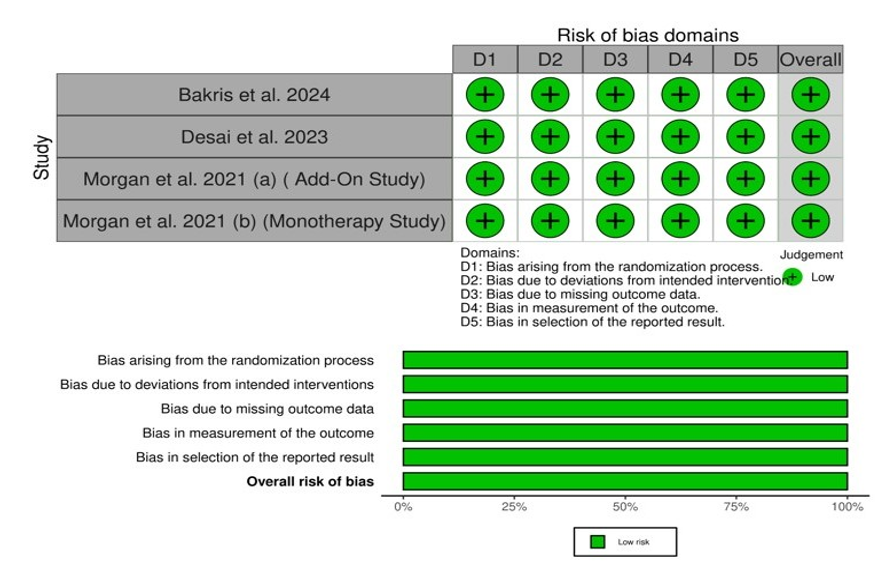
All studies appeared to have a low risk of bias across all domains, resulting in an overall low risk of bias, as illustrated in Figure 1.
Pairwise meta-analysis
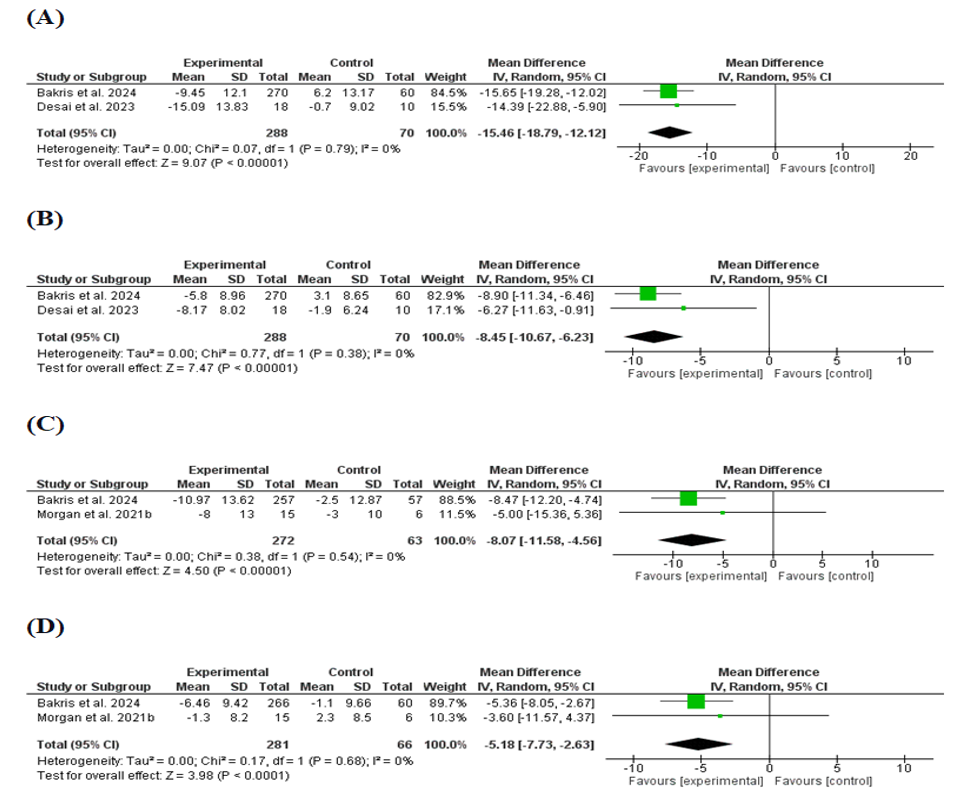
Efficacy Ambulatory blood pressure The analysis comparing siRNAs and placebo involved two studies and revealed a significant difference favoring the intervention in terms of ambulatory SBP and DBP (MD: -15.46, 95% CI: [-18.79, -12.12], P < 0.00001, as shown in Figure 2A) and (MD: -8.45, 95% CI: [-10.67, -6.23], P < 0.00001, as shown in Figure 2B), respectively. No heterogeneity was detected in either outcome.
Office blood pressure Two studies were involved in the analysis of office blood pressure. They showed a significant difference in favor of intervention in improving office SBP and DBP (MD: -8.07, 95% CI: [-11.58, -4.56], P < 0.00001, as shown in Figure 2C) and (MD: -5.18, 95% CI: [-7.73, -2.63], P < 0.0001, as shown in Figure 2D), respectively. No heterogeneity was observed in either outcome.
AGT, potassium, and eGFR The mean percent change in AGT at the end of follow-up showed a significant difference between the intervention and placebo in favor of the intervention (MD: -87.58, 95% CI: [-102.76, -72.41], P < 0.00001, as shown in Online Resource 3A). However, there was significant heterogeneity (I2 = 88%, P-value = 0.0002). Similar significant reductions with statistical heterogeneity were observed when measuring AGT levels at the 3-month endpoint, as shown in Online Resource 3B. The potassium level change showed no statistically significant difference between the two groups (MD: -0.09, 95% CI: [-0.38, 0.19], P = 0.52, as shown in Online Resource 3C). Similarly, eGFR showed no statistically significant difference between the two groups (MD: -2.92, 95% CI: [-8.53, 2.68], P = 0.31, as shown in Online Resource 3D).
Safety Side effects, including hypotension, hyperkalemia, headache, hepatic adverse effects, serious side effects, and death, showed statistically insignificant differences between the two groups, as shown in Online Resource 4 and Online Resources 5A and B. However, the only significant adverse event associated with siRNAs was injection site reactions (RR: 5.26, 95% CI: 1.01 to 27.44, P = 0.05), as shown in Online Resource 5C.
Network meta-analysis
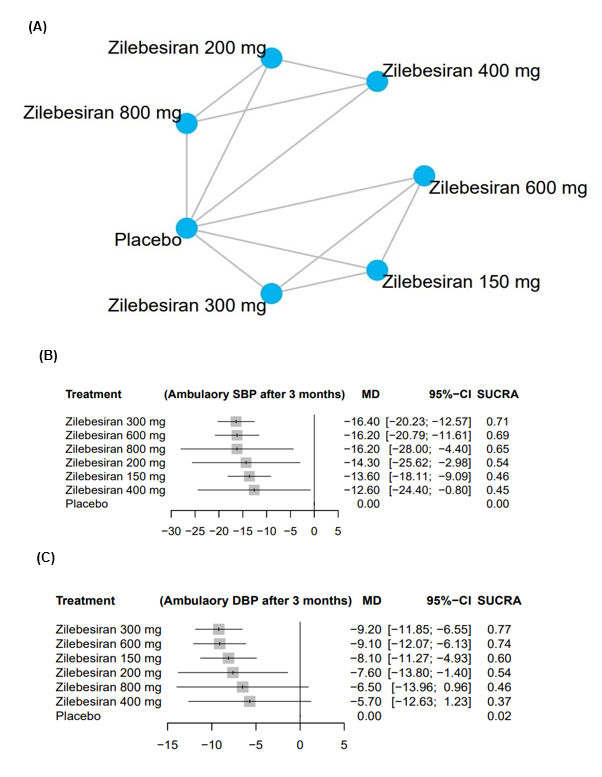
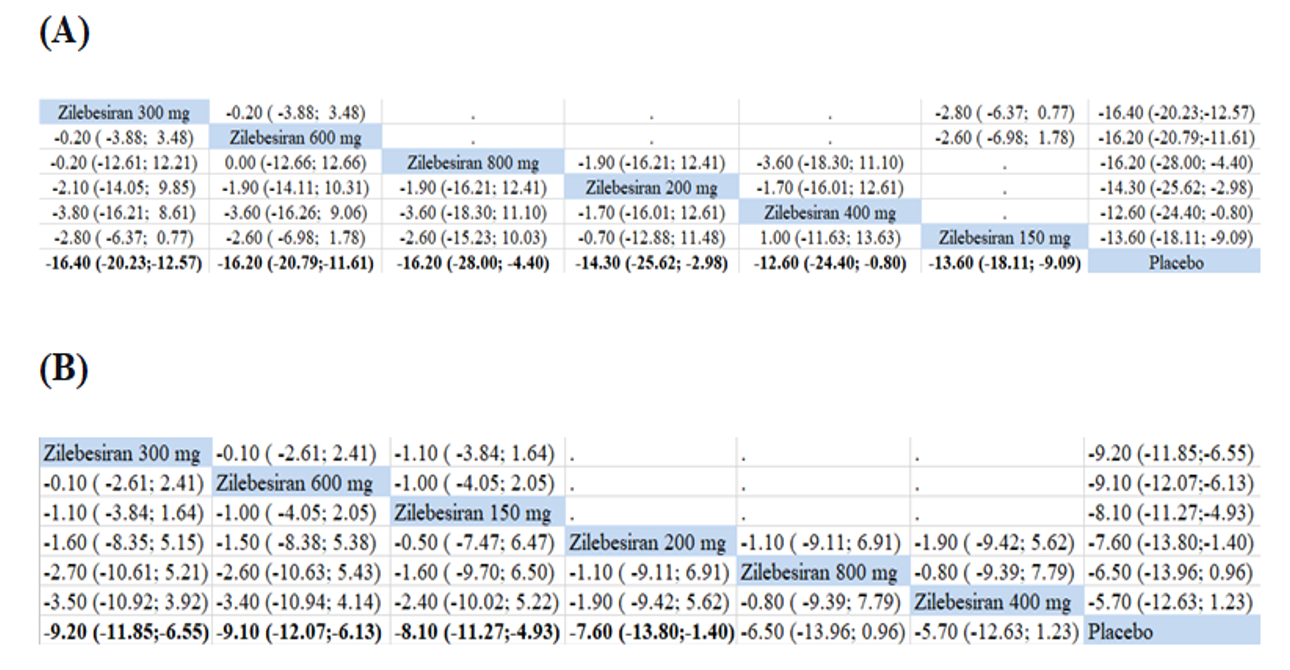
Efficacy Ambulatory blood pressure The NMA included two studies evaluating ambulatory SBP and DBP. The network plot for ambulatory blood pressure is presented in Figure 3A. Regarding SBP, all doses of zilebesiran showed significant MD compared to placebo, with zilebesiran 300 mg being the most effective in reducing SBP (MD: -16.40, 95% CI: [-20.23, -12.57], P < 0.0001, as shown in Figure 3B). According to surface under the cumulative ranking curve (SUCRA) rankings, zilebesiran 300 mg achieved the highest ranking (SUCRA = 71%), followed by zilebesiran 600 mg (69%), 800 mg (65%), 200 mg (54%), 150 mg (46%), and 400 mg (45%). Concerning DBP, all zilebesiran doses exhibited significant MD compared to placebo, except for 800 and 400 mg doses. Analogous to SBP, zilebesiran 300 mg was the most effective in reducing DBP (MD: -9.20, 95% CI: [-11.85, -6.55], P < 0.0001, as shown in Figure 3C), and it showed the highest ranking (SUCRA = 77%), followed by zilebesiran 600 mg (74%), 150 mg (60%), 200 mg (54%), 800 mg (46%), and 400 mg (37%). Although most doses were superior to the placebo in managing ambulatory blood pressure, there was no significant difference between the doses of Zilbesiran and each other, as shown in Figure 4.
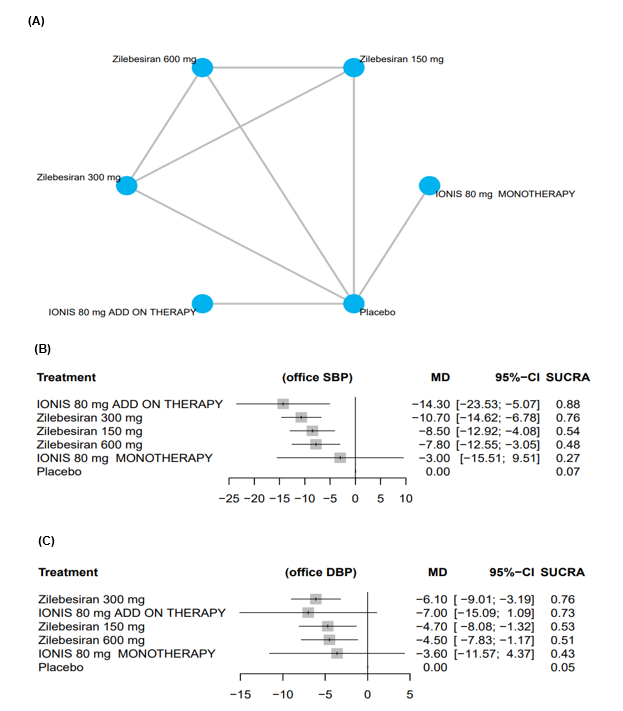
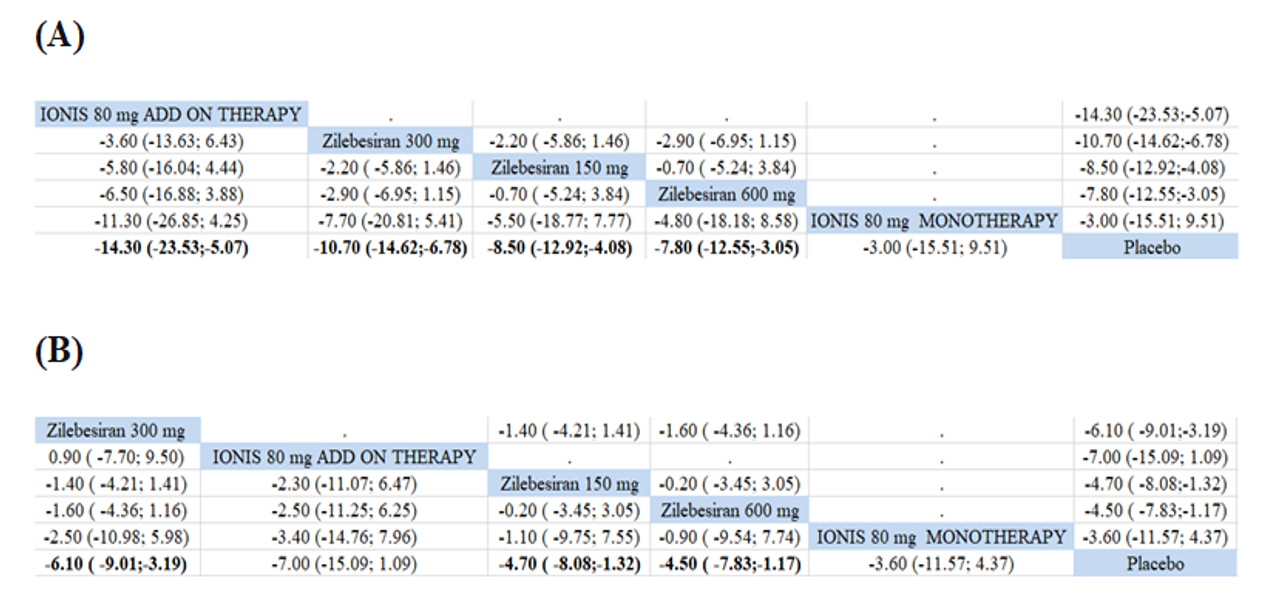
Office blood pressure Concerning office blood pressure, the NMA included three studies evaluating SBP and DBP. The network plots are presented in Figure 5A. Regarding SBP, all interventions at all doses showed significant MD compared to placebo, except for IONIS 80 mg monotherapy. IONIS 80 mg add-on therapy displayed the highest effectiveness in reducing SBP (MD: -14.30, 95% CI: [-23.53, -5.07], P < 0.01, as shown in Figure 5B). According to SUCRA rankings, IONIS 80 mg add-on therapy showed the highest ranking (SUCRA = 88%), followed by zilebesiran 300 mg (76%), zilebesiran 150 mg (54%), zilebesiran 600 mg (48%), and IONIS 80 mg monotherapy (27%). Regarding DBP, all zilebesiran doses exhibited significant MD compared to placebo, while IONIS 80 mg add-on therapy and IONIS 80 mg monotherapy failed to show any significant difference from placebo. Zilebesiran 300 mg was the most effective in reducing DBP (MD: -6.10, 95% CI: [-9.01, -3.19], P < 0.0001, as shown in Figure 5C), and it showed the highest ranking (SUCRA = 76%), followed by IONIS 80 mg add on therapy (73%), zilebesiran 150 mg (53%), zilebesiran 600 mg (51%), and IONIS 80 mg monotherapy (43%). Although most interventions were superior to the placebo in managing office blood pressure, there was no significant difference between the interventions themselves, as shown in Figure 6.
AGT Regarding the AGT percent change after approximately three months, the NMA included four studies, and the network plot is shown in Online Resource 6A. All interventions at all doses demonstrated significant MD compared to placebo, with zilebesiran 800 mg being the most effective in reducing AGT (MD: -111.90, 95% CI: [-120.45, -103.35], P < 0.0001, as shown in Online Resource 6B). Based on intervention rankings, zilebesiran 800 mg was the most effective intervention (SUCRA = 98%), while the IONIS 80 mg add-on had the lowest ranking (SUCRA = 9%). Additionally, zilebesiran 800 mg demonstrated significant reductions in AGT levels compared to most zilebesiran doses and IONIS 80 mg, with or without add-on therapy, as shown in Online Resource 8A.
Regarding the AGT percent change after six months, the NMA included two studies, and the network plot is shown in Online Resource 7A. Similar to the aforementioned AGT levels reductions, all interventions at all doses showed significant AGT reductions compared to placebo, with zilebesiran 800 mg being the most effective in reducing AGT (MD: -113.37, 95% CI: [-133.12, -93.62], P < 0.0001, as shown in Online Resource 7B ). After ranking the interventions, zilebesiran 800 mg was the best intervention (SUCRA = 99%), while zilebesiran 50 mg showed the lowest ranking (SUCRA = 12%). As expected, zilebesiran 800 mg showed significant reductions in AGT levels compared to most zilebesiran doses and IONIS 80 mg with or without add-on therapy, as shown in Online Resource 8B.
Safety outcome Three studies were included in the evaluation of hyperkalemia, with the network plot presented in Online Resource 9A. No significant differences were observed in the incidence of hyperkalemia between any intervention and the placebo. Based on the rankings, zilebesiran 800 mg was associated with the highest risk of hyperkalemia (RR: 3.50, 95% CI: [0.08, 162.90], , as shown in Online Resources 9B and C), while IONIS 80 mg add-on therapy was the safest (RR: 0.89, 95% CI: [0.03, 23.88], , as shown in Online Resources 9B and C) compared to placebo. Regarding hypotension, two studies were involved in the NMA, with the network plot presented in Online Resource 10A. There were no significant differences at any intervention compared to placebo, with zilebesiran 600 mg being the most associated with hypotension (RR: 3.95, 95% CI: [0.45, 34.50], , as shown in Online Resources 10B and C), whereas zilebesiran 150 mg was the safest (RR: 2.88, 95% CI: [0.31, 27.12], , as shown in Online Resources 10B and C). Four studies contributed to the NMA of injection site reactions; the network plot is shown in Online Resource 11A, with no difference observed between any of the interventions and the placebo, as shown in Online Resources 11B and C. The remaining side effects were insignificant and can be found in Online Resources (12–15).
Quality of evidence The quality of evidence regarding the efficacy and safety of siRNAs in the most important and relevant outcomes versus placebo was assessed using the GRADE approach. A summary of the findings and a GRADE evaluation of the outcomes are represented in Table 3.
Discussion
The present meta-analysis provides preliminary evidence regarding the efficacy and safety of siRNAs in the management of hypertensive adults with mild to moderate hypertension. The pairwise analysis yielded statistically and clinically significant reductions in ambulatory blood pressure readings [20]. Targeting AGT to suppress the renin-angiotensin-aldosterone system reduced the ambulatory systolic blood pressure (ASBP) by 15 mmHg and the
| Study names and groups | Bakris et al. 2024 | Desai et al. 2023 | Morgan et al. 2021 (a) | Morgan et al. 2021 (b) | |||||||
| Interventions | Zelibesiran | Zelibesiran | Zelibesiran | Zelibesiran | Placebo | Zelibesiran | Placebo | IONIS | Placebo | IONIS | Placebo |
| 150 mg/6 m | 300 mg/6 m | 300 mg/3 m | 600 mg/6 m | ||||||||
| Sample size | 78 | 73 | 75 | 76 | 75 | 75 | 56 | 28 | 18 | 17 | 8 |
| Age, Mean (SD) | 55.5 (10.6) | 56.4 (10.3) | 57.7 (10.6) | 57.4 (10.2) | 56.8 (11.2) | 56.8 (11.2) | 53 (7.5) | 52.9 (7) | 60 (8) | 60 (7) | 57 (4) |
| BMI, Kg/m2, Mean (SD) | NA | NA | NA | NA | NA | NA | 28.6 (3) | 29.3 (3.1) | 28.1 (4.6) | NA | NA |
| Male, n (%) | 39 (50) | 44 (60) | 45 (60) | 45 (59) | 37 (49) | 37 (49) | 35 (62) | 16 (57) | 4 (22) | 10 (59) | 2 (25) |
| Female, n (%) | 39 (50) | 29 (40) | 30 (40) | 31 (41) | 38 (51) | 38 (51) | 21 (38) | 12 (43) | 14 (78) | 7 (41) | 6 (75) |
| Race, n (%) | White | 53 (68) | 54 (74) | 48 (64) | 52 (68) | 52 (69) | 35 (62) | 21 (75) | 15 (83) | 10 (59) | 5 (63) |
| Asian | 4 (5) | 2 (3) | 7 (9) | 5 (7) | 5 (7) | 3 (5) | 0 | 0 | 1 (6) | 0 | |
| Black or African American | 20 (26) | 17 (23) | 19 (25) | 19 (25) | 18 (24) | 16 (29) | 6 (21) | 3 (17) | 5 (29) | 2 (25) | |
| Other | 1 (1) | 0 | 1 (1) | 0 | 0 | 2 (4) | 1 (4) | 0 | 1 (6) | 1 (12.5) | |
| Ethnicity, n (%) | Hispanic or Latino | 19 (24) | 16 (22) | 10 (13) | 20 (26) | 18 (24) | 18 (24) | NA | NA | 8 (44) | 2 (25) |
| Not Hispanic or Latino | 59 (76) | 57 (78) | 65 (87) | 56 (74) | 66 (88) | 66 (88) | NA | NA | 9 (53) | 6 (75) | |
| Office SBP, mmHg, Mean (SD) | 142.0 (10.9) | 143.0 (11.3) | 140.0 (11.0) | 140.8 (10.6) | 143.1 (13.3) | 143.1 (13.3) | 139.2 (9.4) | 140.6 (8.3) | 154 (11) | 146 (9) | 149 (15) |
| Office DBP, mmHg, Mean (SD) | 87.4 (9.6) | 88.8 (8.8) | 85.3 (9.1) | 85.6 (8.8) | 87.9 (10.5) | 87.9 (10.5) | 85.8 (6.8) | 87.9 (7.9) | 89 (9) | 86 (7) | 88 (10) |
| Serum angiotensinogen, ng/mL | 22.1 (5.9) | 23.2 (7.8) | 20.8 (4.9) | 21.7 (5.9) | 23.9 (10.9) | 23.9 (10.9) | NA | NA | 25.1 (3.3)* | 20.7 (4.7) | 26.9 (19.1) |
µg/mL, microgram per milliliter; NA, Not Available (these data were not reported in the studies.
| Certainty assessment | Summary of findings | ||||||||||
|---|---|---|---|---|---|---|---|---|---|---|---|
| Outcomes / patients (studies) | Risk of bias | Inconsistency | Indirectness | Imprecision | Publication bias | Certainty of evidence | Study event rates (%) | Relative effect (95% CI) | Anticipated absolute effects | ||
| With placebo | With intervention | Risk with Placebo | Risk difference with intervention | ||||||||
| Ambulatory SBP after 3 months | |||||||||||
| 358 (2 RCTs) | not serious | not serious | not serious | not serious | None | High | 70 | 288 | – | – | MD 15.46 mmHg lower (18.79 to 12.12 lower) |
| Ambulatory DBP after 3 months | |||||||||||
| 358 (2 RCTs) | not serious | not serious | not serious | not serious | None | High | 70 | 288 | – | – | MD 8.45 mmHg lower (10.67 to 6.23 lower) |
| Office SBP | |||||||||||
| 335 (2 RCTs) | not serious | not serious | not serious | not serious | None | High | 63 | 272 | – | – | MD 8.07 mmHg lower (11.58 to 4.56 lower) |
| Office DBP | |||||||||||
| 347 (2 RCTs) | not serious | not serious | not serious | not serious | None | High | 281 | 66 | – | – | MD 5.18 mmHg lower (7.73 to 2.63 lower) |
| AGT levels | |||||||||||
| 433 (3 RCTs) | not serious | serious | not serious | not serious | None | Moderate | 103 | 330 | – | – | MD 87.58% lower (102.76 to 72.41 lower) |
| Hypotension | |||||||||||
| 461 (2 RCTs) | not serious | not serious | not serious | very serious | None | Low | 2 | 13 | RR 0.96 (0.06 to 16.63) | 19 per 1000 | 1 fewer (from 18 fewer to 303 more) |
| Injection site reactions | |||||||||||
| 486 (3 RCTs) | not serious | not serious | not serious | very serious | None | Low | 43 | 43 | RR 5.26 (1.01 to 27.44) | 9 per 1000 | 38 more (from 0 fewer to 238 more) |
| Serum potassium | |||||||||||
| 107 (2 RCTs) | not serious | not serious | not serious | serious | None | Moderate | 36 | 71 | – | – | MD 0.09 mEq/L less (0.38 less to 0.19 more) |
| eGFR | |||||||||||
| 480 (3 RCTs) | not serious | not serious | not serious | serious | None | Moderate | 108 | 372 | – | – | MD 2.92 mL/min/1.73m less (8.53 less to 2.68 more) |
a, Wide variance of point estimates across studies; b, Wide 95% confidence intervals which include clinically important differences; c, Very wide 95% confidence intervals which include clinically important differences and few number of events.
ambulatory diastolic blood pressure (ADBP) by 8. A reduction of 5–10 mm Hg in systolic blood pressure or 5 mm Hg in diastolic blood pressure is considered a minimal clinically significant difference in blood pressure [21], which would be associated with a significant reduction in major cardiovascular events by 20%, coronary heart disease by17%, heart failure28%, and stroke by 27% [22].
This novel approach to RAAS system suppression has several advantages, in addition to its aforementioned efficacy. In contrast to traditional RAAS antagonists, compensatory angiotensin reactivation and aldosterone escape mechanisms cannot reduce the effectiveness of siRNAs [23]. Moreover, our meta-analysis revealed no significant risks compared to the placebo regarding hyperkalemia
and reduced eGFR, which are typically associated with aggressive regimens of dual RAAS blockade [24,25]. Besides, our network analysis revealed that zilebesiran 300 mg was ranked most effective in reducing ASBP and ADBP after three months: SUCRAs: 71% and 77%, respectively. These findings align with Bakris et al.’s findings, which revealed dose-related reductions in BP until 300 mg, after which increasing the dose to 800 mg had minimal effect on reducing BP. However, our analysis yielded pharmacologically intuitive results regarding AGT reduction, with zilebesiran 800 mg being the most effective in reducing AGT levels at both 3 and 6 months. The similar or arguably better management of hypertension by zilebesiran 300 mg supports the hypotheses presented in participating trials, which suggest that angiotensinogen reductions of greater than 90% would be sufficient for the most effective and longest-lasting decrease in blood pressure [8]. Therefore, managing BP might be accomplished using a relatively small dose of 300 mg with a potentially better safety profile.
Adverse events associated with novel pharmacotherapeutics represent an apprehension for physicians and patients alike. However, our meta-analysis revealed a generally acceptable short-term safety profile, as a duration of 6 weeks to 6 months is considered a relatively short period to assess the long-term safety of the drug, with injection site reactions being the only significant adverse effect. Fortunately, most patients reporting site reactions experienced mild symptoms and didn’t require treatment withdrawal. Another theoretically feared adverse reaction to siRNAs is hypotension. Thankfully, most of the participating trials didn’t display significant hypotensive events, and our analysis further confirms a statistically nonsignificant difference in hypotension incidence compared to the placebo (P = 0.98). Even if hypotension were to occur in selected patients, restoration of blood pressure was observed to be sufficient with standard interventions, such as a high-sodium diet [7]. Moreover, preclinical models displayed patency of residual RAAS system activation mechanisms, like sympathetic nervous system activation, which would supposedly allow compensatory BP regulation if a hypotensive crisis occurs [26]. However, it is crucial to note that the safety profile presented in this systematic review and meta-analysis reflects short-term safety in adults with mild to moderate hypertension and no comorbidities. The effect of long-term administration of siRNAs in a heterogeneous population of hypertensive patients with variable comorbidities is yet to be known.
Numerous studies have shown that cardiovascular disease and hypertension are related [27,28]. The Kokubo et al. study found that, in comparison to optimal blood pressure, the cardiovascular risk ratio was 2.04 (95% CI 1.19 to 3.48) for normal blood pressure, 2.46 (1.46 to 4.14) for high normal blood pressure, 2.62 (1.59 to 4.32) for grade 1 hypertension, and 3.95 (2.37 to 6.58) for grade 2 hypertension [29].
Hypertension remains one of the most common diagnoses and reasons for physician office visits in the United States [30,31]. With the hypertensive population experiencing challenges in terms of treatment compliance and adherence, siRNAs represent a revolution in this aspect [32]. First and foremost, siRNAs’ pharmacodynamic properties allow for single-dose administration three or four times a year. In addition, siRNAs displayed a steady decline during three months, both during the day and at night, as shown in our analysis, and for six months in some participating trials [8]. Therefore, the administration of siRNAs may be a method to mitigate the residual risk associated with between-visit unpredictability, which represents a challenge to current oral antihypertensive management.
The current meta-analysis stands out in different points. It is the first comprehensive meta-analysis investigating RNA-interference therapeutics in hypertensive adults. Furthermore, the study examines the effects of various doses, providing practical and clinically valuable insights. In addition, the study provides a comprehensive assessment of the quality of evidence using the GRADE framework, offering a more rigorous and structured appraisal of the evidence. While the study provides valuable insights, it is not without its limitations. The analysis incorporated a relatively small number of trials and patients. With only 486 patients, this meta-analysis has insufficient statistical power to detect rare adverse events. Moreover, the small population and very wide confidence interval, especially in outcomes related to injection site reactions, necessitated the authors to downgrade the “imprecision” domain in the GRADE assessment [33]. Another limitation is that the application of any test for publication bias (Egger test or funnel plots) is unreliable, as the minimum number of studies required to perform such tests is 10, as recommended by Cochrane [34].
Also, Lin et al. suggest that a publication bias test can be done with 8 or 6 studies [35]. But it is still a limitation for us, as we have only four studies in our meta-analysis. Besides, the limited number of RCTs provided a simple spur network analysis. A network meta-analysis for only 2-4 studies per comparison deviates from standard assumptions and provides inaccurate indirect estimates. This further precluded investigating possible sources of heterogeneity, if found, such as hypertension severity and patient characteristics, and exploring potential relationships between baseline variables and expected reductions in blood pressure in both network and pairwise analyses. Moreover, it deterred us from identifying any inconsistency in the network analysis. Finally, the findings presented in this study are limited to the short term in patients with mild to moderate hypertension. This might not fairly reflect the outcomes in a larger group of unselected patients, such as those using aggressive antihypertensive medication, those with more severe blood pressure increases, or those with other comorbidities. However, these constraints are understandable, given the novelty of the interventions investigated.
Our future research recommendations are based on the limitations of this meta-analysis. Studies with larger sample sizes with broader populations, including elderly populations with severe hypertension and significant comorbidities, focusing on the long-term safety and efficacy of siRNAs, are recommended. Studies combining siRNAs with other commonly prescribed antihypertensives are highly recommended to yield more generalizable results. Furthermore, investigating siRNAs‘ efficacy in hypertensive patients with comorbidities like heart failure or Obstructive Sleep Apnea might show new insights into the effect of this novel family of drugs.
Conclusion
In conclusion, siRNAs are potentially drugs to manage BP in hypertensive adults with mild to moderate HTN. The safety profile in the short term was acceptable, with only injection site reactions being statistically significant. Despite the absence of significant differences in either efficacy or safety between the doses or types of siRNAs, Zilbesiran 300 mg best reduced BP compared to placebo. Further trials focusing on the long-term safety and efficacy of siRNAs in a more diverse hypertensive population are recommended.
Key finding
siRNAs effectively reduced BP in hypertensive adults with an acceptable safety profile. Despite the indistinguishable efficacy or safety between the doses or types of siRNAs, Zilebesiran 300 mg best reduced BP compared to placebo.
From the authors' abstract.
中文摘要
一项配对与网络荟萃分析比较核糖核酸干扰治疗在高血压管理中的疗效与安全性
背景:小干扰 RNA(siRNA)和针对血管紧张素原的反义剂正在成为新兴的降压药物。我们综合其疗效与安全性。
方法:我们检索 PubMed、Web of Science、Scopus 和 CENTRAL,截止 2024 年 11 月 25 日。符合条件的研究为成人高血压随机对照试验,比较 RNA 干扰治疗与安慰剂。主要结局为诊室血压与动态血压的收缩压/舒张压变化。我们采用随机效应配对荟萃分析和网络荟萃分析(SUCRA 排名),并用 GRADE 评估证据质量。
结果:共有四项试验(n=486)符合纳入标准。与安慰剂相比,RNA 干扰治疗显著降低诊室血压(收缩压平均差 MD −15.46 mmHg;95% 置信区间 CI −18.79 至 −12.12;舒张压 MD −8.45 mmHg;CI −10.67 至 −6.23),并降低动态血压(收缩压 MD −8.07 mmHg;CI −11.58 至 −4.56;舒张压 MD −5.18 mmHg;CI −7.73 至 −2.63)。注射部位反应增加(风险比 RR 5.26;CI 1.01–27.44);其他不良事件、钾水平和估计肾小球滤过率(eGFR)相似。在网络分析中,zilebesiran 300 mg 在降压方面排名最高;在血管紧张素原(AGT)降低方面,800 mg 排名最高。GRADE 证据质量对血压结果为高,对 AGT、钾和 eGFR 为中等。少量短期试验和稀疏网络限制了精确度和外推性;无法评估发表偏倚。
结论:siRNA 在高血压成人中有效降低血压,且安全性可接受。尽管不同剂量或类型的 siRNA 在疗效或安全性上无显著差异,zilebesiran 300 mg 在降低血压方面优于安慰剂。
本中文摘要为机器辅助翻译,仅供参考;以英文摘要为准。 Machine-assisted Chinese translation of the English abstract; the English abstract is the version of record.
References
1. Kario K, Okura A, Hoshide S, Mogi M. The WHO Global report 2023 on hypertension warning the emerging hypertension burden in globe and its treatment strategy. Hypertens Res. 2024: 1099 [PMID: 38443614, https://doi.org/10.1038/s41440-024-01622-w]
2. Collaborators GBDCoD. Global, regional, and national age-sex-specific mortality for 282 causes of death in 195 countries and territories, 1980-2017: a systematic analysis for the Global Burden of Disease Study 2017. Lancet. 2018: 1736 [PMID: 30496103, https://doi.org/10.1016/S0140-6736(18)32203-7]
3. Ranzani OT, Kalra A, Di Girolamo C, Curto A, Valerio F, Halonen JI, Basagana X, Tonne C. Urban-rural differences in hypertension prevalence in low-income and middle-income countries, 1990-2020: A systematic review and meta-analysis. PLoS Med. 2022: e1004079 [PMID: 36007101, https://doi.org/10.1371/journal.pmed.1004079]
4. Zhou B, Perel P, Mensah GA, Ezzati M. Global epidemiology, health burden and effective interventions for elevated blood pressure and hypertension. Nat Rev Cardiol. 2021: 785 [PMID: 34050340, https://doi.org/10.1038/s41569-021-00559-8]
5. Ranasinghe P, Addison ML, Webb DJ. Small Interfering RNA Therapeutics in Hypertension: A Viewpoint on Vasopressor and Vasopressor-Sparing Strategies for Counteracting Blood Pressure Lowering by Angiotensinogen-Targeting Small Interfering RNA. J Am Heart Assoc. 2022: e027694 [PMID: 36216481, https://doi.org/10.1161/JAHA.122.027694]
6. Morgan ES, Tami Y, Hu K, Brambatti M, Mullick AE, Geary RS, Bakris GL, Tsimikas S. Antisense Inhibition of Angiotensinogen With IONIS-AGT-L(Rx): Results of Phase 1 and Phase 2 Studies. JACC Basic Transl Sci. 2021: 485 [PMID: 34222719, https://doi.org/10.1016/j.jacbts.2021.04.004]
7. Desai AS, Webb DJ, Taubel J, Casey S, Cheng Y, Robbie GJ, Foster D, Huang SA, Rhyee S, Sweetser MT, Bakris GL. Zilebesiran, an RNA Interference Therapeutic Agent for Hypertension. N Engl J Med. 2023: 228 [PMID: 37467498, https://doi.org/10.1056/NEJMoa2208391]
8. Bakris GL, Saxena M, Gupta A, Chalhoub F, Lee J, Stiglitz D, Makarova N, Goyal N, Guo W, Zappe D, Desai AS, Group K-S. RNA Interference With Zilebesiran for Mild to Moderate Hypertension: The KARDIA-1 Randomized Clinical Trial. JAMA. 2024: 740 [PMID: 38363577, https://doi.org/10.1001/jama.2024.0728]
9. Hutton B, Salanti G, Caldwell DM, Chaimani A, Schmid CH, Cameron C, Ioannidis JP, Straus S, Thorlund K, Jansen JP, Mulrow C, Catala-Lopez F, Gotzsche PC, Dickersin K, Boutron I, Altman DG, Moher D. The PRISMA extension statement for reporting of systematic reviews incorporating network meta-analyses of health care interventions: checklist and explanations. Ann Intern Med. 2015: 777 [PMID: 26030634, https://doi.org/10.7326/M14-2385]
10. EndNote. EndNote - The Best Citation & Reference Management Tool.
11. Ouzzani M, Hammady H, Fedorowicz Z, Elmagarmid A. Rayyan-a web and mobile app for systematic reviews. Syst Rev. 2016: 210 [PMID: 27919275, https://doi.org/10.1186/s13643-016-0384-4]
12. Sterne JAC, Savovic J, Page MJ, Elbers RG, Blencowe NS, Boutron I, Cates CJ, Cheng HY, Corbett MS, Eldridge SM, Emberson JR, Hernan MA, Hopewell S, Hrobjartsson A, Junqueira DR, Juni P, Kirkham JJ, Lasserson T, Li T, McAleenan A, Reeves BC, Shepperd S, Shrier I, Stewart LA, Tilling K, White IR, Whiting PF, Higgins JPT. RoB 2: a revised tool for assessing risk of bias in randomised trials. BMJ. 2019: l4898 [PMID: 31462531, https://doi.org/10.1136/bmj.l4898]
13. RevMan C. RevMan: Systematic review and meta-analysis tool for researchers worldwide.
14. Jackson D, Turner R. Power analysis for random-effects meta-analysis. Res Synth Methods. 2017: 290 [PMID: 28378395, https://doi.org/10.1002/jrsm.1240]
15. Griffin J. 2020: https://doi.org/10.32614/CRAN.package.metapower]
16. Team RC. R: The R Project for Statistical Computing.
17. Schunemann HJ, Mustafa RA, Brozek J, Steingart KR, Leeflang M, Murad MH, Bossuyt P, Glasziou P, Jaeschke R, Lange S, Meerpohl J, Langendam M, Hultcrantz M, Vist GE, Akl EA, Helfand M, Santesso N, Hooft L, Scholten R, Rosen M, Rutjes A, Crowther M, Muti P, Raatz H, Ansari MT, Williams J, Kunz R, Harris J, Rodriguez IA, Kohli M, Guyatt GH, Group GW. GRADE guidelines: 21 part 1. Study design, risk of bias, and indirectness in rating the certainty across a body of evidence for test accuracy. J Clin Epidemiol. 2020: 129 [PMID: 32060007, https://doi.org/10.1016/j.jclinepi.2019.12.020]
18. Schunemann HJ, Mustafa RA, Brozek J, Steingart KR, Leeflang M, Murad MH, Bossuyt P, Glasziou P, Jaeschke R, Lange S, Meerpohl J, Langendam M, Hultcrantz M, Vist GE, Akl EA, Helfand M, Santesso N, Hooft L, Scholten R, Rosen M, Rutjes A, Crowther M, Muti P, Raatz H, Ansari MT, Williams J, Kunz R, Harris J, Rodriguez IA, Kohli M, Guyatt GH, Group GW. GRADE guidelines: 21 part 2. Test accuracy: inconsistency, imprecision, publication bias, and other domains for rating the certainty of evidence and presenting it in evidence profiles and summary of findings tables. J Clin Epidemiol. 2020: 142 [PMID: 32058069, https://doi.org/10.1016/j.jclinepi.2019.12.021]
19. Gradepro. GRADEpro GDT: GRADEpro Guideline Development Tool Hamilton, ON, Canada: McMaster University; 2015 [cited 21 Jan 2025]. Available from: https://www.gradepro.org/
20. Kandzari DE, Mahfoud F, Weber MA, Townsend R, Parati G, Fisher NDL, Lobo MD, Bloch M, Bohm M, Sharp ASP, Schmieder RE, Azizi M, Schlaich MP, Papademetriou V, Kirtane AJ, Daemen J, Pathak A, Ukena C, Lurz P, Grassi G, Myers M, Finn AV, Morice MC, Mehran R, Juni P, Stone GW, Krucoff MW, Whelton PK, Tsioufis K, Cutlip DE, Spitzer E. Clinical Trial Design Principles and Outcomes Definitions for Device-Based Therapies for Hypertension: A Consensus Document From the Hypertension Academic Research Consortium. Circulation. 2022: 847 [PMID: 35286164, https://doi.org/10.1161/CIRCULATIONAHA.121.057687]
21. Ettehad D, Emdin CA, Kiran A, Anderson SG, Callender T, Emberson J, Chalmers J, Rodgers A, Rahimi K. Blood pressure lowering for prevention of cardiovascular disease and death: a systematic review and meta-analysis. Lancet. 2016: 957 [PMID: 26724178, https://doi.org/10.1016/S0140-6736(15)01225-8]
22. Blood Pressure Lowering Treatment Trialists C. Pharmacological blood pressure lowering for primary and secondary prevention of cardiovascular disease across different levels of blood pressure: an individual participant-level data meta-analysis. Lancet. 2021: 1625 [PMID: 33933205, https://doi.org/10.1016/S0140-6736(21)00590-0]
23. Nobakht N, Kamgar M, Rastogi A, Schrier RW. Limitations of angiotensin inhibition. Nat Rev Nephrol. 2011: 356 [PMID: 21502972, https://doi.org/10.1038/nrneph.2011.29]
24. Makani H, Bangalore S, Desouza KA, Shah A, Messerli FH. Efficacy and safety of dual blockade of the renin-angiotensin system: meta-analysis of randomised trials. BMJ. 2013: f360 [PMID: 23358488, https://doi.org/10.1136/bmj.f360]
25. Investigators O, Yusuf S, Teo KK, Pogue J, Dyal L, Copland I, Schumacher H, Dagenais G, Sleight P, Anderson C. Telmisartan, ramipril, or both in patients at high risk for vascular events. N Engl J Med. 2008: 1547 [PMID: 18378520, https://doi.org/10.1056/NEJMoa0801317]
26. Uijl E, Mirabito Colafella KM, Sun Y, Ren L, van Veghel R, Garrelds IM, de Vries R, Poglitsch M, Zlatev I, Kim JB, Hoorn EJ, Foster D, Danser AHJ. Strong and Sustained Antihypertensive Effect of Small Interfering RNA Targeting Liver Angiotensinogen. Hypertension. 2019: 1249 [PMID: 31030610, https://doi.org/10.1161/HYPERTENSIONAHA.119.12703]
27. Han M, Li Q, Liu L, Zhang D, Ren Y, Zhao Y, Liu D, Liu F, Chen X, Cheng C, Guo C, Zhou Q, Tian G, Qie R, Huang S, Wu X, Liu Y, Li H, Sun X, Zhang M, Hu D. Prehypertension and risk of cardiovascular diseases: a meta-analysis of 47 cohort studies. J Hypertens. 2019: 2325 [PMID: 31335511, https://doi.org/10.1097/HJH.0000000000002191]
28. Miura K, Daviglus ML, Dyer AR, Liu K, Garside DB, Stamler J, Greenland P. Relationship of blood pressure to 25-year mortality due to coronary heart disease, cardiovascular diseases, and all causes in young adult men: the Chicago Heart Association Detection Project in Industry. Arch Intern Med. 2001: 1501 [PMID: 11427097, https://doi.org/10.1001/archinte.161.12.1501]
29. Kokubo Y, Kamide K, Okamura T, Watanabe M, Higashiyama A, Kawanishi K, Okayama A, Kawano Y. Impact of high-normal blood pressure on the risk of cardiovascular disease in a Japanese urban cohort: the Suita study. Hypertension. 2008: 652 [PMID: 18725580, https://doi.org/10.1161/HYPERTENSIONAHA.108.118273]
30. Ma J, Stafford RS. Screening, treatment, and control of hypertension in US private physician offices, 2003-2004. Hypertension. 2008: 1275 [PMID: 18347229, https://doi.org/10.1161/HYPERTENSIONAHA.107.107086]
31. Nelson CR, Knapp DA. Trends in antihypertensive drug therapy of ambulatory patients by US office-based physicians. Hypertension. 2000: 600 [PMID: 11040242, https://doi.org/10.1161/01.hyp.36.4.600]
32. Hill MN, Miller NH, Degeest S, American Society of Hypertension Writing G, Materson BJ, Black HR, Izzo JL, Jr., Oparil S, Weber MA. Adherence and persistence with taking medication to control high blood pressure. J Am Soc Hypertens. 2011: 56 [PMID: 21320699, https://doi.org/10.1016/j.jash.2011.01.001]
33. GRADE Working Group. GRADE handbook.
34. Cochrane Collaboration. Cochrane Handbook for Systematic Reviews of Interventions.
35. Lin L, Chu H, Murad MH, Hong C, Qu Z, Cole SR, Chen Y. Empirical Comparison of Publication Bias Tests in Meta-Analysis. J Gen Intern Med. 2018: 1260 [PMID: 29663281, https://doi.org/10.1007/s11606-018-4425-7]
Data Availability Statement
All data generated or analyzed during this study are included in this published article and its supplementary file.
License
Copyright (c) 2025 Mohamed E. Haseeb, Zeyad Bady, Hazem E. Mohammed, George Hanen, Mohamed Nasser, Nada S. Jibril, Mohamed Khalafalla Darwish, Heba Aboeldahab

This work is licensed under a Creative Commons Attribution 4.0 International License.
Copyright and Licensing
All articles published in ASIDE Internal Medicine are open access and freely available online immediately upon publication, without embargo.
This journal applies the terms of the Creative Commons Attribution 4.0 International License (CC BY 4.0). Under this license, anyone may copy, redistribute, remix, transform, and build upon the material for any purpose, even commercially, provided that proper credit is given to the original author(s), a link to the license is provided, and any changes made are indicated.
-
License link: https://creativecommons.org/licenses/by/4.0/
-
Machine-readable license metadata is embedded in each article and its DOI record.
Copyright Holder
Copyright in all articles remains with the author(s). ASIDE Internal Medicine is published and owned by the American Society for Inclusion, Diversity, and Equity in Healthcare (ASIDE). By submitting a manuscript, authors agree to grant the publisher a non-exclusive license to publish, distribute, and archive the work under the terms of the CC BY 4.0 license.
Third-party Material
Any material (e.g., images, figures, or tables) not covered by CC BY 4.0 will be clearly indicated in the article. Users must obtain permission directly from the copyright holder for reuse of such third-party material.
Author Rights and Self-Archiving
Authors are permitted to deposit all versions of their work (preprint, author’s accepted manuscript, and version of record) in institutional or subject repositories of their choice immediately upon publication, without embargo, provided that the DOI and license information are included.
Downloads
Published
How to Cite
Article history
- Received
- 20 Jun 2025
- Received in revised form
- 17 Aug 2025
- Accepted
- 31 Aug 2025
- Published
- 21 Sep 2025