
Investigating Racial Disparities in Insulin Pump Use Among People with Type 1 Diabetes Across the United States: A Retrospective Multicenter Study
DOI:
https://doi.org/10.71079/ASIDE.IM.0000012262412Abstract
Introduction: Despite technological advances in Type 1 Diabetes Mellitus (T1D) management, racial disparities in insulin pump utilization persist. We investigated patterns of insulin pump adoption across different racial groups using a large-scale, multi-institutional database to quantify these disparities and identify potential intervention points.
Methods: We conducted a retrospective cohort study using the TriNetX research network, analyzing data from 978,665 T1D patients across 66 healthcare organizations. Propensity score matching was employed to balance cohorts, with a focused sub-analysis of Buffalo, NY (n=6,080) to examine regional variations in comparison to the United States nationwide present data.
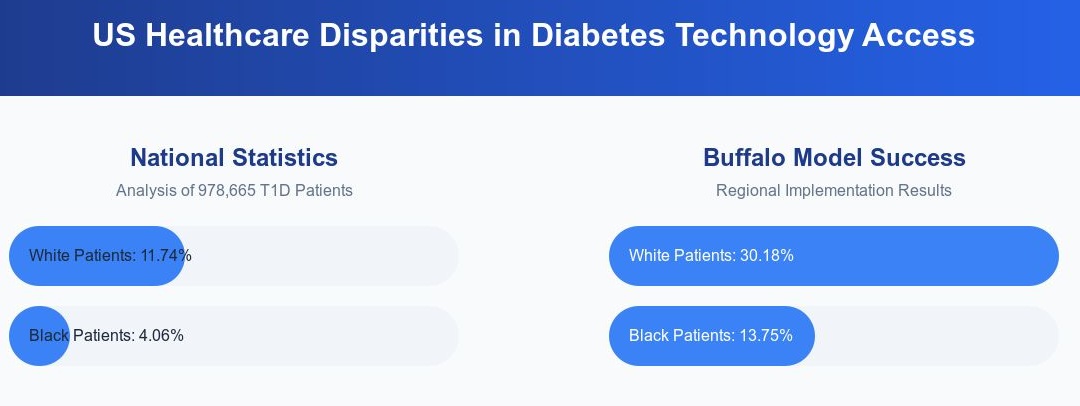
Results: Nationwide data revealed significant racial disparities in insulin pump utilization, with White patients showing the highest adoption rate (11.74%) compared to Black or African American (AA) patients (4.056%). Buffalo cohort demonstrated higher overall adoption rates but maintained similar disparity patterns (White: 30.18%, Black or AA: 13.75%). Post-matching analysis confirmed these disparities persisted independent of demographic factors.
Conclusions: Our findings reveal significant racial disparities in insulin pump adoption, with regional variations suggesting the influence of institutional factors. These results highlight the need for targeted interventions to promote equitable access to diabetes technology and prevent the widening of health disparities in T1D care.
Keywords:
Racial Disparity, Diabetes, Insulin Pump, Real-World Evidence, CGMFull Text
Introduction
Advanced technologies, particularly insulin pumps, have revolutionized the management of type 1 diabetes mellitus (T1D). These pumps have significantly improved glycemic control, quality of life and reduced diabetes-related complications [1]. However, despite these well-documented benefits, we continue to observe substantial disparities in access to and utilization of these vital technologies across different racial and ethnic groups in the United States [2]. Previous and current literature has highlighted concerning patterns of inequitable access to diabetes technology [3], with studies suggesting that racial and ethnic minorities face disproportionate barriers to insulin pump adoption. These disparities persist even when controlling socioeconomic factors and insurance coverage, indicating deeper systemic issues in healthcare delivery and access [4]. While existing literature has documented these disparities, comprehensive analyses of large-scale [5] and multi-institutional data examining racial patterns in insulin pump utilization remain limited [6]. Understanding and addressing these disparities has become increasingly crucial as diabetes technology advances. Recent studies have shown that early adoption of insulin pump therapy is associated with better long-term outcomes, including reduced rates of diabetic ketoacidosis, severe hypoglycemia, and diabetes-related hospitalizations [7]. However, if certain racial and ethnic groups systematically experience delayed access to or reduced utilization of these technologies [8], we risk perpetuating and potentially widening existing health disparities in diabetes care [9]. Our study aims to comprehensively analyze racial disparities in insulin pump utilization among adults with T1D across the United States, leveraging data from a large network of healthcare organizations. By highlighting and addressing both nationwide patterns and focused regional data from Buffalo, New York, we aim to understand how these disparities manifest at different geographic and institutional levels using the TriNetX database. The TriNetX database and research network represents a federated health research platform that integrates de-identified electronic health records from several healthcare organizations across the United States, providing real-world data from over 197 million unique patient records. This network enables large-scale observational studies through standardized data collection and analysis tools while maintaining compliance with privacy regulations and institutional policies [9]. This dual-perspective approach allows us to identify broad systemic patterns and local variations in technology access and adoption. Our study’s significance concerns its potential to inform targeted interventions and policy changes. We can better understand where interventions are most needed by quantifying the extent of racial disparities in insulin pump utilization and identifying specific patterns across different healthcare settings.
Methods
Study Design and Data Source:
We conducted a retrospective cohort study utilizing the TriNetX research network platform (TriNetX Inc., Cambridge, MA, USA). This federated health research network aggregates de-identified electronic health records from 66 healthcare organizations across the United States (https://trinetx.com/solutions/live-platform/). The study period concluded with data extraction on September 25, 2024, employing a standardized query approach through the TriNetX platform to identify eligible participants and extract relevant clinical and demographic data.
Study Population:
The study population comprised adults (≥18 years) with a confirmed diagnosis of T1D, identified using the International Classification of Diseases, 10th Revision, Clinical Modification (ICD-10-CM) code E10. Participants were stratified into two distinct cohorts based on their insulin delivery method: individuals using insulin pump therapy (pump cohort, n=84,903) and those not using insulin pump therapy (no pump cohort, n=893,762), forming an initial nationwide sample of 978,665 patients. Insulin pump usage was identified through Current Procedural Terminology (CPT) codes and medical device records within the electronic health record system. Additionally, data on Continuous Glucose Monitoring (CGM) utilization was collected.
Data Collection and Variables:
Demographic and clinical data collection encompassed age (calculated at the time of data extraction), sex (male/female), and self-reported race/ethnicity. Race and ethnicity categories followed U.S. Census Bureau classifications, including White, Black, or African American (AA), Hispanic or Latino, Asian, Native Hawaiian or Other Pacific Islander, and American Indian or Alaska Native. Clinical variables included insulin pump usage status and comprehensive healthcare utilization metrics.
Statistical Analysis:
Our statistical approach employed propensity score matching to minimize selection bias and ensure robust analysis. We implemented 1:1 matching considering age, sex, and race/ethnicity as covariates, resulting in balanced cohorts of 84,723 patients each. Post-matching balance was confirmed with standardized mean differences less than 0.1 for all variables. Descriptive statistics were calculated with continuous variables presented as means ± standard deviations and categorical variables as frequencies and percentages. Between-group comparisons utilized Chi-square tests for categorical variables and Student’s t-tests for continuous variables, with statistical significance set at p<0.05. To evaluate factors associated with pump utilization, we performed multivariate logistic regression analyses, adjusting for potential confounders, including age, sex, and race/ethnicity, with results presented as adjusted odds ratios and 95% confidence intervals.
Geographic Sub-analysis:
A focused sub-analysis was conducted on a cohort from Buffalo, New York (n=6,080) to examine regional variations in insulin pump utilization patterns. This analysis employed identical statistical methodologies, with propensity score matching yielding 1,360 patients per group, matched for age, sex, and race/ethnicity, followed by comparative analyses between matched cohorts.
Ethical Approvals:
The study protocol was exempted from the University at Buffalo Institutional Review Board (IRB) committee (STUDY00007618). Data handling and analysis adhered to Health Insurance Portability and Accountability Act (HIPAA) guidelines, using de-identified data through the TriNetX platform, ensuring the protection of patient privacy, compliance with federal regulations, and maintenance of data integrity.
Results
Baseline Characteristics:
In our nationwide cohort, we initially identified 978,665 eligible participants, comprising 84,903 patients in the pump cohort and 893,762 in the no-pump cohort Table 1. Before propensity score matching, we observed significant demographic differences between the cohorts (all p<0.0001). The pump cohort was notably younger (mean age 40.3 ± 20.9 years vs 58.5 ± 21.9 years) and had a higher proportion of female patients (54.41% vs 48.56%). We found substantial racial/ethnic disparities in pump utilization, with White patients representing a markedly higher proportion of the pump cohort than the no-pump cohort (85.12% vs 67.37%). Conversely, Black or AA (7.80% vs. 17.98%), Hispanic or Latino (5.65% vs. 10.83%), and Asian patients (1.38% vs. 2.27%) were underrepresented in the pump cohort. After propensity score matching, we achieved well-balanced cohorts of 84,723 patients each, with no significant differences in demographic characteristics (all p>0.05). In the matched cohorts, both groups maintained identical distributions of sex (54.41% female), age (40.3 ± 20.9 years), and racial/ethnic composition (White: 85.12%, Black or AA: 7.80%, Hispanic or Latino: 5.63-5.65%, Asian: 1.38%). Our Buffalo sub-analysis included 6,080 patients (pump: n=1,580; no-pump: n=4,500) before matching Table 2. Similar to our nationwide findings, we observed significant pre-matching disparities. The pump cohort was younger (27.9 ± 16.7 years vs 50.4 ± 24.7 years, p<0.0001) and showed comparable gender distribution (48.10% female vs 48.44%, p=0.8143). Racial disparities were evident, with White patients comprising a larger proportion of the pump cohort (82.91% vs 67.56%, p<0.0001) and Black or AA patients being underrepresented (6.96% vs 15.56%, p<0.0001). Following propensity score matching in the Buffalo cohort, we achieved balanced groups of 1,360 patients each, with no significant demographic differences (all p>0.05). The matched cohorts showed comparable age (pump: 29.5 ± 17.3 years; no-pump: 29.6 ± 17.6 years), gender distribution (pump: 49.27% female; no-pump: 47.06%), and racial/ethnic composition (White: 80.88%, Black or AA: 8.09%, Hispanic or Latino: 3.68-4.41%).
Nationwide vs. Buffalo Comparison:
In our analysis of insulin pump and CGM usage across different racial groups, we observed significant disparities in adoption rates both nationally and in Buffalo. Our findings revealed substantial variations in technology utilization across racial and ethnic groups, with particularly notable differences in insulin pump usage Table 3.
At the national level, we found that White individuals had the highest insulin pump adoption rate at 11.74%, markedly higher than all other racial groups. In contrast, Black or AA individuals showed the lowest insulin pump utilization rate at 4.056%, representing a nearly threefold difference. Other racial groups demonstrated intermediate adoption rates: Asian (5.79%), American Indian or Alaska Native (5.52%), Native Hawaiian or Other Pacific Islander (5.09%), and individuals of Unknown Race (5.01%). While looking at Buffalo specifically, we observed generally higher adoption rates across all racial groups compared to national averages, though racial disparities persisted. In Buffalo, White individuals maintained the highest insulin pump usage rate at 30.18%, while Black or AA individuals showed a usage rate of 13.75%. Considerably, Asian individuals in Buffalo demonstrated a relatively high adoption rate of 37.5%. Similar patterns of disparity were evident in CGM usage. Nationally, White individuals showed the highest CGM adoption rate at 11.55%, while Black or AA individuals had substantially lower usage at 6.2%. Asian individuals demonstrated relatively higher CGM adoption at 8.92%, followed by American Indian or Alaska Native (7.34%), Unknown Race (6.59%), and Native Hawaiian or Other Pacific Islander showing the lowest rate at 1.873%. In the Buffalo system, CGM adoption patterns showed some variation from national trends. White individuals maintained relatively high usage at 11.98%, while Asian individuals showed adoption rates of 12.5%. Black or AA individuals in the Buffalo system had CGM usage rates of 6.25%, similar to national figures. American Indian or Alaska Native individuals showed higher adoption at 20%, though this finding should be interpreted cautiously given potential sample size limitations. It is demonstrated that there are persistent racial disparities in diabetes technology adoption within the United States, with particularly pronounced differences in insulin pump usage between White and Black or AA individuals, both nationally and regionally.
| Before Matching | After Matching | |||||
|---|---|---|---|---|---|---|
| Characteristic | No Pump (n=893,762) | Pump (n=84,903) | P-value | No Pump (n=84,723) | Pump (n=84,723) | P-value |
| Sex, n (%) | ||||||
| Female | 356,119 (48.56) | 43,810 (54.41) | <0.0001 | 43,820 (54.41) | 43,810 (54.41) | 0.9612 |
| Male | 377,182 (51.44) | 36,723 (45.59) | <0.0001 | 36,730 (45.59) | 36,723 (45.59) | 0.9726 |
| Age (years) | ||||||
| Current Age, mean ± SD | 58.5 ± 21.9 | 40.3 ± 20.9 | <0.0001 | 40.3 ± 20.9 | 40.3 ± 20.9 | 0.9546 |
| Race/Ethnicity, n (%) | ||||||
| White | 464,764 (67.37) | 65,453 (85.12) | <0.0001 | 65,477 (85.12) | 65,453 (85.12) | 0.8894 |
| Black / African American | 124,058 (17.98) | 5,999 (7.80) | <0.0001 | 5,997 (7.80) | 5,999 (7.80) | 0.9849 |
| Hispanic or Latino | 74,688 (10.83) | 4,344 (5.65) | <0.0001 | 4,336 (5.63) | 4,344 (5.65) | 0.9298 |
| Asian | 15,678 (2.27) | 1,065 (1.38) | <0.0001 | 1,058 (1.38) | 1,065 (1.38) | 0.8785 |
| Native Hawaiian or Other Pacific Islander | 8,474 (1.23) | 455 (0.59) | <0.0001 | 450 (0.58) | 455 (0.59) | 0.8676 |
| American Indian or Alaska Native | 3,395 (0.32) | 217 (0.28) | <0.0001 | 200 (0.26) | 217 (0.28) | 0.4046 |
SD, Standard Deviation; n, Number (sample size)
| Before Matching | After Matching | |||||
|---|---|---|---|---|---|---|
| Characteristics | No Pump (n=4,500) | Pump (n=1,580) | P-value | No Pump (n=1,360) | Pump (n=1,360) | P-value |
| Sex, n (%) | ||||||
| Female | 2,180 (48.44) | 760 (48.10) | 0.8143 | 640 (47.06) | 670 (49.27) | 0.2496 |
| Male | 2,070 (46.00) | 760 (48.10) | 0.1497 | 680 (50.00) | 650 (47.79) | 0.2498 |
| Age (years) | ||||||
| Current Age, mean ± SD | 50.4 ± 24.7 | 27.9 ± 16.7 | <0.0001 | 29.6 ± 17.6 | 29.5 ± 17.3 | 0.9187 |
| Race/Ethnicity, n (%) | ||||||
| White | 3,040 (67.56) | 1,310 (82.91) | <0.0001 | 1,100 (80.88) | 1,100 (80.88) | 1.0000 |
| Black / African American | 700 (15.56) | 110 (6.96) | <0.0001 | 110 (8.09) | 110 (8.09) | 1.0000 |
| Hispanic or Latino | 230 (5.11) | 70 (4.43) | 0.2825 | 50 (3.68) | 60 (4.41) | 0.3304 |
| Asian | 60 (1.33) | 30 (1.90) | 0.1094 | 30 (2.21) | 20 (1.47) | 0.1535 |
| American Indian or Alaska Native | 40 (0.89) | 10 (0.63) | 0.3324 | 10 (0.74) | 10 (0.74) | 1.0000 |
SD, Standard Deviation; n, Number (sample size)
| Race/Ethnicity | Insulin Pump (USA) | Insulin Pump (Buffalo) | CGM (USA) | CGM (Buffalo) |
|---|---|---|---|---|
| White | 11.74% | 30.18% | 11.55% | 11.98% |
| Asian | 5.79% | 37.50% | 8.92% | 12.50% |
| Native Hawaiian or Other Pacific Islander | 5.09% | 100% | 1.87% | 0% |
| American Indian or Alaska Native | 5.52% | 20% | 7.34% | 20% |
| Unknown Race | 5.01% | 17.28% | 6.59% | 7.41% |
| Black or African American | 4.06% | 13.75% | 6.20% | 6.25% |
T1D, Type 1 Diabetes; CGM, Continuous Glucose Monitoring; USA, United States of America
Discussion
Our study reveals significant racial disparities in insulin pump utilization among individuals with T1D across the United States, with particularly pronounced differences between White and Black or AA populations. These findings carry significant clinical implications, given that insulin pumps provide more precise insulin delivery and reduce risks of both hypoglycemia and hyperglycemia compared to MDI [10]. Integrating insulin pumps with CGM systems, enabling automated insulin delivery adjustments, further amplifies the importance of addressing these disparities [11]. Our disparity patterns align with previous research demonstrating that advanced diabetes technologies significantly enhance glycemic control [12] and reduce adverse events [13]. Our findings of lower insulin pump adoption rates among racial minorities are particularly concerning given that CGM use has been associated with improved self-management and enhanced quality of life [14], with continuous application leading to reduced HbA1c levels and decreased glucose variability [15]. The contrast in insulin pump utilization between White (11.74%) and Black or AA individuals (4.056%) in our nationwide cohort reflects broader systemic inequities in healthcare access. These differences persist despite evidence that insulin pump therapy provides more stable glycemic control [16] and significantly reduces HbA1c levels compared to MDI [17]. The higher adoption rates observed in the Buffalo cohort (White: 30.18%, Black or AA: 13.75%) suggest that regional variations and institutional factors may influence technology access, though racial disparities remain evident. Our findings of persistent disparities, even in settings with higher over adoption rates highlight multiple barriers to insulin pump access. These include high initial and ongoing costs [18], technical complexity requiring comprehensive education [19], and challenges related to healthcare provider biases [20]. The impact of these barriers is particularly pronounced among Black or AA populations, who often face additional socioeconomic challenges [21] and healthcare access limitations [22]. Geographic variations in our data, particularly between national and Buffalo-specific cohorts, suggest that local healthcare delivery systems significantly influence technology access [23]. While encouraging, the higher overall adoption rates in the Buffalo cohort also demonstrate that addressing systemic barriers [24] and insurance coverage issues [25] may help reduce but not eliminate racial disparities. The lower insulin pump utilization rates among racial minorities likely contribute to poorer health outcomes [26], as previous studies have shown that limited access to advanced diabetes technologies is associated with higher rates of complications [27]. Our findings of persistent disparities, even after controlling for demographic factors, are consistent and parallel with some of the literature studies [28] showing that socioeconomic status alone does not fully explain these gaps [29]. Our results suggest the need for multi-level interventions to address these disparities. These should include improving insurance coverage, enhancing provider education about cultural competency, and developing targeted outreach programs for underserved communities [30]. The higher adoption rates in our Buffalo cohort, while still showing racial disparities, suggest that institutional policies and focused efforts to improve access can have positive impacts. Our study has important considerations, as well as future clinical practice and health policy directions. First, healthcare systems should systematically evaluate and address barriers to insulin pump adoption among racial minorities. Second, provider education should emphasize both the technical aspects of insulin pump therapy and cultural competency in technology prescription. Third, insurance policies should be reviewed and modified to ensure equitable access to diabetes technologies. The limitations of our study include its retrospective nature, potential selection bias in the TriNetX database, and inability to capture detailed socioeconomic factors or insurance status. Additionally, while our regional analysis provides valuable insights, the smaller sample sizes for certain racial groups may limit generalizability. Future studies should focus on prospective studies examining the impact of targeted interventions to reduce racial disparities in insulin pump adoption. Additionally, investigating successful institutional policies and practices that have reduced disparities could provide valuable guidance for broader implementation. These findings underscore the urgent need for systematic changes to address racial disparities in diabetes technology access. While technological advances continue to improve diabetes management capabilities, ensuring equitable access to these technologies remains a critical challenge, requiring coordinated efforts from healthcare providers, institutions, and policymakers.
Conclusions
Our comprehensive analysis of racial disparities in insulin pump utilization among T1D patients reveals systemic inequities that require urgent attention. The present contrast in adoption rates between racial groups, particularly the threefold difference between White and Black or AA populations, suggests that technological advances in diabetes care may inadvertently widen existing health disparities if access barriers remain unaddressed. The regional variations observed between our nationwide and Buffalo cohorts provide valuable insights into the potential impact of institutional policies and local healthcare delivery systems. While higher overall adoption rates in the Buffalo cohort demonstrate that targeted interventions can improve access, the persistence of racial disparities, even in this setting, underscores the need for more comprehensive solutions. We propose a three-tiered approach to address these disparities: implementing systematic screening for technology eligibility across all racial groups, developing culturally competent diabetes education programs, and establishing institutional policies prioritizing equitable access to diabetes technologies. Future research should focus on evaluating the effectiveness of these interventions and identifying additional strategies to promote equitable adoption of insulin pump therapy.
Key finding
Our findings reveal significant racial disparities in insulin pump adoption, with regional variations suggesting the influence of institutional factors. These results highlight the need for targeted interventions to promote equitable access to diabetes technology and prevent the widening of health disparities in T1D care.
From the authors' abstract.
中文摘要
研究美国不同种族人群胰岛素泵使用差异:一项回顾性多中心研究
背景:尽管1型糖尿病(T1D)管理技术已取得进步,但胰岛素泵使用仍存在种族差异。我们利用大型多机构数据库,量化不同种族群体的胰岛素泵采用模式,并识别潜在干预点。
方法:我们在TriNetX研究网络上进行回顾性队列研究,分析来自66家医疗机构的978,665名T1D患者数据。采用倾向评分匹配平衡队列,并对纽约布法罗(Buffalo, NY,n=6,080)进行聚焦亚组分析,以探讨与全国数据的地区差异。
结果:全国数据显示胰岛素泵使用存在显著种族差异,白人患者采用率最高(11.74%),而黑人或非洲裔美国人(AA)患者仅为4.056%。布法罗队列整体采用率更高,但差异模式相似(白人:30.18%,黑人或AA:13.75%)。匹配后分析证实,即使控制人口学因素,这些差异仍然存在。
结论:我们的研究揭示了胰岛素泵采用中的显著种族差异,地区差异提示机构因素的影响。这些结果强调需要针对性干预,以促进糖尿病技术的公平获取,防止T1D护理中健康差距的扩大。
本中文摘要为机器辅助翻译,仅供参考;以英文摘要为准。 Machine-assisted Chinese translation of the English abstract; the English abstract is the version of record.
References
1. Syed FZ. Type 1 Diabetes Mellitus. Ann Intern Med. 2022;175(3):ITC33-ITC48. [PMID: 35254878, https://doi.org/10.7326/AITC202203150].
2. Dayan CM, Besser REJ, Oram RA, Hagopian W, Vatish M, Bendor-Samuel O, Snape MD, Todd JA. Preventing type 1 diabetes in childhood. Science. 2021;373(6554):506-10. [PMID: 34326231, https://doi.org/10.1126/science.abi4742].
3. Zajec A, Trebusak Podkrajsek K, Tesovnik T, Sket R, Cugalj Kern B, Jenko Bizjan B, Smigoc Schweiger D, Battelino T, Kovac J. Pathogenesis of Type 1 Diabetes: Established Facts and New Insights. Genes (Basel). 2022;13(4). [PMID: 35456512, PMCID: PMC9032728, https://doi.org/10.3390/genes13040706].
4. Bluestone JA, Buckner JH, Herold KC. Immunotherapy: Building a bridge to a cure for type 1 diabetes. Science. 2021;373(6554):510-6. [PMID: 34326232, https://doi.org/10.1126/science.abh1654].
5. Tonnies T, Brinks R, Isom S, Dabelea D, Divers J, Mayer-Davis EJ, Lawrence JM, Pihoker C, Dolan L, Liese AD, Saydah SH, D'Agostino RB, Hoyer A, Imperatore G. Projections of Type 1 and Type 2 Diabetes Burden in the U.S. Population Aged <20 Years Through 2060: The SEARCH for Diabetes in Youth Study. Diabetes Care. 2023;46(2):313-20. [PMID: 36580405, PMCID: PMC9887625, https://doi.org/10.2337/dc22-0945].
6. Lawrence JM, Divers J, Isom S, Saydah S, Imperatore G, Pihoker C, Marcovina SM, Mayer-Davis EJ, Hamman RF, Dolan L, Dabelea D, Pettitt DJ, Liese AD, SEARCH for Diabetes in Youth Study Group. Trends in Prevalence of Type 1 and Type 2 Diabetes in Children and Adolescents in the US, 2001-2017. JAMA. 2021;326(8):717-27. [PMID: 34427600, PMCID: PMC8385600, https://doi.org/10.1001/jama.2021.11165].
7. Rafferty J, Stephens JW, Atkinson MD, Luzio SD, Akbari A, Gregory JW, Bain S, Owens DR, Thomas RL. A retrospective epidemiological study of type 1 diabetes mellitus in wales, UK between 2008 and 2018. Int J Popul Data Sci. 2021;6(1):1387. [PMID: 34007896, PMCID: PMC8103995, https://doi.org/10.23889/ijpds.v6i1.1387].
8. Wass JAH, Arlt W, Semple RK, Hammond P, Campbell F. Strategies for the Management of Type 1 Diabetes. In: Oxford Textbook of Endocrinology and Diabetes 3e. Oxford University Press; 2022. p. 2024-31. [https://doi.org/10.1093/med/9780198870197.003.0255].
9. Janez A, Guja C, Mitrakou A, Lalic N, Tankova T, Czupryniak L, Tabak AG, Prazny M, Martinka E, Smircic-Duvnjak L. Insulin Therapy in Adults with Type 1 Diabetes Mellitus: a Narrative Review. Diabetes Ther. 2020;11(2):387-409. [PMID: 31902063, PMCID: PMC6995794, https://doi.org/10.1007/s13300-019-00743-7].
10. Visser MM, Charleer S, Fieuws S, De Block C, Hilbrands R, Van Huffel L, Maes T, Vanhaverbeke G, Dirinck E, Myngheer N, Vercammen C, Nobels F, Keymeulen B, Mathieu C, Gillard P. Comparing real-time and intermittently scanned continuous glucose monitoring in adults with type 1 diabetes (ALERTT1): a 6-month, prospective, multicentre, randomised controlled trial. Lancet. 2021;397(10291):2275-83. [PMID: 34089660, https://doi.org/10.1016/S0140-6736(21)00789-3].
11. Varkevisser RDM, Birnie E, Mul D, van Dijk PR, Aanstoot HJ, Wolffenbuttel BHR, van der Klauw MM. Type 1 diabetes management: Room for improvement. J Diabetes. 2023;15(3):255-63. [PMID: 36808864, PMCID: PMC10036258, https://doi.org/10.1111/1753-0407.13368].
12. Zaharieva DP, Messer LH, Paldus B, O'Neal DN, Maahs DM, Riddell MC. Glucose Control During Physical Activity and Exercise Using Closed Loop Technology in Adults and Adolescents with Type 1 Diabetes. Can J Diabetes. 2020;44(8):740-9. [PMID: 33011134, https://doi.org/10.1016/j.jcjd.2020.06.003].
13. Pratley RE, Kanapka LG, Rickels MR, Ahmann A, Aleppo G, Beck R, Bhargava A, Bode BW, Carlson A, Chaytor NS, Fox DS, Goland R, Hirsch IB, Kruger D, Kudva YC, Levy C, McGill JB, Peters A, Philipson L, Philis-Tsimikas A, Pop-Busui R, Shah VN, Thompson M, Vendrame F, Verdejo A, Weinstock RS, Young L, Miller KM, Wireless Innovation for Seniors With Diabetes Mellitus (WISDM) Study Group. Effect of Continuous Glucose Monitoring on Hypoglycemia in Older Adults With Type 1 Diabetes: A Randomized Clinical Trial. JAMA. 2020;323(23):2397-406. [PMID: 32543682, PMCID: PMC7298607, https://doi.org/10.1001/jama.2020.6928].
14. Galindo RJ, Aleppo G. Continuous glucose monitoring: The achievement of 100 years of innovation in diabetes technology. Diabetes Res Clin Pract. 2020;170:108502. [PMID: 33065179, PMCID: PMC7736459, https://doi.org/10.1016/j.diabres.2020.108502].
15. Laffel LM, Kanapka LG, Beck RW, Bergamo K, Clements MA, Criego A, DeSalvo DJ, Goland R, Hood K, Liljenquist D, Messer LH, Monzavi R, Mouse TJ, Prahalad P, Sherr J, Simmons JH, Wadwa RP, Weinstock RS, Willi SM, Miller KM, CGM Intervention in Teens and Young Adults with T1D (CITY) Study Group. Effect of Continuous Glucose Monitoring on Glycemic Control in Adolescents and Young Adults With Type 1 Diabetes: A Randomized Clinical Trial. JAMA. 2020;323(23):2388-96. [PMID: 32543683, PMCID: PMC7298603, https://doi.org/10.1001/jama.2020.6940].
16. Keyu G, Jiaqi L, Liyin Z, Jianan Y, Li F, Zhiyi D, Qin Z, Xia L, Lin Y, Zhiguang Z. Comparing the effectiveness of continuous subcutaneous insulin infusion with multiple daily insulin injection for patients with type 1 diabetes mellitus evaluated by retrospective continuous glucose monitoring: A real-world data analysis. Front Public Health. 2022;10:990281. [PMID: 36091534, PMCID: PMC9454013, https://doi.org/10.3389/fpubh.2022.990281].
17. McAuley SA, Vogrin S, Lee MH, Paldus B, Trawley S, de Bock MI, Abraham MB, Bach LA, Burt MG, Cohen ND, Colman PG, Davis EA, Hendrieckx C, Holmes-Walker DJ, Jenkins AJ, Kaye J, Keech AC, Kumareswaran K, MacIsaac RJ, McCallum RW, Sims CM, Speight J, Stranks SN, Sundararajan V, Ward GM, Jones TW, O'Neal DN, Australian JDRF Closed-Loop Research Group. Less Nocturnal Hypoglycemia but Equivalent Time in Range Among Adults with Type 1 Diabetes Using Insulin Pumps Versus Multiple Daily Injections. Diabetes Technol Ther. 2021;23(6):460-6. [PMID: 33351699, https://doi.org/10.1089/dia.2020.0589].
18. Huo L, Deng W, Lan L, Li W, Shaw JE, Magliano DJ, Ji L. Real-World Application of Insulin Pump Therapy Among Patients With Type 1 Diabetes in China: A Cross-Sectional Study. Front Endocrinol (Lausanne). 2022;13:891718. [PMID: 35757419, PMCID: PMC9226667, https://doi.org/10.3389/fendo.2022.891718].
19. Harper A, Aflatoony L, Wilson W, Wang W. Exploring the Challenges and Potential Alternatives to Insulin Pump Technologies. In: Proceedings of the 14th EAI International Conference on Pervasive Computing Technologies for Healthcare; 2020. p. 371-4. [https://doi.org/10.1145/3421937.3421950].
20. Gu M. Effective Use of Insulin Pump in Patients with Type 1 Diabetes. The Journal of Korean Diabetes. 2020;21(1):36-40. [https://doi.org/10.4093/jkd.2020.21.1.36].
21. Demir G, Çubukcu E, Akcay N. Problems in Insulin Pump Management and Suggestions for Solutions in Children and Adolescents with Type 1 Diabetes. Turkish Journal of Diabetes and Obesity. 2022;6(2):187-94. [https://doi.org/10.25048/tudod.1105407].
22. O'Donnell HK, Vigers T, Johnson SB, Pyle L, Wright N, Deeb LC, Driscoll KA. Pump It Up! A randomized clinical trial to optimize insulin pump self-management behaviors in adolescents with type 1 diabetes. Contemp Clin Trials. 2021;102:106279. [PMID: 33440262, PMCID: PMC8341128, https://doi.org/10.1016/j.cct.2021.106279].
23. Boscari F, Avogaro A. Current treatment options and challenges in patients with Type 1 diabetes: Pharmacological, technical advances and future perspectives. Rev Endocr Metab Disord. 2021;22(2):217-40. [PMID: 33755854, PMCID: PMC7985920, https://doi.org/10.1007/s11154-021-09635-3].
24. Almogbel E. Impact of insulin pump therapy on glycemic control among adult Saudi type-1 diabetic patients. An interview-based case-control study. J Family Med Prim Care. 2020;9(2):1013-9. [PMID: 32318460, PMCID: PMC7114031, https://doi.org/10.4103/jfmpc.jfmpc_869_19].
25. Biester T, Schwandt A, Heidtmann B, Rami-Merhar B, Haak T, Festa A, Kostow S, Muller A, Monkemoller K, Danne T, DPV Initiative. Declining Frequency of Acute Complications Associated with Tubeless Insulin Pump Use: Data from 2,911 Patients in the German/Austrian Diabetes Patienten Verlaufsdokumentation Registry. Diabetes Technol Ther. 2021;23(8):527-36. [PMID: 33684335, PMCID: PMC8377506, https://doi.org/10.1089/dia.2020.0675].
26. Agarwal S, Schechter C, Gonzalez J, Long JA. Racial-Ethnic Disparities in Diabetes Technology use Among Young Adults with Type 1 Diabetes. Diabetes Technol Ther. 2021;23(4):306-13. [PMID: 33155826, PMCID: PMC7994432, https://doi.org/10.1089/dia.2020.0338].
27. Everett EM, Wright D, Williams A, Divers J, Pihoker C, Liese AD, Bellatorre A, Kahkoska AR, Bell R, Mendoza J, Mayer-Davis E, Wisk LE. A Longitudinal View of Disparities in Insulin Pump Use Among Youth with Type 1 Diabetes: The SEARCH for Diabetes in Youth Study. Diabetes Technol Ther. 2023;25(2):131-9. [PMID: 36475821, PMCID: PMC9894603, https://doi.org/10.1089/dia.2022.0340].
28. Lipman TH, Willi SM, Lai CW, Smith JA, Patil O, Hawkes CP. Insulin Pump Use in Children with Type 1 Diabetes: Over a Decade of Disparities. J Pediatr Nurs. 2020;55:110-5. [PMID: 32889433, https://doi.org/10.1016/j.pedn.2020.08.007].
29. Kanbour S, Jones M, Abusamaan MS, Nass C, Everett E, Wolf RM, Sidhaye A, Mathioudakis N. Racial Disparities in Access and Use of Diabetes Technology Among Adult Patients With Type 1 Diabetes in a U.S. Academic Medical Center. Diabetes Care. 2023;46(1):56-64. [PMID: 36378855, PMCID: PMC9797654, https://doi.org/10.2337/dc22-1055].
30. Carrillo-Iregui A, Lopez-Mitnik G, Cossio S, Garibay-Nieto N, Arheart KL, Messiah SE. Relationship between aminotransferases levels and components of the metabolic syndrome among multiethnic adolescents. J Pediatr Endocrinol Metab. 2010;23(12):1253-61. [PMID: 21714459, https://doi.org/10.1515/jpem.2010.199].
Data Availability Statement
The data that support the findings of this study are available from the corresponding author upon reasonable request.
License
Copyright (c) 2024 Mahmoud Nassar, Ahmed Y. Azzam, Mahmoud M. Morsy, Iqra Patoli, Angad Gill, Erlin J. Marte

This work is licensed under a Creative Commons Attribution 4.0 International License.
Copyright and Licensing
All articles published in ASIDE Internal Medicine are open access and freely available online immediately upon publication, without embargo.
This journal applies the terms of the Creative Commons Attribution 4.0 International License (CC BY 4.0). Under this license, anyone may copy, redistribute, remix, transform, and build upon the material for any purpose, even commercially, provided that proper credit is given to the original author(s), a link to the license is provided, and any changes made are indicated.
-
License link: https://creativecommons.org/licenses/by/4.0/
-
Machine-readable license metadata is embedded in each article and its DOI record.
Copyright Holder
Copyright in all articles remains with the author(s). ASIDE Internal Medicine is published and owned by the American Society for Inclusion, Diversity, and Equity in Healthcare (ASIDE). By submitting a manuscript, authors agree to grant the publisher a non-exclusive license to publish, distribute, and archive the work under the terms of the CC BY 4.0 license.
Third-party Material
Any material (e.g., images, figures, or tables) not covered by CC BY 4.0 will be clearly indicated in the article. Users must obtain permission directly from the copyright holder for reuse of such third-party material.
Author Rights and Self-Archiving
Authors are permitted to deposit all versions of their work (preprint, author’s accepted manuscript, and version of record) in institutional or subject repositories of their choice immediately upon publication, without embargo, provided that the DOI and license information are included.
Published
Issue
Section
Categories
How to Cite
Article history
- Received
- 2 Dec 2024
- Received in revised form
- 25 Dec 2024
- Accepted
- 26 Dec 2024
- Published
- 26 Dec 2024