Efficacy and Safety of Tislelizumab in Combination with Chemotherapy versus Placebo Plus Chemotherapy in Patients with Advanced Gastric Cancer or Gastroesophageal Junction Cancer: A Systematic Review of Randomized Controlled Trials
DOI:
https://doi.org/10.71079/ASIDE.GI.06052577Abstract
Introduction: Advanced gastric cancer or gastroesophageal junction cancer (GC/GEJC) is an aggressive malignancy often having a poor prognosis. Despite current systemic therapies, GC/GEJC remains the third most common cause of cancer-related deaths worldwide. Tislelizumab, an anti-PD1 antibody, has shown promising results in treating various cancers. Therefore, this systematic review investigated the efficacy and safety of tislelizumab plus chemotherapy for patients with GC/GEJC.
Methods: Five databases were systematically searched until July 10, 2024. Articles identified in the screening process included two RCTs based on predefined inclusion criteria. We performed data extraction sheets and quality assessments using the Cochrane ROB2 tool.
Results: Out of the two randomized controlled trials (RCTs), 1646 patients were included in our systematic review. In Rational-306, efficacy outcomes improved, overall survival (OS) significantly improved from 10.6 months (95% CI 9.3–12.1) to 17.2 months (95% CI 15.8–20.1), and progression-free survival (PFS) from 5.6 months (4.9–6.0) to 7.3 months (6.9–8.3). Rational-305 also notably significantly improved.
Outcomes: Improved OS from 12.9 months (12.1-14.1) to 15 months (13.6-16.5), and PFS from 6.2 months (5.6 to 6.9) to 6.9 months (5.7 to 7.2). The proportion of patients with any grade 3 or worse treatment-related adverse events was similar between treatment groups.
Conclusion: Compared with chemotherapy and placebo, Tislelizumab plus chemotherapy demonstrates superior efficacy with a similar safety profile in the two groups, encouraging the use of the tislelizumab group in patients with GC/GEJC.
Keywords:
Immunotherapy, Immuno-oncology, Gastric cancer, Gastroesophageal junction cancer, Tislelizumab, Targeted therapyFull Text
Introduction
Gastrointestinal (GI) cancers account for more than 25% of newly diagnosed cancers worldwide, with incidence reaching up to more than 4 million cases per year [1]. In 2020, Gastroesophageal junction cancers (GEJCs) ranked 7th globally in incidence and 6th in mortality rate [2]. Although GEJCs are rare [3], their diagnosis is still poor until metastasized [4,5]. GEJC poses significant therapeutic challenges due to its complex location where the stomach and esophagus meet and its tendency to present at advanced stages [6]. Surgical intervention remains the only definite treatment, even though high recurrence may occur in poorly differentiated tumors [7], with 5-year survival rates averaging around 30% with surgery alone [8]. Therefore, there is a revolution of immunotherapy use as a potential treatment in a neoadjuvant setting before the surgery, hoping to minimize surgery and tumor recurrence. Immune evasion occurs when PD-1 binds to its ligand, programmed death-ligand 1 (PD-L1), in turn inhibiting T-cell activity and establishing an immunosuppressive environment. [9,10]. Targeting the PD-1/PD-L1 pathway has shown good antitumor activity and safety in gastroesophageal junction cancer [11,12]. Tislelizumab (BGB-A317), a humanized immunoglobulin G4 variant, is an anti-PD-1 monoclonal antibody [13]. It shows superior clinical efficacy in multiple types of cancer, including non-small cell lung cancer (NSCLC) [14], nasopharyngeal carcinoma (NPC) [15], unresectable hepatocellular carcinoma (uHCC) [16], and upper tract urothelial carcinoma (UC) [17]. In March 2024, the FDA approved Tislelizumab in esophageal squamous cell carcinoma (ESCC) compared to chemotherapy based on the RATIONALE-302 trial as a second-line setting for patients who have not previously received any PD-1/PD-L1 inhibitors. Also, in December 2024, the FDA approved Tislelizumab in combination with chemotherapy as a first-line setting for advanced gastric cancer and gastroesophageal junction cancer (GC/GEJC) based on the RATIONALE-305, which is included in our systematic review. This systematic review investigated the efficacy and safety of tislelizumab plus chemotherapy compared to placebo and chemotherapy in GC/GEJC, trying to shed light on this combination as a first-line setting for GC/GEJC patients.
Methods
We established this systematic review with the standards of the Cochrane Handbook for Systematic Reviews of Interventions 2019 and the preferred reporting items for systematic reviews and meta-analysis 2020. Our protocol is registered on Prospero with the ID number CRD42024616507.
Literature Search
We performed a comprehensive literature search on five databases: PubMed, Cochrane Library, Scopus, Ovid, and Embase, to identify the relevant studies for our systematic review. The retrieval cutoff date was July 10, 2024. Our strategy was based on Medical Subject Headings (MeSH terms), other medical synonyms, and search strategies in advanced gastric cancer or gastroesophageal junction adenocarcinoma (GC/GEJC). A part of our literature search is (“Tislelizumab”) OR (“BGB-A317”) AND (“Chemotherapy”) AND (“Gastroesophageal Junction Adenocarcinoma”).
PICO and Eligibility Criteria
Our specific PICO represents patients with advanced gastric cancer or gastroesophageal junction cancer (GC/GEJC) aged 18 years or more without restrictions to tumor grade. They were randomized to receive either tislelizumab, an intravenous PD-1-targeted inhibitor, combined with chemotherapy or chemotherapy plus placebo, measuring overall survival (OS) as the primary outcome, and progression-free survival (PFS), objective response rate (ORR), time to progression, duration of response (DoR), and adverse events (AEs) as the secondary outcomes. We determined specific inclusion criteria as follows: (a) included all randomized controlled clinical trials (RCTs) that assessed the efficacy and safety of tislelizumab plus chemotherapy versus placebo plus chemotherapy in patients with advanced gastric cancer or gastroesophageal junction cancer (GC/GEJC). (b) We only included RCTs written in English. Exclusion Criteria: (a) Excluded all study designs rather than RCTs (literature reviews, case reports, and cohorts). (b) Excluded other combinations, either with tislelizumab or chemotherapy in patients with advanced gastric cancer or gastroesophageal junction cancer (GC/GEJC). (c) Excluded chemotherapy combined with tislelizumab in patients with other types of cancer. (d) Excluded animal studies or preclinical studies.
Data Extraction
We created a spreadsheet to extract data from the included RCTs. Two independent reviewers extracted the following data from each study: study characteristics, including study ID, authors’ names, year of publication, country of the study, and study design; patients’ demographic characteristics, including the number of patients in intervention and control groups, age, gender distribution, race, number of metastases, PDL expression, TAP score, interventions, dosage of the combined interventions, and duration of the treatment; and outcome characteristics including Overall survival (OS), Progression-free survival (PFS), objective response rate (ORR), disease control rate (DCR), and adverse events (AES).
Quality Assessment
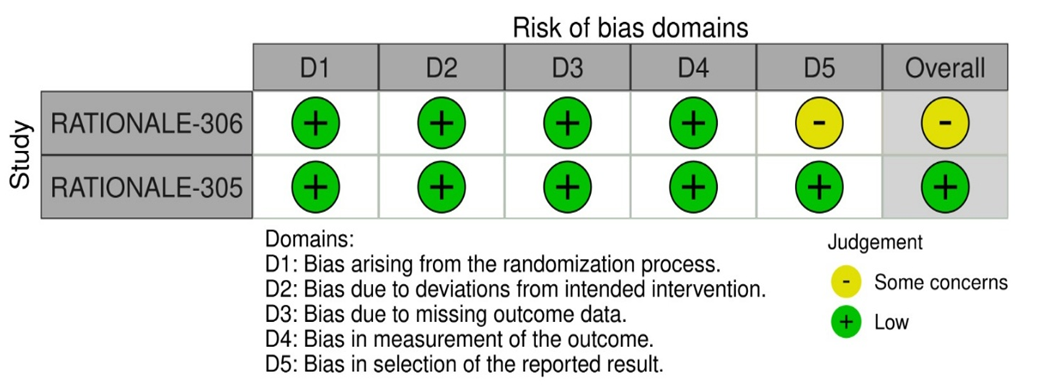
To assess the risk of bias (RoB) in included RCTs and minimize the potential of bias, two independent authors used the Cochrane Risk of Bias (RoB2) version. They evaluated the five domains in the ROB2 tool: randomization process, deviations from intended interventions, missing outcome data, measurement of the outcome, and selection of the reported result. The overall RoB for each study was determined based on the judgments made for each of the five domains. Each domain is assessed for RoB 2 as either low, with some concerns, or high. The two authors followed the guidelines provided by the Cochrane Handbook for Systematic Reviews of Interventions to assess the RoB 2 in included RCTs. More details about ROB2 results are provided in Figure 1.
Results
Study Selection
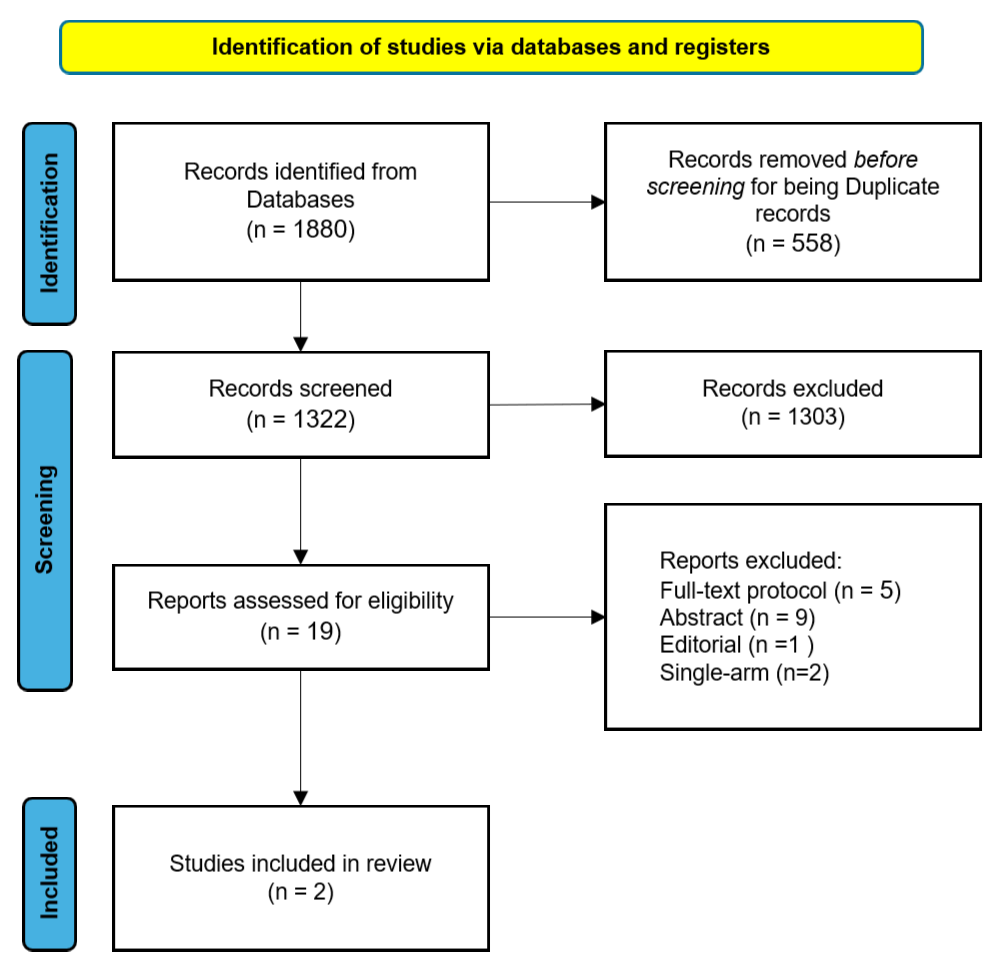
The initial search identified 1,880 studies. After removing 558 duplicates, 1,322 unique records were screened by title and abstract. Of these, 1,303 records were excluded for not meeting the inclusion criteria, leaving 19 full-text articles for detailed evaluation. Among these, five were excluded as protocol-only publications, nine as abstracts, one as an editorial, and two as single-arm. Ultimately, only two studies met the eligibility criteria and were included in this systematic review. The PRISMA flow diagram Figure 2 details the study selection process.
Study Characteristics
The included studies were large-scale randomized controlled trials published between 2023 and 2024, investigating the efficacy and safety of Tislelizumab, a monoclonal antibody targeting programmed cell death-1 (PD-1), in combination with chemotherapy versus placebo and chemotherapy for patients with locally advanced or metastatic esophageal squamous cell carcinoma (ESCC) and gastric or gastroesophageal junction (G/GEJ) adenocarcinoma. The trials, conducted globally, enrolled HER2-negative patients aged 18 or older with advanced or unresectable disease. Key exclusion criteria included HER2-positive tumors, active leptomeningeal disease, uncontrolled brain metastasis, and prior anti-PD-1/PD-L1 therapy. In all trials, patients were randomized to receive 200 mg of Tislelizumab or a matching placebo every three weeks, along with chemotherapy regimens tailored to each study. Frequently used agents included capecitabine, oxaliplatin, and cisplatin, administered as initial cycles or maintenance therapy until disease progression or unacceptable toxicity. Baseline characteristics and demographics were balanced across treatment groups. Specific endpoints included survival outcomes, progression metrics, and objective response rates Table 1.
| Study ID | Country | Study Design | Year | |||
| of Patients | ||||||
| (range), years | ||||||
| Male | ||||||
| Miao-Zhen Qiu, 2024 (Rational-305) | China | RCT (randomized, double-blind, phase 3 trial) | 2024 | 997 | 60.0 (53.0–66.0) | 692 |
| Jianming Xu, 2023 (Rational-306) | China | RCT (randomized, double-blind, phase 3 trial) | 2023 | 649 | 64.0 (59.0–69.0) | 563 |
Efficacy outcomes
Overall Survival (OS)
The study by Qiu et al. (2024) found that Tislelizumab-treated patients had a median OS of 15.0 months (range: 13.6–16.5) compared to 12.9 months (range: 12.1–14.1) in the control group. In the study by Xu et al. (2023), Tislelizumab-treated patients had a median OS of 17.2 months (range: 15.8–20.1), which was significantly longer than the 10.6 months (range: 9.3–12.1) in the control group. Both studies showed a clear survival benefit with Tislelizumab Table 2.
| Survival (months, CI) | ||||
| Survival (months, CI) | ||||
| Response Rate (CI) | ||||
| Control Rate (CI) | ||||
| Miao-Zhen Qiu, 2024 (Rational-305) | 15.0 (13.6–16.5) vs 12.9 (12.1–14.1) | 6.9 (5.7–7.2) vs 6.2 (5.6–6.9) | 90 (87–92) vs 83 (80–86) | 48 (43–52) vs 41 (36–45) |
| Jianming Xu, 2023 (Rational-306) | 17.2 (15.8–20.1) vs 10.6 (9.3–12.1) | 7.3 (6.9–8.3) vs 5.6 (4.9–6) | 89% (85–92) vs 80% (75–84) | 63% (58–69) vs 42% (37–48) |
CI, confidence interval; OS, overall survival; PFS, progression-free survival; ORR, objective response rate; DCR, disease control rate.
Progression-Free Survival (PFS)
Qiu et al. (2024) reported a median PFS of 6.9 months (range: 5.7–7.2) for Tislelizumab-treated patients compared to 6.2 months (range: 5.6–6.9) in the control group. The study by Xu et al. (2023) showed a median PFS of 7.3 months (range: 6.9–8.3) for Tislelizumab-treated patients, compared to 5.6 months (range: 4.9–6.0) in the control group. In both studies, Tislelizumab demonstrated a benefit in PFS Table 2.
Disease Control Rate (DCR)
In the study by Qiu et al. (2024), Tislelizumab-treated patients achieved a DCR of 90% (range: 87–92%) compared to 83% (range: 80–86%) in the control group. Xu et al. (2023) reported a DCR of 89% (range: 85–92%) for Tislelizumab-treated patients versus 80% (range: 75–84%) in the control group. Both studies showed a higher DCR in the Tislelizumab-treated group Table 2.
Objective Response Rate (ORR)
The study by Qiu et al. (2024) found that 48% of Tislelizumab-treated patients achieved an ORR (range: 43–52%), compared to 41% (range: 36–45%) in the control group. In the study by Xu et al. (2023), Tislelizumab-treated patients showed a higher ORR of 63% (range: 58–69%) compared to 42% (range: 37–48%) in the control group Table 2.
Adverse Events (AEs)
Across both RATIONALE-306 and RATIONALE-305, nearly all treatment-emergent adverse events were low grade: most adverse events were Grade 1–2, and no Grade 5 events occurred in either arm. This implies that adding Tislelizumab to chemotherapy has meaningful safety besides its high efficacy compared to a placebo with chemotherapy. For instance, Grade 1–2 rates for decreased appetite were 33.53% vs. 34.07% in Tislelizumab and placebo groups, respectively in RATIONLE 306 and 32.82% vs 33.44% in RATIONALE-305. Nausea, vomiting, fatigue, hypoesthesia, asthenia, and a few hematologic events (e.g., anemia, decreased WBC, peripheral sensory neuropathy) showed only mild differences in the two groups Tislelizumab and placebo groups. The sole notable imbalance was hypothyroidism, which was modestly higher with Tislelizumab (10.78% vs 2.42% in RATIONALE-306 and 9.51% vs 4.33% in RATIONALE-305).
Discussion
In this systematic review, we found that the combination therapy of Tislelizumab and chemotherapy was superior to placebo with chemotherapy in all efficacy measurements: overall survival (OS), progression-free survival (PFS), objective response rate (ORR), and disease control rate (DCR), in turn, it represents a potent targeted therapy for GC/GEJC. Importantly, this combination therapy maintained an acceptable and manageable profile of adverse effects that was consistent with the adverse events associated with the usage of anti-PD-1 drugs. Multiple studies have investigated the safety and efficacy of tislelizumab alone or combined for the treatment of gastroesophageal junction cancer: adenocarcinoma and ESCC. A phase I study by Desai et al. has demonstrated an acceptable safety profile for tislelizumab in the treatment of advanced solid tumors, including esophageal cancer (EC) and gastric cancer (GC) [18]. A phase II study by Xu et al. has shown that tislelizumab plus chemotherapy had durable responses and a manageable safety profile in patients with advanced GEJ adenocarcinoma [19]. In the RATIONALE-302 phase III study, Ajani et al. found that tislelizumab monotherapy had better overall survival rates and safety profile than mono-chemotherapy [20]. Another study by Kim et al. found that Asian patients with ESCC who received tislelizumab monotherapy had better health-related quality of life and ESCC symptoms compared to patients who received chemotherapy alone [21]. However, and to the best of our knowledge, no RCTs have directly compared tislelizumab monotherapy to combination therapy of tislelizumab plus chemotherapy. In the TD-NICE phase II study, Yan et al. found that the combination therapy of tislelizumab plus chemotherapy demonstrated a promising antitumor activity [22]. Moreover, Xu et al. found that adding tislelizumab to chemotherapy could be a new first-line treatment for advanced ESCC and GEJ adenocarcinoma [23]. Tislelizumab plus chemotherapy has shown superiority to pembrolizumab plus chemotherapy in KEYNOTE-059, KEYNOTE-061, and KEYNOTE-062 [24]. In addition, Tislelizumab plus chemotherapy is superior to other combinations such as Nivolumab plus chemotherapy in ATTRACTION-4 [23] and Sintilimab plus chemotherapy in ORIENT-16 [25]. Our results from RATIONALE-305, and RATONALE-306 imply that Tislelizumab may yield better results for patients with higher PD-L1 TAP scores. However, due to the limited amount of RCTs and the challenges associated with multiple PD-L1 scoring methods across different studies, future studies should further investigate the relationship between PD-L1 TAP score status and their ability to predict treatment efficacy with PD-L1 inhibitors such as tislelizumab for patients with ESCC or GEJ adenocarcinoma.
In addition to its novelty, a notable strength of this paper is that both RCTs included in our review were conducted globally, involving numerous medical centers across Asia, Europe, Oceania, and North America. However, the study has limitations, including two RCTs and the potential concerns regarding the risk of bias in one of the included RCTs. Despite the limitations, the results of our systematic review confirm the safety and efficacy of tislelizumab when used in conjunction with chemotherapy for treating gastroesophageal junction adenocarcinoma or esophageal squamous cell carcinoma. These findings also emphasize the need for further RCTs investigating this topic.
More randomized clinical trials are necessary to compare tislelizumab plus chemotherapy and placebo plus chemotherapy in GC/GEJC. In addition, we need clinical trials to compare tislelizumab plus chemotherapy versus tislelizumab as monotherapy in GC/GEJC since this approach has not yet been studied. Tislelizumab plus chemotherapy has shown promising results in GEJC and NSCLC; in turn, it should be investigated in new solid tumors treated with PD-1 inhibitors like breast cancer and colorectal. In addition, Tislelizumab plus chemotherapy should be more investigated in GC/GEJC, HCC, NSCLC, and nasopharyngeal carcinoma, as there are still few trials about this combination, which requires more trials to be clearly understood.
Conclusion
Compared with chemotherapy and placebo, Tislelizumab plus chemotherapy demonstrates superior efficacy with a similar safety profile in the two groups, encouraging the use of the tislelizumab group in patients with GC/GEJC. More clinical is necessary to compare tislelizumab plus chemotherapy to chemotherapy and placebo and to use tislelizumab with chemotherapy in more solid tumors, which are now treated with PD-1 inhibitors as first or second lines.
Key finding
Compared with chemotherapy and placebo, Tislelizumab plus chemotherapy demonstrates superior efficacy with a similar safety profile in the two groups, encouraging the use of the tislelizumab group in patients with GC/GEJC.
From the authors' abstract.
中文摘要
Tislelizumab联合化疗对比安慰剂联合化疗在晚期胃癌或胃食管交界部癌症患者中的疗效与安全性:一项随机对照试验系统综述
背景:晚期胃癌或胃食管交界部癌症(GC/GEJC)是一种侵袭性恶性肿瘤,预后往往不良。尽管目前已有系统治疗方案,GC/GEJC仍是全球第三大癌症相关死亡原因。Tislelizumab(抗PD‑1抗体)在多种癌症治疗中显示出有前景的疗效。因此,本系统综述探讨了Tislelizumab联合化疗在GC/GEJC患者中的疗效与安全性。
方法:对五个数据库进行系统检索,检索截止日期为2024年7月10日。筛选过程中符合预设纳入标准的文献包括两项RCT。我们使用Cochrane ROB2工具完成数据提取表和质量评估。
结果:在两项RCT中,共纳入1646名患者。Rational‑306中,疗效指标显著改善,整体生存期(OS)从10.6个月(95% CI 9.3–12.1)提升至17.2个月(95% CI 15.8–20.1),无进展生存期(PFS)从5.6个月(4.9–6.0)提升至7.3个月(6.9–8.3)。Rational‑305亦显著改善。
结果:OS从12.9个月(12.1–14.1)提升至15个月(13.6–16.5),PFS从6.2个月(5.6–6.9)提升至6.9个月(5.7–7.2)。两组患者出现任何3级或以上治疗相关不良事件的比例相近。
结论:与化疗+安慰剂相比,Tislelizumab联合化疗在两组中显示出更优的疗效,且安全性相似,提示在GC/GEJC患者中鼓励使用Tislelizumab组。
本中文摘要为机器辅助翻译,仅供参考;以英文摘要为准。 Machine-assisted Chinese translation of the English abstract; the English abstract is the version of record.
References
1. Zhang S, Orita H, Fukunaga T. Current surgical treatment of esophagogastric junction adenocarcinoma. World J Gastrointest Oncol. 2019;11(8):567-78. [PMCID: PMC6700029, https://doi.org/10.4251/wjgo.v11.i8.567].
2. Uhlenhopp DJ, Then EO, Sunkara T, Gaduputi V. Epidemiology of esophageal cancer: update in global trends, etiology and risk factors. Clin J Gastroenterol. 2020;13(6):1010-21. [https://doi.org/10.1007/s12328-020-01237-x].
3. Council C. Oesophageal cancer [Web Page]; 2022. [PMCID: PMCID].
4. Sung H, Ferlay J, Siegel RL, Laversanne M, Soerjomataram I, Jemal A, Bray F. Global Cancer Statistics 2020: GLOBOCAN Estimates of Incidence and Mortality Worldwide for 36 Cancers in 185 Countries. CA Cancer J Clin. 2021;71(3):209-49. [https://doi.org/10.3322/caac.21660].
5. Lerut T, Coosemans W, Decker G, De Leyn P, Nafteux P, Van Raemdonck D. Cancer of the esophagus and gastro-esophageal junction: potentially curative therapies. Surg Oncol. 2001;10(3):113-22. [https://doi.org/10.1016/s0960-7404(01)00027-5].
6. Abdullah M, Karim AA, Goh KL. Late presentation of esophageal cancer: observations in a multiracial South-East Asian population. J Dig Dis. 2010;11(1):28-33. [https://doi.org/10.1111/j.1751-2980.2009.00410.x].
7. Ajani JA, Lee J, Sano T, Janjigian YY, Fan D, Song S. Gastric adenocarcinoma. Nat Rev Dis Primers. 2017;3(17036):17036. [https://doi.org/10.1038/nrdp.2017.36].
8. Njei B, McCarty TR, Birk JW. Trends in esophageal cancer survival in United States adults from 1973 to 2009: A SEER database analysis. J Gastroenterol Hepatol. 2016;31(6):1141-6. [PMCID: PMC4885788, https://doi.org/10.1111/jgh.13289].
9. Nowak AK, Lake RA, Marzo AL, Scott B, Heath WR, Collins EJ, Frelinger JA, Robinson BW. Induction of tumor cell apoptosis in vivo increases tumor antigen cross-presentation, cross-priming rather than cross-tolerizing host tumor-specific CD8 T cells. J Immunol. 2003;170(10):4905-13. [https://doi.org/10.4049/jimmunol.170.10.4905].
10. Lesterhuis WJ, Punt CJ, Hato SV, Eleveld-Trancikova D, Jansen BJ, Nierkens S, Schreibelt G, de Boer A, Van Herpen CM, Kaanders JH, van Krieken JH, Adema GJ, Figdor CG, de Vries IJ. Platinum-based drugs disrupt STAT6-mediated suppression of immune responses against cancer in humans and mice. J Clin Invest. 2011;121(8):3100-8. [PMCID: PMC3148725, https://doi.org/10.1172/JCI43656].
11. Xu J, Jiang H, Pan Y, Gu K, Cang S, Han L, Shu Y, Li J, Zhao J, Pan H, Luo S, Qin Y, Guo Q, Bai Y, Ling Y, Yang J, Yan Z, Yang L, Tang Y, He Y, Zhang L, Liang X, Niu Z, Zhang J, Mao Y, Guo Y, Peng B, Li Z, Liu Y, Wang Y, Zhou H, Investigators O. Sintilimab Plus Chemotherapy for Unresectable Gastric or Gastroesophageal Junction Cancer: The ORIENT-16 Randomized Clinical Trial. JAMA. 2023;330(21):2064-74. [PMCID: PMC10698618, https://doi.org/10.1001/jama.2023.19918].
12. Kang YK, Boku N, Satoh T, Ryu MH, Chao Y, Kato K, Chung HC, Chen JS, Muro K, Kang WK, Yeh KH, Yoshikawa T, Oh SC, Bai LY, Tamura T, Lee KW, Hamamoto Y, Kim JG, Chin K, Oh DY, Minashi K, Cho JY, Tsuda M, Chen LT. Nivolumab in patients with advanced gastric or gastro-oesophageal junction cancer refractory to, or intolerant of, at least two previous chemotherapy regimens (ONO-4538-12, ATTRACTION-2): a randomised, double-blind, placebo-controlled, phase 3 trial. Lancet. 2017;390(10111):2461-71. [https://doi.org/10.1016/S0140-6736(17)31827-5].
13. Shen L, Guo J, Zhang Q, Pan H, Yuan Y, Bai Y, Liu T, Zhou Q, Zhao J, Shu Y, Huang X, Wang S, Wang J, Zhou A, Ye D, Sun T, Gao Y, Yang S, Wang Z, Li J, Wu YL. Tislelizumab in Chinese patients with advanced solid tumors: an open-label, non-comparative, phase 1/2 study. J Immunother Cancer. 2020;8(1). [PMCID: PMC7304812, https://doi.org/10.1136/jitc-2019-000437].
14. Daei Sorkhabi A, ZareDini M, Fazlollahi A, Sarkesh A, Naseri A, Mousavi SE, Nejadghaderi SA, Sullman MJM, Kolahi AA, Safiri S. The safety and efficacy of tislelizumab, alone or in combination with chemotherapy, for the treatment of non-small cell lung cancer: a systematic review of clinical trials. BMC Pulm Med. 2023;23(1):495. [PMCID: PMC10704633, https://doi.org/10.1186/s12890-023-02755-3].
15. Sun H, Bu F, Li L, Zhang X, Xin X, Yan J, Huang T. Efficacy and Safety of Immune Checkpoint Inhibitors Combined With Chemotherapy as First-line Treatment for Recurrent or Metastatic Nasopharyngeal Carcinoma: A Network Meta-analysis of Randomized Controlled Trials. Ann Pharmacother. 2024;58(4):349-59. [https://doi.org/10.1177/10600280231188171].
16. Qin S, Kudo M, Meyer T, Bai Y, Guo Y, Meng Z, Satoh T, Marino D, Assenat E, Li S, Chen Y, Boisserie F, Abdrashitov R, Finn RS, Vogel A, Zhu AX. Tislelizumab vs Sorafenib as First-Line Treatment for Unresectable Hepatocellular Carcinoma: A Phase 3 Randomized Clinical Trial. JAMA Oncol. 2023;9(12):1651-9. [PMCID: PMC10557031, https://doi.org/10.1001/jamaoncol.2023.4003].
17. Quan P, Zhang L, Yang B, Hou H, Wu N, Fan X, Yu C, Zhu H, Feng T, Zhang Y, Qu K, Yang X. Effectiveness and safety of adjuvant treatment of tislelizumab with or without chemotherapy in patients with high-risk upper tract urothelial carcinoma: a retrospective, real-world study. Clin Transl Oncol. 2025;27(3):1221-31. [https://doi.org/10.1007/s12094-024-03659-2].
18. Desai J, Deva S, Lee JS, Lin CC, Yen CJ, Chao Y, Keam B, Jameson M, Hou MM, Kang YK, Markman B, Lu CH, Rau KM, Lee KH, Horvath L, Friedlander M, Hill A, Sandhu S, Barlow P, Wu CY, Zhang Y, Liang L, Wu J, Paton V, Millward M. Phase IA/IB study of single-agent tislelizumab, an investigational anti-PD-1 antibody, in solid tumors. J Immunother Cancer. 2020;8(1). [PMCID: PMC7295442, https://doi.org/10.1136/jitc-2019-000453].
19. Xu J, Bai Y, Xu N, Li E, Wang B, Wang J, Li X, Wang X, Yuan X. Tislelizumab Plus Chemotherapy as First-line Treatment for Advanced Esophageal Squamous Cell Carcinoma and Gastric/Gastroesophageal Junction Adenocarcinoma. Clin Cancer Res. 2020;26(17):4542-50. [https://doi.org/10.1158/1078-0432.CCR-19-3561].
20. Ajani J, El Hajbi F, Cunningham D, Alsina M, Thuss-Patience P, Scagliotti GV, Van den Eynde M, Kim SB, Kato K, Shen L, Li L, Ding N, Shi J, Barnes G, Van Cutsem E. Tislelizumab versus chemotherapy as second-line treatment for European and North American patients with advanced or metastatic esophageal squamous cell carcinoma: a subgroup analysis of the randomized phase III RATIONALE-302 study. ESMO Open. 2024;9(1):102202. [PMCID: PMC10837773, https://doi.org/10.1016/j.esmoop.2023.102202].
21. Kim SB, Van Cutsem E, Ajani J, Shen L, Barnes G, Ding N, Tao A, Xia T, Zhan L, Kato K. Tislelizumab in advanced/metastatic esophageal squamous cell carcinoma: health-related quality of life in Asian patients. Curr Med Res Opin. 2024;40(1):69-75. [https://doi.org/10.1080/03007995.2023.2270894].
22. Yan X, Duan H, Ni Y, Zhou Y, Wang X, Qi H, Gong L, Liu H, Tian F, Lu Q, Sun J, Yang E, Zhong D, Wang T, Huang L, Wang J, Chaoyang W, Wang Y, Wan Z, Lei J, Zhao J, Jiang T. Tislelizumab combined with chemotherapy as neoadjuvant therapy for surgically resectable esophageal cancer: A prospective, single-arm, phase II study (TD-NICE). Int J Surg. 2022;103(106680):106680. [https://doi.org/10.1016/j.ijsu.2022.106680].
23. Gafton B, Morarasu S, Dimofte G. Role of immunotherapy in gastric cancer with liver metastasis. World J Clin Oncol. 2024;15(11):1383-9. [PMCID: PMC11514424, https://doi.org/10.5306/wjco.v15.i11.1383].
24. Yan SY, Fan JG. Application of immune checkpoint inhibitors and microsatellite instability in gastric cancer. World J Gastroenterol. 2024;30(21):2734-9. [PMCID: PMC11185298, https://doi.org/10.3748/wjg.v30.i21.2734].
25. Zhang XM, Yang T, Xu YY, Li BZ, Shen W, Hu WQ, Yan CW, Zong L. Effectiveness and tolerability of programmed cell death protein-1 inhibitor + chemotherapy compared to chemotherapy for upper gastrointestinal tract cancers. World J Gastrointest Oncol. 2024;16(4):1613-25. [PMCID: PMC11037061, https://doi.org/10.4251/wjgo.v16.i4.1613].
Data Availability Statement
This review article does not contain any new primary data. All information discussed is derived from previously published sources and publicly available databases, as cited in the manuscript.
License
Copyright (c) 2025 Ahmed Reda Bahr, Ahmed Magdy Hassan, Mohamed Wagdy, Mahmoud Abdelkader, Ahmed Samy Elgammal

This work is licensed under a Creative Commons Attribution 4.0 International License.
Copyright and Licensing
All articles published in ASIDE Gastroenterology are open access and freely available online immediately upon publication, without embargo.
This journal applies the terms of the Creative Commons Attribution 4.0 International License (CC BY 4.0). Under this license, anyone may copy, redistribute, remix, transform, and build upon the material for any purpose, even commercially, provided that proper credit is given to the original author(s), a link to the license is provided, and any changes made are indicated.
-
License link: https://creativecommons.org/licenses/by/4.0/
-
Machine-readable license metadata is embedded in each article and its DOI record.
Copyright Holder
Copyright in all articles remains with the author(s). ASIDE Gastroenterology is published and owned by PubPorta Publishing LLC. By submitting a manuscript, authors agree to grant the publisher a non-exclusive license to publish, distribute, archive, and identify itself as the original publisher of the work under the terms of the CC BY 4.0 license.
Academic oversight and scholarly guidance are provided by the American Society for Inclusion, Diversity, and Equity in Healthcare (ASIDE). Copyright and licensing arrangements are administered by the publisher.
Third-party Material
Any material (e.g., images, figures, or tables) not covered by CC BY 4.0 will be clearly indicated in the article. Users must obtain permission directly from the copyright holder for reuse of such third-party material.
Author Rights and Self-Archiving
Authors are permitted to deposit all versions of their work (preprint, author’s accepted manuscript, and version of record) in institutional or subject repositories of their choice immediately upon publication, without embargo, provided that the DOI and license information are included.
Published
Issue
Section
How to Cite
Article history
- Received
- 21 Apr 2025
- Received in revised form
- 12 May 2025
- Accepted
- 18 May 2025
- Published
- 5 Jun 2025