Usage of Trapezoid RX Wire Guided Retrieval Basket with the Alliance™ II Inflation Handle for Treatment of Bouveret Syndrome: A Rare Clinical Entity
DOI:
https://doi.org/10.71079/ASIDE.GI.0102255Abstract
Bouveret Syndrome is an infrequent manifestation of gallstone disease, causing gastric outlet obstruction. This syndrome has diagnostic and therapeutic challenges due to its rarity and non-specific clinical presentation. Here, we present a case report involving a 78-year-old female patient who experienced gastric outlet blockage due to the presence of a sizable gallstone. A novel technique was applied wherein a trapezoid RX wire-guided retrieval basket (Boston Scientific) was utilized with Esophagogastroduodenoscopy to remove the stone without the need for surgical intervention. Post-procedure monitoring demonstrated a smooth recovery with immediate relief of symptoms. Imaging confirmed the absence of residual gallstones or obstruction.
Keywords:
Gallstones, Gastric outlet obstruction, Bouveret syndrome, Trapezoid , Case report, GastroenterologyFull Text
Introduction
Bouveret syndrome (BS) is an uncommon manifestation of gallstone disease characterized by gastric outflow obstruction where the gallstone gets lodged in the duodenum or pylorus [1]. BS has been linked to a high mortality rate of up to 27% and can cause serious complications, particularly in elderly patients or those with comorbidities. Due to the rarity and non-specific presentation of BS, diagnosing it can be difficult [2]. A correct and prompt diagnosis is essential for enhancing prognosis, lowering morbidity, and preventing death [3]. Here, we present a case of BS with a large gallstone causing gastric outlet obstruction for which a trapezoid RX wire-guided retrieval basket (Boston Scientific) is used during EGD without surgical intervention.
Case Report
A 78-year-old female patient presented with a two-month history of worsening abdominal pain, nausea, and vomiting. The patient reported a decreased appetite and unintentional weight loss but no history of hematemesis, melena, dysphagia, fever, or rigors. Her medical history included type 2 diabetes mellitus, hypertension, ischemic heart disease, atrial fibrillation, NSAID due to sciatica, and a history of chronic calculous cholecystitis with an unremarkable surgical history. She was afebrile, slightly hypertensive, and had an irregular heart rate. Physical examination revealed abdominal distension and tenderness in the epigastric region with no organomegaly.
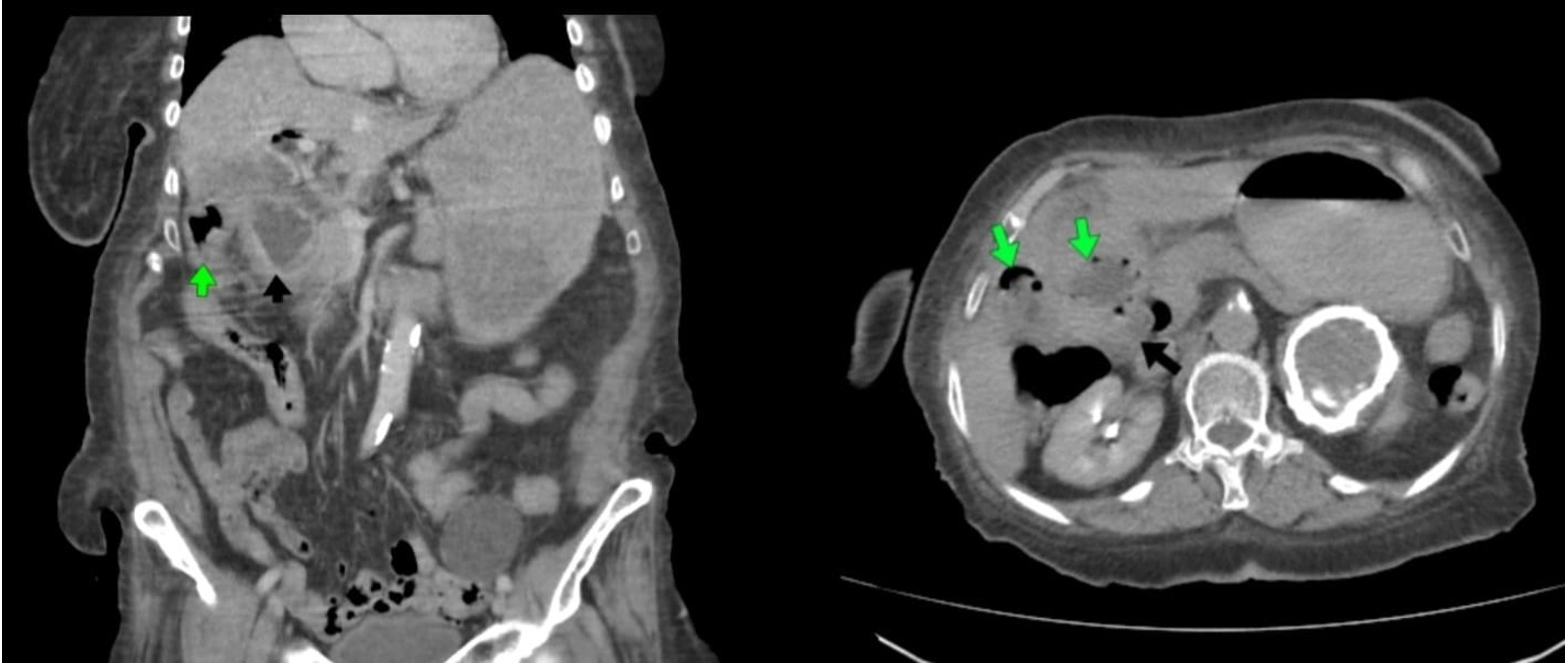
On initial laboratory evaluation, she had a hemoglobin level of 9.3 g/dL and a white cell count of 15.3 × 10⁹/L with elevated CRP 12 mg/dl. Serum creatinine was 1.4 mg/dL, and random blood sugar was 295 mg/dL with no acetone in urine. Her amylase and lipase were 52 U/L and 65 U/L, respectively. Bilirubin was normal with an alkaline phosphatase (ALP) level of 155 U/l (normal range, 40–120 U/l) and a -glutamyl transferase (GGT) level of 99 U/l (normal, <37 U/l). Diagnostic workup, including an abdominal X-ray and CT scan, confirmed the presence of a large gallstone causing gastric outlet obstruction with a fistulous tract between the gallbladder and the duodenum and a dilated proximal stomach Figure 1.
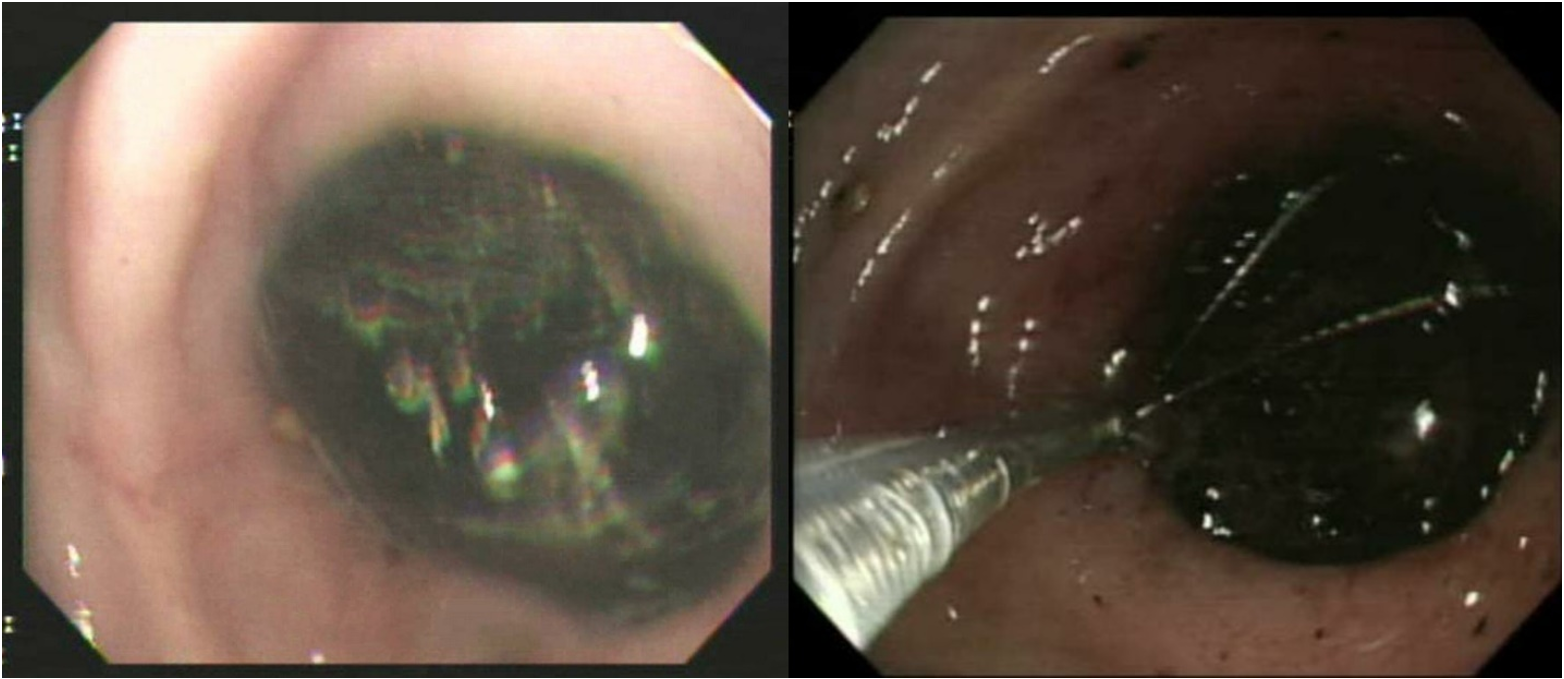
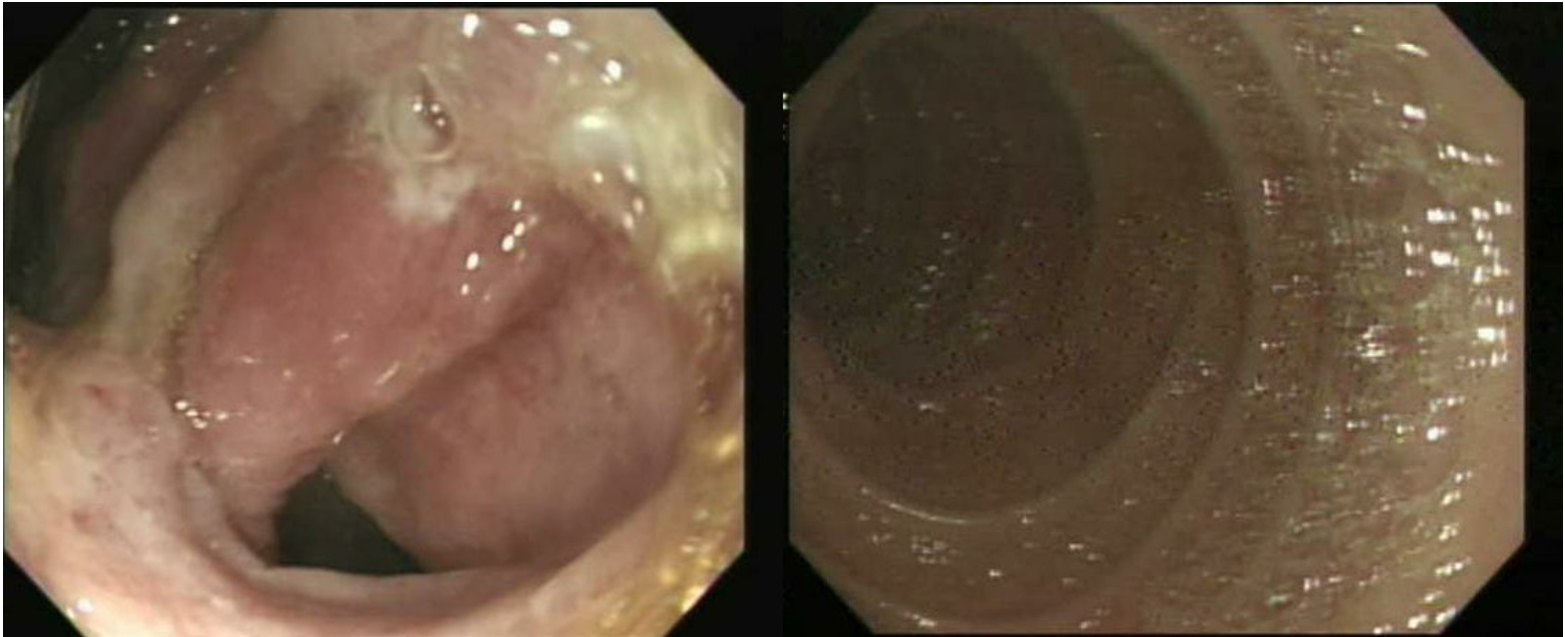
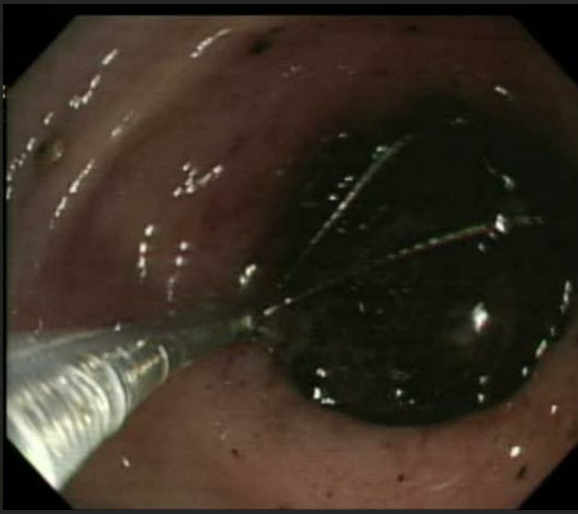
After careful assessment and evaluation, an upper GI endoscopy was performed to relieve the gastric outlet obstruction. The gastroscope was inserted after endotracheal intubation, and the obstructing gallstone was visualized in the pyloric ring obstructing the lumen Figure 2. We decided to use the trapezoid RX wire-guided retrieval basket (Boston Scientific), which is designed to crush and remove stones in the biliary duct. We may use the Alliance™ II Inflation Handle for mechanical lithotripsy to crush large stones trapped within the basket with the scope in place. However, after several trials, stone extraction failed. So, we decided to try to mobilize the large stone to the stomach. The biliary extractor balloon catheter was inflated up to 18 mm distal to the obstructing stone, and the stone was successfully retrieved into the stomach with difficulty. A trapezoid basket was introduced through the endoscope’s working channel and used to crush, grasp, and extract the large gallstone, which measures 4 cm × 3.6 cm, and to facilitate the extraction of the stone through the cardia and esophagus without impaction or perforation. The remaining stones were retrieved without any complications Figure 3. Finally, gastric outflow was restored after three hours of working in a single session.
The patient experienced immediate relief, and post-procedure monitoring showed a steady recovery without any complications. The patient tolerated a regular diet, and subsequent imaging studies confirmed the absence of residual gallstones or signs of obstruction.
Discussion
Bouveret’s syndrome (BS) is a rare subtype of gallstone ileus making up about 1%-3% of cases [4]. Repeated episodes of cholecystitis result in inflammation and adhesions between the gallbladder and the GI tract which most commonly involves the duodenum but can also involve the stomach. Pressure necrosis by fairly large calculus results in fistula formation, which predisposes to a migrating calculus, causing either obstruction or ileus [5].
BS is usually seen in elderly females, with a median age of 74 and a history of cholelithiasis or cholecystitis. Patients present with vague symptoms of gastric outlet or bowel obstruction that usually include nausea or vomiting and sometimes hematemesis or melena [5]. Non-specific presenting symptoms not only make diagnosis challenging but also increase morbidity and mortality [4].
Multiple diagnostic modalities can be used in the workup for BS, but CT and EGD are the most widely utilized diagnostic modalities with the highest specificity and sensitivity (95% and 100% in the former). EGD is the most commonly used modality in patients presenting with overt bleeding. CT with contrast can also be used in diagnosis, with the extravasated contrast outlining the fistula [6]. In our case, Abdominal X-rays followed by CT were sufficient to reach a definitive diagnosis of BS.
In terms of BS management, endoscopy utilization is especially worthwhile in elderly patients with significant comorbidities [7]. However, a study done by Howells et al. showed up to 91% failure of endoscopic and percutaneous extraction despite the availability of expert providers [8]. Nevertheless, various endoscopic techniques have been shown to be successful [9]. For example, Endoscopic Electrohydraulic Lithotripsy (EHL) has been utilized by Avci et al. to help dissolve a 3 cm biliary stone lodged at the proximal duodenum [10].
In another case, gastric outflow was restored endoscopically in a poor surgical candidate with a pigmented gallstone using Roth Net Platinum Universal Retriever [11]. In case EGD fails, surgery is required. Traditional methods like open gastrotomy, pylorotomy, or duodenotomy are often used but are less preferred due to higher morbidity and mortality rates. Laparoscopy is also used in some cases where open surgery is not an option. For elderly patients who are not suitable candidates for surgery due to increased surgical risks, a two-step procedure is considered. This involves first removing the stone and then performing cholecystectomy and fistula repair [12].
Conclusions
In conclusion, using the trapezoid RX wire-guided retrieval basket (Boston Scientific) along with Alliance™ II Inflation Handle for mechanical lithotripsy and the biliary extractor balloon catheter, as described in this endoscopic approach to treating BS, may improve patient outcomes.
Conflicts of Interest
None
Funding Source
The authors declare that no specific grant or funding was received for this research from any public, commercial, or not-for-profit funding agency.
Acknowledgments
None
Institutional Review Board (IRB)
None
Large Language Model
None
Authors Contribution
MG wrote the case presentation section, was the case reporter, and provided the endoscopy images. HA reviewed the previous literature, wrote the introduction, extracted some key points, contributed to the discussion, and served as the corresponding author. AS contributed to the discussion section by describing previous case data. SA wrote the main discussion after reviewing the literature and submitting the article. SH reviewed the manuscript and wrote the abstract. MS Whole paper review, senior author of the paper.
Data Availability
Upon request, a full endoscopic video of the case is available to the author.
References
- Turner A. R., Kudaravalli P., Al-Musawi J. H., Ahmad H.. Bouveret Syndrome (Bilioduodenal Fistula). StatPearls. 2025. PMID: 28613489
- Dunlop H., Goodarzi M. R.. Bouveret Syndrome: A Rare Case of Gallstone Ileus Further Complicated by Stone Migration. Cureus. 2020;12(10):e11219. doi:10.7759/cureus.11219 PMID: 33154859 PMCID: PMC7606263
- Qasaimeh G. R., Bakkar S., Jadallah K.. Bouveret's Syndrome: An Overlooked Diagnosis. A Case Report and Review of Literature. Int Surg. 2014;99(6):819-23. doi:10.9738/INTSURG-D-14-00087.1 PMID: 25437593 PMCID: PMC4254246
- Probert S., Cai W., Islam F., Ballanamada Appaiah N. N., Salih A.. Bouveret Syndrome: A Rare Case and Review of the Literature. Cureus. 2022;14(5):e24768. doi:10.7759/cureus.24768 PMID: 35686250 PMCID: PMC9170448
- Yu Y. B., Song Y., Xu J. B., Qi F. Z.. Bouveret's syndrome: A rare presentation of gastric outlet obstruction. Exp Ther Med. 2019;17(3):1813-1816. doi:10.3892/etm.2019.7150 PMID: 30783453 PMCID: PMC6364238
- Nickel F., Muller-Eschner M. M., Chu J., von Tengg-Kobligk H., Muller-Stich B. P.. Bouveret's syndrome: presentation of two cases with review of the literature and development of a surgical treatment strategy. BMC Surg. 2013;13:33. doi:10.1186/1471-2482-13-33 PMID: 24006869 PMCID: PMC3766223
- Zhao J. C., Barrera E., Salabat M., Denham W., Leung D., Ujiki M.. Endoscopic treatment for Bouveret syndrome. Surg Endosc. 2013;27(2):655. doi:10.1007/s00464-012-2533-8 PMID: 23052513
- Howells L., Liasis L., Demosthenous M.. Gallstone Coleus: A Rare Relation of Gallstone Ileus. International Journal of Surgery and Research. 2015:28-31. doi:10.19070/2379-156x-150006
- Puri V., Lee R. W., Amirlak B. A., Lanspa S. J., Fitzgibbons R. J., Jr.. Bouveret syndrome and gallstone ileus. Surg Laparosc Endosc Percutan Tech. 2007;17(4):328-30. doi:10.1097/SLE.0b013e31806c7dc2 PMID: 17710061
- Avci A., Gogenur I., Bulut M.. Bouveret's syndrome treated with endoscopic electrohydraulic lithotripsy. BMJ Case Rep. 2019;12(2). doi:10.1136/bcr-2018-228316 PMID: 30798279 PMCID: PMC6441271
- Jindal A., Philips C. A., Jamwal K., Sarin S. K.. Use of a Roth Net Platinum Universal Retriever for the endoscopic management of a large symptomatic gallstone causing Bouveret's syndrome. Endoscopy. 2016;48(S 01):E308. doi:10.1055/s-0042-116430 PMID: 27669536
- Rey Chaves C. E., Villamil C. J., Ruiz S., Galvis V., Conde D., Sabogal Olarte J. C.. Cholecystogastric fistula in Bouveret syndrome: Case report and literature review. Int J Surg Case Rep. 2022;93:106918. doi:10.1016/j.ijscr.2022.106918 PMID: 35339038 PMCID: PMC8957017
中文摘要
使用Trapezoid RX 线导引取石篮与Alliance™ II充气手柄治疗Bouveret综合征的案例报告:一种罕见临床实体
背景:Bouveret综合征是胆石病的罕见表现,导致胃出口梗阻。由于其罕见性和非特异性临床表现,该综合征在诊断和治疗上面临挑战。
目的:报告一例78岁女性因大尺寸胆石导致胃出口阻塞的病例,并介绍使用Trapezoid RX 线导引取石篮(Boston Scientific)与Alliance™ II充气手柄结合内镜取石的创新技术。
方法:患者接受食管胃十二指肠镜检查,利用Trapezoid RX 线导引取石篮配合Alliance™ II充气手柄将胆石取出,无需外科干预。术后对患者进行监测。
结果:术后监测显示患者恢复顺利,症状立即缓解。影像学检查证实无残留胆石或梗阻。
结论:Trapezoid RX 线导引取石篮与Alliance™ II充气手柄的组合为Bouveret综合征的非外科治疗提供了一种安全有效的方案。
本中文摘要为机器辅助翻译,仅供参考;以英文摘要为准。 Machine-assisted Chinese translation of the English abstract; the English abstract is the version of record.
References
1. Turner AR, Kudaravalli P, Al-Musawi JH, Ahmad H. In: Bouveret Syndrome (Bilioduodenal Fistula). Treasure Island (FL): StatPearls Publishing Copyright © 2023, StatPearls Publishing LLC.; 2025. [PMID: 28613489].
2. Dunlop H, Goodarzi MR. Bouveret Syndrome: A Rare Case of Gallstone Ileus Further Complicated by Stone Migration. Cureus. 2020;12(10):e11219. [PMID: 33154859, PMCID: PMC7606263, https://doi.org/10.7759/cureus.11219].
3. Qasaimeh GR, Bakkar S, Jadallah K. Bouveret's Syndrome: An Overlooked Diagnosis. A Case Report and Review of Literature. Int Surg. 2014;99(6):819-23. [PMID: 25437593, PMCID: PMC4254246, https://doi.org/10.9738/INTSURG-D-14-00087.1].
4. Probert S, Cai W, Islam F, Ballanamada Appaiah NN, Salih A. Bouveret Syndrome: A Rare Case and Review of the Literature. Cureus. 2022;14(5):e24768. [PMID: 35686250, PMCID: PMC9170448, https://doi.org/10.7759/cureus.24768].
5. Yu YB, Song Y, Xu JB, Qi FZ. Bouveret's syndrome: A rare presentation of gastric outlet obstruction. Exp Ther Med. 2019;17(3):1813-6. [PMID: 30783453, PMCID: PMC6364238, https://doi.org/10.3892/etm.2019.7150].
6. Nickel F, Muller-Eschner MM, Chu J, von Tengg-Kobligk H, Muller-Stich BP. Bouveret's syndrome: presentation of two cases with review of the literature and development of a surgical treatment strategy. BMC Surg. 2013;13:33. [PMID: 24006869, PMCID: PMC3766223, https://doi.org/10.1186/1471-2482-13-33].
7. Zhao JC, Barrera E, Salabat M, Denham W, Leung D, Ujiki M. Endoscopic treatment for Bouveret syndrome. Surg Endosc. 2013;27(2):655. [PMID: 23052513, https://doi.org/10.1007/s00464-012-2533-8].
8. Howells L, Liasis L, Demosthenous M. Gallstone Coleus: A Rare Relation of Gallstone Ileus. International Journal of Surgery and Research. 2015:28-31. [https://doi.org/10.19070/2379-156x-150006].
9. Puri V, Lee RW, Amirlak BA, Lanspa SJ, Fitzgibbons J R J. Bouveret syndrome and gallstone ileus. Surg Laparosc Endosc Percutan Tech. 2007;17(4):328-30. [PMID: 17710061, https://doi.org/10.1097/SLE.0b013e31806c7dc2].
10. Avci A, Gogenur I, Bulut M. Bouveret's syndrome treated with endoscopic electrohydraulic lithotripsy. BMJ Case Rep. 2019;12(2). [PMID: 30798279, PMCID: PMC6441271, https://doi.org/10.1136/bcr-2018-228316].
11. Jindal A, Philips CA, Jamwal K, Sarin SK. Use of a Roth Net Platinum Universal Retriever for the endoscopic management of a large symptomatic gallstone causing Bouveret's syndrome. Endoscopy. 2016;48(S 01):E308. [PMID: 27669536, https://doi.org/10.1055/s-0042-116430].
12. Rey Chaves CE, Villamil CJ, Ruiz S, Galvis V, Conde D, Sabogal Olarte JC. Cholecystogastric fistula in Bouveret syndrome: Case report and literature review. Int J Surg Case Rep. 2022;93:106918. [PMID: 35339038, PMCID: PMC8957017, https://doi.org/10.1016/j.ijscr.2022.106918].
Data Availability Statement
Full Endoscopic video of the case is available with the author upon request.
License
Copyright (c) 2025 Mahmod Ghoname, Hazem Abosheaishaa, Arshia Sethi, Sharif Abbas, Sherif Hegab, Moataz Yousry Soliman

This work is licensed under a Creative Commons Attribution 4.0 International License.
Copyright and Licensing
All articles published in ASIDE Gastroenterology are open access and freely available online immediately upon publication, without embargo.
This journal applies the terms of the Creative Commons Attribution 4.0 International License (CC BY 4.0). Under this license, anyone may copy, redistribute, remix, transform, and build upon the material for any purpose, even commercially, provided that proper credit is given to the original author(s), a link to the license is provided, and any changes made are indicated.
-
License link: https://creativecommons.org/licenses/by/4.0/
-
Machine-readable license metadata is embedded in each article and its DOI record.
Copyright Holder
Copyright in all articles remains with the author(s). ASIDE Gastroenterology is published and owned by PubPorta Publishing LLC. By submitting a manuscript, authors agree to grant the publisher a non-exclusive license to publish, distribute, archive, and identify itself as the original publisher of the work under the terms of the CC BY 4.0 license.
Academic oversight and scholarly guidance are provided by the American Society for Inclusion, Diversity, and Equity in Healthcare (ASIDE). Copyright and licensing arrangements are administered by the publisher.
Third-party Material
Any material (e.g., images, figures, or tables) not covered by CC BY 4.0 will be clearly indicated in the article. Users must obtain permission directly from the copyright holder for reuse of such third-party material.
Author Rights and Self-Archiving
Authors are permitted to deposit all versions of their work (preprint, author’s accepted manuscript, and version of record) in institutional or subject repositories of their choice immediately upon publication, without embargo, provided that the DOI and license information are included.
Published
Issue
Section
How to Cite
Article history
- Received
- 5 Nov 2024
- Received in revised form
- 18 Dec 2024
- Accepted
- 23 Dec 2024
- Published
- 2 Jan 2025