Efficacy and Safety of Tofacitinib in Pediatric Ulcerative Colitis Patients: A Systematic Review
DOI:
https://doi.org/10.71079/ASIDE.GI.04212519Abstract
Introduction: Ulcerative colitis (UC), an inflammatory Bowel Disease (IBD), is a chronic illness of unknown mechanism affecting the colonic mucosa, mainly causing diarrhea and bleeding. It can potentially disrupt the quality of life. Tofacitinib, a Janus Kinase inhibitor, showed a promising effect in inducing remission in IBD patients. In this study, we aim to assess the efficacy and safety of Tofacitinib in treating children with ulcerative colitis.
Methods: Following the Preferred Reporting Items for Systematic Reviews and Meta-Analyses guidelines (PRISMA), we searched four electronic databases (PubMed, Scopus, Cochrane Library, Embase, and Web of Science) to identify eligible studies reported up to July 2024. We reported outcomes as frequencies and proportions in our study.
Results: We identified five studies encompassing 83 children diagnosed with IBD, of which 57 children had ulcerative colitis. The proportion of patients achieving a clinical response across one included study was 66.67%. The proportion of patients achieving clinical remission was 38.46%. Also, the proportion of patients achieving steroid-free remission across the three studies was 48.57%. The rate for serious adverse events was 25.53% across the three included studies.
Conclusion: Tofacitinib could be useful in achieving clinical remission in children with UC and reducing colectomy rates. Also, a low infection rate and the incidence of serious adverse events were observed. Future randomized controlled trials with larger samples and longer follow-up periods are needed to support these findings.
Keywords:
Ulcerative Colitis, Inflammatory Bowel Disease, Crohn's Disease, Tofacitinib, Janus kinaseFull Text
Introduction
Ulcerative colitis (UC) is a chronic inflammatory bowel disease characterized by inflammation of the colonic mucosa, leading to symptoms such as abdominal pain, diarrhea, and rectal bleeding that have a negative impact on the quality of life of affected individuals, including children. Management of UC in pediatric patients presents special challenges, as patients’ growth, development, psychological health, and physical health [1,2]. Numerous treatments, such as steroids, 5-aminosalicylic acid (5-ASA), azathioprine, and biologic therapy using anti-tumor necrosis factor (TNF) inhibitors, are currently authorized for use in juvenile UC patients. Many individuals have severe refractory illness, meaning that they do not respond to therapy and may need surgery, even with their effectiveness. Individuals with moderate-to-severe UC who don’t respond to biological treatment can now use Tofacitinib [3].
Tofacitinib, an oral Janus kinase (JAK) inhibitor, has become a viable UC therapeutic option. It functions by specifically blocking JAK enzymes, which mediate immune response-related signaling pathways and are essential to the inflammatory process. Initially approved for the treatment of rheumatoid arthritis, Tofacitinib has demonstrated efficacy in adults with moderate to severe UC, providing rapid symptom relief and sustained remission in many cases. This success has prompted interest in its potential use for pediatric patients, who often have limited treatment options and may experience significant side effects from conventional therapies such as corticosteroids and immunomodulators [4].
Clinical trials and studies are increasingly focusing on the safety and efficacy of Tofacitinib in children and adolescents with UC. Early findings suggest that Tofacitinib may offer a well-tolerated and effective alternative, capable of inducing and maintaining remission with a favorable safety profile. As the understanding of JAK inhibitors in pediatric inflammatory diseases grows, Tofacitinib represents a beacon of hope for children with UC, offering a potential new avenue for management that could significantly improve their quality of life and long-term health outcomes [5,6,7]. Consequently, the goal of this study is to evaluate the effectiveness and safety of tofacitinib in pediatric patients.
Methods
The guidelines of the Preferred Reporting Items for Systematic Reviews and Meta-Analyses (PRISMA) statement were adhered to in this systematic review and meta-analysis [8]. The Cochrane Handbook for Systematic Reviews of Interventions served as the primary reference for all steps of the study [9]. This study was registered with PROSPERO.
Data source and search terms
We searched PubMed, Web of Science (WOS), Scopus, Cochrane Library, and Embase databases until July 2024 for studies using Tofacitinib to treat children with ulcerative colitis. The applied search strategy is available in the supplementary file. Additionally, we reinforced our search by reviewing the references of our final included studies to include other relevant studies.
Eligibility criteria and study selection
We included observation studies evaluating the safety and efficacy of Tofacitinib, conducted on participants under 18 years old and published in English. The primary outcome was the clinical response, defined as a ≥ 20-point decrease in the Pediatric Ulcerative Colitis Activity Index. Secondary outcomes included clinical remission, steroid-free remission, colectomy rate, and adverse events. Animal studies and Studies published in other languages were excluded. After searching the mentioned databases, we imported the search results into Rayyan. Two researchers independently screened the titles and abstracts of all identified studies. Full-text articles of potentially eligible studies were sorted out and assessed for inclusion. Conflicts were resolved by discussion or by a third reviewer.
Data extraction
Data were extracted from each paper of the final included studies by two independent researchers into Microsoft Excel spreadsheets to ensure the accuracy of our data. Any conflicts were resolved by discussion or by a third reviewer. Extracted data included the following: (a) Summary of the included studies, (b) Baseline characteristics, and (c) Outcomes. Clinical response was our primary outcome. Our secondary outcomes included clinical remission, colectomy, and safety outcomes.
Risk of bias and quality assessment
We used the Newcastle Ottawa Scale (NOS) to assess the risk of bias for our observational included studies [10]. Two independent researchers assessed the quality using these NOS domains (Selection, Comparability, and Outcome). Any disagreements were resolved by consensus.
Results
Literature results
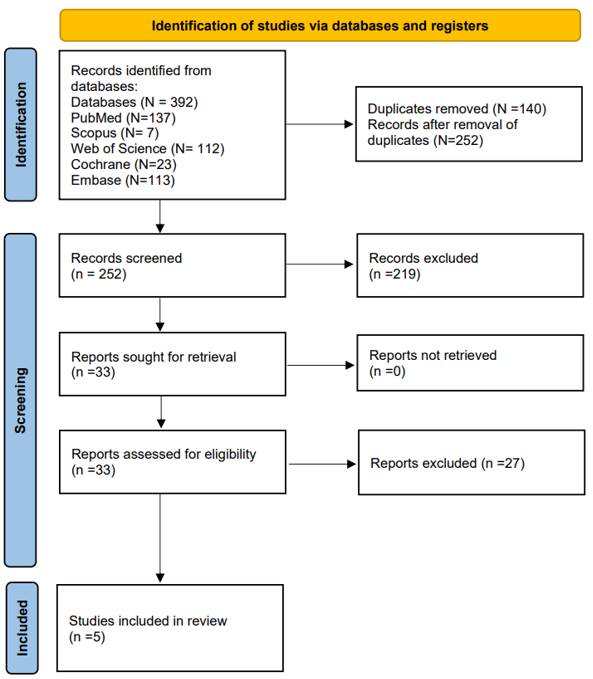
As shown in Figure 1, the systematic search identified 392 records from databases including PubMed, WOS, Scopus, Cochrane, and Embase. After removing 140 duplicates, 252 records were screened based on titles and abstracts. A total of 219 records were excluded as they did not meet the inclusion criteria. The remaining 33 full-text articles were assessed for eligibility. After further exclusions, 5 studies with a total of 83 participants with IBD met the inclusion criteria and were included in this review [5,11,12,13,6,7].
| Study ID | Country | Study design | Total of Participants | Study duration | Main inclusion criteria | Outcomes | Conclusion |
|---|---|---|---|---|---|---|---|
| Ryan 2023 [7] | Ireland | Retrospective cohort study | 15 | November 1, 2019, and June 30, 2022 | All children with a confirmed diagnosis of IBD who were commenced on Tofacitinib either as monotherapy or in combination with another biological agent | The primary outcome was remission by 8 weeks, with other clinical outcomes being recorded to the maximum available follow-up. | Combining Tofacitinib with other biologics is effective in selecting children with refractory UC. Early responders were more likely to achieve a sustained response in week 16. Failure to achieve remission by week 16 of Tofacitinib therapy was strongly associated with progression to colectomy. |
| Constant 2022 [5] | USA | Retrospective cohort study | 11 | 2018 to 2021 | Patients were identified from departmental lists of patients initiating Tofacitinib and were eligible for inclusion if they were diagnosed with UC (per clinical, endoscopic, and histologic findings) | The primary outcome was 90-day colectomy-free survival. Secondary outcomes included colectomy-free clinical remission, corticosteroid independence, colectomy-free Tofacitinib drug persistence, Tofacitinib-related adverse events, and postoperative complications. | Tofacitinib may represent a new treatment option for hospitalized pediatric patients with corticosteroid- and anti-TNF-nonresponsive ulcerative colitis. Future research is essential in determining the optimal positioning of these therapies. |
| Moore 2021 [6] | USA | Retrospective cohort study | 21 | 52 weeks | All patients 21 years and younger initiated on Tofacitinib because of active IBD despite biologic therapy being included. | The primary outcome measures were a clinical response to Tofacitinib at week 12, a time point corresponding to the end of the induction period, and at week 52. Secondary outcomes measured were clinical response at weeks 6 and 24 as well as adverse events (AEs). Specific AEs of interest included the development of thrombi, hyperlipidemia, and opportunistic infections. | There is limited experience with Tofacitinib in pediatric IBD. In this cohort, Tofacitinib induced a rapid clinical response with sustained efficacy in nearly half of the subjects. This study provides encouraging evidence for the efficacy and safety of Tofacitinib as part of the treatment paradigm for young individuals with moderate-to-severe IBD. Larger, well-powered, prospective studies are warranted. |
| Koubek 2023 [12] | USA | Retrospective cohort study | 20 | September 1, 2019, to September 30, 2021 | Patients aged 0 to 18 years admitted to our institution for 2 years from September 1, 2019, to September 30, 2021, who received infliximab, adalimumab, Tofacitinib, Ustekinumab, and/or vedolizumab for the treatment of CD or UC | Outcomes are Readmission within 6 months, Colectomy, Biologic acceleration >7 days, Patients with new therapy, Infusion reaction, and Time to biologic administration. | The diversity of practice observed within our institution supports the need for guidelines to define the standard of therapy or guide the selection of second-line therapies based on patient-specific factors. |
| Dolinger 2021 [11] | USA | Retrospective cohort study | 16 | Part of an ongoing, single-center, pediatric IBD observational registry, initiated in October 2014 | All patients under the age of 18 years starting dual therapy were identified prospectively. | The primary outcome was steroid-free remission at 6 months, defined as a wPCDAI ≤12.5 for CD or pMS <2 for UC/IBD-U, and no form of corticosteroids for at least 4 weeks. Secondary outcomes included time to steroid-free remission, change in serum biomarkers (CRP and ESR) and albumin between baseline and 6 months, and adverse events. Safety reporting included infusion and injection reactions, in addition to any serious adverse events. | Our data suggest that dual therapy may be an option for patients with limited therapeutic options remaining. Safety concerns should always be at the forefront of decision-making, and larger studies are needed to help confirm the preliminary safety data observed. |
UC, Ulcerative Colitis; IBD, Inflammatory Bowel Disease; CD, Crohn's disease; IBD-U, Indeterminate Inflammatory Bowel Disease; AEs, Adverse Events; TNF, Tumor Necrosis Factor; Retro., Retrospective; wPCDAI, Weighted Pediatric Crohn’s Disease Activity Index; pMS, Pediatric Mayo Score; CRP, C-reactive Protein; ESR, Erythrocyte Sedimentation Rate
Characteristics of the included studies
A total of five studies encompassed 83 children diagnosed with IBD, of which 57 children had ulcerative colitis. Twenty-one patients (25.3%) were on corticosteroids before receiving Tofacitinib. Only eight patients (9.63%) were previously treated with 5-aminosalicylic acid. The summary and baseline characteristics of the included studies are shown in Table 1 and Table 2, respectively.
| Study ID | Age (Years), Mean (SD) | Gender (Female), N (%) | Diagnosis | Previous therapies | |||||||
|---|---|---|---|---|---|---|---|---|---|---|---|
| Infliximab | Adalimumab | Vedolizumab | Ustekinumab | 5-ASA | Corticosteroids | Tofacitinib | Tacrolimus | ||||
| Ryan 2023 [7] | 12 (2.3) | 10 (66.7) | UC = 15 | 15 | 5 | 5 | 2 | - | - | - | - |
| Constant 2022 [5] | 16 (1.8) | 3 (27) | UC = 11 | 8 | 2 | 3 | - | 8 | 11 | - | - |
| Moore 2021 [6] | 17 (3.8) | 7 (33.3) | UC = 14 | 20 | 9 | 13 | 2 | - | - | - | - |
| IBD-U = 4 | |||||||||||
| CD = 3 | |||||||||||
| Koubek 2023 [12] | 15 (1.6) | 10 (50) | UC = 9 | 15 | 3 | 1 | 1 | - | - | 4 | - |
| CD = 11 | |||||||||||
| Dolinger 2021 [11] | 15.4 (2.8) | 8 (50) | UC = 8 | 16 | 3 | 8 | 10 | - | 10 | 4 | - |
| CD = 7 | |||||||||||
| IBD-U = 1 | |||||||||||
UC, Ulcerative Colitis; CD, Crohn's Disease; IBD-U, Inflammatory Bowel Disease-Unclassified; 5-ASA, 5-Aminosalicylic acid
Quality assessment of the included studies
We used the Newcastle Ottawa Scale to assess the risk of bias for included studies. All of the included cohort studies were of good overall quality [5,11,12,13,6,7]. The detailed quality assessment is available in the supplementary material (Supplementary Table 1).
| Outcome | Number of studies | Event | Total | Proportion (%) |
|---|---|---|---|---|
| Clinical Response | 1 | 10 | 15 | 66.667 |
| Clinical Remission | 2 | 10 | 26 | 38.46 |
| Steroid-free remission | 3 | 17 | 35 | 48.57 |
| Colectomy | 3 | 12 | 35 | 34.28 |
| Infections | 3 | 11 | 47 | 23.4 |
| Serious adverse events | 3 | 12 | 47 | 25.53 |
Outcomes
One of our included studies reported a clinical response with a total of 15 from the total population. The proportion of patients achieving a clinical response was 66.67% (n=10) Table 3. We reported Clinical remission, steroid-free remission, colectomy, infections, allergies, and serious adverse events Table 3. Clinical remission was reported in two studies with a total population of 26 and a proportion of 38.46% (n=10). Steroid-free remission was reported in three studies with a total population of 35 and a proportion of 48.57% (n=17). Colectomy was reported in three studies, involving a total population of 35 and a proportion of 34.28% (n = 12). Infections were reported in three studies with a total population of 47 and a proportion of 32.4% (n=11). Serious adverse events were reported in three studies with a total population of 47 and a proportion of 25.53% (n=12).
Discussion
Ulcerative colitis (UC) is a chronic inflammatory bowel disease (IBD) that primarily affects the colon. In children, UC causes the inner lining of the colon to become inflamed and develop ulcers. Symptoms commonly include abdominal cramping, bloody diarrhea, fatigue, weight loss, loss of appetite, rectal bleeding, and an urgency to have a bowel movement. These symptoms can vary in severity and duration depending on the extent and duration of the disease. The exact cause of UC in children is not fully understood, but it is believed to involve a combination of genetic, environmental, and immune system
factors. The condition can significantly impact a child’s growth, development, and overall quality of life. Treatment aims to reduce inflammation, manage symptoms, and induce and maintain remission. This can include medications such as aminosalicylates, corticosteroids, immunomodulators, and biologics, including tofacitinib, vedolizumab, and Ustekinumab. In some cases, surgery may be necessary [14].
Janus kinase inhibitors have gained growing popularity among gastrologists for several inflammatory conditions, especially when most other therapeutic options are exhausted [15]. Tofacitinib is an oral Janus kinase (JAK) inhibitor that targets JAK1 and JAK3 enzymes. Its mechanism of action involves inhibiting the JAK-STAT signaling pathway, which is crucial in the inflammatory response. By blocking these kinases, Tofacitinib disrupts the downstream signaling that leads to inflammation; this inhibition reduces the activity of pro-inflammatory cytokines, thereby decreasing inflammation and halting the progression of the disease.
Tofacitinib has been studied for its pharmacokinetic profile in pediatric patients. The pharmacokinetics (PK) of the drug in children and adolescents with JIA have shown that it is well-absorbed orally, and its safety profile is consistent with that observed in adults. The PK parameters, such as absorption rate and plasma concentration, vary depending on the age and weight of the pediatric patients. These studies are crucial for determining appropriate dosing regimens to ensure both efficacy and safety in younger populations [16,17,18]. In this systematic review, we investigated the efficacy of Tofacitinib in Pediatric Inflammatory Bowel Disease in terms of clinical response. The primary efficacy outcome in our study. The results showed a clinical response proportion of 66.67% (10 out of 15), Ryan et al. 2023 [7]. For clinical remission, the proportion was 38.46% (10 out of 26). Regarding allergy, Koubek 2023 reported zero events, with a proportion of 0% (0 out of 20) [12].
Moving to serious adverse events, real-world safety data have associated Tofacitinib with higher incidences of venous thromboembolic events, herpes zoster reactivation, and serious infections. In our study, 15 % of children treated with Tofacitinib got an infection. However, these risks appear to be lower in the pediatric population [19]. Constant et al. 2021 stated that no serious adverse events were linked to Tofacitinib during follow-up [5]. On the other hand, the FDA has reported that adult patients with comorbidities who are taking higher doses of Tofacitinib face risks of pulmonary embolism and death, as well as cardiovascular events and cancers. Moore et al. 2021 declared that the majority of their subjects were on 10 mg BID for most of the study period, and there were no occurrences of thrombi, clinically significant hyperlipidemia, or other cardiovascular or oncologic adverse events [6]. Tofacitinib has shown benefits when used sequentially with or concomitantly to anti-TNF therapy. In the study, 4 out of 6 patients who received Tofacitinib after inpatient anti-TNF therapy remained colectomy-free at the last follow-up [15,20]. Shimizu et al. 2021 used infliximab alone. Six patients (30%) underwent colectomy during the study period [21]. The colectomy rate was 3(21.5%) in Rohani et al. 2021 who used adalimumab and infliximab in the treatment of very early-onset ulcerative colitis.
Additionally, emerging research supports the use of Tofacitinib in combination with biological therapies like Ustekinumab or vedolizumab to achieve corticosteroid-free remission in medically refractory UC cases [22]. In the study of 16 biologically refractory pediatric IBD patients treated with dual biologics or biologics in combination with Tofacitinib, 75% (12 out of 16) achieved and maintained steroid-free remission after a median of 88 days. These children had previously failed to achieve steroid-free remission with at least 2 biological therapies and had a median disease duration of 3 years. The combination therapy allowed them to be safely weaned off steroids [11]. It can be considered as an add-on therapy as clinical and remission rates are < 50 %, which is low.
Although Tofacitinib has emerged as an adjunctive treatment in patients with refractory UC, the data in pediatric patients are limited, particularly regarding the effect of this agent in combination with TNF-α inhibitors In pediatrics, use of the lowest effective dose is advised given a boxed warning noting an increased risk of pulmonary embolism observed in adult rheumatoid arthritis patients with additional risk factors. Further safety considerations should include dose-dependent herpes zoster infection rates and lipid abnormalities, as well as CYP3A4 drug interactions that may require empiric dose adjustment [23].
Overall, while the study demonstrates the efficacy of Tofacitinib, the five included studies provided data on a total of 83 participants and exhibited variations in design, sample size, and interventions. Despite the merits and strengths of our synthesis, there are important limitations. First, the lack of a comparator group and biases associated with retrospective studies. Second, the observed variability in the studies and outcomes highlights the need for further research to refine treatment protocols and understand the factors contributing to outcome differences. Third, the observational nature of the included studies and their small numbers of patients, lack of objective endoscopic data there was a lack of objective endoscopic data before and after Tofacitinib commencement, as well as a lack of calprotectin correlates of mucosal activity. Also, the study does not assess long-term outcomes, preventing conclusions about the efficacy and safety of specialty therapies over time. Additional studies with stronger evidence, extended follow-up periods, and more comprehensive data are necessary to reach more conclusive results.
Conclusions
In conclusion, our study may demonstrate the efficacy of Tofacitinib in inducing clinical response and remission. Still, due to the variability observed among included studies, the need for more robust, well-designed trials with more efficacy data is essential to confirm our findings. Additionally, while the safety profile of Tofacitinib was observed in the pediatric population, the small sample sizes and limited long-term data necessitate cautious interpretation. Further research is crucial to establish optimal dosing regimens, understand the long-term safety, and evaluate the potential of combining Tofacitinib with other therapies.
Key finding
Tofacitinib could be useful in achieving clinical remission in children with UC and reducing colectomy rates. Also, a low infection rate and the incidence of serious adverse events were observed. Future randomized controlled trials with larger samples and longer follow-up periods are needed to support these findings.
From the authors' abstract.
中文摘要
托法替尼在儿童溃疡性结肠炎中的疗效与安全性:系统综述
背景:溃疡性结肠炎(UC)是一种炎症性肠病(IBD),其发病机制未知,主要影响结肠黏膜,导致腹泻和出血,可能破坏生活质量。托法替尼(Tofacitinib)是一种Janus激酶抑制剂,在诱导IBD患者缓解方面显示出有前景的效果。本研究旨在评估托法替尼治疗儿童溃疡性结肠炎的疗效与安全性。
方法:依据首选报告项目系统综述与荟萃分析(PRISMA)指南,我们检索了四个电子数据库(PubMed、Scopus、Cochrane Library、Embase 和 Web of Science),筛选截至2024年7月的符合条件研究。本研究将结果以频数和比例呈现。
结果:共纳入五项研究,涉及83名IBD诊断的儿童,其中57名为溃疡性结肠炎患者。单项研究中,临床反应率为66.67%。临床缓解率为38.46%。在三项研究中,无类固醇缓解率为48.57%。三项研究中严重不良事件发生率为25.53%。
结论:托法替尼可能有助于实现儿童UC的临床缓解并降低结肠切除率。同时观察到低感染率和严重不良事件发生率。未来需要更大样本量、随访期更长的随机对照试验来进一步验证这些发现。
本中文摘要为机器辅助翻译,仅供参考;以英文摘要为准。 Machine-assisted Chinese translation of the English abstract; the English abstract is the version of record.
References
1. Muller KE, Lakatos PL, Arato A, Kovacs JB, Varkonyi A, Szucs D, Szakos E, Solyom E, Kovacs M, Polgar M, Nemes E, Guthy I, Tokodi I, Toth G, Horvath A, Tarnok A, Csoszanszki N, Balogh M, Vass N, Bodi P, Dezsofi A, Gardos L, Micskey E, Papp M, Cseh A, Szabo D, Voros P, Veres G, Hungarian IBD Registry Group. Incidence, Paris classification, and follow-up in a nationwide incident cohort of pediatric patients with inflammatory bowel disease. J Pediatr Gastroenterol Nutr. 2013;57(5):576-82. [PMID: 23820399, https://doi.org/10.1097/MPG.0b013e31829f7d8c].
2. Schechter A, Griffiths C, Gana JC, Shaoul R, Shamir R, Shteyer E, Bdolah-Abram T, Ledder O, Turner D. Early endoscopic, laboratory and clinical predictors of poor disease course in paediatric ulcerative colitis. Gut. 2015;64(4):580-8. [PMID: 24848266, https://doi.org/10.1136/gutjnl-2014-306999].
3. Alajmi R, Alabdulhadi M, Alali AA, Shehab M. Tofacitinib for a Child with Refractory Steroid-Dependent Ulcerative Colitis: A Case Report and Review of the Literature. Am J Case Rep. 2021;22:e934460. [PMID: 34767543, PMCID: PMC8596185, https://doi.org/10.12659/AJCR.934460].
4. Cordes F, Foell D, Ding JN, Varga G, Bettenworth D. Differential regulation of JAK/STAT-signaling in patients with ulcerative colitis and Crohn's disease. World J Gastroenterol. 2020;26(28):4055-75. [PMID: 32821070, PMCID: PMC7403801, https://doi.org/10.3748/wjg.v26.i28.4055].
5. Constant BD, Baldassano R, Kirsch J, Mitchel EB, Stein R, Albenberg L. Tofacitinib Salvage Therapy for Children Hospitalized for Corticosteroid- and Biologic-Refractory Ulcerative Colitis. J Pediatr Gastroenterol Nutr. 2022;75(6):724-30. [PMID: 36122389, https://doi.org/10.1097/MPG.0000000000003616].
6. Moore H, Dubes L, Fusillo S, Baldassano R, Stein R. Tofacitinib Therapy in Children and Young Adults With Pediatric-onset Medically Refractory Inflammatory Bowel Disease. J Pediatr Gastroenterol Nutr. 2021;73(3):e57-62. [PMID: 34091545, https://doi.org/10.1097/MPG.0000000000003190].
7. Ryan N, Cooper S, Dominik A, Quinn S, Broderick A, Bourke B, Hussey S. Outcomes of Tofacitinib Use in an Irish Pediatric Cohort. JPGN Rep. 2023;4(3):e332. [PMID: 37600624, PMCID: PMC10435039, https://doi.org/10.1097/PG9.0000000000000332].
8. Page MJ, McKenzie JE, Bossuyt PM, Boutron I, Hoffmann TC, Mulrow CD, Shamseer L, Tetzlaff JM, Akl EA, Brennan SE, Chou R, Glanville J, Grimshaw JM, Hrobjartsson A, Lalu MM, Li T, Loder EW, Mayo-Wilson E, McDonald S, McGuinness LA, Stewart LA, Thomas J, Tricco AC, Welch VA, Whiting P, Moher D. The PRISMA 2020 statement: an updated guideline for reporting systematic reviews. BMJ. 2021;372:n71. [PMID: 33782057, PMCID: PMC8005924, https://doi.org/10.1136/bmj.n71].
9. Cumpston M, Li T, Page MJ, Chandler J, Welch VA, Higgins JP, Thomas J. Updated guidance for trusted systematic reviews: a new edition of the Cochrane Handbook for Systematic Reviews of Interventions. Cochrane Database Syst Rev. 2019;10(10):ED000142. [PMID: 31643080, PMCID: PMC10284251, https://doi.org/10.1002/14651858.ED000142].
10. Wells GA, Shea B, O’Connell D, Peterson J, Welch V, Losos M, Tugwell P. The Newcastle-Ottawa Scale (NOS) for assessing the quality of nonrandomised studies in meta-analyses. 2000.
11. Dolinger MT, Spencer EA, Lai J, Dunkin D, Dubinsky MC. Dual Biologic and Small Molecule Therapy for the Treatment of Refractory Pediatric Inflammatory Bowel Disease. Inflamm Bowel Dis. 2021;27(8):1210-4. [PMID: 33125058, https://doi.org/10.1093/ibd/izaa277].
12. Koubek DN, Pulk RA, Rosano JV. A Review of Therapeutic Escalation for Pediatric Patients Admitted for Inflammatory Bowel Disease Flares. J Pediatr Pharmacol Ther. 2023;28(7):649-57. [PMID: 38025147, PMCID: PMC10681080, https://doi.org/10.5863/1551-6776-28.7.649].
13. Ledder O, Dolinger M, Dubinsky MC, Stein R, Vellanki S, Buckuk R, Fatima A, Suskind DL, Scarlett J, Roser D, Shouval DS, Meyer G, Rios ZM, Pujol-Muncunill G, Lozano A, Kolho KL, Rohani P, Hussey S, de Mejj T, Ayers T, Navas-Lopez VM, Turner D, Tzivinikos C. Tofacitinib in Pediatric Ulcerative Colitis: A Retrospective Multicenter Experience. Inflamm Bowel Dis. 2025;31(2):425-31. [PMID: 38828483, https://doi.org/10.1093/ibd/izae112].
14. Ferretti F, Cannatelli R, Monico MC, Maconi G, Ardizzone S. An Update on Current Pharmacotherapeutic Options for the Treatment of Ulcerative Colitis. J Clin Med. 2022;11(9):2302. [PMID: 35566428, PMCID: PMC9104748, https://doi.org/10.3390/jcm11092302].
15. Honap S, Agorogianni A, Colwill MJ, Mehta SK, Donovan F, Pollok R, Poullis A, Patel K. JAK inhibitors for inflammatory bowel disease: recent advances. Frontline Gastroenterol. 2024;15(1):59-69. [PMID: 38487554, PMCID: PMC10935522, https://doi.org/10.1136/flgastro-2023-102400].
16. Chang C, Vong C, Wang X, Hazra A, Diehl A, Nicholas T, Mukherjee A. Tofacitinib pharmacokinetics in children and adolescents with juvenile idiopathic arthritis. CPT Pharmacometrics Syst Pharmacol. 2024;13(4):599-611. [PMID: 38298058, PMCID: PMC11015083, https://doi.org/10.1002/psp4.13104].
17. Ruperto N, Brunner HI, Zuber Z, Tzaribachev N, Kingsbury DJ, Foeldvari I, Horneff G, Smolewska E, Vehe RK, Hazra A, Wang R, Mebus CA, Alvey C, Lamba M, Krishnaswami S, Stock TC, Wang M, Suehiro R, Martini A, Lovell DJ, Pediatric Rheumatology International Trials Organization, Pediatric Rheumatology Collaborative Study Group. Pharmacokinetic and safety profile of tofacitinib in children with polyarticular course juvenile idiopathic arthritis: results of a phase 1, open-label, multicenter study. Pediatr Rheumatol Online J. 2017;15(1):86. [PMID: 29282090, PMCID: PMC5745974, https://doi.org/10.1186/s12969-017-0212-y].
18. Vong C, Wang X, Hazra A, Mukherjee A, Nicholas T, Chang C. Fri0465 Tofacitinib Population Pharmacokinetics in Children with Juvenile Idiopathic Arthritis: A Pooled Analysis of Data from Three Clinical Studies. Annals of the Rheumatic Diseases. 2020;79(Suppl 1):830-0. [https://doi.org/10.1136/annrheumdis-2020-eular.400].
19. Deepak P, Alayo QA, Khatiwada A, Lin B, Fenster M, Dimopoulos C, Bader G, Weisshof R, Jacobs M, Gutierrez A, Ciorba MA, Christophi GP, Patel A, Hirten RP, Colombel JF, Rubin DT, Ha C, Beniwal-Patel P, Ungaro RC, Syal G, Pekow J, Cohen BL, Yarur A. Safety of Tofacitinib in a Real-World Cohort of Patients With Ulcerative Colitis. Clin Gastroenterol Hepatol. 2021;19(8):1592-601 e3. [PMID: 32629130, PMCID: PMC7779667, https://doi.org/10.1016/j.cgh.2020.06.050].
20. Sandborn WJ, Peyrin-Biroulet L, Sharara AI, Su C, Modesto I, Mundayat R, Gunay LM, Salese L, Sands BE. Efficacy and Safety of Tofacitinib in Ulcerative Colitis Based on Prior Tumor Necrosis Factor Inhibitor Failure Status. Clin Gastroenterol Hepatol. 2022;20(3):591-601 e8. [PMID: 33684552, https://doi.org/10.1016/j.cgh.2021.02.043].
21. Shimizu H, Arai K, Takeuchi I, Minowa K, Hosoi K, Sato M, Oka I, Kaburaki Y, Shimizu T. Long-Term Durability of Infliximab for Pediatric Ulcerative Colitis: A Retrospective Data Review in a Tertiary Children's Hospital in Japan. Pediatr Gastroenterol Hepatol Nutr. 2021;24(1):7-18. [PMID: 33505889, PMCID: PMC7813568, https://doi.org/10.5223/pghn.2021.24.1.7].
22. Singh S, George J, Boland BS, Vande Casteele N, Sandborn WJ. Primary Non-Response to Tumor Necrosis Factor Antagonists is Associated with Inferior Response to Second-line Biologics in Patients with Inflammatory Bowel Diseases: A Systematic Review and Meta-analysis. J Crohns Colitis. 2018;12(6):635-43. [PMID: 29370397, PMCID: PMC7189966, https://doi.org/10.1093/ecco-jcc/jjy004].
23. Pfizer Inc. XELJANZ® (tofacitinib) tablets, for oral use: prescribing information. Pfizer Inc.; 2018.
Data Availability Statement
All data generated or analyzed during this study are included in this published article.
License
Copyright (c) 2025 Abdelaziz A. Awad, Mohamed A. Aldemerdash, Ahmed Aldemerdash, Esraa Awad, Salma Allam, Ahmed L. Youseif, Alshimaa M. Abu alabbas, Nermin Elhossiny, Hazem Abosheaishaa

This work is licensed under a Creative Commons Attribution 4.0 International License.
Copyright and Licensing
All articles published in ASIDE Gastroenterology are open access and freely available online immediately upon publication, without embargo.
This journal applies the terms of the Creative Commons Attribution 4.0 International License (CC BY 4.0). Under this license, anyone may copy, redistribute, remix, transform, and build upon the material for any purpose, even commercially, provided that proper credit is given to the original author(s), a link to the license is provided, and any changes made are indicated.
-
License link: https://creativecommons.org/licenses/by/4.0/
-
Machine-readable license metadata is embedded in each article and its DOI record.
Copyright Holder
Copyright in all articles remains with the author(s). ASIDE Gastroenterology is published and owned by PubPorta Publishing LLC. By submitting a manuscript, authors agree to grant the publisher a non-exclusive license to publish, distribute, archive, and identify itself as the original publisher of the work under the terms of the CC BY 4.0 license.
Academic oversight and scholarly guidance are provided by the American Society for Inclusion, Diversity, and Equity in Healthcare (ASIDE). Copyright and licensing arrangements are administered by the publisher.
Third-party Material
Any material (e.g., images, figures, or tables) not covered by CC BY 4.0 will be clearly indicated in the article. Users must obtain permission directly from the copyright holder for reuse of such third-party material.
Author Rights and Self-Archiving
Authors are permitted to deposit all versions of their work (preprint, author’s accepted manuscript, and version of record) in institutional or subject repositories of their choice immediately upon publication, without embargo, provided that the DOI and license information are included.
Additional Files
Published
Issue
Section
How to Cite
Article history
- Received
- 7 Jan 2025
- Received in revised form
- 11 Mar 2025
- Accepted
- 12 Mar 2025
- Published
- 21 Apr 2025