
Periprosthetic Joint Infection in Egypt: A Narrative Review of the Current Landscape and Knowledge Gaps
DOI:
https://doi.org/10.71079/ASIDE.IM.032926416Abstract
Background: Periprosthetic joint infection (PJI) is one of the most serious complications of total joint arthroplasty (TJA). This review synthesizes the available local evidence of PJI in Egypt to identify the current landscape and knowledge gaps in the Egyptian healthcare system.
Methods: A literature review was conducted by searching PubMed, Scopus, and Google Scholar for studies on PJI in Egypt, with articles published up to January 2026. Search terms included "periprosthetic joint infection," "PJI," "Arthroplasty," and "Egypt." We included 9 primary studies for synthesis and excluded review papers.
Results: This paper summarizes PJI studies from Egypt and highlights the limited existing knowledge, specific local issues, and gaps. Main findings were limited epidemiological data indicating that rates of PJI in a key study appear higher than in high-income countries, with Staphylococci as the most common organism across studies. Critical gaps exist in national epidemiological data, risk factors, patient demographics, the detailed microbiological spectrum and antimicrobial resistance patterns, as well as long-term patient outcomes, and standardized national guidelines for diagnosis and management.
Conclusion: Based on this review, there is limited local evidence on many aspects of PJI in Egypt. Our proposed priorities include further research into the highlighted gaps, the establishment of a national registry, the development of multidisciplinary care models, standardized antimicrobial prescribing protocols, and the implementation of evidence-based national guidelines tailored to the Egyptian healthcare system.
Keywords:
Periprosthetic joint infection, PJI, Egypt, Total joint arthroplastyFull Text
Introduction
Periprosthetic joint infection (PJI) is a well-recognized and serious complication following joint arthroplasty. It represents one of the leading causes of implant failure, often necessitating complex revision procedures, carrying significant morbidity and healthcare burden [1]. Total joint arthroplasty (TJA) is considered one of the most effective and successful surgical interventions, providing remarkable improvements in pain, mobility, and quality of life for patients in need. Because TJA is highly effective, the number of performed arthroplasty procedures rises, and, consequently, the overall incidence of PJI is expected to increase proportionally [2], making it a critical issue that warrants careful attention. especially in countries such as Egypt, where reported rates in available Egyptian studies appear higher than commonly reported in many high-income settings [3].
In Egypt, operating within the complexities of a low- to middle-income country (LMIC) [4], the challenges associated with PJI are particularly significant. While international guidelines from International Consensus Meeting (ICM), Infectious Diseases Society of America (IDSA), European Bone and Joint Infection Society (EBJIS) and Musculoskeletal Infection Society (MSIS) outline best practices for the diagnosis and management of PJI, their direct application in resource-limited settings can be difficult because of differences in healthcare resources, capacity and infrastructure, patient demographics, characteristics, and risk factors, local microbiological patterns, and antibiotic resistance profile [5,2,3].
These factors exacerbate the challenges of PJI in Egypt. And due to the absence of dedicated national guidelines, surgeons often rely on international guidelines, which may not be suitable given differences in the healthcare system, with patients frequently presenting for arthroplasty surgeries at advanced age, leading to poorer health and more complex operations, which in turn increase complication rates. The lack of a robust national registry with a dedicated workforce also hinders both accurate data reporting and the full assessment of risk [5,3]. These systemic and patient-specific challenges highlight the necessity for a focused review of PJI in Egypt.
This review aims to summarize the current studies on PJI in Egypt, addressing epidemiology, risk factors, patient demographics, diagnostic and therapeutic approaches, infection control measures, and outcomes. The aim is to consolidate existing knowledge, identify specific local issues, highlight areas requiring further investigation, and identify knowledge gaps to inform future research and clinical practice within the country.
Methods
This study was conducted as a narrative literature review to provide a broad overview of PJI in Egypt and identify gaps. We searched PubMed, Scopus, and Google Scholar databases for articles published up to 1st of January 2026. The search strategy combined keywords and terms related to PJI and Egypt, using the following representative query: ("periprosthetic joint infection" OR "prosthetic joint infection" OR "PJI" OR "arthroplasty infection") AND "Egypt". The reference lists of retrieved articles were also manually screened for additional relevant publications. We included all primary studies relevant to our review identified using these search terms. We excluded review papers. A total of 9 primary studies were included in the synthesis Table 4. We extracted most of the available evidence from the limited papers. The findings were synthesized thematically to construct a narrative describing the state of PJI in Egypt. A formal quality or risk-of-bias assessment was not performed, which is a recognized limitation of this review methodology.
Review
Incidence and Prevalence
Data on the incidence and prevalence of PJI in Egypt are limited, with no population-based estimates due to the lack of comprehensive national registries or large-scale studies.
Only one cross-sectional study found in Egypt, using data from the Egyptian Community Arthroplasty Registry (ECAR) and a survey of six high-volume arthroplasty surgeons across various hospitals over 10 years (2007–2017), identified 210 PJI cases out of 5,216 total hip arthroplasties (THA) and total knee arthroplasties (TKA), yielding a PJI rate of 4.03% of both total hip and knee arthroplasties combined, with THA demonstrating a higher infection rate at 4.73%, compared to TKA at 2.94%. The higher incidence of THA cases is thought to be due to the relatively high volume of THA procedures performed for failed fixation of the fracture of the neck of the femur. And infections necessitating staged revision occurred in 2.24% of THA and 1.71% of TKA cases (overall 2.03%). Although those rates are lower than some other low- and middle-income countries, they’re still higher than those typically found in developed countries and fall below global benchmarks, given that ECAR data were collected from 13 hospitals. The surgeons involved were generally very experienced. The study authors acknowledged that less experienced surgeons in low-volume or remote settings might face even higher infection rates, and also acknowledged that reporting bias may occur, as many surgeons underreport complications out of fear of a bad reputation for their names [3]. A prospective study with a total of 60 arthroplasties showed that 4 patients had surgical site infections (SSI), 3 of them were superficial and 1 deep infection [2]. Another study on orthopedic SSI report rates up to 14.18%, with 36.1% deep infections requiring intervention, though the study wasn’t arthroplasty-PJI-specific [6].
No other studies reported the incidence of PJI in the Egyptian studies. The lack of comparable registries or national databases, along with surgeon-reported data, makes it difficult to comprehensively compare and analyze PJI across the country. As the available data provide only part of the picture, more research is needed to understand the true extent of such a condition, to determine whether patients in Egypt really have a higher chance of getting PJI, and, if so, to identify the root cause and how to improve it.
Risk Factors and Patient Demographics
Patient demographics and comorbidities significantly influence the risk of PJI in Egypt. As an ECAR study highlighted, due to economic complexities, patients often present late for arthroplasty, leading to poorer overall health status and more complex operations, which consequently increase complication rates, including PJI. Other contributing factors include the type of arthroplasty, with THA showing higher infection rates across different studies. Technical aspects such as preoperative varus deformity greater than 10° in TKA, the use of specific implant types, the use of wrong or low-cost implants, poor cementing techniques, and inadequate training have also been implicated in arthroplasty failure, which can lead to infection [3]. As many patients requiring arthroplasty usually are elderly, A study found a mean age of 58.4 years (range, 38 – 72 years) for PJI patients [7]. Another study showed that the average age of patients undergoing single-stage revision for periprosthetic hip infection was 61 years (range 41-73 years) [8]. General comorbidities identified in Egyptian PJI patients included diabetes mellitus, hepatic conditions, anemia, and, in some cases, smoking was also noted [8]. Another study found a statistically significant positive correlation between positive culture and age [9].
Data on sex-based differences in PJI incidence, risk factors, and outcomes in Egypt are limited, with no studies exclusively investigating sex differences in PJI incidence, risk factors, or outcomes within the Egyptian population. Some studies provide initial insights. The female-to-male ratio was 1.16 for THA patients, compared with a markedly higher 3.9 for TKA. In a key registry-based analysis, the study doesn’t break down sex ratios or demographics for the 210 PJI cases of the total 5216 surgeries undergone [3]. One study found that among PJI patients (n=170), 55.9% were male and 44.1% were female. In contrast, another prospective study involving 11 PJI patients included 4 males and 7 females, with an infection rate of 36.4% among males versus 63.6% among females [7]. Limited data suggest a knowledge gap requiring further research to confirm whether global trends of male sex as a recognized risk factor for PJI [10] also apply to the Egyptian population and to understand the underlying factors.
The lack of dedicated PJI studies on comorbidities, risk factors, and patient demographics in Egypt calls for further research in those areas.
Microbiology and Resistance
The spectrum of causative organisms in Egyptian PJI cases from the literature search showed Staphylococci as the most commonly encountered pathogens, including Methicillin-Resistant Staphylococcus Aureus (MRSA) and Staphylococcus Epidermidis, including Methicillin-Resistant Staphylococcus Epidermidis (MRSE). There was also a notable occurrence of Gram-negative pathogens, including Klebsiella Pneumoniae, Escherichia coli, and Pseudomonas Aeruginosa [5,1,8,7,2,3], although they were less frequent.
A study included 265 staged revision surgeries after knee or hip arthroplasties. 170 of them had PJI based on MSIS criteria. Of those 170 PJIs, only 120 were positive using sonication fluid culture (SFC). The microbiological profile of this cohort (N=120 positive cultures via sonication) revealed a diverse distribution of microorganisms [1]:
The study noted that the ability of some microorganisms (specifically Staphylococcus Epidermidis) to form biofilms on synthetic materials is a major challenge in the treatment of PJI. As this biofilm acts as a protective barrier, shielding the bacteria from antimicrobial agents and the host’s immune response, it makes it more difficult to eliminate infections and increases adverse events. And the authors highlighted that the presence of biofilms requires specialized diagnostic techniques using SFC, which has significantly higher sensitivity than periprosthetic tissue culture (PTC), with sensitivities of 70.6% and 47.1%, respectively (P < 0.001). They also highlighted that the results were consistent with other international research. Still, the study was limited by the relatively small number of participants, necessitating further confirmation in a larger cohort [1].
Another Small PJI Cohort (N=11 infections) reported S. aureus at 45.4% (5/11), Coagulase-negative Staphylococci at 27.3% (3/11), and Enterococci, E. coli, and Pseudomonas each at 9.1% (1/11 for each) [7].
Specific resistance data were very limited and primarily focused on methicillin resistance among Staphylococci. Besides the data from the SFC study, there were only 2 studies found to have the following:
In Egypt, antimicrobial resistance (AMR) is a significant concern, with poor infection control programs, crowded hospital environments, and uncontrolled prescription of antimicrobials thought to contribute to the emergence and spread of multidrug-resistant (MDR) strains[2]. And with no standardized antimicrobial prescribing protocols for orthopedic surgery and limited Egyptian studies on AMR in the context of PJI, a critical gap exists. But addressing this gap remains challenging, as other studies have noted that comprehensive bacterial resistance data and genomic analyses are often constrained by financial constraints [3].
The very limited antibiotic-sensitivity data indicate that, in revision surgeries, organisms such as E. coli and Klebsiella were successfully treated with meropenem and ciprofloxacin, based on their respective sensitivity profiles. However, specific resistance percentages for these Gram-negative bacteria were not provided [8]. One MRSA case had sensitivity to ciprofloxacin, levofloxacin, linezolid, co-trimoxazole, cefepime, and vancomycin. And it was treated with thorough debridement and irrigation, and linezolid 600 mg every 12 h for 6 weeks, based on culture and sensitivity, with complete resolution without further intervention [2].
There was also a significant lack of data on other high-priority resistance patterns, such as Extended-Spectrum Beta-Lactamase (ESBL) production rates in the context of PJI or carbapenem-resistant strains, despite the use of meropenem in these cohorts. Furthermore, no data on fungal or mycobacterial PJI in the Egyptian context were identified in the literature search, and no primary frequency distributions or resistance patterns for these pathogens were reported in the Egyptian studies, representing another area for future investigation.
A comprehensive and detailed spectrum of causative organisms, including their occurrence and specific local antimicrobial resistance patterns against PJI in Egypt, has not been clearly demonstrated. Although some studies examine these aspects, specific findings and robust Egyptian antibiogram data have not been reported in the available research, highlighting a critical knowledge gap.
Diagnosis
The diagnosis of PJI in Egypt largely relies on established international criteria. As Egypt lacks comprehensive national protocols, making diagnosis multifactorial, integrating clinical signs, serum and synovial biomarkers, tissue histopathology, and culture results, leading surgeons to rely on international criteria from MSIS, ICM, IDSA, and EBJIS [5,3,9]. Although many Egyptian studies extensively explore the diagnostic utility of various inflammatory markers, including Interleukin-6 (IL-6), C-reactive protein (CRP), and Erythrocyte sedimentation rate (ESR), as well as other novel diagnostic methods Table 2 [11,5,7].
The “legacy MSIS criteria” were the most commonly used criteria across studies searched, according to it; a definitive PJI diagnosis is made if at least one major criterion or three out of five minor criteria are met Table 1 [1].
| Criteria Type | Details |
|---|---|
| Major Criteria | • A sinus tract in communication with the prosthesis. |
| • Two or more separate tissue or fluid cultures yielding a phenotypically identical organism. | |
| Minor Criteria | • Elevated Erythrocyte Sedimentation Rate (ESR) and C-Reactive Protein (CRP). |
| • Elevated synovial fluid White Blood Cell (WBC) count. | |
| • Elevated percentage of Polymorphonuclear Neutrophils (PMN%) in the synovial fluid. | |
| • Positive histological analysis of periprosthetic tissue, showing acute inflammation. | |
| • A single positive culture from synovial fluid or periprosthetic tissue. |
PJI, periprosthetic joint infection; ESR, erythrocyte sedimentation rate; CRP, C-reactive protein; WBC, white blood cell; PMN%, polymorphonuclear neutrophil percentage.
Alternatively, a PJI is considered definitive if a pathogen is isolated by culture from two or more distinct tissue or fluid samples, or if at least four of six specific requirements are met: increased synovial white blood cell count (WBC) count, increased synovial PMN percentage, increased serum ESR and serum CRP concentration, purulence in the affected joint, isolation of a microorganism in one culture of periprosthetic tissue or fluid, or more than five neutrophils per high-power field in histopathological analysis [9].
An Egyptian study investigated serum IL-6 as a marker for diagnosing PJI and showed that IL-6 provided better diagnostic accuracy than CRP and ESR when evaluated independently. And when combined with CRP and IL-6, they yield high sensitivity and negative predictive value (NPV). In some cases, the combination of CRP and IL-6 has shown 100% sensitivity and 100% NPV [7]. However, these numbers must be interpreted with caution, as they are derived from a relatively small study population (N=40), and the authors highlighted that more studies in large cohorts are needed to confirm the findings. The study concluded that IL-6 is a reliable inflammatory marker that can differentiate between septic and aseptic joint failure and highlighted IL-6 as “the most accurate laboratory biomarker for diagnosing PJI when compared to ESR and CRP.” The combination of CRP and IL-6 is an excellent tool for ruling out PJI after hip and knee arthroplasties [7]. But again, this study was only on 40 patients, 11 of them had PJI, and the other 29 had aseptic.
Other diagnostic methods, including synovial fluid analysis with leukocyte count, polymorphonuclear (PMN) percentage, leukocyte esterase, and culture and sensitivity testing, with extended cultures for up to two weeks, are performed if initial cultures are negative [1,7,9]. Another study aimed at determining the predictive value of culture testing for Hemovac fluid found that routine culture and sensitivity testing has minimal predictive value for postoperative infections in asymptomatic cases and is not a reliable indicator for diagnosing PJI [9].
Advanced Biomarkers and Techniques
Sonication fluid culture (SFC)
Is particularly useful in culture-negative cases due to biofilm-forming bacteria. Despite culture being the gold standard for diagnosis, a significant proportion of PJI cases (7 – 39%) can still be culture-negative. SFC had significantly higher sensitivity than PTC, with sensitivity of 70.6% and 47.1%, respectively (p < 0.001). However, culture-negative infection was observed in 50 of 170 (29.4%) MSIS-confirmed PJI cases, highlighting the persistent diagnostic limitations [1].
Alpha-defensin immunoassay
In a study of the role of alpha-defensin in PJI, researchers have explored the use of alpha-defensin immunoassay, finding it effective for ruling out PJI due to its high specificity and NPV. This biomarker has been added to the 2018 ICM definition for PJI. However, its high cost is considered a barrier and will not be cost-effective, especially in the Egyptian healthcare system [5].
Emerging Methods
Newer methods like synovial next-generation sequencing and artificial intelligence are emerging globally as promising diagnostic tools, though their specific adoption and impact in Egypt were not detailed in the literature search [5].
Novel Serum Biomarkers
Other novel serum biomarkers, like the neutrophil-lymphocyte ratio and platelet count to mean platelet volume ratio (PC/MPV), have been investigated in Egyptian settings. However, studies suggest they offer limited added value over traditional ESR and CRP, which remain more cost-effective and readily available options [11].
| Test | N | Sensitivity (95% CI) | Specificity (95% CI) | Accuracy (95% CI) | NPV (95% CI) | PPV (95% CI) | Key finding |
|---|---|---|---|---|---|---|---|
| Alpha Defensin [5] | 90 | 92.11% (78.6–98.3) | 98.08% (89.7–99.9) | 97.96% (92.5–99.8) | 99.84% (99.5–99.9) | 49.43% (12.3–87.2) | Rules out infection effectively, but cost is a noted barrier |
| Interleukin-6 [7] | 40 | 100% (NR) | 90.9% (NR) | 92.5% (NR) | 100% (NR) | 79.0% (NR) | Most accurate compared to other inflammatory markers |
| Sonication Fluid (SFC) [1] | 265 | 70.59% (63.1–77.3) | 100% (96.2–100) | 88.7% (84.9–92.5) | 65.52% (60.1–70.6) | 100% (97.0–100) | Improves bacterial yield with higher sensitivity than tissue culture |
| PC/MPV Ratio [11] | 110 | 57.45% (42.2–71.7) | 63.33% (49.9–75.4) | 63.22% (53.3–72.3) | 98.65% (98.0–99.1) | 3.10% (2.1–4.6) | No added value over traditional markers |
N, sample size; NR, Not Reported in the primary study results; CI, Confidence interval; PJI, periprosthetic joint infection; NPV, negative predictive value; PPV, positive predictive value.
Treatment and Management
This can be discussed or divided into two categories: surgical management and medical management.
Surgical management
Nearly half of PJI cases needed revision surgeries, with staged revision surgeries in one of the biggest studies regarding PJI in Egypt [3]. All six surgeons involved in the study used a two-stage revision surgery technique for all patients. Still, they varied in the spacers they used between cement and articulated [3], but the search found no details about the use of different spacers during staged revision. Another study compared single-stage (SS) revision and two-stage (TS) revision for treating contained periprosthetic hip infections to evaluate if SS revision is as effective as the traditional TS revision approach when the infection is contained and the causative organism is identified. And it showed a success rate of 97% with SS revision compared to 95% for the traditional TS approach [12,8]. Although the author highlights that the success of SS surgeries is highly dependent on specific patient selection, quality of debridement, and adherence to antibiotic protocols [12], it should also be noted that the study was specifically designed for periprosthetic hip infection using antibiotic-loaded impaction grafts. Generally, SS revision involves removing the infected prosthesis, debriding the joint, and reimplanting a new prosthesis in a single surgical session. In contrast, traditional TS revision involves an initial surgery to remove the infected prosthesis, debridement of the area, and insertion of an antibiotic spacer, followed by a second surgery to implant a new prosthesis after the infection has been controlled with antimicrobials [12,8].
While a study included bone cement as a foreign material that exacerbates bacterial adhesion and biofilm formation, which acts as a protective barrier to bacteria, making them resistant to both systemic antibiotics and the host’s immune cells [1,3]. The use of Antibiotic-Loaded Bone Cement (ALBC) has been used as a prophylactic measure to reduce infection rates, with the idea of using dual antibiotic-loaded bone cement, which can be synergistically efficacious. Specifically, vancomycin and meropenem have been tested in combination with bone cement, demonstrating synergistic effects [12,3].
The treatment and management of PJI differ entirely depending on whether it is acute (<4 weeks from the index operation), usually involving Debridement, Antibiotics, and Implant Retention (DAIR), or chronic (>4 weeks), usually involving revision surgeries. While DAIR is recognized as a mainstay and standard of care for managing PJI, particularly acute PJI, according to the IDSA [13], the targeted literature search in Egypt was lacking in this critical area of management. Most of the studies excluded acute PJI cases, and the focus was mainly on revision surgeries, as discussed. We found only one technical note case study that showed a safe, step-by-step technique for performing DAIR to treat early infections after Unicompartmental Knee Arthroplasty (UKA) [14]. and one MRSA deep infection case treated with thorough debridement and irrigation, followed by antibiotic therapy based on culture and sensitivity, which led to complete resolution without further intervention [2]. This data scarcity highlights a pressing need for further research, specifically investigating the outcomes and protocols of acute PJI management in the Egyptian healthcare context.
Medical Management
As discussed, for most of management, Egypt relied on international guidelines from Europe, the U.K., or the U.S. Still, a significant disparity exists between Egyptian practices and international standards regarding antimicrobial administration [2,3]. As international guidelines typically recommend single dose or a 1-day course of postoperative prophylactic intravenous antibiotics, surgeons in Egypt often administer antibiotic prophylaxis for several days postoperatively [2], another study confirms that surgeons in Egypt uses antibiotics for prolonged durations than the standard recommendation, which is 1 day for prophylaxis and 6 weeks for treatment they also found that five of six surgeons did not adhere to the guidelines for antibiotic use. Only one surgeon adhered to the recommended 14-day minimum antibiotic holiday [3].
This appears to stem from a lack of local protocols for prescribing antimicrobials in orthopedic surgery in the country. Also, most hospitals do not have an infectious disease service to guide antimicrobial prescribing. A study investigated the optimal duration of prophylaxis and found no significant difference in deep wound infection rates between a 1-day and 3-day regimen of cefazolin. Still, it should be noted that the study was more of a generalized one about Deep Wound Infection/Surgical Site Infection (SSI) [2]. There were no other studies in the search that discussed this critical area, which represents a significant knowledge gap in standardized, evidence-based AMR prescribing protocols specific to the local healthcare context and challenges Table 3.
| Category | International Standard (IDSA guidelines) [13] | Reported Egyptian Practice [2,3] |
|---|---|---|
| Perioperative Prophylaxis | 24 hours (often single dose) | Several days, often 3–7 days (IV and/or oral) [2] |
| Curative Duration | Maximum 6 weeks | Often 6–12 weeks [3] |
| Antibiotic Holiday | Minimum 14 days before surgery | Variable; commonly 3–14 days [3] |
IDSA, Infectious Diseases Society of America; IV, intravenous.
According to the survey of six high-volume Egyptian surgeons, the most frequently used antibiotics for treating established PJI were vancomycin, followed by Cefoperazone and Sulbactam, and one surgeon used the combination of vancomycin and ciprofloxacin. The choice of these specific medical agents was driven by the microbiological profile identified in the study’s 210 infection cases. The most encountered organisms requiring these antibiotics were Staphylococcus aureus, Streptococcus species, MRSA, and various Gram-negative bacilli. The authors explicitly mention that due to financial limitations, they were unable to include detailed data on bacterial resistance or perform the genomic analysis necessary for a more precise microbiological breakdown, as discussed in the microbiology section. And that local surgeons frequently used these antibiotics for a "relatively long period" (exceeding the standard 6-week international recommendation) [3].
Another study showed that for Single-Stage Revision, a combination of IV and oral antibiotics is administered for 4 weeks postoperatively, followed by an additional 6 – 8 weeks of purely oral therapy, totaling approximately 10 – 12 weeks of treatment. And for Two-Stage Revision, patients are typically placed on a 6-week course of antibiotics, such as a combination of meropenem, rifampicin, and ciprofloxacin, until culture results allow for more specific targeting [12,8].
Effective treatment of PJI requires close collaboration and interaction between orthopedic surgeons and infectious disease physicians. At the same time, the international literature emphasizes the importance of multidisciplinary team approaches to manage PJI to achieve optimal results [15,16]. Egyptian studies revealed significant gaps in coordinated care and adherence to evidence-based antimicrobial protocols.
Infection Control Measures
Infection control measures in Egypt, according to a study, are thought to be complicated by many factors that include poor infection control programs, crowded hospital environments, and the uncontrolled prescription of antimicrobial agents [2]. Additionally, a cross-sectional study highlights the lack of dedicated arthroplasty rooms, ventilation systems, space gowns, pulse lavage, and sufficient stock of implants and instruments, further contributing to higher infection rates in developing countries like Egypt [3].
We have found that preventive strategies in this cross-sectional study in Egypt included many preoperative preparations, such as performing necessary major dental procedures, screening for MRSA with nasal swabs, minimizing preoperative hospitalization, hair removal from the surgical site, and preoperative bathing with chlorhexidine. Intraoperatively, maintaining aseptic technique, proper handwashing, using double gloves, minimizing surgical time, controlling hyperglycemia, and preventing hypothermia and dehydration. Ensuring proper wound healing postoperatively was also emphasized. All of which are nearly in line with the World Health Organization (WHO) guidelines Figure 1. However, the authors acknowledge that adherence to these measures can be inconsistent due to challenging resource-limited settings and the absence of tailored national guidelines [3]. In our targeted research, we found limited documented data on system-wide compliance rates, infectious disease supervision of infection prevention and control measures, or on the effectiveness or cost-effectiveness of these measures in the context of PJI in Egypt, highlighting a gap. We believe that many core elements of prevention bundles are realistically implementable. And while cost can be a barrier in LMIC settings, the lack of standardized protocols, education, and multidisciplinary coordination can be equally significant barriers.
![WHO recommendations for preventing SSIs [17].](https://asidejournals.com/index.php/internal-medicine/article/download/416/version/415/337/14538/1.jpg)
Outcomes and Prognosis
Patient-reported outcomes and functional recovery post-PJI management in Egypt show generally positive results in some studies, though broader data remains scarce.
A study of 52 patients undergoing hip revision for contained PJI showed some insights into functional scores, eradication, survivorship, complications, and mortality [8].
Another study of a technical note on a case of early PJI after UKA managed with DAIR in Assiut used the Oxford Knee Score (OKS), which showed an OKS improvement from 25 preoperatively to 40 at 1-year follow-up, with the patient regaining a near-normal range of motion (110° flexion) [14].
The Egyptian Community Arthroplasty Registry (ECAR) reported that 22.6 and 19.1% of THAs and TKAs, respectively, were complex operations. They thought that this was because Egyptian patients present late for these operations due to some economic complexities, which lead to poorer health, more complex operations, and higher rates of complications [3]. Although in our research we didn’t find any study investigating the cost on patients and the healthcare system, Egypt is known as an LMIC [4].
They also highlighted a paucity of data on Patient-Reported Outcome Measures (PROMs) and long-term survivorship across the general population. There is currently no primary data investigating how complications like recurrent dislocation specifically impact the long-term Quality of Life (QoL) or socioeconomic status of Egyptian patients, who often "disappear" from follow-up unless a failure occurs [3].
The outcomes and prognosis of PJI in Egypt are thought to be influenced by the complexities of the diagnosis and management of the condition, as discussed. In our targeted literature search, there was limited data on patient-reported outcomes, quality of life, satisfaction, or long-term survival of joint prostheses, or on patient mortality on a broad scale.
| Author(s), Year | Study Design & Setting | Arthroplasty Type | PJI Definition Used | Sample Size (n) | Key Findings |
|---|---|---|---|---|---|
| Hafez et al., 2023 [3] | Cross-sectional; Multicenter (ECAR data + surgeons survey); Data collected 2007–2017 | THA & TKA | 2013 ICM Criteria | 5,216 TJAs (210 PJI cases) | Reported PJI rate of 4.03% (THA 4.73%, TKA 2.94%). Two-stage revision was standard. Noted underreporting and non-adherence to antibiotic guidelines. |
| Abou El-Khier et al., 2019 [1] | Case–control study; Single center | THA & TKA | Consensus definition of PJI (MSIS 2014) | 265 staged revision surgeries (170 PJI, 95 aseptic) | SFC sensitivity (70.6%) superior to tissue culture (47.1%). Staphylococci common. SFC missed 50 confirmed PJI. |
| Elgeidi et al., 2014 [7] | Prospective cohort; Single center | THA & TKA | Intraoperative cultures & histopathological examination | 11 PJI, 29 aseptic | IL-6 showed superior specificity (90.9%) and accuracy (92.5%) vs CRP; combination of IL-6 and CRP achieved 97.5% accuracy. |
| Ebied et al., 2016 [8] | Retrospective cohort; Single center | THA | Clinical, radiological, lab findings; confirmed by aspiration/intraoperative cultures | 30 SS, 20 TS revision | SS revision had 97% success rate vs 95% for TS in selected hip PJI patients. |
| Abdelnasser et al., 2025 [5] | Prospective cohort; Single center | THA & TKA | MSIS criteria | 90 patients (38 infected, 52 non-infected) | Alpha-defensin: specificity 98.08%, sensitivity 92.11%, NPV 99.84%, effective for ruling out infection; cost is a barrier. |
| Abdelnasser et al., 2025 [11] | Prospective cohort; Single center | THA & TKA | MSIS criteria | 110 patients (48 septic, 62 aseptic) | NLR and PC/MPV ratios offered no significant diagnostic value over standard ESR and CRP. |
| Sharkawy et al., 2025 [9] | Prospective clinical single-center study | THA & TKA | MSIS criteria | 82 patients (37 THA, 45 TKA) | Hemovac fluid cultures had very low (2.4%) positivity; routine testing in asymptomatic patients has minimal predictive value. |
| Abdelhameed et al., 2022 [14] | Technical note: early PJI case | UKA | N/A (Technical note) | N/A (Technique description on one case) | Described technique for DAIR in early PJI after UKA. |
| Elsaqa et al., 2021 [2] | RCT; Single center | Primary joint arthroplasty (bipolar hemiarthroplasty, THA, TKA) | Clinical/lab signs; culture & sensitivity for postoperative SSI | 60 patients (2 groups of 30) | No significant difference in deep SSI rates between 1-day and 3-day antibiotic prophylaxis regimens. |
PJI, periprosthetic joint infection; THA, total hip arthroplasty; TKA, total knee arthroplasty; UKA, unicompartmental knee arthroplasty; TJAs, total joint arthroplasties; SFC, sonication fluid culture; IL-6, interleukin-6; CRP, C-reactive protein; SS, single-stage revision; TS, two-stage revision; DAIR, debridement, antibiotics, and implant retention; SSI, surgical site infection; MSIS, Musculoskeletal Infection Society; ECAR, Egyptian Center for Arthroplasty Research.
Discussion /Knowledge Gaps and Future Directions
This review confirms that a scarcity of high-quality, local evidence characterizes the landscape of PJI in Egypt. The available data, while valuable, are largely derived from small, single-center studies or registry data, with acknowledged limitations such as underreporting and selection bias. Also, a significant challenge in interpreting and comparing PJI data from Egypt is the heterogeneity in diagnostic criteria used across studies. While MSIS and ICM criteria are commonly cited, different versions exist (e.g., ICM 2013, 2018), and their application may vary across versions. The EBJIS criteria, for instance, place greater emphasis on certain biomarkers and clinical findings than MSIS. This lack of a single, uniformly applied standard means that the reported PJI rates may not be directly comparable to findings from other local or international studies using different definitions. This variability can affect both the apparent incidence of PJI and the performance of diagnostic tests, serving as a critical confounder that complicates the synthesis of a true national picture of the PJI burden.
In this section, we aim to summarize the identified knowledge gaps and guide future directions for implementing best practices for PJI in Egypt.
We have found a lack of national registries, comprehensive local epidemiological data, and limited knowledge of local risk factors, patient demographics, detailed microbiological spectrum, and antimicrobial resistance patterns. All of which are important for developing preventive strategies for PJI and to improve the overall outcomes of PJI patients in Egypt. There was also a lack of data on patient-reported outcomes, QoL, satisfaction, long-term survivability of joint prostheses, patient mortality, regular follow-ups, and the cost burden. Additionally, for evolving technologies, the field would also need to address the place of newer techniques and advanced biomarkers through conducting more research and larger studies to evaluate the efficacy, utility, and cost-effectiveness of these techniques in the Egyptian context.
Future efforts should prioritize establishing a national PJI registry. We can start by implementing a pilot of a minimal dataset registry in high-volume centers. Also, we need extensive epidemiologic data and local research in the identified gaps, along with implementing evidence-based national guidelines for prevention, diagnosis, and management of PJI in Egypt and standard evidence-based antimicrobial prescribing protocols for both prophylaxis and treatment of PJI, all of which are specifically designed and tailored to address the unique challenges of the Egyptian healthcare system. We strongly recommend establishing a multidisciplinary team comprising infectious disease specialists focused on orthopedic infections, clinical pharmacists, microbiologists, and orthopedic surgeons. Finally, bridging the gaps between international guidelines and local practices by developing multidisciplinary care teams that include close collaboration and interaction between orthopedic surgeons and infectious disease physicians for effective treatment and management of PJI patients, and to improve their outcomes.
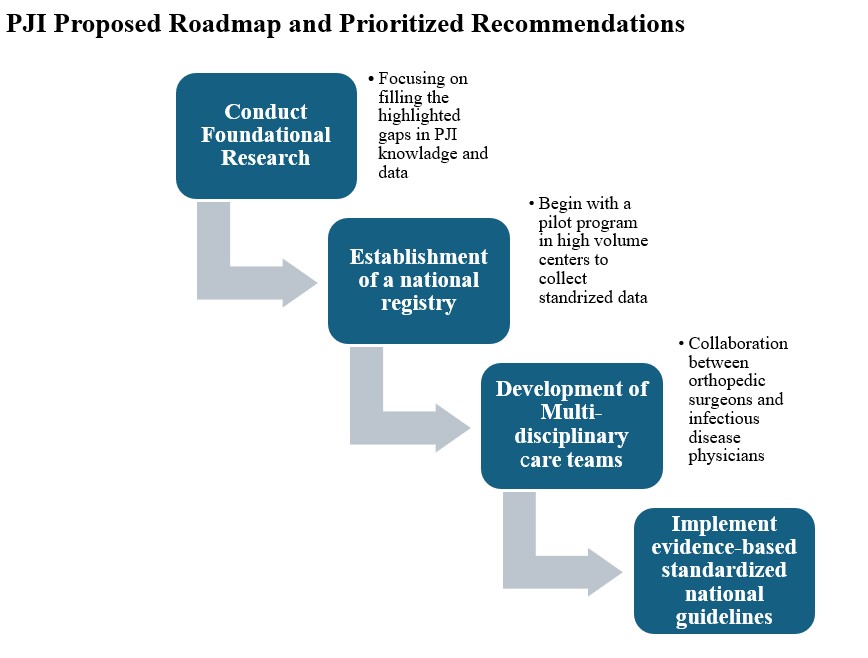
By following this proposed roadmap -shown in Figure 2, we believe that we can move from a position of data scarcity and reliance on external guidance to one of evidence-based, self-determined, and contextually appropriate care for patients with PJI in Egypt.
Conclusion
We conclude from this review that there is limited local evidence on many aspects of PJI in Egypt, including local epidemiological data, and limited knowledge of local risk factors, patient demographics, the detailed microbiological spectrum and antimicrobial resistance patterns, and patient-reported outcomes. Proposed priorities include:
Limitations
This review is a narrative review; it employed a non-systematic literature search, which may have resulted in the omission of relevant studies, particularly unpublished or grey literature. This review did not conduct a formal quality or risk-of-bias assessment of the studies included. Also, due to the overall scarcity of literature, a key limitation in our article is relying on the cross-sectional study by Hafez et al. [3] in many parts of the review, which limits the generalizability of the findings. Finally, the heterogeneity in PJI definitions and reporting across studies makes direct comparison difficult.
Conflicts of Interest
The authors declare no competing interests that could have influenced the objectivity or outcome of this research
Funding Source
The authors declare that no specific grant or funding was received for this research from any public, commercial, or not-for-profit funding agency.
Acknowledgments
None.
Institutional Review Board (IRB)
None.
Large Language Model
The authors declare that generative artificial intelligence (AI) tools (ChatGPT, OpenAI) were used to assist in language refinement and grammar checking during the preparation of this manuscript. The authors reviewed and verified all content, and they take full responsibility for the integrity and accuracy of the manuscript.
Authors Contribution
AM and MA contributed to the conceptualization of the work, literature search, review of articles, methodology, analysis, and synthesis of ideas. AM was responsible for the original draft, writing, and editing. MA provided supervision, guidance, and the final review.
Data Availability
All data are derived from published sources cited in the manuscript; no new datasets were generated.
References
- Abou El-Khier Noha Tharwat, El-Kazzaz Samah Sabry, Elgeidi Adham, Elganainy Abd El Rhman. Sonication to improve the yield in culture-negative peri-prosthetic joint infection. Egyptian Journal of Basic and Applied Sciences. 2019;6(1):46-53. doi:10.1080/2314808x.2019.1651552
- Elsaqa Mahmoud, Karim Mahmoud A., Ebeid Walid, Youness Mohamed. One day versus three days’ antibiotic prophylaxis in joint arthroplasty. A prospective randomized controlled trial. Journal of Musculoskeletal Surgery and Research. 2021;6:57-61. doi:10.25259/jmsr_80_2021
- Hafez M. A., Zamel F., El-Khadrawi T., El Ganzoury I., Lotfy A. M., Fansa M., Makram A. M.. The rate and management of prosthetic joint infection in the low-income setting: a cross-sectional study. Ann Med Surg (Lond). 2023;85(4):790-795. doi:10.1097/MS9.0000000000000430 PMID: 37113835 PMCID: PMC10129171
- The World Bank. Human Capital Project --- Economy: Egypt, Arab Rep. [Internet]. 2026.
- Abdelnasser M. K., Bakhet A., Hosni A., Kamal D. T., Osman O. B., Abdelhameed M. A., Moustafa M. M.. Alpha defensin immunoassay is more effective for ruling out rather than diagnosing periprosthetic joint infection (PJI): a prospective cohort study. Arthroplasty. 2025;7(1):52. doi:10.1186/s42836-025-00337-8 PMID: 41057905 PMCID: PMC12506515
- Fakhreldin Ahmed Kamel, Romeih Mohamed, Helal Ahmed Samir, Elmehy Emad. Incidence and prevention of early postoperative infection in orthopedic surgery. International Journal of Orthopaedics Sciences. 2024;10(3):257-263. doi:10.22271/ortho.2024.v10.i3d.3606
- Elgeidi A., Elganainy A. E., Abou Elkhier N., Rakha S.. Interleukin-6 and other inflammatory markers in diagnosis of periprosthetic joint infection. Int Orthop. 2014;38(12):2591-5. doi:10.1007/s00264-014-2475-y PMID: 25117573
- Ebied AymanM. Single-stage versus two-stage revision of total hip replacement for contained periprosthetic infection. The Egyptian Orthopaedic Journal. 2016;51(2). doi:10.4103/1110-1148.203142
- Sharkawy Mohamed Abd el-moumen, Morsi Elsayed, Zakarya Bahaa, Ebied Ahmed Ali. Culture and Sensitivity Test for Fluid of Hemovac after Hip and Knee Arthroplasty. The Egyptian Journal of Hospital Medicine. 2025;100(1):4095-4101. doi:10.21608/ejhm.2025.418155.1831
- De Mauro D., Meschini C., Balato G., Ascione T., Festa E., Bizzoca D., Moretti B., Maccauro G., Vitiello R.. Sex-related differences in periprosthetic joint infection research. J Bone Jt Infect. 2024;9(2):137-142. doi:10.5194/jbji-9-137-2024 PMID: 38895102 PMCID: PMC11184614
- Abdelnasser M. K., Bakhet A., Elagramy M., Abdelhameed M. A.. No added value of the neutrophil-lymphocyte ratio and platelet count to mean platelet volume ratio over the traditional serum markers (erythrocyte sedimentation rate and C-reactive protein) in the diagnosis of periprosthetic joint infection. Knee Surg Sports Traumatol Arthrosc. 2025;33(12):4244-4254. doi:10.1002/ksa.12768 PMID: 40652379
- Ebied A. M., Elseedy A. I., Gamal O.. Single-stage revision for periprosthetic hip infection using antibiotic loaded impaction graft. Hip Int. 2016;26(6):573-579. doi:10.5301/hipint.5000401 PMID: 27739567
- Osmon D. R., Berbari E. F., Berendt A. R., Lew D., Zimmerli W., Steckelberg J. M., Rao N., Hanssen A., Wilson W. R., Infectious Diseases Society of America. Diagnosis and management of prosthetic joint infection: clinical practice guidelines by the Infectious Diseases Society of America. Clin Infect Dis. 2013;56(1):e1-e25. doi:10.1093/cid/cis803 PMID: 23223583
- Abdelhameed M. A., Khalifa Y. E., Bakr H. M., Abdelnasser M. K.. Debridement, Antibiotics, and Implant Retention for an Early Periprosthetic Infection After Unicompartmental Knee Arthroplasty: A Technical Note. Arthroplast Today. 2022;17:16-19. doi:10.1016/j.artd.2022.06.009 PMID: 35942108 PMCID: PMC9355908
- Sires J. D., Pham K., Wilson C. J.. The Impact of a Dedicated Multidisciplinary Team Approach for Prosthetic Joint Infections of the Lower Limb. Indian J Orthop. 2023;57(5):696-702. doi:10.1007/s43465-023-00842-5 PMID: 37128563 PMCID: PMC10147879
- Vasoo S., Chan M., Sendi P., Berbari E.. The Value of Ortho-ID Teams in Treating Bone and Joint Infections. J Bone Jt Infect. 2019;4(6):295-299. doi:10.7150/jbji.41663 PMID: 31966961 PMCID: PMC6960030
- World Health Organization. Global guidelines for the prevention of surgical site infection [Internet]. 2018.
References
1. Abou El-Khier NT, El-Kazzaz SS, Elgeidi A, Elganainy AER. Sonication to improve the yield in culture-negative peri-prosthetic joint infection. Egyptian Journal of Basic and Applied Sciences. 2019: 46 [https://doi.org/10.1080/2314808x.2019.1651552]
2. Elsaqa M, Karim MA, Ebeid W, Youness M. One day versus three days’ antibiotic prophylaxis in joint arthroplasty. A prospective randomized controlled trial. Journal of Musculoskeletal Surgery and Research. 2021: 57 [https://doi.org/10.25259/jmsr_80_2021]
3. Hafez MA, Zamel F, El-Khadrawi T, El Ganzoury I, Lotfy AM, Fansa M, Makram AM. The rate and management of prosthetic joint infection in the low-income setting: a cross-sectional study. Ann Med Surg (Lond). 2023: 790 [PMID: 37113835, https://doi.org/10.1097/MS9.0000000000000430]
4. The World Bank. Human Capital Project — Economy: Egypt, Arab Rep. 2026. Available from: https://humancapital.worldbank.org/en/economy/EGY.
5. Abdelnasser MK, Bakhet A, Hosni A, Kamal DT, Osman OB, Abdelhameed MA, Moustafa MM. Alpha defensin immunoassay is more effective for ruling out rather than diagnosing periprosthetic joint infection (PJI): a prospective cohort study. Arthroplasty. 2025: 52 [PMID: 41057905, https://doi.org/10.1186/s42836-025-00337-8]
6. Fakhreldin AK, Romeih M, Helal AS, Elmehy E. Incidence and prevention of early postoperative infection in orthopedic surgery. International Journal of Orthopaedics Sciences. 2024: 257 [https://doi.org/10.22271/ortho.2024.v10.i3d.3606]
7. Elgeidi A, Elganainy AE, Abou Elkhier N, Rakha S. Interleukin-6 and other inflammatory markers in diagnosis of periprosthetic joint infection. Int Orthop. 2014: 2591 [PMID: 25117573, https://doi.org/10.1007/s00264-014-2475-y]
8. Ebied A. Single-stage versus two-stage revision of total hip replacement for contained periprosthetic infection. The Egyptian Orthopaedic Journal. 2016: [https://doi.org/10.4103/1110-1148.203142]
9. Sharkawy MAe-m, Morsi E, Zakarya B, Ebied AA. Culture and Sensitivity Test for Fluid of Hemovac after Hip and Knee Arthroplasty. The Egyptian Journal of Hospital Medicine. 2025: 4095 [https://doi.org/10.21608/ejhm.2025.418155.1831]
10. De Mauro D, Meschini C, Balato G, Ascione T, Festa E, Bizzoca D, Moretti B, Maccauro G, Vitiello R. Sex-related differences in periprosthetic joint infection research. J Bone Jt Infect. 2024: 137 [PMID: 38895102, https://doi.org/10.5194/jbji-9-137-2024]
11. Abdelnasser MK, Bakhet A, Elagramy M, Abdelhameed MA. No added value of the neutrophil-lymphocyte ratio and platelet count to mean platelet volume ratio over the traditional serum markers (erythrocyte sedimentation rate and C-reactive protein) in the diagnosis of periprosthetic joint infection. Knee Surg Sports Traumatol Arthrosc. 2025: 4244 [PMID: 40652379, https://doi.org/10.1002/ksa.12768]
12. Ebied AM, Elseedy AI, Gamal O. Single-stage revision for periprosthetic hip infection using antibiotic loaded impaction graft. Hip Int. 2016: 573 [PMID: 27739567, https://doi.org/10.5301/hipint.5000401]
13. Osmon DR, Berbari EF, Berendt AR, Lew D, Zimmerli W, Steckelberg JM, Rao N, Hanssen A, Wilson WR, Infectious Diseases Society of A. Diagnosis and management of prosthetic joint infection: clinical practice guidelines by the Infectious Diseases Society of America. Clin Infect Dis. 2013: e1 [PMID: 23223583, https://doi.org/10.1093/cid/cis803]
14. Abdelhameed MA, Khalifa YE, Bakr HM, Abdelnasser MK. Debridement, Antibiotics, and Implant Retention for an Early Periprosthetic Infection After Unicompartmental Knee Arthroplasty: A Technical Note. Arthroplast Today. 2022: 16 [PMID: 35942108, https://doi.org/10.1016/j.artd.2022.06.009]
15. Sires JD, Pham K, Wilson CJ. The Impact of a Dedicated Multidisciplinary Team Approach for Prosthetic Joint Infections of the Lower Limb. Indian J Orthop. 2023: 696 [PMID: 37128563, https://doi.org/10.1007/s43465-023-00842-5]
16. Vasoo S, Chan M, Sendi P, Berbari E. The Value of Ortho-ID Teams in Treating Bone and Joint Infections. J Bone Jt Infect. 2019: 295 [PMID: 31966961, https://doi.org/10.7150/jbji.41663]
17. World Health Organization. Global guidelines for the prevention of surgical site infection 2018. Available from: https://www.who.int/publications/b/47483.
Data Availability Statement
All data are derived from published sources cited in the manuscript; no new datasets were generated.
License
Copyright (c) 2026 Asem Mohsen, Mostafa Alfishawy

This work is licensed under a Creative Commons Attribution 4.0 International License.
Copyright and Licensing
All articles published in ASIDE Internal Medicine are open access and freely available online immediately upon publication, without embargo.
This journal applies the terms of the Creative Commons Attribution 4.0 International License (CC BY 4.0). Under this license, anyone may copy, redistribute, remix, transform, and build upon the material for any purpose, even commercially, provided that proper credit is given to the original author(s), a link to the license is provided, and any changes made are indicated.
-
License link: https://creativecommons.org/licenses/by/4.0/
-
Machine-readable license metadata is embedded in each article and its DOI record.
Copyright Holder
Copyright in all articles remains with the author(s). ASIDE Internal Medicine is published and owned by the American Society for Inclusion, Diversity, and Equity in Healthcare (ASIDE). By submitting a manuscript, authors agree to grant the publisher a non-exclusive license to publish, distribute, and archive the work under the terms of the CC BY 4.0 license.
Third-party Material
Any material (e.g., images, figures, or tables) not covered by CC BY 4.0 will be clearly indicated in the article. Users must obtain permission directly from the copyright holder for reuse of such third-party material.
Author Rights and Self-Archiving
Authors are permitted to deposit all versions of their work (preprint, author’s accepted manuscript, and version of record) in institutional or subject repositories of their choice immediately upon publication, without embargo, provided that the DOI and license information are included.

Published
Issue
Section
Categories
How to Cite
Article history
- Received
- 7 Dec 2025
- Received in revised form
- 10 Mar 2026
- Accepted
- 18 Mar 2026
- Published
- 29 Mar 2026