
Quality of sepsis management in the Emergency Department at Goulburn Valley Health, Victoria, Australia: A Retrospective Audit
DOI:
https://doi.org/10.71079/ASIDE.HS.112725241Abstract
Background: This audit aims to assess the care of sepsis at Goulburn Valley Health by comparing current practice with national benchmarks and the local sepsis protocol. The secondary objectives explore relationships between different clinical factors and sepsis care to provide insights that may guide future studies.
Method: The audit was conducted in the Emergency Department at Goulburn Valley Hospital in Shepparton. It involved a retrospective review of both electronic and paper medical records for patients diagnosed with sepsis. Included participants were patients admitted with sepsis or septic shock between January 1, 2023, and March 31, 2023. Key measurements included adherence to the local sepsis pathway, time from triage to intravenous fluids, time from triage to intravenous antibiotics, and compliance with the electronic Therapeutic Guidelines (eTG) for initial treatment. Additional measurements included time from triage to blood cultures, lactate trends, and adequacy of fluid resuscitation.
Results: The median time from triage to fluid resuscitation was 51 minutes (IQR 32–91.5). The median time from triage to antimicrobial infusion was 68 minutes (IQR 48–117). Overall, 59% of patients received appropriate antimicrobial coverage, while 41% did not.
Conclusion: The median infusion times compared favorably with the national pilot under the definitions used; however, differences in time-zero definitions, selection criteria, and a small sample size limit direct comparison. A notable proportion of patients did not receive appropriate antimicrobial coverage. Based on these findings, improvements in sepsis management are recommended, including implementing a sepsis bundle dashboard and strengthening antimicrobial stewardship efforts.
Keywords:
Sepsis, Quality improvement, Emergency medicine, Antimicrobial therapy, Clinical auditFull Text
Introduction
Sepsis is defined as a time-critical medical condition that arises when the body’s immune response to an infection causes damage to tissue and organs [1,2]. In 2017, there were approximately 55,251 cases of sepsis with 8,700 related deaths due to sepsis. The direct economic burden of sepsis amounts to 700 million dollars annually within the Australian healthcare system [1]. The significance of sepsis as a medical condition with high morbidity and mortality means that evidence-based standards of sepsis management are pivotal in providing better patient health outcomes [3]. The rationale for completing this audit at Goulburn Valley Health is to review current standards of sepsis management in the Emergency Department and to provide insight into the clinical improvement of local sepsis protocols.
The benchmark criteria used to determine sepsis cases are the Goulburn Valley Health sepsis protocol form, which is similar to the SIRS criteria and includes clinical indicators such as respiratory rate, heart rate, temperature, and white cell count. The SIRS criteria resulted in earlier identification in greater than 50% of patients within a median time of 26 minutes [IQR 0,119 minutes] compared to qSOFA with a median time of 113 minutes [IQR 60, 251 minutes] or equivalent (54.7% vs 42.3%, p<0.001) [4]. The prompt sepsis identification provided by SIRS in the emergency department would affect patient management [5]. Other criteria, such as qSOFA, may be used in the emergency setting to determine organ dysfunction, but it is recommended to use it in conjunction with SIRS for identification and prognosis.
Within the Australian regional context, a further study investigated the appropriateness of antimicrobial prescribing for patients. It was found that inappropriate prescribing in sepsis was higher in regional health centres compared to metropolitan centres (24.0% vs. 22.1%; P <0.001) [6]. The audit will investigate whether a regional hospital such as Goulburn Valley Health has a high rate of inappropriate antimicrobial prescribing.
Method
The study will be a single-hospital, retrospective observational study involving patients admitted to Goulburn Valley Health (GVH) in Victoria, Australia. Patients who presented to the Emergency Department (ED) from 01/01/2023 to 31/03/2023 will be included. The patient group will consist of all adults aged 18 and above, formally diagnosed on the patient’s ED discharge summary with “sepsis” or “septic shock” as per the treating clinician, and triaged as Category 2 as per the Australasian Triage System. Patient sepsis status will be determined using the SIRS criteria, which coincides with the hospital’s sepsis protocol. Patients not included are paediatric patients (under 18 years of age) and patients triaged to other categories other than Category 2. Completion of local sepsis protocol forms involves initiating the form at triage and completing it within 60 minutes, clearly marking sepsis criteria as fulfilled, completing the primary survey sheet, and obtaining the signature of either the bedside nurse or the treating clinician. Patients were also grouped by demographic factors, including age, which was further categorised into three age groups: under 65 inclusive, 65-75 exclusive, and 75 and over inclusive. Patients were separated by immunocompromised state, which included the following causes: chronic kidney disease (CKD), malignancy from all causes, type 1 and type 2 diabetes, all infectious sources, systemic diseases including rheumatoid arthritis (RA), and inflammatory bowel disease (IBD). The time from triage to admission for fluid infusion, antibiotic infusion, and blood culture (BC) collection will involve recording the time from first contact at triage until the recorded time of fluid infusion as per hospital documentation, the recorded time for antibiotic infusion as per the medication chart, and the recorded time of BC collection as per pathology records, respectively. The patient’s length of stay (LOS) was measured from formal admission to the ED until the recorded time of discharge from the ED, wards (including surgical and medical), or the intensive care unit (ICU). Lactate levels were recorded from the initial pathology blood draw to form the “initial” lactate values, and the subsequent lactate value was recorded as the “serial” lactate value. Fluid resuscitation volume was calculated as the crystalloid fluid (only 0.9% normal saline was considered) infused over a period of three hours at a rate of 30ml/kg, as either maintenance or bolus doses.
Patient information from Goulburn Valley Health will be collected from the electronic Health Information System (HIS) and accessed and stored electronically on the local GVH intranet. Information to be collected will include a combination of quantitative and qualitative data, such as sepsis protocol charts, fluid balance charts, medication charts, blood culture reports, PROMPT (Policies and Procedures) guidelines as per Goulburn Valley Health, and patient demographic details, including sex and age. Outcome measurements, including length of stay and immunocompromised state, were extracted from the patient database. National guideline information will be derived from the Sepsis Medical Record Review conducted by the Australian Commission on Safety and Quality in Health Care (ACSQH) [7]. Antimicrobial adherence information was gathered from the regional audit review completed by Bishop et al [6].
Patient information will be collected and organised into several variables in a spreadsheet using Microsoft Excel (2019), and statistical calculations will be performed in GraphPad Prism 8. The tools to be used will depend on the objective. Given the small sample size and presence of outliers in the results, non-parametric analysis will be utilised. The primary objective results will be presented as median values with interquartile ranges, along with confidence intervals based on the Hodges-Lehman estimator at approximately 95% confidence. To compare categorical values, a chi-squared test will be used. The Mann-Whitney U test and the Kruskal-Wallis test with subsequent Dunn’s multiple comparison test will be utilised for multiple-group analysis. A p-value of <0.05 is used to signify statistical significance. Once the statistical analysis is complete, the data will be used for presentation and reporting of the findings. Once the collected information is no longer used for the clinical audit, it will be disposed of in accordance with local guidelines.
Ethics Statement
Due to the nature of the clinical audit (Quality improvement audit), it will be a low-risk/negligible project. Information will be collected through a data request monitored by the hospital’s ethics department, which has received approval from the research and ethics department. Data will be utilised and stored on the local hospital intranet for the duration of the project. Patient results post statistical calculations will be deidentified in line with the hospital’s research policy. A waiver has been obtained from the local hospital Human Research Ethics Committee (HREC) in accordance with NHMRC Ethics guidelines.
Results
During the study period from 1 January 2023 to 31 March 2023, 117 patients were diagnosed with sepsis in the Emergency Department, of whom 78 met the study criteria. The average age of the participants was 69 years (95% CI 65-74), with an age range from 23 to 100 years. Age distribution revealed 20 participants under 65 (26%), 15 between 65 and 75 (19%), and 43 above 75 (55%). Regarding sex distribution, 32 females (41%) and 46 males (59%) participated. 40 participants (51%) were classed as immunocompromised. Of the 40 participants, 16 (40%) were immunocompromised due to malignancy from all causes, 23 (58%) due to CKD, 11 (28%) due to either type 1 or type 2 diabetes, and 3 (8%) due to systemic diseases. The median length of stay was 5298 minutes [IQR 4224-7290], with 49/78 (63%) of patients admitted from the ED to specialty inpatient wards, 18/78 (23%) admitted to the intensive care unit (ICU), and 11/78 (14%) discharged from the ED directly after 24 hours.
| Characteristic | N (%) | Mean (95% CI) | Median (IQR) |
|---|---|---|---|
| Age (total) | 78/78 | 69 (65-74) | - |
| Age (<65) | 20/78 (26%) | - | - |
| Age (65-75) | 15/78 (19%) | - | - |
| Age (75+) | 43/78 (55%) | - | - |
| Sex - Female | 32/78 (41%) | - | - |
| Sex - Male | 46/78 (59%) | - | - |
| Immunocompromised (total) | 40/78 (51%) | - | - |
| malignancy from all causes | 16/40 (40%) | - | - |
| CKD | 23/40 (58%) | - | - |
| type 1 and type 2 diabetes | 11/40 (28%) | - | - |
| systemic diseases including RA and IBD | 3/40 (8%) | - | - |
| Time from triage to antibiotic infusion in 60 minutes | 27/78 (35%) | - | 68.50 (62-80) minutes |
| Time from triage to fluid infusion in 60 minutes | 26/78 (33%) | - | 50.50 (39-69) minutes |
| Sepsis form completed | 36/63 (57%) | - | - |
| Antibiotic criteria met | 43/78 (55%) | - | - |
| Length of inpatient stay | 76/78 (97%) | - | 5298 (4224-7290) minutes |
| Wards (all specialties included) | 49/78 (63%) | - | - |
| ICU (intensive care unit) | 18/78 (23%) | - | - |
| Emergency department | 11/78 (14%) | - | - |
| Lactate – initial level | 77/78 (99%) | - | 1.6 (1.4-2.0) |
| Lactate – serial | 50/78 (64%) | - | 1.6 (1.3-1.9) |
| Time from triage to blood culture In 60 minutes | 76/78 (98%) | - | 28 (27-39) minutes |
| Fluid resuscitation volume | 66/78 (85%) | - | 1000 (1000-1500) ml |
CKD, Chronic Kidney Disease; RA, Rheumatoid Arthritis; IBD, Inflammatory Bowel Disease; ICU, Intensive Care Unit.
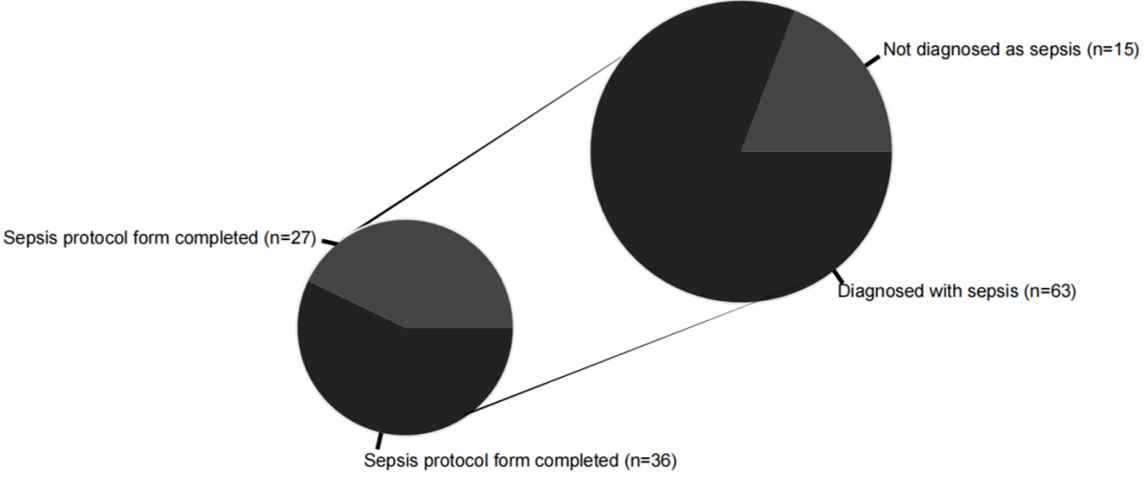
Of the 78 patients, 81% (n = 63) met local sepsis protocol criteria for sepsis. Of the 63 patients that were diagnosed as sepsis according to local sepsis criteria, 57% (n=36) of local sepsis protocol forms were completed appropriately and promptly, and 43% (n=27) were either partially completed or not completed at all [Figure 1].
The national median time for fluid resuscitation from triage to ED admission was 72 minutes, according to the National Pilot Study. Data collated from the hospital show that the median time of fluid resuscitation from triage to ED admission was 51 minutes [IQR: 32-91.5 minutes]. Data from the National Pilot Study shows that the median time of antimicrobial infusion from triage to ED admission was 91 minutes. In comparison, the hospital median time of antimicrobial infusion from triage to ED admission was 69 minutes [IQR: 48-117]. The median time for blood culture collection was recorded at 28 minutes [IQR: 27-39]. The median fluid resuscitation volume over the three hours from triage was 1000ml [IQR 1000-1500]. Initial lactate reading was recorded for 77/78 of the participants with a value of 1.6 [IQR 1.4-2.0], with serial lactate levels at 1.6 [IQR 1.3-1.9]
The choice of antimicrobials used was determined from national eTG guidelines. As per the National Pilot Study for sepsis, 85% of patients audited had received adequate antimicrobial coverage based upon a provisional diagnosis of sepsis and an initial source (except where cases were diagnosed as sepsis of unknown origin). 7.5% of patients from the audit group did not receive adequate coverage, and another 7.5% of patients were unable to be assessed within the study. When compared to hospital data collated, 59% of patients were given appropriate antimicrobial coverage, with 41% of patients not receiving adequate coverage.
| Sepsis Source | Diagnosis of source from study data (n) | Guideline Treatment for Source (Tazobactam + Piperacillin as default for febrile neutropenia) | Number of patients treated with antibiotics as per Guideline (n, %) |
|---|---|---|---|
| All sources (From Sepsis study) | 147/159 | N/A | 135/147, 92% |
| Respiratory | 27/78 | Ceftriaxone + Azithromycin | 22/27, 81% |
| Genitourinary | 19/78 | Ceftriaxone + Stat Gentamicin | 12/19, 63% |
| Integumentary | 13/78 | Flucloxacillin/Cephazolin | 4/13, 31% |
| PUO | 10/78 | Flucloxacillin + Gentamicin | 5/10, 50% |
| Gastrointestinal | 6/78 | Amoxicillin + Stat Gentamicin + Metronidazole | 3/6, 50% |
| Others including meningitis, dental infection, quinsy | 3/78 | Ceftriaxone (meningitis) Benzylpenicillin + metronidazole (quinsy, dental infection) | 0/3, 0% |
LRTI, Lower respiratory tract infection; URTI, Upper respiratory tract infection; UTI, Urinary tract infection; PUO, Pyrexia of unknown origin; Respiratory, including bacterial, viral pneumonia, and other LRTI/URTI infections; Genitourinary, including cystitis, urethritis, pyelonephritis, ascending UTI, renal calculi, epididymo-orchitis; Skin, including cellulitis, chronic wounds, erysipelas, trauma; Gastrointestinal, including gastroenteritis, cholangitis, and surgical abdominal causes, including cholecystitis and appendicitis.
Through Kruskal-Wallis analysis with Dunn’s multiple comparison test, analysis of age and multiple sepsis bundle factors, including fluid infusion times, antibiotic infusion times, blood culture collection times, and fluid resuscitation volume. There were insignificant age differences across the antibiotic, fluid infusion, blood culture collection, and fluid resuscitation volume categories. There was a significant difference in length of stay between the three groups (H(2) = 14.94, p = 0.0006), specifically between the under 65 and 65-75 age groups (p = 0.0106) and between the under 65 and over 75 age groups (p = 0.0007). There was also a statistically significant difference in lactate levels (H(2) = 6.179, p = 0.0455), specifically between the under-65 and 65-75 age groups (p = 0.048). Further values are summarised in the table below.
| Comparison Groups | <65 vs >75 (mean rank difference, p value) | <65 vs 65-75 (mean rank difference, p value) | 65-75 vs >75 (mean rank difference, p value) | All age groups (H(df), p value) |
|---|---|---|---|---|
| Length of stay | -21.60, p < 0.0007* | -21.57, p = 0.0106* | 0.0231, p > 0.9999 | H(2) = 14.94, p = 0.0006* |
| Antibiotic infusion | -5.259, p > 0.9999 | -0.7407, p > 0.9999 | 4.518, p > 0.9999 | H(2) = 0.61, p = 0.737 |
| Fluid infusion | 0.9167, p > 0.9999 | 2.414, p > 0.9999 | 1.497, p > 0.9999 | H(2) = 0.2327, p = 0.890 |
| Blood culture collection | 1.753, p > 0.9999 | 8.080, p = 0.5152 | 6.327, p > 0.9999 | H(2) = 2.161, p = 0.3394 |
| Lactate levels | -13.59, p = 0.2063 | -14.96, p = 0.0480* | -1.366, p > 0.9999 | H(2) = 6.179, p = 0.0455* |
| Fluid resuscitation volume | 0.09276, p > 0.9999 | 1.515, p > 0.9999 | 1.422, p > 0.9999 | H(2) = 0.1094, p = 0.9468 |
H, Kruskal Wallis statistic; df, degrees of freedom; p values <0.005 denote statistical significance.
Through Chi-squared analysis, there was non-significant association between sex and antibiotic infusion time (, df = 2, p = 0.29), fluid infusion time (, df = 2, p = 0.4957), and blood culture collection time (, df = 2, p = 0.847).
Using the Mann-Whitney U test revealed that there was no statistically significant relationship between length of stay and whether a participant was immune-compromised or non-immune compromised (p=0.0968). A statistically significant association was noted between the time of fluid infusion and the time of antibiotic infusion (p=0.0296). Furthermore, there was a noted associated between age and length of stay (p<0.0001).
Discussion
This study demonstrated that 81% (n=63) of cases were diagnosed with sepsis based on local sepsis criteria, whilst 19% (n=15) were diagnosed with sepsis but did not meet local sepsis criteria. The results show that there is discordance between clinical diagnosis and local protocol criteria. This can affect patient treatment, including inappropriate diagnoses and treatments. By providing patients with treatment that they do not require, this places them at a higher risk of adverse events relating to treatment. Furthermore, resources used for the patient’s treatment would be unnecessarily utilised and would not have provided any additional benefit Of the 63 patients, 57% (n=36) of the patients had an appropriately completed sepsis protocol form whilst 43% (n=27) of patients had either partially completed form or the form was not completed at all, meaning that there is low compliance with completing sepsis protocol forms. The hospital expects that every sepsis protocol form be completed once the patient meets the criteria; therefore, the hospital has underperformed on this metric. Reasons for low compliance with form completion include time constraints with other patient jobs, human error, and treating teams’ unawareness of the sepsis form due to insufficient training. The sepsis protocol aims to create a standardized guideline to help identify cases of sepsis, guide appropriate initial investigations to strengthen the diagnosis, and ensure that patients receive proper treatment and that it is not missed due to human error. The use of a sepsis protocol has been linked to improving the mortality outcomes of patients diagnosed with severe sepsis. A study by Nguyen et al. (2007) examined the outcomes of using a sepsis protocol (referred to as a “bundle” in the report) to determine whether modifying physician behaviour for the treatment of sepsis in the emergency department would improve inpatient mortality rates. The study found that more appropriate treatment was provided to the patient (100.0 vs. 89.7%, p = 0.04) and that there was a clinically significant decrease in mortality (OR 0.36, [0.17-0.79] p = 0.01) [8]. The adherence to sepsis protocol forms can be further improved by ongoing training and awareness of the form, to hold discussion with nursing and medical staff to make the protocol a priority during the care of a patient, delegation of the sepsis protocol to the triage nurse for the ward nurse to follow through on and finally, to place signage or posters across the ED to bring further awareness.
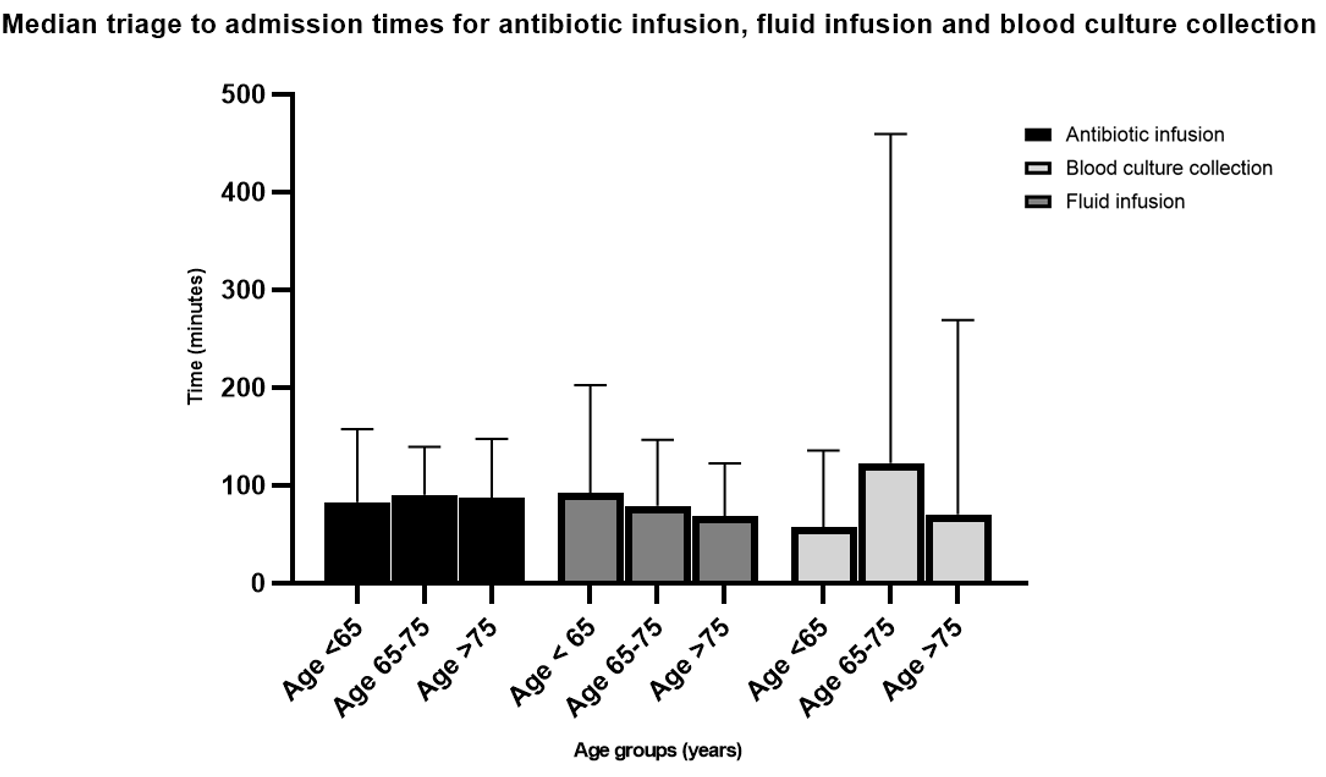
When analysing the data from the study regional hospital, the median time for fluid resuscitation from triage to ED admission was 51 minutes [IQR: 32-91.5 minutes], which was 21 minutes quicker than the national standard of 72 minutes, indicating that the hospital’s performance exceeded the national standard. The median time of antimicrobial infusion from triage to ED admission was 68 minutes [IQR: 48-117 minutes], which was 23 minutes quicker than the national standard of 91 minutes, meaning that the hospital’s performance exceeded the national standard.
The discrepancy in the average times is most likely due to multiple outlier data points in the national standard, which would skew the collated data and be inappropriate for measuring fluid and antimicrobial infusion performance. The hospital had performed well in the median time for both treatments due to reasons such as appropriate recognition of reduced blood pressure by the treating team, accessibility of fluid bags in an easily accessible area for the treating team to use, accessible guidelines on antimicrobial use on the PROMPT website and strong communication between varying team members that are a part of the patient’s care.
Nevertheless, upon further analysis, multiple areas of improvement were identified. One such area is improving electronic blood pressure monitoring devices with reduced calibration error and making sphygmomanometers more accessible. Often, nurses reported blood pressure readings from the electronic blood pressure machines, which did not meet sepsis criteria; however, when measured manually, they did meet the criteria, leading to a delay in fluid infusion from the time of electronic measurement to the time of manual measurement. A potential delay in antimicrobial treatment is due to inefficient stock management. Given the volume of patients requiring antimicrobials in the hospital, inefficient stock management would lead to medications not being readily available at the dispensing machine, requiring extra time to order and transport them from one area of the hospital to another, delaying treatment. Another factor in delayed treatment infusion is documentation delays. The documentation process for treatments involves two nurses signing off on the order prior to administration. At times, there may not be two nurses available to sign off on the order due to higher-priority jobs or because nurses are on break, which would further delay treatment. The delay can be reduced by upgrading electronic devices to improve blood pressure monitoring accuracy and by purchasing more sphygmomanometers; however, this may not be feasible given cost constraints in the ED and logistical issues. Furthermore, documentation policies may need to be updated to allow either two nurses or a nurse and a doctor to sign off, providing greater avenues for completing documentation.
Appropriate antimicrobial treatment coverage was measured based on adherence to eTG guidelines, suspected source, any drug allergies, renal function, and local antimicrobial resistance. Hospital data show that 59% of patients treated for sepsis had appropriate antimicrobial coverage, compared to 85% in the national benchmark. The results show a substandard antimicrobial coverage in the treatment of sepsis. A possible cause of such a discrepancy is the varied choice of antimicrobials by physicians and the use of outdated local antimicrobial guidelines. Locum consultants usually lead the ED at the study regional hospital, having come from various hospitals and training backgrounds. Given this variation, some physicians would prefer to use a certain antimicrobial over another, even if it deviates from eTG guidelines. Furthermore, consultants accustomed to following local hospital policy would find themselves using the hospital’s antimicrobial guidelines, last reviewed in 2022. Given that three years have passed since the guidelines were last reviewed, there is a possibility of changes to the eTG guidelines that are not reflected in the guidelines. The study completed by Kumar et al analysed groups of patients that were treated with either appropriate antimicrobial coverage or inappropriate antimicrobial coverage and found that there was an almost five fold decrease in mortality (52% vs 10.3%, OR = 9.45, 95%CI [7.74-11.54] p > 0.0001) of the patients in the appropriate antimicrobial group compared to the inappropriate antimicrobial group [9]. Appropriate antimicrobial coverage can be further improved through ongoing training on where to access eTG guidelines and CPD activities. Implementing an antimicrobial stewardship program in the ED would enable infectious disease experts to provide appropriate treatment regimens tailored to each patient’s clinical situation. The stewardship team should take a multidisciplinary approach, with doctors and pharmacists involved in the regular monitoring and updating of all antimicrobial policies [10].
Finally, increased convenience in accessing medical records internally and externally to the hospital should be provided to ensure that we are aware of pertinent medical information prior to giving antibiotics that would be ineffective in treating the patient, such as resistance to organisms on previous cultures, recent hospital admissions, medication history causing immunosuppression, and malignancy history.
Sepsis recognition through sepsis bundles can be implemented within the hospital to help health staff promptly diagnose sepsis. This would involve completing the interval sepsis bundle within 1 hour at the initial stage, and then post-treatment [11]. A study conducted by Ventakesh et al utilised a sepsis bundle in intervals of 1 hour and 3 hours, which involved the collection of two sets of blood cultures, serum lactate measurement, antibiotics within 3 hours for septic patients without shock, and 1 hour with shock and a fluid bolus at a rate of 20ml/kg. The study found that there was increased compliance in administering antibiotics within 1 hour (OR 1.90 [95% CI 1.1-3.6]) and 3 hours (OR 1.7 [95% CI 1.4-2.1]), reduction in in-hospital mortality (OR 0.60 [95% CI 0.4-0.8]) and improved adherence to antimicrobial guidelines (OR 1.4 [95% CI 0.9-2.1]) [12]. Through such sepsis bundle implementation, this would create a streamlined process for sepsis investigation, diagnosis, and management, aiming to reduce mortality and in-hospital admissions, proving beneficial from both the patient’s and health economics perspectives [13].
Limitation
There are some potential limitations in this study, such as confounding factors within the sepsis local protocol definition. The protocol is based on sepsis diagnosis in 4 categories, of which at least 2 must be met. The four categories for diagnosing a suspected sepsis include temperature either or , heart rate over >90 bpm, respiratory rate >20/min, or white cell count <4 or >12x109 L. Multiple co-morbidities may present in patients that may skew values needed for diagnosis. One such example may be an elevated heart rate in a patient with atrial fibrillation, which would have been present if the patient were not septic, or an increased respiratory rate due to end-stage COPD. Hence, diagnosis must involve an in-depth evaluation and a clinical diagnosis consistent with the criteria. Another noted limitation is the use of only Category 2 triage patients defined with sepsis or septic shock. This introduces a selection bias, selecting only the most urgent sepsis cases; hence, higher-urgency care is provided to those patients, leading to an underestimation of the time from triage to infusion of fluids and antibiotics.
In addition, 63 patients were utilised out of the 78 potential patients diagnosed with sepsis over 3 months. Due to the smaller sample size and time period investigated, this would affect both the reliability and validity of the results compared to a larger study cohort. Further audits, which collect data over a more extended time period or across a larger patient population and involve more hospitals, would provide a larger sample size and, consequently, greater reliability and validity of the results. Moreover, the findings are expected to assist other regional hospitals in planning to improve the quality of care for sepsis patients. Human measurement errors and incomplete recording of values, such as the start of antibiotic infusions and the scanning of records, including sepsis protocols, were also limitations that reduced the data obtained from patient records.
Conclusions
The study investigated sepsis management in the regional setting, measuring triage-to-admission infusion times for antibiotics and fluids, antibiotic adherence, and the rate of completion of local sepsis protocols. The study’s implications are to highlight the factors that affect sepsis treatment and to identify strategies to enhance patient care. Applications of the study would include implementing sepsis bundles or expanding antimicrobial stewardship. Future studies would utilise the data for any further audits conducted at the hospital or for the evaluation of new policies and procedures implemented at the hospital, to serve as a benchmark. Data collated from the study hospital are expected to provide more information and insight into sepsis management within a regional setting.
Key finding
The median infusion times compared favorably with the national pilot under the definitions used; however, differences in time-zero definitions, selection criteria, and a small sample size limit direct comparison. A notable proportion of patients did not receive appropriate antimicrobial coverage. Based on these findings, improvements in sepsis management are recommended, including implementing a sepsis bundle dashboard and strengthening antimicrobial stewardship efforts.
From the authors' abstract.
中文摘要
澳大利亚维多利亚州古尔本谷健康中心急诊科脓毒症管理质量:回顾性审计
背景:本次审计旨在通过将当前实践与国家基准及本地脓毒症方案进行比较,评估古尔本谷健康中心的脓毒症护理。次要目标探讨不同临床因素与脓毒症护理之间的关系,以提供可能指导未来研究的见解。
方法:审计在Shepparton的古尔本谷医院急诊科进行。对2023年1月1日至2023年3月31日期间诊断为脓毒症或脓毒性休克的患者的电子及纸质病历进行回顾性审查。关键测量包括遵循本地脓毒症路径的情况、从分诊到静脉输液的时间、从分诊到静脉抗菌药物的时间,以及对初始治疗的电子治疗指南(eTG)的遵从情况。其他测量包括从分诊到血培养的时间、乳酸趋势以及液体复苏的充足性。
结果:从分诊到液体复苏的中位时间为51分钟(四分位距 32–91.5)。从分诊到抗菌药物输注的中位时间为68分钟(四分位距 48–117)。总体而言,59%的患者获得了适当的抗菌覆盖,而41%未获得。
结论:在所使用的定义下,中位输注时间与国家试点相比表现较好;然而,时间零点定义、选择标准以及样本量小等因素限制了直接比较。相当比例的患者未获得适当的抗菌覆盖。基于这些发现,建议改进脓毒症管理,包括实施脓毒症集束化治疗仪表板并加强抗菌药物管理工作。
本中文摘要为机器辅助翻译,仅供参考;以英文摘要为准。 Machine-assisted Chinese translation of the English abstract; the English abstract is the version of record.
References
1. Australian Commission on Safety and Quality in Health Care. Sepsis Clinical Care Standard. Sydney: ACSQHC; 2022. Available from: https://www.safetyandquality.gov.au/publications-and-resources/resource-library/sepsis-clinical-care-standard-2022.
2. Australian Commission on Safety and Quality in Health Care. Sepsis Medical Record Review: Pilot Study. Sydney: ACSQHC; 2022. Available from: https://www.safetyandquality.gov.au/publications-and-resources/resource-library/sepsis-medical-record-review-pilot-study.
3. Gyawali B, Ramakrishna K, Dhamoon AS. Sepsis: The evolution in definition, pathophysiology, and management. SAGE Open Med. 2019;7:2050312119835043. [PMID: 30915218, PMCID: PMC6429642, https://doi.org/10.1177/2050312119835043].
4. Ore T. Trends and disparities in sepsis hospitalisations in Victoria, Australia. Aust Health Rev. 2016;40(5):511-8. [PMID: 26654709, https://doi.org/10.1071/AH15106].
5. Prasad PA, Fang MC, Abe-Jones Y, Calfee CS, Matthay MA, Kangelaris KN. Time to Recognition of Sepsis in the Emergency Department Using Electronic Health Record Data: A Comparative Analysis of Systemic Inflammatory Response Syndrome, Sequential Organ Failure Assessment, and Quick Sequential Organ Failure Assessment. Crit Care Med. 2020;48(2):200-9. [PMID: 31939788, PMCID: PMC7494056, https://doi.org/10.1097/CCM.0000000000004132].
6. Bishop JL, Schulz TR, Kong DCM, James R, Buising KL. Similarities and differences in antimicrobial prescribing between major city hospitals and regional and remote hospitals in Australia. Int J Antimicrob Agents. 2019;53(2):171-6. [PMID: 30722961, https://doi.org/10.1016/j.ijantimicag.2018.10.009].
7. Australian Commission on Safety and Quality in Health Care. National Sepsis Program; 2023. Based on the 2022–23 ACSQHC National Sepsis Program. Available from: https://www.safetyandquality.gov.au/our-work/national-sepsis-program.
8. Nguyen HB, Corbett SW, Steele R, Banta J, Clark RT, Hayes SR, Edwards J, Cho TW, Wittlake WA. Implementation of a bundle of quality indicators for the early management of severe sepsis and septic shock is associated with decreased mortality. Crit Care Med. 2007;35(4):1105-12. [PMID: 17334251, https://doi.org/10.1097/01.CCM.0000259463.33848.3D].
9. Kumar A. Early antimicrobial therapy in severe sepsis and septic shock. Curr Infect Dis Rep. 2010;12(5):336-44. [PMID: 21308515, https://doi.org/10.1007/s11908-010-0128-x].
10. D'Onofrio V, Meersman A, Magerman K, Waumans L, van Halem K, Cox JA, van der Hilst JC, Cartuyvels R, Messiaen P, Gyssens IC. Audit of empirical antibiotic therapy for sepsis and the impact of early multidisciplinary consultation on patient outcomes. Int J Antimicrob Agents. 2021;58(3):106379. [PMID: 34161787, https://doi.org/10.1016/j.ijantimicag.2021.106379].
11. Khanina A, Cairns KA, McGloughlin S, Orosz J, Bingham G, Dooley M, Cheng AC. Improving sepsis care for hospital inpatients using existing medical emergency response systems. Infect Dis Health. 2020;25(2):63-70. [PMID: 31740379, https://doi.org/10.1016/j.idh.2019.10.003].
12. Venkatesh B, Schlapbach L, Mason D, Wilks K, Seaton R, Lister P, Irwin A, Lane P, Redpath L, Gibbons K, Ergetu E, Rice M. Impact of 1-hour and 3-hour sepsis time bundles on patient outcomes and antimicrobial use: A before and after cohort study. Lancet Reg Health West Pac. 2022;18:100305. [PMID: 35024649, PMCID: PMC8654968, https://doi.org/10.1016/j.lanwpc.2021.100305].
13. Arulappen AL, Danial M, Ng LW, Teoh JC. The Impact of Antibiotics Administration on Mortality for Time in Sepsis and Septic Shock Patients including Possible Reasons for Delayed Administration in Malaysia. Antibiotics (Basel). 2022;11(9). [PMID: 36139981, PMCID: PMC9495043, https://doi.org/10.3390/antibiotics11091202].
Data Availability Statement
The datasets generated and/or analyzed during the current study are not publicly available due to institutional and patient privacy restrictions at Goulburn Valley Health but are available in de-identified form from the corresponding author on reasonable request and subject to approval by the Goulburn Valley Health Research and Ethics Department.
License
Copyright (c) 2025 Jahin Ishraq Ahmed

This work is licensed under a Creative Commons Attribution 4.0 International License.
Copyright and Licensing
All articles published in ASIDE Health Sciences are open access and freely available online immediately upon publication, without embargo.
This journal applies the terms of the Creative Commons Attribution 4.0 International License (CC BY 4.0). Under this license, anyone may copy, redistribute, remix, transform, and build upon the material for any purpose, even commercially, provided that proper credit is given to the original author(s), a link to the license is provided, and any changes made are indicated.
-
License link: https://creativecommons.org/licenses/by/4.0/
-
Machine-readable license metadata is embedded in each article and its DOI record.
Copyright Holder
Copyright in all articles remains with the author(s). ASIDE Health Sciences is published and owned by PubPorta Publishing LLC. By submitting a manuscript, authors agree to grant the publisher a non-exclusive license to publish, distribute, archive, and identify itself as the original publisher of the work under the terms of the CC BY 4.0 license.
Academic oversight and scholarly guidance are provided by the American Society for Inclusion, Diversity, and Equity in Healthcare (ASIDE). Copyright and licensing arrangements are administered by the publisher.
Third-party Material
Any material (e.g., images, figures, or tables) not covered by CC BY 4.0 will be clearly indicated in the article. Users must obtain permission directly from the copyright holder for reuse of such third-party material.
Author Rights and Self-Archiving
Authors are permitted to deposit all versions of their work (preprint, author’s accepted manuscript, and version of record) in institutional or subject repositories of their choice immediately upon publication, without embargo, provided that the DOI and license information are included.
Published
Issue
Section
How to Cite
Article history
- Received
- 29 Aug 2025
- Received in revised form
- 26 Oct 2025
- Accepted
- 8 Nov 2025
- Published
- 27 Nov 2025