Sepsis Mortality Among Patients with Myeloid Leukemia in the United States, 1999–2023: Insights, Trends, and Disparities
Alyaa Ahmed IbrahimⒾ1*, Mahmoud TablawyⒾ2, Mohamed Fawzi HemidaⒾ1, Anika GoelⒾ3, Raveen MujeebⒾ4, Krish PatelⒾ5, Sahil JairamaniⒾ6, AbdAllah DewairⒾ1, Mirna HusseinⒾ1, Maryam SaghirⒾ7, Eshal SaghirⒾ4, Safeya FawziⒾ8, Ehsanullah AlokozayⒾ9, Amro AliⒾ10
- 1Faculty of Medicine, Alexandria University, Alexandria, Egypt
- 2Faculty of Medicine, Al-azhar University, Cairo, Egypt
- 3Department of Medicine, Kakatiya Medical College, Warangal, Telangana, India
- 4Department of Medicine, Dow University of Health Sciences, Karachi, Pakistan
- 5Department of Medicine, C. U. Shah Medical College, Surendranagar, Gujarat, India
- 6Department of Medicine, Liaquat University of Medical and Health Sciences, Jamshoro, Pakistan
- 7Department of Medicine, Jinnah Sindh Medical University, Karachi, Pakistan
- 8Faculty of Nursing, Matrouh University, Marsa Matrouh, Egypt
- 9Faculty of Medicine, Kandahar University, Kandahar, Afghanistan
- 10Department of Internal Medicine, Community Regional Medical Center, California, USA
Abstract
Background: Sepsis is a life-threatening condition that complicates major diseases like myeloid leukemia. Both conditions can lead to morbidity and mortality. Despite its clinical significance, trends in sepsis among myeloid leukemia patients remain understudied.
Methods: Nationwide mortality records were obtained from the CDC-WONDER database for U.S. adults aged ≥ 25 with myeloid leukemia (ICD-10 code C92) and sepsis (ICD-10 codes A40, A41) from 1999 to 2023. Age-adjusted mortality rates (AAMRs) per 100,000 population were calculated for variables. Joinpoint analysis was utilized to evaluate annual percent changes (APCs).
Results: From 1999 to 2023, a total of 35,075 deaths were recorded. The overall AAMR showed a modest but statistically significant increase (0.62) per 100,000 (AAPC 0.31; 95% CI 0.09 to 0.53; p = 0.007). Males experienced higher AAMRs (AAPC: 0.17, 95% CI: -0.05 to 0.40; p = 0.113) than females (0.82 vs.0.48) (AAPC: 0.33, 95% CI: -0.01 to 0.67; p = 0.056). Time trends within each sex were not statistically significant. The highest overall AAMR was recorded among NH Blacks (0.68), followed by NH Whites (0.64). Regional AAMRs were similar; the Northeast showed the largest decline, while the West increased modestly. The overall AAMR was slightly higher in metropolitan areas (0.64) compared to non-metropolitan areas (0.60). Older adults aged ≥ 65 years consistently exhibited the highest CMRs (1.86). Most deaths occurred in inpatient medical facilities (88.80%).
Conclusion: Trends in sepsis mortality among myeloid leukemia patients increased modestly. Higher trends observed in urban areas and NH Blacks. Declines were observed in the Northeast region.
Keywords: Sepsis, Mortality, Trends, Myeloid leukemia
Article information
Introduction
Sepsis is a leading cause of morbidity and mortality in the United States and worldwide. Sepsis-3 defines it as a life-threatening organ dysfunction caused by a dysregulated host response to the infection [1,2]. In the United States, sepsis is the sixth most common admitting diagnosis [3], contributing to more than 1.7 million adult hospitalizations and thousands of deaths annually. Additionally, it remains one of the most common causes of hospital deaths [4,5]. Certain populations, like immunosuppressed patients, especially those with hematological cancers, are more susceptible to sepsis [6,7].
Myeloid leukemia, a clonal proliferation of myeloid cells and their precursors to either neutrophils in chronic myeloid leukemia (CML), or to immature myeloid cells and myeloblasts in acute myeloid leukemia (AML), which is more common [8], results in a state of immunosuppression as a result of the effect of the disease itself and the immunotoxic treatment frequently causing neutropenia [9]. This puts patients with myeloid leukemia at increased risk of developing sepsis. One study found that among 5501 patients diagnosed with AML, 16% developed sepsis compared to 4% of non-AML patients, and that their sepsis-related mortality was 30% compared to 21% in non-AML patients [10]. Furthermore, another study that focused on AML patients who were admitted to the ICU found that septic shock was the primary diagnosis in 32% of cases compared to 17% of non-AML ICU admissions [11]. Another study observed that 28% of AML patients admitted to the ICU developed septic shock [12].
Despite these concerns, we only found limited data describing sepsis-related mortality in myeloid leukemia patients. Although some studies described trends in overall sepsis-related mortality and sepsis-related cancer mortality in the United States [13,14], we couldn’t find any large studies that focused specifically on myeloid leukemia. Thus, the effects of confounding factors such as age, gender, race, and regional differences remain poorly understood. To address this gap, we aim to analyze trends in sepsis-related mortality among United States patients with myeloid leukemia from 1999 to 2023. We will also evaluate disparities in gender, race, census tract, urbanization, place of death, and age group to identify subgroups at elevated risk. We hope to provide new insights to guide clinicians and health policy and to reduce mortality in our target population.
Methods
Study design and population
We conducted a retrospective analysis using death certificate data from the Centers for Disease Control and Prevention Wide-Ranging Online Data for Epidemiologic Research (CDC WONDER) database to examine long-term temporal trends in sepsis mortality among adults aged 25 and older between 1999 and 2023. We chose 25 years to focus on mature adult mortality patterns and excluded individuals younger than 25 years and documents with missing geographic and demographic data, as risks of sepsis among myeloid leukemia patients differ substantially in younger populations. Consequently, this age cutoff has been used by previous studies to define adults [15,16]. We used the International Statistical Classification of Diseases and Related Health Problems-10th Revision (ICD-10) as follows: A40 and A41 for sepsis, and C92 for myeloid leukemia, both as multiple causes of death. Deaths were included if sepsis (A40, A41) and myeloid leukemia (C92) were listed anywhere on the death certificate, either as the underlying cause of death or as one of the contributing causes of death. This comprehensive approach ensures the capture of all deaths where sepsis and myeloid leukemia played a documented role, regardless of their position on the death certificate. Institutional review board approval was not required for this study, as it used de-identified public-use data provided by the government and adhered to the STROBE (Strengthening the Reporting of Observational Studies in Epidemiology) guidelines for reporting [17].
Data abstraction
Data on population size and demographics, including sex, age, race, and region, were extracted. The place of death was categorized into medical facilities, hospice, home, and nursing home/long-term care facilities. Racial and ethnic categories were classified as non-Hispanic (NH) White, NH Black or African American, Hispanic or Latino, and NH Asian or Pacific Islander. Results for NH American Indian/Alaska Native are not reported due to a small sample size, which precludes reliable rate estimation. The National Center for Health Statistics Urban-Rural Classification Scheme was used to assess the population by urban counties per the 2013 U.S. census classification [18]. It is important to note that urban-rural data were consistently available and analyzed only for the period 1999–2020 due to historical limitations in CDC WONDER stratifications. Regions were stratified into Northeast, Midwest, South, and West according to the U.S. Census Bureau definitions [19]. Age groups were divided into 3 groups (25–44, 45–64, and 65 years).
Statistical analysis
Crude mortality rates (CMRs) and age-adjusted mortality rates (AAMRs) per 100,000 population from 1999 to 2023, by year, sex, race/ethnicity, and urban-rural status, were calculated for 1999 to 2020 only, with 95% CIs, using the 2000 U.S. population as the standard [20]. We should mention that all mortality rates (AAMRs/CMRs) were calculated using the total U.S. population as the denominator, reflecting our focus on population-level burden rather than risk among individuals diagnosed with myeloid leukemia. Consequently, CMRs were determined by dividing the number of sepsis and myeloid leukemia patients by the corresponding U.S. population of that year. It’s worth mentioning that we used CMRs exclusively for age-specific analyses, as age adjustment would mask true differences between age groups. For all other variables, AAMRs were calculated to ensure comparability across populations with differing age structures. The Joinpoint Regression Program (Joinpoint V 5.4.0.0, National Cancer Institute) was used to determine the average annual percent change (AAPC) and the annual percent change (APC) with 95% CI in AAMR to quantify national annual trends in sepsis and myeloid leukemia-related mortality. Joinpoint regression, a segmented regression technique, was used to identify points of trend change (join points) by fitting log-linear models and using permutation tests to select the optimal number of join points, thereby ensuring model fit [21]. Using this regression analysis, we identified the joinpoints, dividing the study period into segments based on observed inflection points. This method allows identification of significant changes in AAMR over time by fitting log-linear regression models where temporal variation occurred. APCs were considered increasing or decreasing if the slope describing the change in mortality was significantly different from zero using two-tailed t testing. A p-value < 0.05 was considered statistically significant.
Results
Overall trends
From 1999 to 2023, sepsis-related deaths among patients with myeloid leukemia accounted for a total of 35,075 deaths in the United States among adults aged 25 years and older. Most deaths occurred in medical facilities as inpatients (88.80%), followed by decedents’ homes (4.44%), hospice facilities (2.44%), nursing homes or long-term care settings (1.65%), outpatient or emergency room settings (1.49%), other locations (0.84%), medical facilities – status unknown (0.08%), medical facilities – dead on arrival (0.05%), and for 0.20% of cases, the place of death was unknown (Supplemental Tables 1, 2).
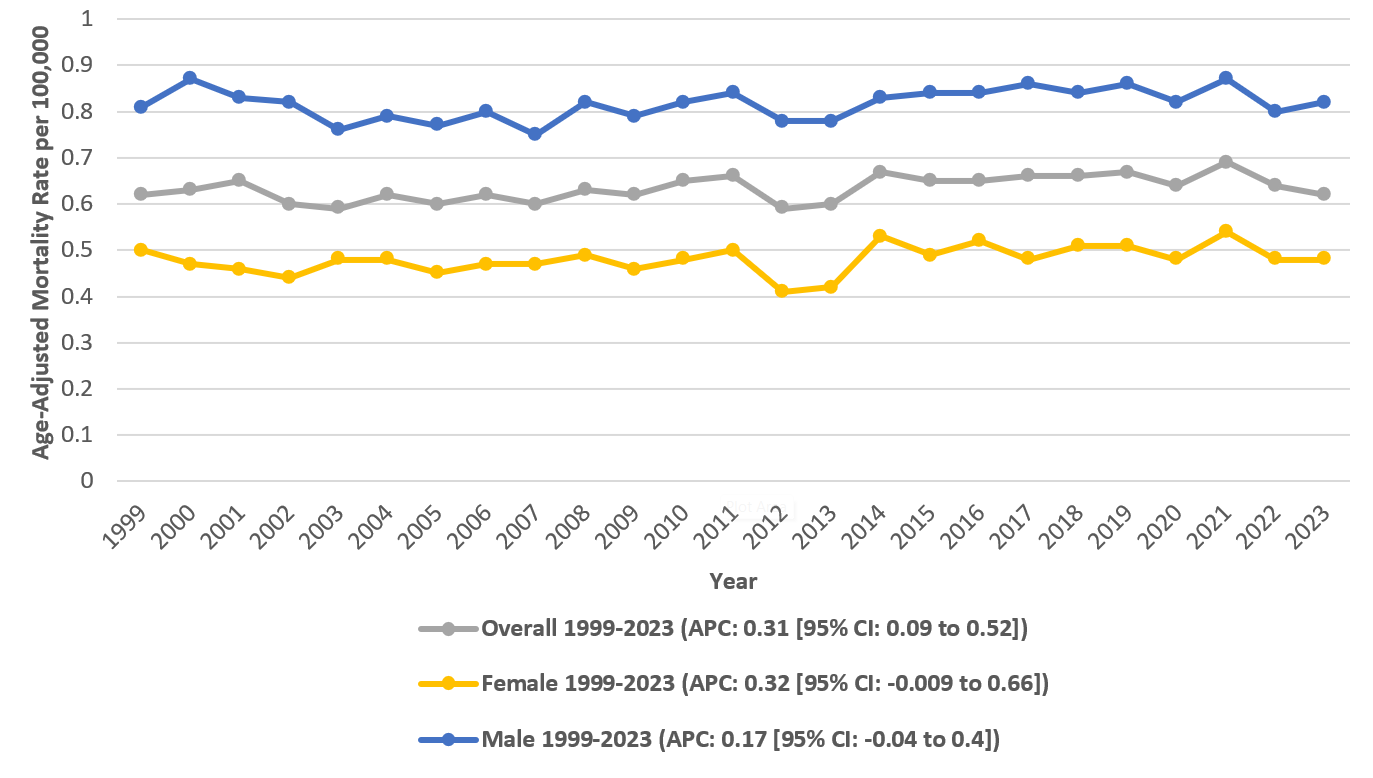
The overall AAMR for sepsis among myeloid leukemia patients remained stable, at 0.62 per 100,000 in both 1999 and 2023. Over the entire study period, the mean AAMR observed from 1999 to 2023 was 0.63 (95% CI: 0.60 to 0.67). The AAPC was 0.31 (95% CI: 0.09 to 0.53) (p = 0.007), indicating a small but statistically significant trend, with no joinpoints identified (Supplemental Tables 1, 3, 4; Figure Figure 1).
Sex-startified trends
Across the study period, sepsis-related deaths among patients with myeloid leukemia contributed to 20,655 deaths among males and 14,420 among females. Males experienced higher AAMRs than females (males: 0.82, 95% CI: 0.76 to 0.87; females: 0.48, 95% CI: 0.44 to 0.52). From 1999 to 2023, the AAMR in males showed a minimal, statistically non-significant change from 0.81 in 1999 to 0.82 in 2023, with no joinpoints (AAPC: 0.18, 95% CI: -0.05 to 0.40; p = 0.113). Among females, the AAMR showed a slight non-significant decline from 0.50 in 1999 to 0.48 in 2023 (AAPC: 0.33, 95% CI: -0.01 to 0.67; p = 0.056), with no joinpoints. These findings indicate no significant change over time within sexes (Supplemental Tables 1, 3, 4; Figure Figure 1).
Racial trends
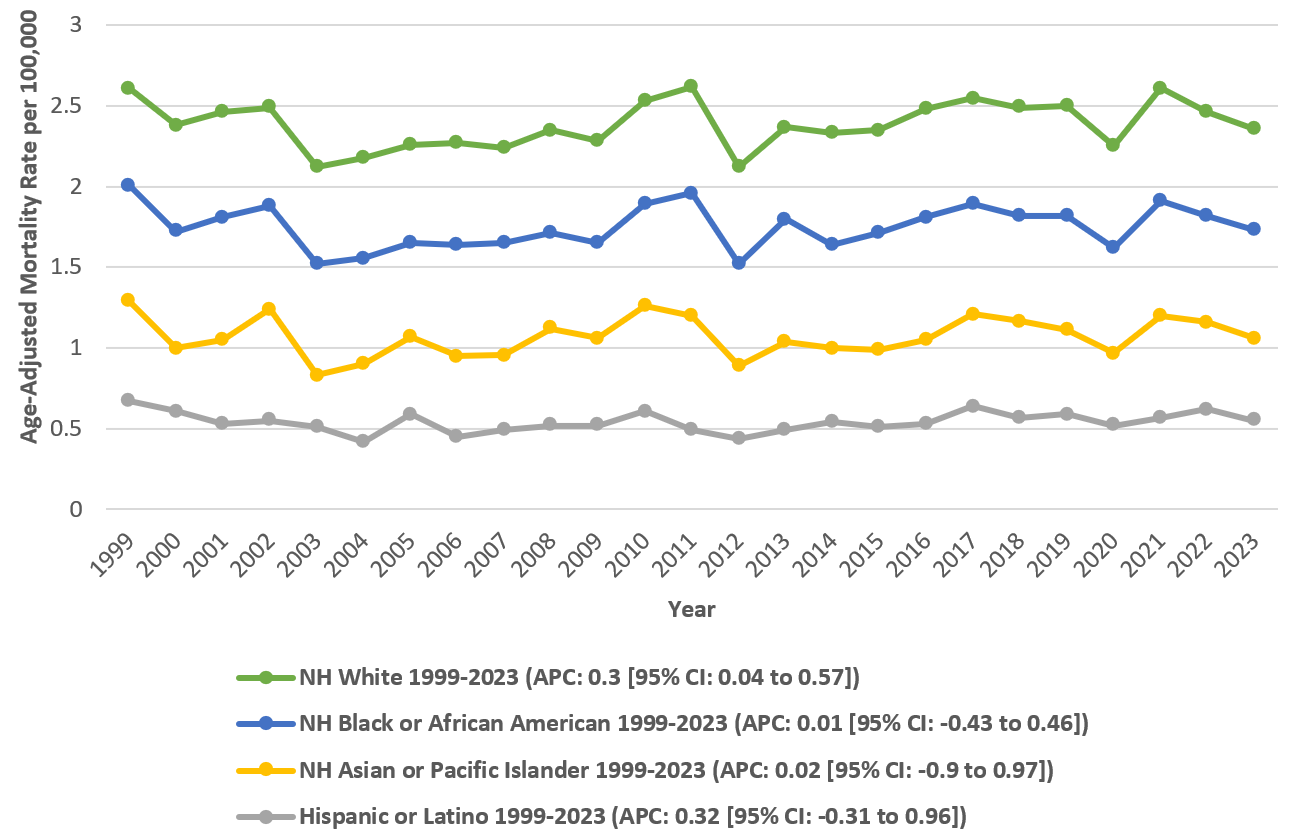
Across racial/ethnic groups, the highest overall AAMR was recorded among NH Blacks or African Americans (0.68, 95% CI: 0.57 to 0.79), followed by NH Whites (0.64, 95% CI: 0.60 to 0.68), Hispanics (0.54, 95% CI: 0.44 to 0.66), and NH Asians or Pacific Islanders (0.53, 95% CI: 0.39 to 0.71). Among NH Asians, the AAMR declined from 0.62 in 1999 to 0.51 in 2023 (AAPC: 0.03, 95% CI: -0.90 to 0.97; p = 0.95). For NH Blacks, the AAMR decreased slightly from 0.72 in 1999 to 0.67 in 2023 (AAPC: 0.01, 95% CI: -0.43 to 0.47; p = 0.947). Among NH Whites, the AAMR increased slightly from 0.60 in 1999 to 0.63 in 2023 (AAPC: 0.31, 95% CI: 0.04 to 0.58; p = 0.025). For Hispanics, the AAMR decreased from 0.67 in 1999 to 0.55 in 2023 (AAPC: 0.32, 95% CI: -0.31 to 0.96; p = 0.305), and no joinpoint was identified. No joinpoints were observed for any racial/ethnic group (Supplemental Tables 1, 3, 5; Figure Figure 2).
Regional trends
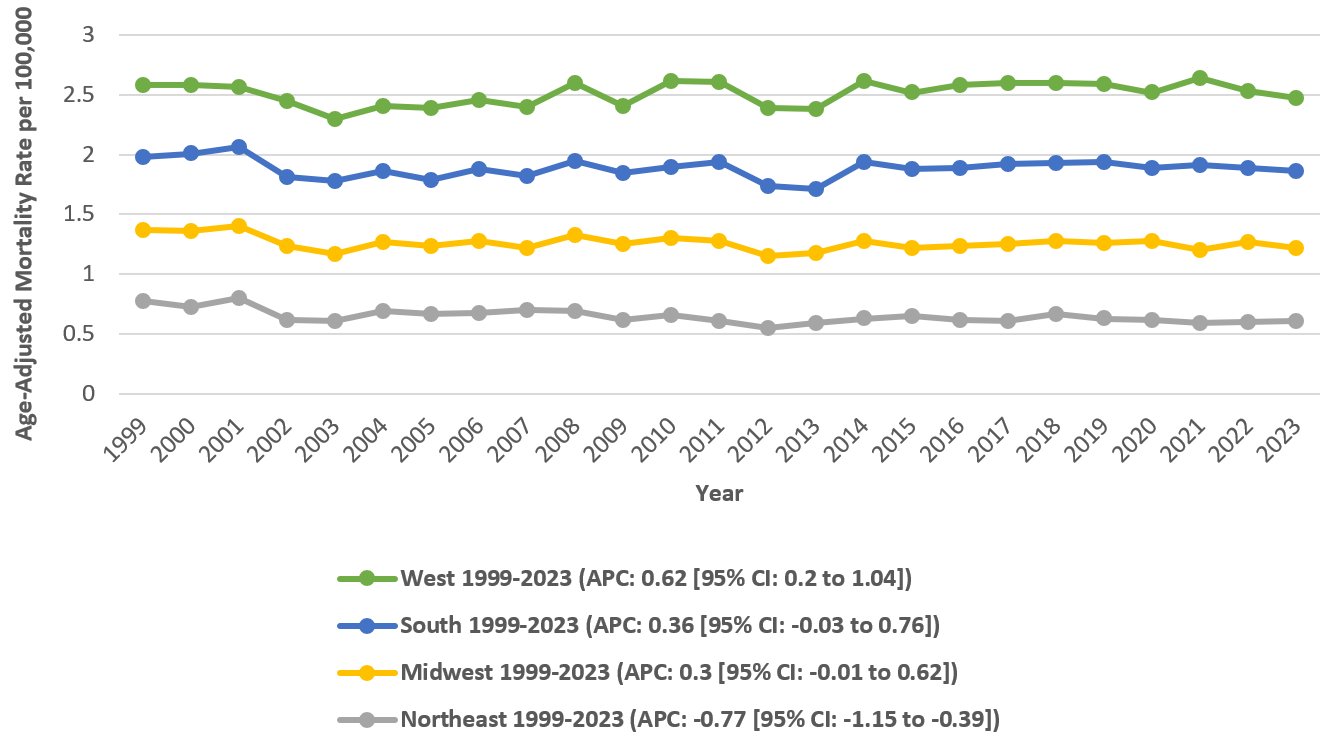
On average, during the study period, the highest mortality rates were recorded in the Northeast (AAMR: 0.65, 95% CI: 0.57 to 0.73), followed by the West (AAMR: 0.63, 95% CI: 0.56 to 0.70), South (AAMR: 0.62, 95% CI: 0.57 to 0.68) and Midwest (AAMR: 0.61, 95% CI: 0.54 to 0.68).
The Northeast experienced a significant decline from 0.78 in 1999 to 0.61 in 2023 (AAPC: -0.78, 95% CI: -1.16 to -0.40; p < 0.001). In the Midwest, the AAMR rose marginally from 0.59 in 1999 to 0.61 in 2023 (AAPC: 0.30; 95% CI: -0.02 to 0.63; p = 0.06). The South showed a similar trend, increasing from 0.61 in 1999 to 0.64 in 2023 (AAPC: 0.36; 95% CI: -0.04 to 0.76; p = 0.075). In the West, the AAMR increased significantly from 0.60 in 1999 to 0.61 in 2023 (AAPC: 0.62; 95% CI: 0.20 to 1.05; p = 0.006). No joinpoints were identified in any region (Supplemental Tables 3, 6; Figure Figure 3).
Stratified by urbanization
From 1999 to 2020, modest differences in mortality trends were observed between metropolitan and non-metropolitan areas. The overall AAMR was slightly higher in metropolitan areas (0.64, 95% CI: 0.63 to 0.65) compared to non-metropolitan areas (0.60, 95% CI: 0.58 to 0.62).
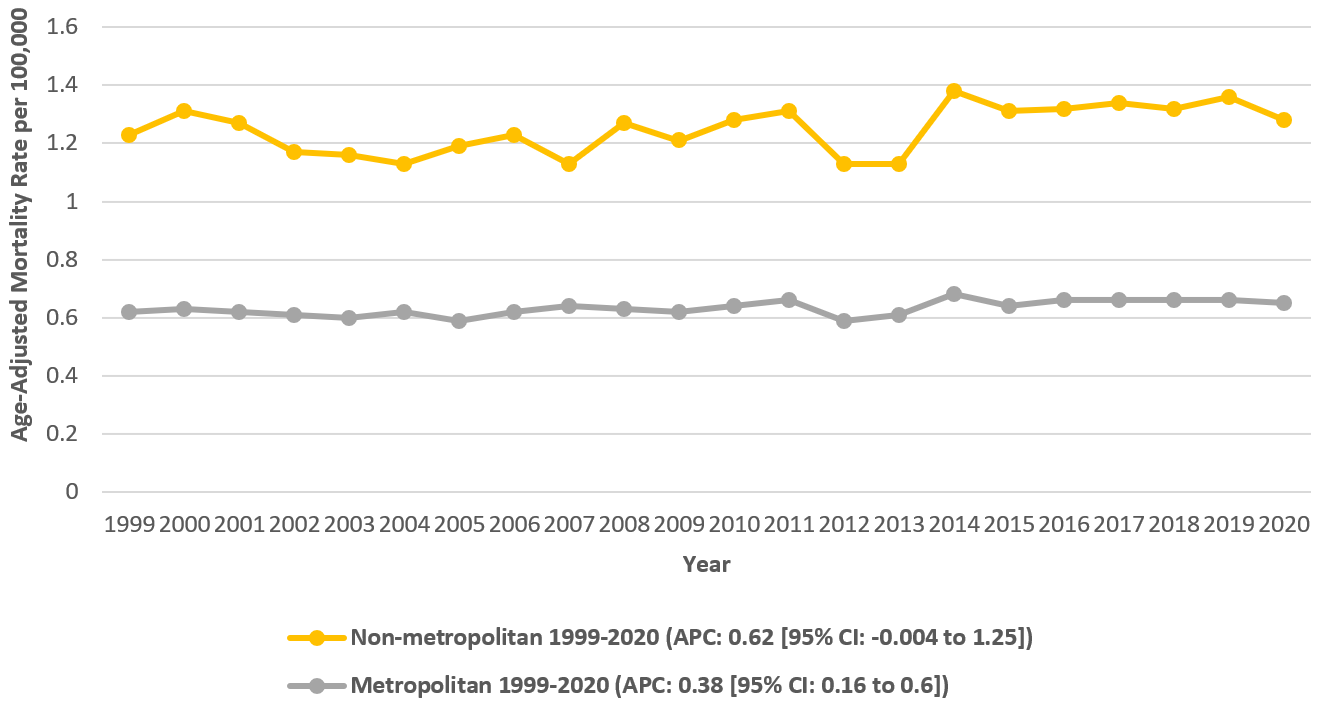
In metropolitan areas, the AAMR increased significantly from 0.62 in 1999 to 0.65 in 2020, with no joinpoints (AAPC: 0.38; 95% CI: 0.17 to 0.60; p = 0.002). Conversely, in non-metropolitan areas, the AAMR increased modestly from 0.61 in 1999 to 0.63 in 2020 with no joinpoints (AAPC: 0.62; 95% CI: -0.004 to 1.26; p = 0.05) (Supplemental Tables 3, 7; Figure Figure 4).
Age-specific trends
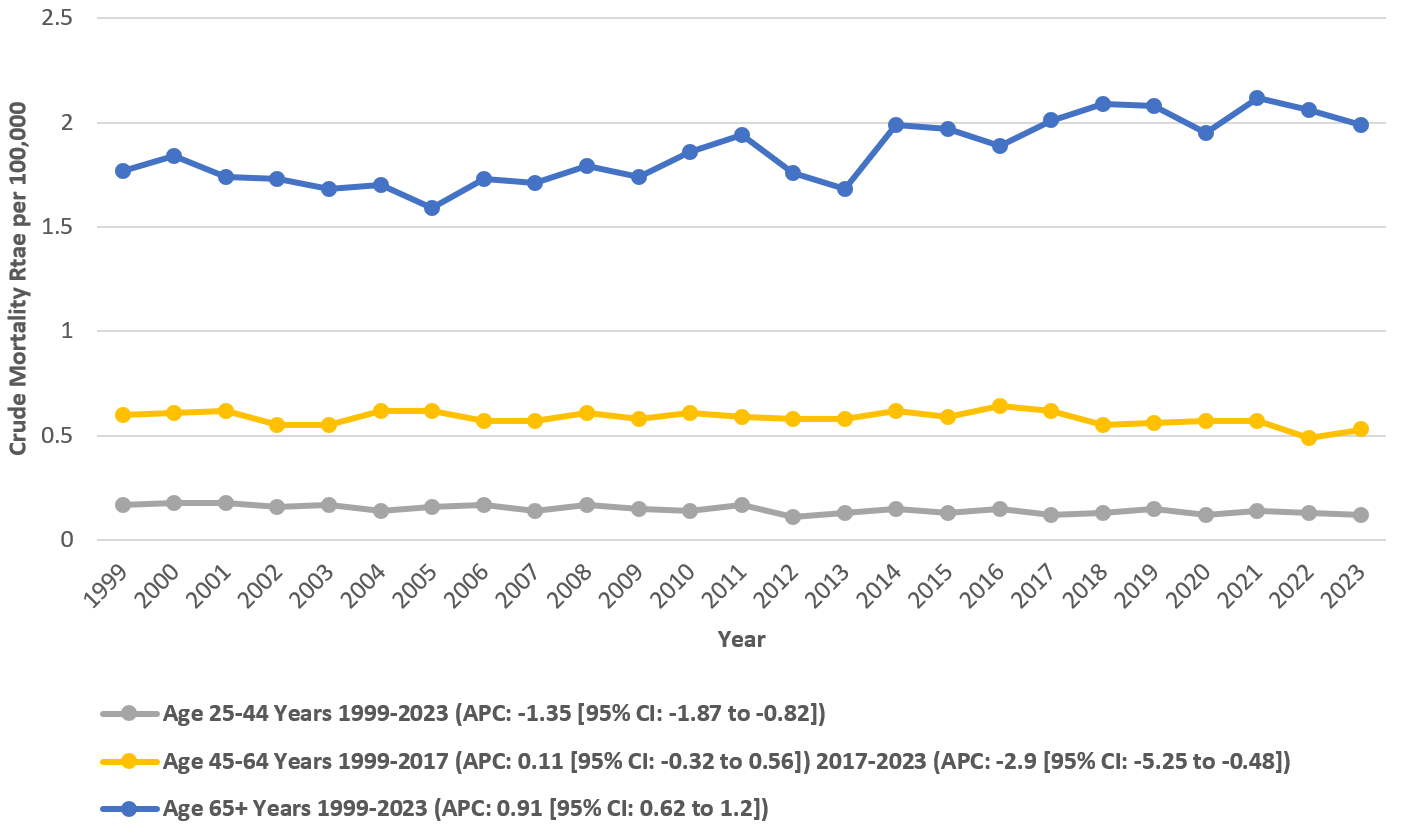
For age-specific analyses, CMRs were used because AAMRs cannot be meaningfully calculated within fixed age groups. Throughout the study period, older adults aged 65 years consistently exhibited the highest CMRs compared to younger and middle aged adults (overall CMR for 65 years: 1.86, 95% CI: 1.73 to 1.98; for 45-64 years: 0.58, 95% CI: 0.53 to 0.64; for 25-44 years: 0.15, 95% CI: 0.12 to 0.17). On average, the CMRs for all age groups changed from 1999 to 2023, with the most pronounced increase observed among adults aged 65 years (AAPC: 0.91; 95% CI: 0.62 to 1.20; p < 0.001). Among the 25-44 year age group, the CMR decreased from 0.17 in 1999 to 0.12 in 2023, with no joinpoints (APC: -1.35; 95% CI: -1.87 to -0.83; p < 0.001). Among adults aged 45-64 years, the CMR rose slightly from 0.60 in 1999 to 0.62 in 2017 (APC: 0.12; 95% CI: -0.32 to 0.56; p = 0.584), followed by a significant decline from 0.62 in 2017 to 0.53 in 2023 (APC: -2.90; 95% CI: -5.29 to -0.49; p = 0.021), with an AAPC of -0.65 (95% CI: -1.30 to 0.01; p = 0.053). For those aged 65 years, the CMR increased from 1.77 in 1999 to 1.99 in 2023 with no joinpoints (Supplemental Tables 3, 8; Figure Figure 5).
Discussion
This 25-year national study provides an overall evaluation of sepsis deaths among adults with myeloid leukemia in the U.S. During the study period, the AAMRs remained stable, with minor variations. Males consistently had greater mortality than females. And CMRs was greatest among older individuals at 65 years or older. Disparities between racial and ethnic groups remained consistent, with the highest overall mortality among Black individuals. Variability between regions was low, but some regions had significant increases or decreases over time. A large proportion of deaths occurred in inpatient medical facilities, suggesting an extensive critical care burden to sepsis in immunocompromised patients with leukemia. The significantly rising mortality trends observed in metropolitan areas, in contrast to relatively stable trends in non-metropolitan areas, likely reflect complex interactions among referral concentration, differential access to specialized leukemia care, and hospital-level infectious disease resources. Urban centers disproportionately manage advanced or treatment-refractory leukemia cases transferred from surrounding regions, which may inflate sepsis-related mortality through referral bias.
The differences seen in mortality rates due to gender are consistent with previous literature, which showed male patients with hematological cancers do poorly in comparison to females [22]. There are biological differences in immune responses, with men generally having a less vigorous response due to testosterone. [23] Some aspects of cytokine expression and variations in septic shock evolution may involve sex-based differences, which may explain different susceptibilities and poorer outcomes of sepsis, especially when complicated with myeloid leukemia, in male patients [24,25,26].
The age-related mortality gradients in this study are consistent with epidemiological work identifying that older patients experience increased risks of infections from complications of their disease, particularly in oncologic populations. Older age may be associated with decreased immune response, increased prevalence of comorbidities, and delayed symptom recognition [27,28]. For instance, dose intensification and modification of therapy may have to be kept changing in elderly patients with leukemia due to toxicity or frailty, which in some instances impacts the efficacy of anti-leukemic and/or anti-infective treatment [29,30,31]. The increasing mortality of the elderly provides further justification and impetus for tailored age-adapted infection prevention and early detection of sepsis strategies in this population against which we treat leukemia.
The 25-year study period also spans major therapeutic transitions in myeloid leukemia, including the introduction of lower-intensity regimens, hypomethylating agent–based combinations, and targeted therapies that have reshaped survival and infectious risk profiles. Earlier eras were dominated by intensive cytotoxic chemotherapy with prolonged neutropenia. In contrast, later years increasingly incorporated venetoclax-based and molecularly targeted regimens that may alter both the incidence and severity of sepsis [32,33]. These evolving treatment paradigms introduce unavoidable heterogeneity into long-term mortality trend interpretation and may partially explain temporal stability despite advances in supportive care.
Sepsis hospitalizations and mortality rates for NH Blacks have a higher risk of sepsis, primarily due to APOL1 high-risk genotypes, and are associated with later diagnosis, limited access to quality care, and more prevalent comorbidities [34,35]. In myeloid leukemia, minority populations have increased chances of experiencing non-intensive therapy and have considerably lower enrollment in clinical trials, resulting in a widening gap in outcomes [36,37,38].
The significant decline observed in the Northeast contrasts with rising trends in the South and West. Differences may influence these results in healthcare infrastructure, specialist availability, regional adherence to guidelines, and hospital resource allocation. The Northeast academic centers typically have baseline better care measures and scores that may account for better mortality trends. The South, on the other hand, is more challenged by access to tertiary care and to healthcare in rural areas, which generally impacts infectious disease mortality [39].
The COVID-19 pandemic (2020-2023) years are a significant contextual factor for interpreting mortality data. During this period, there would have been considerable overlap in coding for sepsis and septicemia attributable to the COVID-19 pandemic, potentially leading to misclassification errors within categories A40-A41. Further, disruptions to healthcare access, delays in diagnosis and treatment for people with leukemia, and changes in the threshold for admission to hospitals may have independently affected the trends of sepsis mortality in people with compromised immune systems. Failure to conduct sensitivity analyses within the study population during the pandemic years means the full impact of COVID-19 on mortality trends cannot be fully established, limiting the robustness of these results [40,41].
In addition, major U.S. healthcare policy changes during the study period, including the introduction of Medicare Part D and implementation of the Affordable Care Act, may have influenced access to leukemia therapies, antimicrobial agents, and critical care services. These structural changes in insurance coverage and healthcare utilization could have indirectly affected sepsis-related outcomes and merit consideration when interpreting long-term mortality trends [42].
There is a remarkable focus on inpatient hospital deaths, highlighting that sepsis ultimately brings acute, rapidly progressive clinical deterioration for this cohort of patients [43]. Alongside this, earlier work noted myeloid leukaemia is often the diagnosis found in cancer patients who die in intensive care units [44,45]. While the low proportion of deaths occurring in home or hospice settings may suggest delayed transitions to comfort-focused care in some patients, this observation cannot be interpreted as direct evidence of inadequate palliative integration in the absence of individual-level enrollment or utilization data. Future linkage studies incorporating hospice claims or electronic health records would be required to confirm this relationship [46].
The study’s findings identify a vital knowledge gap in hematologic oncology and in infectious disease epidemiology research. Many studies have focused on sepsis-related outcomes in general cancer populations and in recipients of bone marrow transplants. Still, few have specifically examined trends in sepsis mortality stratified to the myeloid leukemia population over an extended time frame [39]. This analysis uniquely contributes to the literature by examining a longer temporal window that is informative of the population-level burden, differences across subpopulations, and chronic shortcomings that can inform clinical practice, recommendations, or public health interventions.
International population-based studies from Europe, Canada, and Australia have similarly reported persistently high sepsis-related mortality among patients with hematologic malignancies despite parallel advances in leukemia therapy and supportive care. However, differences in healthcare system structure, antimicrobial stewardship, and critical care access limit direct comparability of trend magnitudes [47,48]. The present U.S.-based analysis therefore provides an essential national benchmark within a broader global context of leukemia-associated sepsis burden.
Strengths and limitations
Strengths of this study include a large, nationally representative dataset spanning 25 years, with strict definitions of mortality for both the underlying and contributory causes of death using ICD-10 codes. Mortality rates calculated as age-adjusted and standardized rates are also a strength of this study. The stratification of participants by sex, race/ethnicity, census region, age group, urbanization, and place of death enabled a multidimensional analysis of disparities and risk concentrations. Joinpoint regression is also presented here to improve the temporal accuracy of trend identification.
Despite its strengths, this study has limitations. The reliance on death certificate data may have also led to misclassification bias, particularly with respect to the role of sepsis as a contributing versus underlying cause of death. Coding may also vary over time and across jurisdictions. Additionally, the use of ICD-10 codes A40–A41 for sepsis may result in under- or over-capture due to evolving sepsis coding practices. Furthermore, the dataset has limited clinical details and no information regarding chemotherapy exposure or duration of neutropenia, central venous catheter use, or microbiological documentation, all of which are important determinants of sepsis risk in patients with leukemia. There is no record of changes in treatment, such as the introduction of new targeted therapies or prophylactic strategies, which may affect the ability to interpret trends.
Given the multiple subgroup analyses across sex, race/ethnicity, region, urbanization, and age categories, no formal correction for multiple comparisons was applied, and these stratified findings should therefore be interpreted as exploratory rather than confirmatory. Additionally, no pandemic-era sensitivity analysis excluding 2020–2021 was performed, limiting causal attribution of late-period trend fluctuations specifically to sepsis or leukemia-related factors. Changes in leukemia screening practices, earlier diagnosis, and heightened clinical awareness of infectious complications over the 25 years may also introduce lead-time and detection bias, potentially influencing apparent sepsis mortality trends independent of true biologic risk. Competing risks from alternative causes of death in myeloid leukemia were not modeled, and declining or stable sepsis mortality may partially reflect improvements in overall leukemia survival rather than sepsis-specific risk reduction.
Clinical implications and future research
These descriptive population-level patterns suggest hypotheses for future research rather than causal inferences, particularly regarding targeted infection surveillance, timing of intervention, and supportive care strategies in myeloid leukemia [49,50]. Second, routine incorporation of sepsis risk stratification into clinical oncology practice, timelier oncology infectious disease consultations, and universally agreed-upon guidelines for fever workups in immunocompromised hosts will help avoid or expedite delays in intervention [51,52]. Future studies integrating longitudinal electronic health records with population-level mortality surveillance may allow earlier detection of infectious deterioration and more precise attribution of preventable septicemia-related deaths.
Future research should strive to bring together electronic health record-based investigations that recount treatment courses, pathogen-specific outcomes, and antimicrobial resistance profiles with population-level surveillance [53,54,55]. Additionally, prospective registries may develop a mechanism to combine oncologic parameters and infectious parameters, allowing future modeling on the risk of septicemia-related mortality and better individualized care pathways. Future longitudinal investigations should also examine intersectional subgroup interactions, such as sex-by-race and age-by-region effects, to better delineate compounding disparities in sepsis-associated mortality among patients with myeloid leukemia.
Conclusion
This 25-year population-based analysis demonstrates a modest overall increase in sepsis-associated mortality among patients with myeloid leukemia, with regional divergence: declining trends in the Northeast and rising trends in the West. In contrast, sex-specific trends were not statistically significant. The persistent issues affecting these vulnerable populations remain despite medical advances in oncology and infectious diseases. Integrating clinical treatment, improving equitable access to timely sepsis care, and catalyzing more research at the intersection of hematologic malignancy and infectious diseases will be critical to close these gaps.
Conflicts of Interest
The authors declare no competing interests that could have influenced the objectivity or outcome of this research.
Funding Source
No financial support was received for the study.
Acknowledgments
None.
Institutional Review Board (IRB)
No ethical approval was required for the study.
Large Language Model
None.
Authors Contribution
AAI contributed to conceptualization and writing the original draft, as well as writing, review, and editing. MT contributed through formal analysis and writing, review, and editing. MFH was responsible for writing, review, and editing, methodology, and validation. AG, RM, AD, MH, MS, and SF contributed to writing the original draft. KP was responsible for data extraction. SJ contributed through formal analysis. ES prepared tables and visualizations. EA contributed to writing, review, and editing. AA contributed to writing, review, and editing, validation, and supervision.
Data Availability
The data supporting the findings of this study are publicly available in CDC‐WONDER at https://wonder.cdc.gov/. The data supporting the findings of this study were obtained from the CDC WONDER online database (Centers for Disease Control and Prevention Wide‐ranging Online Data for Epidemiologic Research). Further inquiries can be directed to the corresponding author.
References
- Rhee C., Dantes R., Epstein L., Murphy D. J., Seymour C. W., Iwashyna T. J., Kadri S. S., Angus D. C., Danner R. L., Fiore A. E., Jernigan J. A., Martin G. S., Septimus E., Warren D. K., Karcz A., Chan C., Menchaca J. T., Wang R., Gruber S., Klompas M., CDC Prevention Epicenter Program. Incidence and Trends of Sepsis in US Hospitals Using Clinical vs Claims Data, 2009-2014. JAMA. 2017;318(13):1241-1249. doi:10.1001/jama.2017.13836 PMID: 28903154 PMCID: PMC5710396
- Singer M., Deutschman C. S., Seymour C. W., Shankar-Hari M., Annane D., Bauer M., Bellomo R., Bernard G. R., Chiche J. D., Coopersmith C. M., Hotchkiss R. S., Levy M. M., Marshall J. C., Martin G. S., Opal S. M., Rubenfeld G. D., van der Poll T., Vincent J. L., Angus D. C.. The Third International Consensus Definitions for Sepsis and Septic Shock (Sepsis-3). JAMA. 2016;315(8):801-10. doi:10.1001/jama.2016.0287 PMID: 26903338 PMCID: PMC4968574
- Paoli C. J., Reynolds M. A., Sinha M., Gitlin M., Crouser E.. Epidemiology and Costs of Sepsis in the United States-An Analysis Based on Timing of Diagnosis and Severity Level. Crit Care Med. 2018;46(12):1889-1897. doi:10.1097/CCM.0000000000003342 PMID: 30048332 PMCID: PMC6250243
- Dantes R. B., Kaur H., Bouwkamp B. A., Haass K. A., Patel P., Dudeck M. A., Srinivasan A., Magill S. S., Wilson W. W., Whitaker M., Gladden N. M., McLaughlin E. S., Horowitz J. K., Posa P. J., Prescott H. C.. Sepsis Program Activities in Acute Care Hospitals - National Healthcare Safety Network, United States, 2022. MMWR Morb Mortal Wkly Rep. 2023;72(34):907-911. doi:10.15585/mmwr.mm7234a2 PMID: 37616184 PMCID: PMC10468219
- Rudd K. E., Johnson S. C., Agesa K. M., Shackelford K. A., Tsoi D., Kievlan D. R., Colombara D. V., Ikuta K. S., Kissoon N., Finfer S., Fleischmann-Struzek C., Machado F. R., Reinhart K. K., Rowan K., Seymour C. W., Watson R. S., West T. E., Marinho F., Hay S. I., Lozano R., Lopez A. D., Angus D. C., Murray C. J. L., Naghavi M.. Global, regional, and national sepsis incidence and mortality, 1990-2017: analysis for the Global Burden of Disease Study. Lancet. 2020;395(10219):200-211. doi:10.1016/S0140-6736(19)32989-7 PMID: 31954465 PMCID: PMC6970225
- Gudiol C., Albasanz-Puig A., Cuervo G., Carratala J.. Understanding and Managing Sepsis in Patients With Cancer in the Era of Antimicrobial Resistance. Front Med (Lausanne). 2021;8:636547. doi:10.3389/fmed.2021.636547 PMID: 33869250 PMCID: PMC8044357
- Nates J. L., Pene F., Darmon M., Mokart D., Castro P., David S., Povoa P., Russell L., Nielsen N. D., Gorecki G. P., Gradel K. O., Azoulay E., Bauer P. R., Nine I. Investigators. Septic shock in the immunocompromised cancer patient: a narrative review. Crit Care. 2024;28(1):285. doi:10.1186/s13054-024-05073-0 PMID: 39215292 PMCID: PMC11363658
- World Health Organization. International Statistical Classification of Diseases and Related Health Problems, 10th Revision (ICD-10) [Internet]. 2025.
- Hansen B. A., Wendelbo O., Bruserud O., Hemsing A. L., Mosevoll K. A., Reikvam H.. Febrile Neutropenia in Acute Leukemia. Epidemiology, Etiology, Pathophysiology and Treatment. Mediterr J Hematol Infect Dis. 2020;12(1):e2020009. doi:10.4084/MJHID.2020.009 PMID: 31934319 PMCID: PMC6951355
- Malik I. A., Cardenas-Turanzas M., Gaeta S., Borthakur G., Price K., Cortes J., Nates J. L.. Sepsis and Acute Myeloid Leukemia: A Population-Level Study of Comparative Outcomes of Patients Discharged From Texas Hospitals. Clin Lymphoma Myeloma Leuk. 2017;17(12):e27-e32. doi:10.1016/j.clml.2017.07.009 PMID: 28844403
- Roze des Ordons A. L., Chan K., Mirza I., Townsend D. R., Bagshaw S. M.. Clinical characteristics and outcomes of patients with acute myelogenous leukemia admitted to intensive care: a case-control study. BMC Cancer. 2010;10:516. doi:10.1186/1471-2407-10-516 PMID: 20920175 PMCID: PMC2955611
- Slavin S. D., Fenech A., Jankowski A. L., Abel G. A., Brunner A. M., Steensma D. P., Fathi A. T., DeAngelo D. J., Wadleigh M., Hobbs G. S., Amrein P. C., Stone R. M., Temel J. S., El-Jawahri A.. Outcomes for older adults with acute myeloid leukemia after an intensive care unit admission. Cancer. 2019;125(21):3845-3852. doi:10.1002/cncr.32397 PMID: 31299106 PMCID: PMC6788935
- Liu M. A., Bakow B. R., Hsu T. C., Chen J. Y., Su K. Y., Asiedu E. K., Hsu W. T., Lee C. C.. Temporal Trends in Sepsis Incidence and Mortality in Patients With Cancer in the US Population. Am J Crit Care. 2021;30(4):e71-e79. doi:10.4037/ajcc2021632 PMID: 34195781
- Morrissey R., Lee J., Baral N., Tauseef A., Sood A., Mirza M., Jabbar A. B. A.. Demographic and regional trends of sepsis mortality in the United States, 1999-2022. BMC Infect Dis. 2025;25(1):504. doi:10.1186/s12879-025-10921-7 PMID: 40211200 PMCID: PMC11987265
- Hemida M. F., Ibrahim A. A., Shahriar Z., Khalid M., Zeeshan N., Qaisi W., Hussein M., Sarfraz M. R., Rabie O. M., Saghir M., Saghir E., Jalal A. A., Alagamy M., Tabasum P., Ahmed R.. Mortality trends in multiple sclerosis and cardiovascular disease in adults in the United States: A 25-year mortality perspective. Mult Scler Relat Disord. 2026;105:106861. doi:10.1016/j.msard.2025.106861 PMID: 41308235
- Hemida Mohamed Fawzi, Khan Ayesha, Ibrahim Alyaa Ahmed, Goel Anika, Patel Krish, Shahriar Zahin, Hageen Ahmed W., Alsaadi Mustafa, Rahman Saif Ur, Arafa Amr, Kholeif Zeyad, Bahnasy Ahmed. Trends in Mortality from Leukemia and Ischemic Heart Disease: A 22-Year Analysis in the U.S. (1999-2020). ASIDE Internal Medicine. 2025;2(2):21-30. doi:10.71079/aside.Im.091425163
- von Elm E., Altman D. G., Egger M., Pocock S. J., Gotzsche P. C., Vandenbroucke J. P., STROBE Initiative. The Strengthening the Reporting of Observational Studies in Epidemiology (STROBE) statement: guidelines for reporting observational studies. J Clin Epidemiol. 2008;61(4):344-9. doi:10.1016/j.jclinepi.2007.11.008 PMID: 18313558
- Aggarwal R., Chiu N., Loccoh E. C., Kazi D. S., Yeh R. W., Wadhera R. K.. Rural-Urban Disparities: Diabetes, Hypertension, Heart Disease, and Stroke Mortality Among Black and White Adults, 1999-2018. J Am Coll Cardiol. 2021;77(11):1480-1481. doi:10.1016/j.jacc.2021.01.032 PMID: 33736831 PMCID: PMC8210746
- Ingram D. D., Franco S. J.. 2013 NCHS Urban-Rural Classification Scheme for Counties. Vital Health Stat 2. 2014:1-73. PMID: 24776070
- Anderson R. N., Rosenberg H. M.. Age standardization of death rates: implementation of the year 2000 standard. Natl Vital Stat Rep. 1998;47(3):1-16, 20. PMID: 9796247
- Surveillance Research Program, National Cancer Institute. Joinpoint Regression Program. Joinpoint Trend Analysis Software [Internet]. 2025.
- Durugu Satya R., Ali Hassan, Sinha Shrishti, Kalantri Shreyas, Ahmed Faizan, Abboud Brian, Rojulpote Krishna V., Thirumaran Rajesh. Trends in Mortality Due to Hematologic Malignancies Among Patients Aged 25 and Older in the United States: Annual Trends and Insights on Gender Disparities from the CDC Wonder Database. Blood. 2024;144(Supplement 1):7936-7936. doi:10.1182/blood-2024-206738
- Evelyn Mpora Kakwanzi. Sex Disparities in Cancer Immunotherapy: A Review. Research Output Journal of Public Health and Medicine. 2024;4(1):19-24. doi:10.59298/rojphm/2024/411924
- Asai K., Hiki N., Mimura Y., Ogawa T., Unou K., Kaminishi M.. Gender differences in cytokine secretion by human peripheral blood mononuclear cells: role of estrogen in modulating LPS-induced cytokine secretion in an ex vivo septic model. Shock. 2001;16(5):340-3. doi:10.1097/00024382-200116050-00003 PMID: 11699070
- Lakbar I., Einav S., Lalevee N., Martin-Loeches I., Pastene B., Leone M.. Interactions between Gender and Sepsis-Implications for the Future. Microorganisms. 2023;11(3). doi:10.3390/microorganisms11030746 PMID: 36985319 PMCID: PMC10058943
- Majetschak M., Christensen B., Obertacke U., Waydhas C., Schindler A. E., Nast-Kolb D., Schade F. U.. Sex differences in posttraumatic cytokine release of endotoxin-stimulated whole blood: relationship to the development of severe sepsis. J Trauma. 2000;48(5):832-9; discussion 839-40. doi:10.1097/00005373-200005000-00006 PMID: 10823526
- Ramirez-Soto M. C.. Long-term, all-cause mortality risk after infection episodes in older adults. Lancet Healthy Longev. 2023;4(9):e452-e454. doi:10.1016/S2666-7568(23)00166-6 PMID: 37659424
- Wordsworth Dthj, Dunn-Walters D. K.. The ageing immune system and its clinical implications. Reviews in Clinical Gerontology. 2010;21(2):110-124. doi:10.1017/s0959259810000407
- Borlenghi Erika, Borlenghi Erika, Terrenato Irene, Oberti Margherita, Soverini Giulia, Spolzino Angelica, Cerqui Elisa, Maifredi Simone, Lovato Ester, Masina Lorenzo, Federico Francesca, Bertoli Diego, Marchesi Francesco, Rossi Giuseppe, Tucci Alessandra. Impact of Infectious Complications Should be Considered When Choosing Chemotherapy for Elderly Acute Myeloid Leukemia Fit Patients: Results of a Large Monocentric Retrospective Study. Blood. 2024;144(Supplement 1):5946-5946. doi:10.1182/blood-2024-203868
- Kadia T. M., Wei A. H.. Evolution of Therapy for Older Patients With Acute Myeloid Leukemia: How Should We Use Currently Available Agents?. Cancer J. 2022;28(1):67-72. doi:10.1097/PPO.0000000000000574 PMID: 35072376 PMCID: PMC10123925
- Pollyea D. A., Kohrt H. E., Medeiros B. C.. Acute myeloid leukaemia in the elderly: a review. Br J Haematol. 2011;152(5):524-42. doi:10.1111/j.1365-2141.2010.08470.x PMID: 21314823
- Ball S., Jain A. G., Al Ali N., Aguirre L. E., Bewersdorf J. P., Kent A., Rose A., Hayden A., Siddon A., Lykon J., Madarang E., Swoboda D. M., Padron E., Sweet K., Sallman D. A., Lancet J., Carraway H. E., Watts J., Zeidan A., Pollyea D. A., Komrokji R. S.. Hypomethylating Agent and Venetoclax Combination Is a Safe and Effective Alternative to Intensive Chemotherapy in Older (>/= 70 Years) Patients With Newly Diagnosed Favorable Risk Acute Myeloid Leukemia. Am J Hematol. 2025;100(10):1920-1923. doi:10.1002/ajh.70031 PMID: 40772639
- Jen W. Y., Loghavi S., Bazinet A., Bataller A., Bouligny I., Daver N. G., Issa G. C., Arani N., Almanza Huante E., Maiti A., Montalban-Bravo G., Borthakur G., Short N. J., Pierce S., Jabbour E., Garcia-Manero G., Ravandi F., Kantarjian H. M., DiNardo C. D., Kadia T. M.. Outcomes and Patterns of Relapse of NPM1 Mutated Acute Myeloid Leukemia Treated With Venetoclax Based Therapies. Am J Hematol. 2025;100(11):2118-2122. doi:10.1002/ajh.70046 PMID: 40874710 PMCID: PMC12430535
- Jiang L., Liu G., Oeser A., Ihegword A., Dickson A. L., Daniel L. L., Hung A. M., Cox N. J., Chung C. P., Wei W. Q., Stein C. M., Feng Q.. Association between APOL1 risk variants and the occurrence of sepsis in Black patients hospitalized with infections: a retrospective cohort study. Elife. 2023;12. doi:10.7554/eLife.88538 PMID: 37882666 PMCID: PMC10602586
- Rush B., Danziger J., Walley K. R., Kumar A., Celi L. A.. Treatment in Disproportionately Minority Hospitals Is Associated With Increased Risk of Mortality in Sepsis: A National Analysis. Crit Care Med. 2020;48(7):962-967. doi:10.1097/CCM.0000000000004375 PMID: 32345833 PMCID: PMC8085686
- Gong Inna Y., Rafinejad-Farahani Bahar, Majeed Haris, Soto Mark, Conti Rena M., Unger Joseph M., Guerra Carmen E., Rosenthal Meredith, Rodin Danielle. Disparities in Phase II and III Clinical Trial Enrollment for Hematologic Malignancies. Blood. 2024;144(Supplement 1):5100-5100. doi:10.1182/blood-2024-206450
- Hantel Andrew, Wang Yating, Abraham Ivy, Patel Anand Ashwin, Monick Sarah Elizabeth, Rauscher Garth H., Avila Rodriguez Ana Maria, Galvez Carlos, Doukas Peter, Altman Jessica K., Burkart Madelyn, Erra Amani, Zia Maryam, Larson Melissa L., Dave Ami Atulkumar, Tsai Stephanie, Aleem Ahmed, Raptis Nepheli, Khan Irum, Abel Gregory A.. Identifying eligibility criteria that perpetuate race/ethnic disparities in acute myeloid leukemia (AML) clinical trial participation. Journal of Clinical Oncology. 2024;42(16_suppl):1589-1589. doi:10.1200/JCO.2024.42.16_suppl.1589
- Loeb Nathalie Arielle, Katsnelson Olivia, Jain Anshika, Tahvildar Parsa, Teitelbaum Daniel, Garcia-Horton Alejandro. Disparities in the Enrollment of Racialized, Ethnic Minority, and Older Adults in Randomized Trials of Acute Myeloid Leukemia: A Systematic Review. Blood. 2023;142(Supplement 1):3813-3813. doi:10.1182/blood-2023-187632
- Orhin Albert Ekow, Gyato Albert, Ohene Albert, Otoo Samuel Darlynton, Assabill Fiifi, Akoto Natalie Atese Yaa, Khanapara Dipen. National Trends and Disparities in Sepsis-Related Mortality in Adults with Hematological Cancers, 1999-2020. Blood. 2024;144(Supplement 1):5176-5176. doi:10.1182/blood-2024-204124
- Chen Z., Tian Y., Liu J., Ran J., Sun S., Zhao S., Ge Y., Martinez L., Chen X., Cao P.. COVID-19 and sepsis-related excess mortality in the United States during the first 3 years: a national-wide time-series study. Am J Epidemiol. 2025;194(8):2219-2229. doi:10.1093/aje/kwae411 PMID: 39479803
- Oud L., Garza J.. The Impact of COVID-19 on Sepsis-Related Mortality in the United States. J Clin Med Res. 2023;15(6):328-331. doi:10.14740/jocmr4937 PMID: 37434769 PMCID: PMC10332882
- Manchikanti L., Helm Ii S., Benyamin R. M., Hirsch J. A.. A Critical Analysis of Obamacare: Affordable Care or Insurance for Many and Coverage for Few?. Pain Physician. 2017;20(3):111-138. doi:10.36076/ppj.2017.138 PMID: 28339427
- Cox C. E., Wysham N. G.. Untangling Health Trajectories among Patients with Sepsis. Ann Am Thorac Soc. 2015;12(6):796-7. doi:10.1513/AnnalsATS.201503-134ED PMID: 26075553 PMCID: PMC4590017
- Gao S., Wang Y., Yang L., Wang Z., Huang W.. Characteristics and clinical subtypes of cancer patients in the intensive care unit: a retrospective observational study for two large databases. Ann Transl Med. 2021;9(1):13. doi:10.21037/atm-20-4634 PMID: 33553306 PMCID: PMC7859733
- Mottal N., Issa N., Dumas P. Y., Camou F., Sauvezie M., Gros F. X., Cazaubiel T., Mourissoux G., Leroy H., Pigneux A., Guisset O., Leguay T.. Reduce Mortality and Morbidity in Acute Myeloid Leukemia With Hyperleukocytosis With Early Admission in Intensive Care Unit: A Retrospective Analysis. J Hematol. 2020;9(4):109-115. doi:10.14740/jh691 PMID: 33224390 PMCID: PMC7665861
- Moody S. Y., Bell C. L., Lindenberger E. C., Reid M. C.. Adaptive Care Planning: A paradigm shift. J Am Geriatr Soc. 2024;72(2):337-345. doi:10.1111/jgs.18731 PMID: 38193787 PMCID: PMC11215758
- Garcia-Aguilera M. F., Yu-Liu Y., Alexander-Leon H., Fuenmayor-Gonzalez L., Manterola C., Otzen T., Llerena P., Granda P., Navas Hidalgo A. D., Changoluisa Aimacana N. J., Llumitasig Vaca B. A., Velasco E., Caballero H., Garcia-Mendez N.. Mortality in Cancer Patients with Septic Shock in Intensive Care: Systematic Review and Meta-Analysis. J Intensive Care Med. 2025;40(11):1193-1203. doi:10.1177/08850666251357878 PMID: 40953035
- MacPhail A., Dendle C., Slavin M., Weinkove R., Bailey M., Pilcher D., McQuilten Z.. Sepsis mortality among patients with haematological malignancy admitted to intensive care 2000-2022: a binational cohort study. Crit Care. 2024;28(1):148. doi:10.1186/s13054-024-04932-0 PMID: 38711155 PMCID: PMC11075186
- Alam Junaid, Panezai Shakila Aziz, Shaikh Usman, Kumari Lavita, Ilyas Muhammad, Kakar Sana Ullah. Impact of Infections in Patients with Acute Myeloid Leukemia Receiving Cytarabine+ Daunorubicin (7+3) Versus Azacitidine and Venetoclax during Induction Chemotherapy. Indus Journal of Bioscience Research. 2025;3(1):190-196. doi:10.70749/ijbr.v3i1.469
- Kafazi Alkmena, Stylianou Christos, Zwmas Athanasios, Aggeli Christina, Papadaki Eirini, Stefanitsi Panagiota, Apostolopoulou Eleni. Surveillance of Healthcare-Associated Infections Rates in Hematology-Oncology Patients. Journal of Integrative Oncology. 2017;06(04). doi:10.4172/2329-6771.1000200
- Cossey J., Cote M. C. B.. Evaluation and management of febrile neutropenia in patients with cancer. JAAPA. 2024;37(8):16-20. doi:10.1097/01.JAA.0000000000000054 PMID: 38980295
- Shelton B. K., Stanik-Hutt J., Kane J., Jones R. J.. Implementing the Surviving Sepsis Campaign in an Ambulatory Clinic for Patients With Hematologic Malignancies. Clin J Oncol Nurs. 2016;20(3):281-8. doi:10.1188/16.CJON.281-288 PMID: 27206294
- Casey J. A., Schwartz B. S., Stewart W. F., Adler N. E.. Using Electronic Health Records for Population Health Research: A Review of Methods and Applications. Annu Rev Public Health. 2016;37:61-81. doi:10.1146/annurev-publhealth-032315-021353 PMID: 26667605 PMCID: PMC6724703
- Perlman Sharon E., McVeigh Katharine H., Newton-Dame Remle, Thorpe Lorna E., Snell Elisabeth F., Chernov Claudia, Singer Jesse, Greene Carolyn M.. Innovations in Population Health Surveillance Using Electronic Health Record Data. Online Journal of Public Health Informatics. 2014;6(1). doi:10.5210/ojphi.v6i1.5123
- Rezel-Potts E., Gulliford M.. Electronic Health Records and Antimicrobial Stewardship Research: a Narrative Review. Curr Epidemiol Rep. 2022:1-10. doi:10.1007/s40471-021-00278-1 PMID: 35891969 PMCID: PMC9303046