HIV in Egypt: from Silent Emergence to Concentrated Epidemic - A Narrative Review of Past, Present, and Future
Asem MohsenⒾ1*, Mostafa AlfishawyⒾ2
- 1Faculty of Medicine, Helwan University, Cairo, Egypt
- 2Al-Azhar Center for Allergy and Immunology, Al-Azhar University, Cairo, Egypt
Abstract
Introduction: Human immunodeficiency virus (HIV) continues to represent one of the most significant public health challenges, with Egypt facing a rapidly and silently growing epidemic masked by its low-prevalence classification. This narrative review tracks the historical trajectory of HIV in Egypt, from its silent beginning in 1986 to its current status. It aims to provide critical insight into how more effective and equitable interventions and policies can be framed to address this public health challenge.
Methods: We synthesized data from a non-systematic search including national and international reports, estimates, surveys, and peer-reviewed papers addressing epidemiology, trends, social determinants, and health-system performance related to Egypt. Literature was identified through PubMed, Google Scholar, and reports from UNAIDS, WHO, and the Egyptian Ministry of Health. We prioritized literature published on data specific to Egypt. Where local data were unavailable, regional and global data were used to provide context and identify research gaps.
Results: The review revealed Egypt’s transition to a concentrated epidemic. It identified significant gaps in local research and long-term health outcomes and showed that, despite National AIDS Program efforts, the availability of free antiretroviral therapy, and the adoption of a “Treat All” policy, gaps persist.
Conclusion: The 40-year story of HIV in Egypt revealed rising incidence, critical gaps in the treatment cascade, and a lack of local data on non-infectious comorbidities. Addressing these challenges, promoting early diagnosis, reducing stigma, expanding access to treatment, and adopting innovative prevention strategies are essential to reverse current trends.
Keywords: AIDS, MENA, Egypt, Stigma and discrimination, HIV epidemiology
Article information
Introduction
Human immunodeficiency virus (HIV) infection and its devastating consequence, acquired immunodeficiency syndrome (AIDS), continue to represent one of the most significant public health challenges [1]. From its early days, when AIDS was first clinically recognized as a mysterious cluster of rare opportunistic infections in the United States on June 5, 1981 [2]. HIV/AIDS has become an escalating global crisis [3]. And despite the significant medical advancements and sustained global efforts, HIV/AIDS remains a leading cause of morbidity and mortality, with approximately 630,000 AIDS related deaths reported worldwide as per the latest data from 2024 [4]. While global efforts have made remarkable progress in controlling the spread of HIV and improving the quality of life for people living with HIV (PLHIV), regional disparities persist, with countries like Egypt facing unique sociocultural and epidemiological challenges that shape the course of the epidemic [5].
Egypt stands as a pivotal nation within the Middle East and North Africa (MENA) region, defined by its large population, cultural influence, and a cultural crossroads that shapes regional dynamics [6]. The social structure of the country is heavily influenced by conservative culture and traditional values, which in turn affect how public health policies and programs address sensitive topics like AIDS [7,8]. This particular context has long contributed to Egypt being viewed as a “low-prevalence” country, a description that, while accurate in terms of overall population rates (consistently below 0.1% or even 0.01% since 1990) [9]. However, the country has evidence suggesting a concentrated epidemic may exist in high-risk groups, specifically Men who have sex with men (MSM) and People who inject drugs (PWID), as shown in Figure 1. A concentrated HIV epidemic is defined when there is increased prevalence (%) of the disease in one or more defined populations like MSM, PWID, or Female Sex Worker (FSW), compared to an overall low general population prevalence (typically < 1%), as per the WHO definition [10].
A decisive step was taken when the National AIDS Program (NAP) was established in 1987 [11]. An initiative that was launched one year after the first officially documented HIV case was reported in Egypt in 1986 [12]. Through collaborations with various international organizations and civil society organizations implementing initiatives for targeted populations [11]. While the first Antiretroviral therapy (ART) became available in Egypt in 2008, NAP actively implements control measures, including expanding access to ART and preventing vertical transmission [9]. These efforts have not been sufficient to confront the epidemic challenges, with estimated ART coverage in Egypt remaining at approximately 40% in 2020, significantly lower than global targets, reflective of the continuous substantial growth of HIV incidence in Egypt [5]. The “low-prevalence” classification paradoxically obscures the significant challenges in Egypt and throughout the MENA region, as it remains one of the few parts of the world where new HIV cases continue to rise sharply [13]. Indeed, "concerted action is needed to reverse current epidemic trends" across the MENA region and Egypt specifically [14], as data from UNAIDS consistently highlight this concerning trend (Figure 2, Figure 3). While early Egyptian reports from the late 1980s conducted limited surveys to determine prevalence [15]. The country has since witnessed a concerning annual increase of 25–30% in new confirmed HIV cases over the past decade [12,5]. The number of PLHIV in Egypt has escalated, from fewer than 500 in earlier estimates to an estimated 30,000 in recent years (2021) [9]. The latest UNAIDS data from 2024 show an estimated prevalence of 56,000 [16] Table 1.
![UNAIDS key population atlas Egypt [16].](https://asidejournals.com/index.php/internal-medicine/article/download/410/version/409/351/14577/1.jpg)
![Number of new HIV infections in countries with available data, 2010–2022, showing Egypt with an increase of 70% or more in the category. Source: [14].](https://asidejournals.com/index.php/internal-medicine/article/download/410/version/409/351/14578/2.jpg)
![Egypt has a new HIV infection (all ages) estimate of 6,300 compared to 23,000 for the MENA region, indicating that Egypt alone accounts for about >25% (\sim27%) of new HIV infections in the MENA region [16].](https://asidejournals.com/index.php/internal-medicine/article/download/410/version/409/351/14579/3.jpg)
| Indicator | 1990 | 2000 | 2010 | 2021 | 2024 projections | 2024 |
|---|---|---|---|---|---|---|
| General Population Prevalence | <0.01% | <0.01% | <0.01% | <0.02% | - | <0.1% |
| Estimated Number of PLHIV | <500 | 1,600 | 5,400 | 30,000 | 39,000 | 56,000 |
| New HIV Infections | <100 | <500 | 1,200 | 4,300 | - | 6,300 |
PLHIV, people living with HIV.
This narrative review will carefully track the historical trajectory of HIV in Egypt over the last 40 years, from its silent beginning in 1986 to its current status as a rapidly growing, concentrated epidemic. Drawing on insights from a wide range of studies and data, we will unpack the complexities embedded in current epidemiological and social challenges. In this narrative review, we will:
Methods
This study is a narrative, non-systematic review. We synthesized evidence from a range of sources to construct a comprehensive overview of the HIV concentrated epidemic in Egypt. Literature was identified through searches of electronic databases, including PubMed and Google Scholar, for the period from 1986 to 2025. Search terms included "HIV," "AIDS," "Egypt," "MENA, “and "comorbidities." Inclusion criteria were broad, encompassing peer-reviewed articles, national and international surveillance reports (e.g., from UNAIDS, WHO, and the Egyptian National AIDS Program), and governmental publications. We prioritized data and studies specific to Egypt. In areas where local data were scarce, particularly for non-infectious comorbidities and specific prevention programs, we included evidence from the MENA region and global literature to frame the context and highlight research priorities. No formal search of Arabic-language databases was conducted.
Review
The Past (1986-2010): The Quiet Years and First Alarms
In June 1981, when the United States Centers for Disease Control (CDC) reported unusual cases of Pneumocystis pneumonia among young, previously healthy gay men in Los Angeles, this brought us to the initial recognition of what would later be known as Acquired Immunodeficiency Syndrome [2]. Since then, HIV began to spread, moving from one country to another [17] and reaching Egypt, five years after its initial recognition. When Egypt officially documented its first HIV case in 1986 [12]. Later, the Egyptian government established the National AIDS Program (NAP) in 1987 [11]. Working on controlling the epidemic’s spread, preventing new infections, particularly in key populations, and improving health outcomes for those living with HIV [11]. Collaborating with international organizations and civil society groups, implementing awareness and prevention initiatives through several key strategies for example, but not limited to making AIDS a mandatory reportable disease, banning glass syringes and promoting disposable plastic ones, requiring HIV screening for all blood and blood products, and mandating HIV testing for foreigners residing in the country for more than a month [17]. And in the late 1980s, the primary focus of national efforts was still on passive HIV/AIDS case reporting [17]. During these early years, the epidemic in Egypt was living and growing silently with low prevalence, as fewer than 500 people were estimated to be living with HIV by the 1990s [9].
By the beginning of the new century, with support from the CDC and United States Agency for International Development (USAID), Egypt enhanced its HIV/AIDS surveillance from a passive system to a more organized structure, featuring both Epidemiology and Surveillance Units across different administrative levels and a National Electronic Disease Surveillance System in at least 13 governorates [17].
In 2003, the NAP recognized the necessity for a second-generation surveillance survey to have more reliable data [17]. 2004-2005, the NAP, in collaboration, established 15 fixed and 9 mobile Voluntary Counselling and Testing (VCT) centres [18]. By 2007, these centres had attracted 3,718 high-risk individuals [17].
Biobehavioural Surveillance Surveys (BBSS) conducted in 2006 and 2010 provided evidence that people who inject drugs (PWID) and Men who have sex with men (MSM) were the most vulnerable populations in Egypt [11]. These surveys yielded specific data on risk behaviours.
The 2010 BBSS indicated that 22.9% of male PWID reported sharing needles within the 30 days prior to the survey, a decrease from 32.2% in the 2006 BBSS. Among those who reported sexual activity in the preceding 12 months, 13.1% engaged in transactional sex, and overall condom use was low across various partner types. Additionally, 14.3% of male PWID reported ever having had sex with another male [19].
Challenges were observed in reaching female populations through biobehavioural surveillance. The Egypt BBSS indicated that females, including street girls, female sex workers, or female injecting drug users, were more difficult to reach and often did not network with other women. This highlighted the need for innovative approaches to engage women in surveillance efforts [17].
Even with these programmatic efforts, the limited surveillance infrastructure and societal stigma likely contributed to an underestimation of the actual number of cases [8,12]. The marginalized nature of key populations, coupled with social stigma and the illegality of certain behaviours, makes individuals reluctant to disclose their status or behaviours, thereby complicating surveillance efforts and access to these groups [8]. Furthermore, the historical scarcity of comprehensive data on HIV epidemiology in the MENA region, including Egypt, has consistently hindered a clear understanding of the true scope and dynamics of the HIV/AIDS situation in the country [12,9]. As the conflict between the growing epidemic and the opposing efforts of stopping it continued, the first ART became available in Egypt in 2008, which was supported by the Global Fund to Fight AIDS, Tuberculosis, and Malaria (GFATM) at that time [9].
A study highlighted that bridging populations have not been formally identified. However, isolated reports suggest Commercial Sex Worker (CSW) clients, the wives of MSM (as 73% of MSM are married in Egypt), and the sexual partners of IVDU as possible groups [8].
Another study in 2009 highlighted ongoing risky sexual behaviours among Men who have sex with men (MSM), with low condom use and heterosexual relations (Heterosexual relationships were reported by 73.3% of the older age group, while the younger age group 70.7% were exclusively MSM.), and the sexual partners of IVDU, which could result in bridging the infection to other populations [20].
Egypt National HIV Strategic Plan (NSP) acknowledges that data on key populations is outdated but provides the most recent available prevalence estimates from the 2010 BBSS: 7.1% for PWID and 6.1% for MSM. For FSWs, the prevalence was reported as 0.0% in the same survey, though this estimate is considered invalid due to significant challenges in reaching this population. The NSP also notes that no data is available for transgender (TG) individuals, identifying this as a critical gap and explicitly states that the behaviours of key populations are criminalized, which contributes to the difficulty in reaching them [21].
By 2010, it was noted that HIV reported cases in Egypt were showing a steady increase Figure 4.
![Showing the rising incidence in Egypt. Source: UNAIDS AIDSinfo | UNAIDS [16].](https://asidejournals.com/index.php/internal-medicine/article/download/410/version/409/351/14580/4.jpg)
Epidemiological Transition (2010–Present): From a ‘Low-Prevalence’ to Concentrated Epidemic
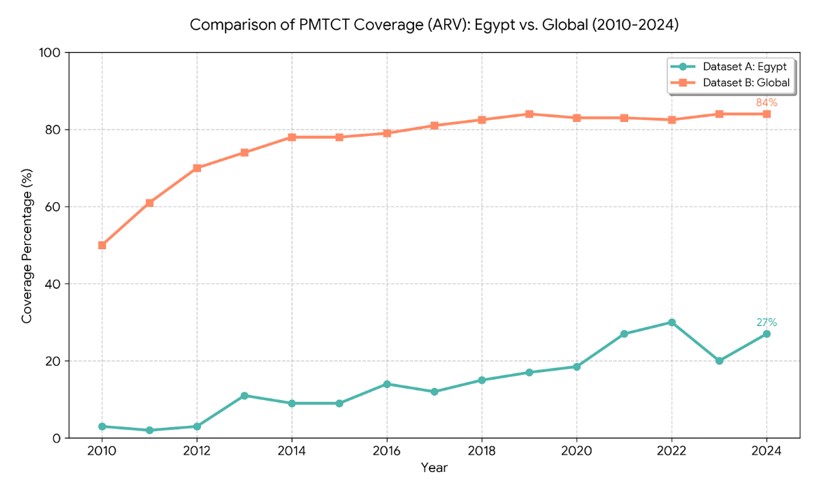
It was, as 2010 was the turning point Figure 4 in the devastating story of HIV in Egypt. Data showed a dramatic epidemiological shift: in only 4 years, Egypt experienced a 76% increase in cases between 2010 and 2016 [22]. The number of PLHIV in Egypt surged from approximately 5,400 in 2010 to an estimated 30,000 by the end of 2021 representing a concerning five folds increase in just over a decade with gender dynamics showing a continued "higher male predominance since 2010", also this period saw a notable increase in paediatric HIV cases, with the number of children living with HIV rising from less than 100 in 1990 to 1,100 in 2021 [9], and the percentage of pregnant women receiving ART to prevent maternal-fatal transmission increased from 3% in 2010 to 27% in 2024 as per latest UNAIDS data on shown in Figure 5, which shows us how this disease is affecting all members of the community, including men, women, and children. and translates how fast it is about the annual increase of 25–30% in new confirmed HIV cases, making Egypt one of the fastest growing epidemics in the MENA region [12,5], as previously shown in Figure 2, Figure 3, Figure 4.
In 2014, UNAIDS introduced the ambitious 90-90-90 treatment targets, aiming for 90% of PLHIV to know their status, 90% of diagnosed individuals to receive antiretroviral therapy, and 90% of those on ART to achieve viral load suppression by 2020 [12], which was later advanced to 95-95-95 as a global target in 2021. The Coronavirus disease (COVID-19) pandemic significantly impacted global health systems, necessitating rapid adaptations to maintain essential services, including HIV care. In Egypt, the NAP implemented strategies to ensure the continuity of ART for PLHIV. Specifically, adopted multi-month ART dispensing, covering 2–3 months of medication. This strategy aimed to reduce the frequency of patient visits and minimize potential exposure risks, thereby positively influencing adherence among PLHIV during movement restrictions. Furthermore, challenges in the global supply chain, which restricted access to certain ART combinations, prompted recommendations to use locally manufactured tenofovir disoproxil fumarate/lamivudine (3TC) as an alternative [23].
While Egypt has made progress, particularly in diagnosing PLHIV and initiating treatment, through a Treat All Policy that recommends ART initiation regardless of CD4 count, adopted in Egypt in 2017 [24]. The domestic budget covers 100% of locally produced first-line generics [23]. Still, it faces significant gaps in achieving these global benchmarks.
UNAIDS latest data estimates for Egypt 2024 [16], shown in (Table 2, Table 3).
| Indicator | Number | Percentage of PLHIV (%) |
|---|---|---|
| Total PLHIV | 56,000 | 100.0 |
| Know their HIV status | 33,000 | 58.9 |
| On antiretroviral therapy (ART) | 25,000 | 44.6 |
| Virally suppressed | 20,000 | 35.7 |
PLHIV, people living with HIV; ART, antiretroviral therapy.
| Cascade Stage | Percentage (%) | Target (95-95-95) |
|---|---|---|
| Awareness of Status | 58.9 | 95.0 |
| Receiving ART (for diagnosed) | 75.8 | 95.0 |
| Viral Suppression (of those on ART) | 80.0 | 95.0 |
ART, antiretroviral therapy.
Key Insights Drawn from (Table 2, Table 3):
These figures are critical indicators of the challenges the country is facing as the conservative cultural context in Egypt complicates efforts for effective HIV prevention, surveillance, and treatment [8,9]. Even with free ART, systemic and social barriers prevent individuals from remaining engaged in care, as most PLHIV in Egypt are diagnosed late with low retention in the first year of treatment due to lack of treatment knowledge, stigma, transport costs, and fear of disclosure [19]. Stigma, in particular, is a major barrier, with many individuals not disclosing their HIV status to family and friends due to fear of discrimination [5].
Historically, the MENA region, including Egypt, has lacked comprehensive epidemiological data, leading to an incomplete understanding of the HIV/AIDS situation. [12,9]. Societal and cultural norms, combined with legal conservatism, social stigma, and discrimination, significantly contribute to the underreporting and delayed diagnoses of HIV and hinder surveillance efforts and public health outreach. Despite these restrictive norms, evidence shows that high-risk behaviours are more widespread than publicly acknowledged, and the cultural perception of immorality that discourages individuals from seeking care, along with evolving socioeconomic conditions, has contributed to this complex situation. The interplay of social, legal, and economic factors highlights the multifaceted challenges in addressing HIV in Egypt [7,25,8].
Egypt Expanded Challenges
Data Gaps and Coverage of Key Populations
While BBSS data from 2006 and 2010 identified MSM and PWID as key populations, significant data gaps remain for other vulnerable groups. There is a notable lack of recent, systematic prevalence data for female sex workers (FSWs) and transgender (TG) individuals. The 2010 BBSS noted that female key populations were exceptionally difficult to reach for surveillance due to criminalization by law [21,17] and no subsequent national surveys have been published to fill this gap.
Latest data from UNAIDS show similar gaps, particularly for TG populations, which lack country data in some countries. For sex workers, it showed 0% in 2011 to the latest data from 2024, when it showed 2.5% Figure 1. This lack of data hinders targeted prevention and care programs for these marginalized groups.
Prevention Portfolio (Beyond ART)
This can be divided into 2 main categories:
1- Pre-Exposure Prophylaxis (PrEP) while the WHO recommends PrEP globally as part of the HIV prevention for at-risk populations [26] Its formal availability and registration in the Egyptian public health system remain underdeveloped. Access is usually available through private clinics and is not part of organized national HIV prevention services. The NSP 2021-2025 confirms that offering oral PrEP is not included in the planned interventions [21].
2- Harm reduction services Such as Needle and Syringe Exchange Programs (NSEPs) and Opioid Substitution Therapy (OST), which were not widely implemented or officially supported. However, the NSP 2021-2025 marks a significant policy shift by including the scale-up of comprehensive harm reduction, including NSEPs and OST, as a strategic objective [21]. And latest data from UNAIDS showed harm reduction programs were indeed expanded, including the distribution of 1.85 million needles and syringes to more than 27000 PWID and opioid agonist therapy for 2000 at 13 sites [27].
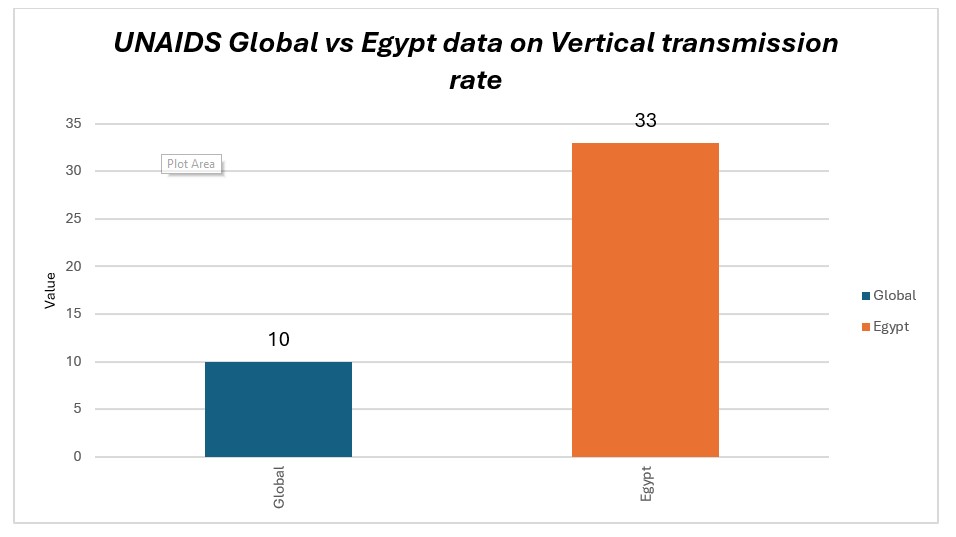
Prevention of Mother-to-Child Transmission (PMTCT) Gap .
Although coverage improved significantly compared to earlier estimates, it’s still lagging behind global targets.
Low coverage suggests barriers, including low diagnosis rates among women of childbearing age due to stigma and potential difficulties in linkage, initiation, retention, and adherence of HIV- diagnosed pregnant women to HIV treatment [21]. which increases the risk of vertical transmission, as shown in Figure 6.
Healthcare Infrastructure and Service
Ministry of Health and Population. (MOHP) Expanded care and treatment centers to reach 27 ART centers across Egypt. [9] The exact distribution of these treatment centers was not available in our search. But access is a known barrier, as delivering HIV care in Egypt is known to be centralized. Treatment and care are primarily provided through a limited number of specialized centers, often located within "Fever Hospitals, " which are government-run infectious disease hospitals. While this model allows for the concentration of expertise, it creates geographical and logistical barriers for patients living outside major urban centres, potentially contributing to high transport costs and, eventually, low retention in care.
Drug Resistance and Advanced Treatment Lines
This review found no published national data on HIV drug resistance patterns, rates of treatment failure for first-line regimens, or the extent of national drug resistance surveillance. However, a recently published 2025 single-centre study in Alexandria found a pretreatment drug resistance (PDR) rate of 17.3% to reverse transcriptase inhibitors. Resistance was higher among patients reinitiating therapy (50%) compared to treatment-naïve patients (11.4%) [28]. While the domestic budget covers first-line generic ART [23], the availability, accessibility, and funding mechanisms for second- and third-line therapies for patients with treatment failure or resistance are not well documented. Highlighting a critical gap in both national resistance surveillance and its management.
The Legal and Policy Environment
The legal environment in Egypt poses a significant barrier to HIV prevention and care. While HIV status itself is not criminalized, laws criminalize "debauchery”, sex work, and drug use, which are often used to target key populations like MSM, FSWs, and PWID. This legal framework reinforces an environment of fear and discrimination, driving these populations underground and away from essential health services, including HIV testing, prevention, and treatment. This legal and policy environment directly undermines public health efforts by creating a disincentive for individuals to seek care or disclose risk behaviours [7,8].
Timeline of Key HIV/AIDS Milestones in Egypt
HIV/AIDS Comorbidities: Beyond the disease
Improvements in diagnosis, treatment access, and survival have extended the life expectancy of people living with HIV, with the significant advancements of ARTs, HIV/AIDS has transformed from a rapidly fatal disease into a manageable chronic condition, increasing lifespan for PLHIV [29]. This success, however, has led to a new set of challenges that we didn’t see in the past a new phase that extends beyond the disease itself with a wide range of comorbidities both infectious including Hepatitis C Virus (HCV), Human Papilloma Virus (HPV) and Tuberculosis (TB) and a non-infectious, including cardiovascular diseases (CVD), metabolic disorders, renal dysfunction, bone diseases, neurological and psychological complications which are often exacerbated by both the virus itself, the lifelong use of antiretroviral therapies. and the overall increase in survival [30,31,32]
Infectious Comorbidities
People living with HIV often have other viral coinfections, especially if they were infected through the same routes of transmission (like unprotected sex or needle sharing). Some of these coinfections interact with HIV, changing how both infections progress. which can make HIV disease worse, or the coinfected virus becomes more severe itself when HIV weakens the immune system [33].
HCV: HCV, which is pa rticularly relevant to Egypt, as the country has historically faced one of the highest prevalence rates of HCV infection. HCV co-infection has a global estimate that suggests it affects 20–30% of HIV patients, given the blood-borne transmission routes shared by HIV and HCV, with a high frequency of co-infection, especially among PWID, with a study showing that HIV and HCV coinfection is 62%–80% among HIV infected patients who are using drug injections. Despite a dramatic decline in the general HCV prevalence in Egypt due to a nationwide screening and treatment program, continued attention is necessary for co-infected high-risk groups because of how HIV/HCV co-infection significantly alters the course and outcomes of both infections, leading to increased morbidity and mortality among PLHIV in Egypt [33,34]. Other studies explored the efficacy and safety of direct-acting antivirals (DAAs) (sofosbuvir and daclatasvir) in the treatment of chronic HCV in HIV-HCV co-infected Egyptian patients, which showed excellent virologic response and a safety profile, with a significant increase in CD-4 count in those patients [35]. Another cross-sectional study investigated the barriers preventing a group of Egyptian HIV/HCV coinfected patients from accessing HCV treatment, despite being available and free of charge showed that fear of stigma associated with HIV/HCV was the most important barrier to compliance with treatment in more than 70% and lack of supportive work environment 50% and nearly 40% didn’t continue follow up due to the lack of integrated services in the healthcare facility [36] Which highlight a concerning gap defect in care for these patients. Strategies tailored to PLHIV are needed to ensure equitable access for co-infected individuals. To our knowledge, we didn’t find nationally representative or systematically collected data that currently describe access pathways, linkage to care, or treatment uptake for HIV/HCV co-infected individuals in Egypt; available evidence is limited to small institutional cohorts and descriptive studies.
HPV: Globally, HPV is recognized as the most common sexually transmitted infection and is the primary cause of many anogenital cancers, including cervical, anal, vaginal, vulvar, and penile cancers, particularly in immunocompromised patients [37,38]. HIV-HPV coinfection is one of the most well-known coinfections. Many international studies showed that PLHIV have a substantially higher risk of HPV infection and HPV-related diseases compared to those without HIV [39]. Women are at a higher risk of developing cervical cancer and other HPV-associated malignancies, with some studies indicating up to a six-fold increase in cervical cancer incidence among women with HIV compared to those without [30,40].
In Egypt, a recent cross-sectional study provided crucial insight into the burden of HPV among women living with HIV. The study, which included 251 HIV-positive and 268 HIV-negative women from nine Egyptian governorates, found a significantly higher prevalence of HPV infection among women living with HIV (24.4%) compared to HIV-negative women (3.4%). Several factors were identified as significant predictors for HPV infection: Number of lifetime marriages: odds (2.06), and Drug addiction: odds (2.01). These findings highlight that HPV infection is more prevalent among women living with HIV in Egypt, and that certain demographic and behavioral factors significantly predict the risk of infection [41].
TB: Pulmonary diseases in general represent the number one cause of morbidity and mortality among PLHIV [42]. TB specifically remains one of the most common opportunistic infections and the leading cause of death in PLHIV. They are often described as a co-epidemic, as each infection worsens the other’s [43,44]. Because of how the weak immune system in HIV patients increases TB susceptibility and progression, and how TB, on the other hand, results in progression of HIV. In the Egyptian context, studies corroborate this relationship. A retrospective cohort study in Egypt highlights that TB and HIV frequently accelerate each other’s progression, with factors like immunosuppression and HIV/AIDS increasing susceptibility to TB [47). Furthermore, HIV-related pulmonary studies in Egyptian patients confirm the strong link between lower CD4 counts and the presence of TB infections. Among HIV-infected individuals with respiratory symptoms, pulmonary tuberculosis was the most common diagnosis, accounting for 18% of cases [44). Broader epidemiological studies discuss the clinical challenges and global burden of this coinfection across many regions. Both global and Egyptian studies emphasize the need for improved routine screening, expanded HIV testing in TB programs for earlier detection and better disease management, especially in vulnerable populations and those at higher risks, and emphasize the need for healthcare infrastructure and treatment strategies to effectively manage the HIV-TB co-epidemic [45,46]. However, there is a lack of published Egyptian data on the targeted literature search covering the screening for latent TB infection (LTBI) and the provision of preventive therapy (Isoniazid) among PLHIV in Egypt, which are key strategies for preventing active TB disease [47].
Non-infectious comorbidities
There was a severe leakage in this area in the Egyptian studies, although globally, non-infectious comorbidities are considered the shift in the mortality trend. As non-infectious comorbidities now account for more than half of deaths in PLHIV, with cardiovascular diseases and cancer being the leading causes globally [48,49,50]. While HIV-related mortality has declined, non-HIV-related mortality has remained more stable, highlighting the ongoing challenge posed by these conditions [51,49]. As PLHIV get older and live longer, long-term related health conditions are becoming a major cause of morbidity and mortality [52]. These conditions often occur at a higher prevalence and at an earlier age compared to the general population, indicating a phenomenon of premature aging [53]. This is linked to chronic inflammation, immune dysfunction, the chronicity of HIV infection itself, and potential side effects of ART [54,55,56].
CVD: Specific research directly examining HIV-associated CVD prevalence or burden within the Egyptian population was not prominently found in the targeted academic literature search. General atherosclerotic cardiovascular disease and its risk factors are subjects of study in Egypt [57], but these studies do not specifically focus on PLHIV.
Global data shows that CVD are a leading cause of death in PLHIV, including hypertension, myocardial infarction, stroke, and cardiomyopathy [55,58]. Some estimates suggesting risk of CVD including myocardial infarction (MI), hypertension and strokes are 1.5 to 2 fold higher in PLHIV compared to the general population [29].
Malignancies: There was limited Egyptian studies on malignancies associated HIV. A study on HIV-related pulmonary manifestations among Egyptian patients identified several types of cancer among those with respiratory symptoms. These included: Kaposi sarcoma, Squamous cell carcinoma, Adenocarcinoma, and Hodgkin lymphoma [42]. besides this study and the cross-sectional study about HIV-HPV coinfection and cervical cancer as consequence on women living in Egypt as discussed before there wasn’t any specific comprehensive studies on the overall prevalence and detailed epidemiology of all HIV-associated cancers in Egypt. Given the limited specific data for Egypt on the full spectrum of HIV-associated malignancies and giving that how cancers (besides CVD) is one of the most common cause of morbidity and mortality in the new era of HIV [48,50]. Further research is needed to understand the precise burden and types of cancers affecting PLHIV in the country. This information is crucial for developing targeted screening, prevention, and treatment strategies for HIV patients. As PLHIV face an increased risk of developing various cancers, including both AIDS-defining and non-AIDS-defining malignancies. Attributed to HIV-induced immunosuppression, chronic inflammation, and co-infection with oncogenic viruses. [59,60]
Metabolic disorders: Targeted academic literature searches did not yield specific studies focusing on HIV-associated metabolic disorders in the Egyptian population. But based on global and regional studies. Associated HIV metabolic disorders include diabetes mellitus, dyslipidaemia (occurring in up to 40% of individuals), obesity, weight gain, insulin resistance, and fat redistribution syndromes [61,55,62]. Studies from various African regions also indicate a notable burden of metabolic syndrome and its components among PLHIV [63,64,65].
Bone disease: Targeted academic literature searches did not provide specific studies focusing on HIV-associated bone disease within the Egyptian population. The following is based on global data. Lower bone mineral density, including osteopenia, osteoporosis, and an increased risk of fractures, is more common in PLHIV globally [66,67]. This risk results from several mixed factors like chronic inflammation, vitamin D deficiency, low body weight, hypogonadism, HCV co-infection, and certain antiretroviral drugs—particularly tenofovir disoproxil fumarate (TDF) and protease inhibitors [68].
Renal disease: Specific research on the prevalence and characteristics of HIV-associated renal disease within the Egyptian population was not found in our targeted search. Based on global and regional data. Chronic kidney disease is more prevalent among PLHIV compared to the general population, with HIV infection contributing directly to kidney pathologies such as HIV-associated nephropathy (HIVAN) [69,70]. While ART has altered the spectrum of kidney disease, certain antiretroviral drugs can also contribute to nephrotoxicity [71]. Reviews focusing on HIV-associated nephropathy in Africa indicate its prevalence and the added burden it places on health systems in low-resource settings and announced that reviews on HIVAN in Africa indicate a higher prevalence among individuals of African ancestry compared to those of European descent [72].
Neurological and Neurocognitive Disorders: Egyptian studies specifically detailing the prevalence and characteristics of HIV-associated neurocognitive disorders (HAND) within the Egyptian context were not readily available in the literature reviewed. The following is based on global data. HAND encompasses a spectrum of cognitive impairments that can affect PLHIV, even with effective ART [73]. While severe forms like HIV-associated dementia have decreased in incidence, milder forms of neurocognitive impairment remain prevalent. Studies across Africa highlight that a large proportion of PLHIV experience HAND [74,75,76]. Again, Egyptian studies specifically detailing the prevalence and characteristics of HAND within the Egyptian context were not readily available in the literature reviewed.
Psychological disorders: Mental health disorders, such as depression and anxiety, are highly prevalent comorbidities among PLHIV [77,78,79]. These conditions significantly impact the overall well-being and adherence to treatment [79,80] In Egypt, Stigma and fear of revealing one’s HIV status due to societal judgment profoundly impact the mental well-being of PLHIV. Studies in Egypt have shown that PLHIV experience a substantial degree of stigma, which can lead to social isolation, negatively affect their quality of life, decrease adherence to ART, and cause significant anxiety [22,5].
Separately, the stigma associated with HIV also extends to family members. An Egyptian article highlights how healthy children and adolescents of HIV-positive parents in Egypt experience significantly lower health-related quality of life (HRQOL), particularly in physical, mental, family, and social domains, with adolescents being more affected. This diminished well-being is largely attributed to the severe stigma and discrimination against HIV-affected families within Egypt’s conservative cultural context, leading to social isolation and psychological distress for children. They suggested establishing organized social and mental support services within the NAP, specifically targeting adolescents and children, especially those from lower educational backgrounds, suggesting that parental education can positively influence children’s quality of life and the impact on the well-being of the next generation [81].
| Comorbidity | Global Data Status | Egyptian Data Status | Key Gaps in Egypt |
|---|---|---|---|
| Infectious (HCV, TB, HPV) | Extensive: Well-documented prevalence, treatment pathways, and outcomes. | Moderate: Strong data on HCV/TB prevalence; small cohort studies for HPV. | Systematic data on access pathways and treatment uptake for coinfected individuals. |
| CVD & Metabolic | Large-scale studies on premature aging and ART-related risks. | Scarce: Literature is almost non-existent for HIV-specific cohorts. | Prevalence of hypertension, MI, and diabetes specifically among PLHIV. |
| Malignancies | Large-scale studies on both AIDS-defining and non-AIDS cancers. | Limited: Only one nonspecific study and an HPV-related study that discussed cervical cancer. | Comprehensive epidemiology of AIDS and non-AIDS-defining cancers. |
| Neurological (HAND) | A growing body of research on neurocognitive decline. | Minimal: No readily available data on neurocognitive prevalence. | Baseline cognitive assessments and ART-related neurological impact. |
| Psychological | Extensive focus on depression/anxiety globally. | Qualitative: High focus on stigma and HRQOL; less on clinical diagnosis. | Integrated mental health services and quantitative clinical prevalence. |
HCV, hepatitis C virus; TB, tuberculosis; HPV, human papillomavirus; CVD, cardiovascular disease; MI, myocardial infarction; HAND, HIV-associated neurocognitive disorder; HRQOL, health-related quality of life; PLHIV, people living with HIV.
In summary, “Non-infectious comorbidities” in Egypt were not extensively available in the literature. While these comorbidities are globally recognized concerns for PLHIV, the specific epidemiological data for the Egyptian HIV population appear limited in the recent academic literature. This highlights a potential gap in the localized research on this critical public health concern. As insufficient data impedes the ability to develop targeted public health interventions and holistic care approaches essential for enhancing the long-term well-being of PLHIV in Egypt Table 4.
The Future
In recent years, our team—the largest and most experienced infectious-disease unit in Egypt— As an institutional case example, we cared for the first granddaughter of an HIV-positive grandfather. The grandfather had unknowingly transmitted the virus to his wife and daughter; both parents later died, but the daughter survived after receiving antiretrovirals through the National AIDS Program. With our guidance, she married an HIV-negative partner, conceived safely, and delivered a healthy, HIV-free girl—the first such grandchild in the country. We also managed Egypt’s first autologous stem-cell transplant for an HIV-positive patient with lymphoma, achieving complete remission. Yet much remains to be done.
New long-acting injectable drugs originally developed for pre-exposure prophylaxis (PrEP) have now observed that a single annual dose can suppress HIV replication for more than a year in a recently published case report [82]. If in the future a similar regimen is rolled out after a clinical trial nationwide, patients would need to visit a fever hospital only once every twelve months. To make the date unforgettable, we propose scheduling the injection during the patient’s birth month. Because antiretrovirals are already distributed free of charge in Egypt’s fever hospitals, this change would eliminate the street market in which some intravenous drug users sell monthly pills to buy narcotics. A once-yearly injection, administered under medical supervision, could guarantee adherence, sustain viral suppression, and propel us toward the U = U (undetectable equals untransmissible) target by 2030. The manufacturer of these long-acting formulations could partner with the Egyptian government to secure a stable supply. However, we acknowledge that this remains a forward-looking concept as this is preliminary and not established evidence, which will depend on the results of future clinical trials, regulatory approval, and assessments of feasibility and cost.
Social media—especially WhatsApp and Facebook groups—could now maybe precipitate transmission by clustering at-risk individuals. We therefore recommend aggressive, platform-specific campaigns on Facebook, WhatsApp, and TikTok that explain what HIV is, how it spreads, how it can be prevented, and how to obtain discreet home-based self-tests. Widely available self-testing could help shorten the dangerously long interval between infection and diagnosis, reduce stigma, and curb further spread. Egypt already provides free antiretroviral therapy; the missing piece is earlier diagnosis. By combining those conceptual strategies annual long-acting injections with innovative social-media education and home testing, we can hopefully contribute to reversing the sharp upward trend that currently places Egypt among one of the world’s fastest-growing HIV hotspots [16]and, with careful planning, we can move closer to the hope of ending the epidemic altogether.
Limitations
This review is a narrative review; it employed a non-systematic literature search, which may have resulted in the omission of relevant studies, particularly unpublished or grey literature from Egyptian sources. Also this review did not conduct a formal quality or risk-of-bias assessment of the included studies, and due to the significant scarcity of local data for many key areas, particularly non-infectious comorbidities and certain prevention strategies, the review relied on regional and global data to provide context, which may not be directly applicable to the epidemiological and sociocultural situation in Egypt. Also, a key limitation of this study is the heterogeneity in data quality across time periods. Estimates from the 1980s and early 1990s were derived from early surveillance systems with limited coverage and likely underreporting and therefore should be interpreted cautiously. In contrast, more recent UNAIDS figures represent model-based estimates informed by improved surveillance inputs and standardized assumptions. As a result, numerical estimates across different periods are not directly comparable with equal confidence, and observed temporal trends may partially reflect methodological improvements rather than true epidemiological changes.
Conclusion
Finally, after four decades, Egypt’s HIV story stands at a rare moment where science, humanity, and opportunity meet. With a hopeful vision for the future and a deep understanding of the past and present, we can begin a more hopeful chapter for all lives affected by HIV. We conclude from this narrative that Egypt is experiencing a rapidly growing concentrated epidemic with rising incidence. The national treatment cascade falls short of global targets. There were many local knowledge gaps regarding the burdens of non-infectious comorbidities and the prevalence of data on some key populations. Addressing these challenges, promoting early diagnosis, reducing stigma, expanding access to treatment, and adopting innovative prevention and treatment strategies are essential to reverse current trends.
Conflicts of Interest
The authors declare no competing interests that could have influenced the objectivity or outcome of this research
Funding Source
The authors declare that no specific grant or funding was received for this research from any public, commercial, or not-for-profit funding agency.
Acknowledgments
None.
Institutional Review Board (IRB)
None.
Large Language Model
We have employed an advanced Large Language Model (LLM) to enhance and refine the English-language writing. This process focused solely on improving the text’s clarity and style, without generating or adding any new information to the content. All authors have reviewed and verified the scientific accuracy of the manuscript content following the LLM-assisted language editing.
Authors Contribution
AM and MA contributed to the conceptualization of the work, literature search, review of articles, methodology, analysis, and synthesis of ideas. AM was responsible for the original draft, writing, and editing. MA provided supervision, guidance, and the final review.
Data Availability
All AI assistance was carefully reviewed, edited, and validated by the authors and was used only to enhance and refine the English-language writing. This process focused solely on improving the text’s clarity and style, without adding any new information. All authors have reviewed and verified the scientific accuracy of the manuscript content following the LLM-assisted editing. Grammarly and ChatGPT were used exclusively for language editing, sentence restructuring, and clarity improvement. Skywork was used to generate figures and format graphs based on the author-provided concepts and descriptions. AI tools were not used for data collection, statistical analysis, coding, interpretation of results, or scientific decision-making, and AI tools did not determine scientific conclusions.
References
- Sah A. K., Elshaikh R. H., Shalabi M. G., Abbas A. M., Prabhakar P. K., Babker A. M. A., Choudhary R. K., Gaur V., Choudhary A. S., Agarwal S.. Role of Artificial Intelligence and Personalized Medicine in Enhancing HIV Management and Treatment Outcomes. Life (Basel). 2025;15(5):745. doi:10.3390/life15050745 PMID: 40430173 PMCID: PMC12112836
- Beyrer C.. A pandemic anniversary: 40 years of HIV/AIDS. Lancet. 2021;397(10290):2142-2143. doi:10.1016/S0140-6736(21)01167-3 PMID: 34087110
- Immaculata Ugwu Ngozi, Nwachi Ugwu Collins, Ariel Onoka Chima, Ehigiator Iyare Festus, Friday Una Alfred, Marchand Christophe. Knowledge, Perception And Practice Of Preventive Lifestyle Against HIV/AIDS Among Students Of A Tertiary Educational Institution In South Eastern Nigeria. Journal of Clinical Research In HIV AIDS And Prevention. 2015;2(2):29-38. doi:10.14302/issn.2324-7339.jcrhap-15-648
- UNAIDS. Fact sheet - Latest global and regional statistics on the status of the AIDS epidemic [Internet]. 2025.
- Magdy Mona, Zaki Adel, Osman Sherif Omar, Abd El-Wahab Ekram W., Abd Elhameed Asmaa. Stigma among people living with HIV in Northern Egypt. openRxiv. 2024. doi:10.1101/2024.08.27.24312679
- Khalil A., Shaltout M., Costa S.. Identifying Opportunity for Online Education to Address HIV/HCV Knowledge Gaps in Health Professionals and Students in Egypt. Ann Glob Health. 2018;84(4):580-583. doi:10.9204/aogh.2388 PMID: 30779503 PMCID: PMC6748228
- Al-Abri S., Mokhbat J. E.. HIV in the MENA Region: Cultural and Political Challenges. Int J Infect Dis. 2016;44:64-5. doi:10.1016/j.ijid.2016.01.017 PMID: 26873278
- Boutros S., Skordis J.. HIV/AIDS surveillance in Egypt: current status and future challenges. East Mediterr Health J. 2010;16(3):251-8. doi:10.26719/2010.16.3.251 PMID: 20795437
- Ghazy R. M., Al Awaidy S., Taha S. H. N.. Trends of HIV indicators in Egypt from 1990 to 2021: time-series analysis and forecast toward UNAIDS 90-90-90 targets. BMC Public Health. 2023;23(1):625. doi:10.1186/s12889-023-15490-5 PMID: 37005670 PMCID: PMC10066021
- Holmes King K., Bertozzi Stefano, Bloom Barry R., Jha Prabhat. Disease Control Priorities, Third Edition (Volume 6): Major Infectious Diseases. Washington, DC: World Bank. 2017. doi:10.1596/978-1-4648-0524-0
- UNAIDS. Egypt country report [Internet]. 2017.
- El-Gibaly Omaima, Eskander Doneez Amir, Amin Mariam Taher. Trends in newly diagnosed HIV cases at Assiut university hospital, Egypt. Discover Public Health. 2025;22(1). doi:10.1186/s12982-025-00525-6
- Khorrami Z., Balooch Hasankhani M., Khezri M., Jafari-Khounigh A., Jahani Y., Sharifi H.. Trends and projection of incidence, mortality, and disability-adjusted life years of HIV in the Middle East and North Africa (1990-2030). Sci Rep. 2023;13(1):13859. doi:10.1038/s41598-023-40743-z PMID: 37620356 PMCID: PMC10449905
- UNAIDS. UNAIDS Global AIDS Update 2023. 2023. doi:10.18356/9789210028370
- Sheba M. F., Woody J. N., Zaki A. M., Morrill J. C., Burans J., Farag I., Kashaba S., Madkour S., Mansour M.. The prevalence of HIV infection in Egypt. Trans R Soc Trop Med Hyg. 1988;82(4):634. doi:10.1016/0035-9203(88)90540-8 PMID: 3256121
- UNAIDS. Egypt [Internet]. 2025.
- Shawky S., Soliman C., Kassak K. M., Oraby D., El-Khoury D., Kabore I.. HIV surveillance and epidemic profile in the Middle East and North Africa. J Acquir Immune Defic Syndr. 2009;51 Suppl 3(Suppl 3):S83-95. doi:10.1097/QAI.0b013e3181aafd3f PMID: 19553783 PMCID: PMC3356162
- Kabbash I. A., El-Gueneidy M., Sharaf A. Y., Hassan N. M., Al-Nawawy N.. Needs assessment and coping strategies of persons infected with HIV in Egypt. East Mediterr Health J. 2008;14(6):1308-20. PMID: 19161106
- Anwar S., El Kharrat E., Bakhoum A., El-Sadr W. M., Harris T. G.. Association of sociodemographic factors with needle sharing and number of sex partners among people who inject drugs in Egypt. Glob Public Health. 2022;17(8):1689-1698. doi:10.1080/17441692.2021.1950798 PMID: 34283695
- El-Sayyed N., Kabbash I. A., El-Gueniedy M.. Risk behaviours for HIV/AIDS infection among men who have sex with men in Cairo, Egypt. East Mediterr Health J. 2008;14(4):905-15. PMID: 19166174
- UNAIDS HIV Prevention Coalition. Egypt National HIV Strategic Plan 2021-2025 [Internet]. 2021.
- Aziz M. M., Abdelrheem S. S., Mohammed H. M.. Stigma and discrimination against people living with HIV by health care providers in Egypt. BMC Health Serv Res. 2023;23(1):663. doi:10.1186/s12913-023-09676-1 PMID: 37340396 PMCID: PMC10283161
- Mohamed R., Wanis H., Zebachi S., El-Kotamy M. T., Esmat G., Cordie A.. COVID-19 crisis effect on HIV service delivery in Egypt: Hard times or blessings in disguise?. South Afr J HIV Med. 2020;21(1):1170. doi:10.4102/sajhivmed.v21i1.1170 PMID: 33354367 PMCID: PMC7736654
- Ferreyra C., O'Brien D., Alonso B., Al-Zomour A., Ford N.. Provision and continuation of antiretroviral therapy during acute conflict: the experience of MSF in Central African Republic and Yemen. Confl Health. 2018;12(1):30. doi:10.1186/s13031-018-0161-1 PMID: 29988565 PMCID: PMC6027556
- Badahdah A. M., Pedersen D. E.. "I want to stand on my own legs": A qualitative study of antiretroviral therapy adherence among HIV-positive women in Egypt. AIDS Care. 2011;23(6):700-4. doi:10.1080/09540121.2010.534431 PMID: 21476148
- WHO. Pre-exposure prophylaxis (PrEP) [Internet]. 2025.
- UNAIDS. Egypt | Results and Transparency Portal [Internet]. 2025.
- Okasha Hadir, Afifi Amany Refaat, Ibrahim Khaled Ibn-Elwalid, Emad Rasha, Alzahaby Amgad A., Abdel-Baki Amin, Goumaa Ramadan, Amer Amira Fathy. Human immunodeficiency virus pretreatment drug resistance to first line antiretroviral therapy: a single center study. The Egyptian Journal of Internal Medicine. 2025;37(1). doi:10.1186/s43162-025-00441-w
- Lembas A., Zaleski A., Peller M., Mikula T., Wiercinska-Drapalo A.. Human Immunodeficiency Virus as a Risk Factor for Cardiovascular Disease. Cardiovasc Toxicol. 2024;24(1):1-14. doi:10.1007/s12012-023-09815-4 PMID: 37982976 PMCID: PMC10838226
- Chu C., Pollock L. C., Selwyn P. A.. HIV-Associated Complications: A Systems-Based Approach. Am Fam Physician. 2017;96(3):161-169. PMID: 28762691
- Webel A. R., Schexnayder J., Cioe P. A., Zuniga J. A.. A Review of Chronic Comorbidities in Adults Living With HIV: State of the Science. J Assoc Nurses AIDS Care. 2021;32(3):322-346. doi:10.1097/JNC.0000000000000240 PMID: 33595986 PMCID: PMC8815414
- Zhabokritsky A., Klein M., Loutfy M., Guaraldi G., Andany N., Guillemi S., Falutz J., Arbess G., Tan D. H. S., Walmsley S.. Non-AIDS-defining comorbidities impact health related quality of life among older adults living with HIV. Front Med (Lausanne). 2024;11:1380731. doi:10.3389/fmed.2024.1380731 PMID: 38690177 PMCID: PMC11058201
- Abdelgawad Osama, El-Bendary Mahmoud, Elegezy Mohamed, Abdel-Razik Ahmed, Farid Khaled, El-Gilany Abdel-Hady, El-Eraky Ahmed. Coinfection of Hepatitis C Virus with Human Immunodeficiency Virus: Not the End of the Story: A Multicenter Egyptian Study. Afro-Egyptian Journal of Infectious and Endemic Diseases. 2023;13(2):114-125. doi:10.21608/aeji.2023.205584.1285
- Elrashdy F., Hagag S., Mohamed R., Abdel Alem S., Meshaal S., Cordie A., Elsharkawy A., Esmat G.. Incidence of hepatitis C virus infection among people living with HIV: An Egyptian cohort study. South Afr J HIV Med. 2022;23(1):1442. doi:10.4102/sajhivmed.v23i1.1442 PMID: 36479422 PMCID: PMC9724027
- Mohamed Inas E. L. Khedr, El-Saeed Kadry Mohamed, Al-Sadik Mahmoud Hassan, Anwar Christina Alphonse. Safety and efficacy of directly acting antivirals (sofosbuvir and daclatasvir) in treatment of chronic HCV in HIV-HCV co-infected Egyptian patients. Egyptian Liver Journal. 2021;11(1). doi:10.1186/s43066-021-00089-5
- Eletreby R., Esmat G., Elsharkawy A., Alsehemy L., Mohamed R., Alem S. A., Yousof H., Cordie A., Lithy R. M.. HCV/HIV coinfected Egyptian patients: a cross-sectional study of their main characteristics and barriers to HCV treatment initiation. Trans R Soc Trop Med Hyg. 2022;116(3):227-232. doi:10.1093/trstmh/trab106 PMID: 34291286
- Lekoane K. M. B., Kuupiel D., Mashamba-Thompson T. P., Ginindza T. G.. The interplay of HIV and human papillomavirus-related cancers in sub-Saharan Africa: scoping review. Syst Rev. 2020;9(1):88. doi:10.1186/s13643-020-01354-1 PMID: 32321580 PMCID: PMC7178989
- Perez-Gonzalez A., Cachay E., Ocampo A., Poveda E.. Update on the Epidemiological Features and Clinical Implications of Human Papillomavirus Infection (HPV) and Human Immunodeficiency Virus (HIV) Coinfection. Microorganisms. 2022;10(5):1047. doi:10.3390/microorganisms10051047 PMID: 35630489 PMCID: PMC9147826
- Tadese B. K., You X., Ndao T., Tota J. E., Chen Y. T., Chowdhary A., Pan J., Costa A. C., Mugo N.. The Burden of HPV Infections and HPV-Related Diseases Among People With HIV: A Systematic Literature Review. J Med Virol. 2025;97(4):e70274. doi:10.1002/jmv.70274 PMID: 40172095 PMCID: PMC11963496
- Stelzle D., Tanaka L. F., Lee K. K., Ibrahim Khalil A., Baussano I., Shah A. S. V., McAllister D. A., Gottlieb S. L., Klug S. J., Winkler A. S., Bray F., Baggaley R., Clifford G. M., Broutet N., Dalal S.. Estimates of the global burden of cervical cancer associated with HIV. Lancet Glob Health. 2021;9(2):e161-e169. doi:10.1016/S2214-109X(20)30459-9 PMID: 33212031 PMCID: PMC7815633
- Ashry M., Shawky S., Mounir Z., Fathy F., Elsayed H., Kamal W., Hassany M.. Prevalence and risk factors of human papilloma virus infection among women living with HIV, Egypt, a cross sectional study. BMC Public Health. 2024;24(1):1821. doi:10.1186/s12889-024-19240-z PMID: 38978047 PMCID: PMC11232173
- Zaki Zeinab M., Khalil Magdy M., Wagih Khaled M., Ezzelregal Hieba G.. HIV-related pulmonary manifestations among Egyptian patients. The Egyptian Journal of Chest Diseases and Tuberculosis. 2023;72(1):120-129. doi:10.4103/ecdt.ecdt_45_22
- Belew H., Wubie M., Tizazu G., Bitew A., Birlew T.. Predictors of tuberculosis infection among adults visiting anti-retroviral treatment center at east and west Gojjam, northwest, Ethiopia, 2017. BMC Infect Dis. 2020;20(1):593. doi:10.1186/s12879-020-05290-2 PMID: 32787798 PMCID: PMC7422613
- Manosuthi W., Charoenpong L., Santiwarangkana C.. A retrospective study of survival and risk factors for mortality among people living with HIV who received antiretroviral treatment in a resource-limited setting. AIDS Res Ther. 2021;18(1):71. doi:10.1186/s12981-021-00397-1 PMID: 34641922 PMCID: PMC8513274
- Amin W., Ashmawy R., Ibrahim S. A., El-Maradny Y. A., Elsawy N. H., Gebili S. A., Gamaleldin N., Ghazy R. M.. Incidence and determinants of extrapulmonary tuberculosis in Egypt: a retrospective cohort study. Sci Rep. 2025;15(1):13631. doi:10.1038/s41598-025-95699-z PMID: 40254648 PMCID: PMC12009986
- Zhang S. X., Wang J. C., Yang J., Lv S., Duan L., Lu Y., Tian L. G., Chen M. X., Liu Q., Wei F. N., Feng X. Y., Yang G. B., Li Y. J., Wang Y., Hu X. J., Yang M., Lu Z. H., Zhang S. Y., Li S. Z., Zheng J. X.. Epidemiological features and temporal trends of the co-infection between HIV and tuberculosis, 1990-2021: findings from the Global Burden of Disease Study 2021. Infect Dis Poverty. 2024;13(1):59. doi:10.1186/s40249-024-01230-3 PMID: 39152514 PMCID: PMC11328430
- Pathmanathan I., Ahmedov S., Pevzner E., Anyalechi G., Modi S., Kirking H., Cavanaugh J. S.. TB preventive therapy for people living with HIV: key considerations for scale-up in resource-limited settings. Int J Tuberc Lung Dis. 2018;22(6):596-605. doi:10.5588/ijtld.17.0758 PMID: 29862942 PMCID: PMC5989571
- Bonnet F., Le Marec F., Leleux O., Gerard Y., Neau D., Lazaro E., Duffau P., Caubet O., Vandenhende M. A., Mercie P., Cazanave C., Dabis F.. Evolution of comorbidities in people living with HIV between 2004 and 2014: cross-sectional analyses from ANRS CO3 Aquitaine cohort. BMC Infect Dis. 2020;20(1):850. doi:10.1186/s12879-020-05593-4 PMID: 33198667 PMCID: PMC7670698
- Fontela C., Aguinaga A., Moreno-Iribas C., Reparaz J., Rivero M., Gracia M., Floristan Y., Fresan U., Miguel R. S., Ezpeleta C., Castilla J.. Trends and causes of mortality in a population-based cohort of HIV-infected adults in Spain: comparison with the general population. Sci Rep. 2020;10(1):8922. doi:10.1038/s41598-020-65841-0 PMID: 32488053 PMCID: PMC7265289
- Trickey A., McGinnis K., Gill M. J., Abgrall S., Berenguer J., Wyen C., Hessamfar M., Reiss P., Kusejko K., Silverberg M. J., Imaz A., Teira R., d'Arminio Monforte A., Zangerle R., Guest J. L., Papastamopoulos V., Crane H., Sterling T. R., Grabar S., Ingle S. M., Sterne J. A. C.. Longitudinal trends in causes of death among adults with HIV on antiretroviral therapy in Europe and North America from 1996 to 2020: a collaboration of cohort studies. Lancet HIV. 2024;11(3):e176-e185. doi:10.1016/S2352-3018(23)00272-2 PMID: 38280393 PMCID: PMC11656032
- Bosh K. A., Johnson A. S., Hernandez A. L., Prejean J., Taylor J., Wingard R., Valleroy L. A., Hall H. I.. Vital Signs: Deaths Among Persons with Diagnosed HIV Infection, United States, 2010-2018. MMWR Morb Mortal Wkly Rep. 2020;69(46):1717-1724. doi:10.15585/mmwr.mm6946a1 PMID: 33211683 PMCID: PMC7676640
- Verheij Eveline, Boyd Anders, Wit Ferdinand, Verboeket Sebastiaan Olaf, Verburgh Myrthe Lauriëtte, van der Valk Marc, Schim van der Loeff Maarten F., Reiss Peter, AGEhIV Cohort Study. Long-Term Trends in Comorbidity Evolution and Disease Burden in HIV-Positive Compared to HIV-Negative Individuals as They Age. SSRN Electronic Journal. 2022. doi:10.2139/ssrn.4057117
- Osei-Yeboah R., Tamuhla T., Ngwenya O., Tiffin N.. Accessing HIV care may lead to earlier ascertainment of comorbidities in health care clients in Khayelitsha, Cape Town. PLOS Glob Public Health. 2021;1(12):e0000031. doi:10.1371/journal.pgph.0000031 PMID: 36962101 PMCID: PMC10021146
- Benti Dugasa Garoma, Daba Debelo Diriba, Hunegna Gizew, Abdena Deressa, Etefa Alemayehu, Adugna Motuma. 2024. doi:10.21203/rs.3.rs-5342438/v1
- Henning R. J., Greene J. N.. The epidemiology, mechanisms, diagnosis and treatment of cardiovascular disease in adult patients with HIV. Am J Cardiovasc Dis. 2023;13(2):101-121. PMID: 37213313 PMCID: PMC10193251
- Maggi P., De Socio G. V., Menzaghi B., Molteni C., Squillace N., Taramasso L., Guastavigna M., Gamboni G., Madeddu G., Vichi F., Cascio A., Sarchi E., Pellicano G., Martinelli C. V., Celesia B. M., Valsecchi L., Gulminetti R., Cenderello G., Parisini A., Calza L., Falasca K., Orofino G., Ricci E., Di Biagio A., Bonfanti P.. Growing old with antiretroviral therapy or elderly people in antiretroviral therapy: two different profiles of comorbidity?. BMC Infect Dis. 2022;22(1):745. doi:10.1186/s12879-022-07739-y PMID: 36151508 PMCID: PMC9508769
- Khalfallah M., Habib M., Kishk A. M., Saeed B., Hemdan S., Eissa A., Aboomar A. A., Hagag R. Y., Elnagar B.. Atherosclerotic Cardiovascular Diseases in Middle Delta of Egypt: A Systematic Analysis of Risk Factors Associated with the Rising Burden of the Disease. Glob Heart. 2025;20(1):11. doi:10.5334/gh.1395 PMID: 39925839 PMCID: PMC11804180
- Nazari I., Feinstein M. J.. Evolving mechanisms and presentations of cardiovascular disease in people with HIV: implications for management. Clin Microbiol Rev. 2024;37(1):e0009822. doi:10.1128/cmr.00098-22 PMID: 38299802 PMCID: PMC10938901
- Cornejo-Juarez P., Cavildo-Jeronimo D., Volkow-Fernandez P.. Non-AIDS defining cancer (NADC) among HIV-infected patients at an oncology tertiary-care center in Mexico. AIDS Res Ther. 2018;15(1):16. doi:10.1186/s12981-018-0202-2 PMID: 30368240 PMCID: PMC6204055
- Yarchoan R., Uldrick T. S.. HIV-Associated Cancers and Related Diseases. N Engl J Med. 2018;378(11):1029-1041. doi:10.1056/NEJMra1615896 PMID: 29539283 PMCID: PMC6890231
- Chang H. H.. Weight Gain and Metabolic Syndrome in Human Immunodeficiency Virus Patients. Infect Chemother. 2022;54(2):220-235. doi:10.3947/ic.2022.0061 PMID: 35706080 PMCID: PMC9259920
- Trachunthong D., Tipayamongkholgul M., Chumseng S., Darasawang W., Bundhamcharoen K.. Burden of metabolic syndrome in the global adult HIV-infected population: a systematic review and meta-analysis. BMC Public Health. 2024;24(1):2657. doi:10.1186/s12889-024-20118-3 PMID: 39342258 PMCID: PMC11438355
- Asgedom Y. S., Kebede T. M., Gebrekidan A. Y., Koyira M. M., Azeze G. A., Lombebo A. A., Efa A. G., Haile K. E., Kassie G. A.. Prevalence of metabolic syndrome among people living with human immunodeficiency virus in sub-Saharan Africa: a systematic review and meta-analysis. Sci Rep. 2024;14(1):11709. doi:10.1038/s41598-024-62497-y PMID: 38777850 PMCID: PMC11111734
- Chihota B. V., Mandiriri A., Shamu T., Muula G., Nyamutowa H., Taderera C., Mwamba D., Chilengi R., Bolton-Moore C., Bosomprah S., Egger M., Chimbetete C., Wandeler G., for Ie D. E. A. Southern Africa. Metabolic syndrome among treatment-naive people living with and without HIV in Zambia and Zimbabwe: a cross-sectional analysis. J Int AIDS Soc. 2022;25(12):e26047. doi:10.1002/jia2.26047 PMID: 36522287 PMCID: PMC9755006
- Husain N. E., Noor S. K., Elmadhoun W. M., Almobarak A. O., Awadalla H., Woodward C. L., Mital D., Ahmed M. H.. Diabetes, metabolic syndrome and dyslipidemia in people living with HIV in Africa: re-emerging challenges not to be forgotten. HIV AIDS (Auckl). 2017;9:193-202. doi:10.2147/HIV.S137974 PMID: 29184449 PMCID: PMC5685138
- Afraie Maryam, Zamani Kamran, Moradi Ghobad, Khateri Sorour, Nikbakht Nikta, Moradi Yousef. Osteoporosis and fracture risk among individuals with HIV: a systematic review and meta-analysis. Discover Public Health. 2025;22(1). doi:10.1186/s12982-025-00608-4
- Delpino M. V., Quarleri J.. Influence of HIV Infection and Antiretroviral Therapy on Bone Homeostasis. Front Endocrinol (Lausanne). 2020;11:502. doi:10.3389/fendo.2020.00502 PMID: 32982960 PMCID: PMC7493215
- Cummins N. W.. Metabolic Complications of Chronic HIV Infection: A Narrative Review. Pathogens. 2022;11(2):197. doi:10.3390/pathogens11020197 PMID: 35215140 PMCID: PMC8879342
- Asmelash D., Nigatie M.. Chronic kidney disease and its associated factors in HIV-infected individuals: a comparison of antiretroviral therapy naive and experienced patients. Front Med (Lausanne). 2024;11:1455688. doi:10.3389/fmed.2024.1455688 PMID: 39588184 PMCID: PMC11586211
- Yussuf F. M., Barbarawi A., Nor M. A., Ali A. I., Sheikh I. M., Ogedegbe O. J., Tabowei G., Jimoh A., Ozokolie G. E., Igbinomwanhia O.. A Systematic Review Exploring the Range of Renal Complications of Human Immunodeficiency Virus. Cureus. 2023;15(3):e36755. doi:10.7759/cureus.36755 PMID: 37123789 PMCID: PMC10132701
- Abraham A. G., Althoff K. N., Jing Y., Estrella M. M., Kitahata M. M., Wester C. W., Bosch R. J., Crane H., Eron J., Gill M. J., Horberg M. A., Justice A. C., Klein M., Mayor A. M., Moore R. D., Palella F. J., Parikh C. R., Silverberg M. J., Golub E. T., Jacobson L. P., Napravnik S., Lucas G. M., North American Aids Cohort Collaboration on Research and Design of the International Epidemiologic Databases to Evaluate Aids. End-stage renal disease among HIV-infected adults in North America. Clin Infect Dis. 2015;60(6):941-9. doi:10.1093/cid/ciu919 PMID: 25409471 PMCID: PMC4357817
- Husain N. E., Ahmed M. H., Almobarak A. O., Noor S. K., Elmadhoun W. M., Awadalla H., Woodward C. L., Mital D.. HIV-Associated Nephropathy in Africa: Pathology, Clinical Presentation and Strategy for Prevention. J Clin Med Res. 2018;10(1):1-8. doi:10.14740/jocmr3235w PMID: 29238427 PMCID: PMC5722038
- Wei J., Hou J., Su B., Jiang T., Guo C., Wang W., Zhang Y., Chang B., Wu H., Zhang T.. The Prevalence of Frascati-Criteria-Based HIV-Associated Neurocognitive Disorder (HAND) in HIV-Infected Adults: A Systematic Review and Meta-Analysis. Front Neurol. 2020;11:581346. doi:10.3389/fneur.2020.581346 PMID: 33335509 PMCID: PMC7736554
- Ayele B. A., Amogne W., Gemechu L.. HIV-associated neurocognitive disorder and HIV-associated myelopathy in a patient with a preserved CD4, but high viral load-a rarely reported phenomenon: a case report and literature review. BMC Infect Dis. 2020;20(1):574. doi:10.1186/s12879-020-05297-9 PMID: 32758161 PMCID: PMC7409403
- Mekuriaw B., Belayneh Z., Teshome W., Akalu Y.. Prevalence and variability of HIV/AIDS-associated neurocognitive impairments in Africa: a systematic review and meta-analysis. BMC Public Health. 2023;23(1):997. doi:10.1186/s12889-023-15935-x PMID: 37254121 PMCID: PMC10228136
- Zenebe Y., Akele B., M W. Selassie, Necho M.. A systematic review and meta-analysis of HIV associated neurocognitive disorders (HAND) among people with HIV in Ethiopia. AIDS Res Ther. 2021;18(1):99. doi:10.1186/s12981-021-00424-1 PMID: 34924002 PMCID: PMC8684693
- Belayneh Z., Mekuriaw B., Mehare T., Shumye S., Tsehay M.. Magnitude and predictors of common mental disorder among people with HIV/AIDS in Ethiopia: a systematic review and meta-analysis. BMC Public Health. 2020;20(1):689. doi:10.1186/s12889-020-08800-8 PMID: 32410600 PMCID: PMC7345520
- Opoku Agyemang S., Ninonni J., Bennin L., Agyare E., Gyimah L., Senya K., Birikorang E., Quarshie E. N., Baddoo N. A., Addo S. A., Obiri-Yeboah D.. Prevalence and associations of depression, anxiety, and stress among people living with HIV: A hospital-based analytical cross-sectional study. Health Sci Rep. 2022;5(5):e754. doi:10.1002/hsr2.754 PMID: 35949667 PMCID: PMC9358537
- Rafiei S., Raoofi S., Pashazadeh Kan F., Masoumi M., Doustmehraban M., Biparva A. J., Ashari A., Vali N., Khani S., Abdollahi B., Vaziri Shahrebabak E. S. V., Heydari M., Momeni Z., Kasaie Z. A., Beliad M., Ghashghaee A.. Global prevalence of suicide in patients living with HIV/AIDS: A systematic review and meta-analysis. J Affect Disord. 2023;323:400-408. doi:10.1016/j.jad.2022.11.061 PMID: 36455715
- Vondo N., Mabaso M., Ginyana T., Malope L., Moyo S., Zungu N., Shisana O.. Determinants of psychological distress among individuals who are aware of their HIV serostatus in South Africa: findings from the 2017 national HIV prevalence, incidence, behavior, and communication survey. Front Public Health. 2024;12:1387878. doi:10.3389/fpubh.2024.1387878 PMID: 38846607 PMCID: PMC11153803
- Ashry M., Ziady H., Hameed M., Mohammed F.. Health-related quality of life in healthy children and adolescents of HIV-infected parents in Alexandria, Egypt. J Egypt Public Health Assoc. 2017;92(4):212-219. doi:10.21608/EPX.2018.22042 PMID: 30612381
- Sunagawa S. W., Bares S. H., Scarsi K. K., Podany A., Mykris T., Weinhold J., O'Neill J., Kubat M., Cramer D., Davis J. M., Havens J. P.. Sustained HIV Viral Suppression 18 Months After the Last Dose of Long-acting Cabotegravir/Rilpivirine: A Case Report. Open Forum Infect Dis. 2025;12(7):ofaf399. doi:10.1093/ofid/ofaf399 PMID: 40704172 PMCID: PMC12283251
- Bio-BSS. Bio-BSS summary report 2006 final web site [Internet]. 2006.
- Bio-BSS. Bio-BSS summary report 2010 [Internet]. 2010.