Losartan Monotherapy vs Combination Regimens in IgA Nephropathy: A Systematic Review and Network Meta-analysis
Mohamed E. HaseebⒾ1*, Hazem E. Mohammed2, Anas Hussein Heiba1, George HanenⒾ1,3, Nada Ali Omar Abd ElazizⒾ1, Mohamed Nasser1
- 1Faculty of Medicine, Minia University, Minia, Egypt.
- 2Faculty of Medicine, Assiut University, Assiut, Egypt.
- 3Medical Research Group of Egypt (MRGE), Negida Academy, Cairo, Egypt.
Abstract
Background: IgA nephropathy (IgAN) is a disorder in which Immunoglobulin A (IgA) antibodies build up, causing kidney damage. Losartan, an Angiotensin Receptor Blocker (ARB), has shown promise in patients with IgAN. However, a comparison of losartan with other IgAN therapies is missing. This study investigates the efficacy of losartan compared to different regimens.
Methods: A systematic search of four electronic databases was conducted till January 2025. The study was registered in PROSPERO (CRD42025634499). Risk of bias assessment was performed using the ROB-2 tool.
Results: The study included five RCTs in the quantitative analysis. Although losartan + temocapril ranked first in systolic blood pressure (SBP) and diastolic blood pressure (DBP) reductions at 12 months [surface under the cumulative ranking curve (SUCRA) = 97% and 86%, respectively], pairwise comparisons versus losartan were not statistically significant, so clinical superiority is uncertain. Additionally, compared to temocapril, losartan + temocapril and losartan demonstrated statistically significant reductions in SBP at 12 months. Regarding proteinuria reduction, none of the interventions demonstrated a statistically significant difference compared to losartan at 3 and 6 months. However, mizoribine and mizoribine + losartan showed a statistically significantly greater reduction in proteinuria than losartan at 12 months.
Conclusions: Among patients with IgAN from East Asian cohorts, mizoribine and mizoribine + losartan best reduced proteinuria at 12 months. Regarding BP, losartan + temocapril best reduced SBP and DBP at 12 months. However, clinical superiority is uncertain, and estimates were imprecise due to limited power.
Keywords: Losartan, IgA Nephropathy, Urinary Protein Excretion, Network meta-analysis
Article information
Introduction
Immunoglobulin A nephropathy (IgAN) is the most common chronic primary glomerulonephritis worldwide [1]. The estimated point prevalence in Europe is 2.53 per 10000 in patients of all ages and 0.12 per 10000 in pediatric populations. The annual incidence is estimated to be 0.76 per 100000 [2]. The global incidence is consistently higher in Asians than in non-Asians, with males being more commonly affected than females [3]. Although overall disease prognosis is considered variable, progression to end-stage kidney disease represents the most deleterious long-term outcome, affecting 25-30% of patients within 20 years of disease onset [4].
Despite the complex pathophysiological basis of the disease, it has been demonstrated that immune dysregulation, mesangial proliferation, and renin-angiotensin-aldosterone system (RAAS) abnormalities represent cardinal pathological processes [5,6]. On a pathological basis, IgAN is characterized by the deposition of antigen-IgA complexes in the mesangium that trigger a glomerular inflammatory response that can gradually cause loss of functional glomeruli and deterioration of renal function [7]. Additionally, in a clinical context, hypertension and proteinuria are considered the most crucial prognostic factors in predicting disease progression [8]. As a result, pharmacotherapy has primarily focused on reducing daily urinary protein excretion and on blood pressure control.
Many classes of drugs are used in the management of IgAN. Immunosuppressant-based regimens such as corticosteroids and cyclosporine have been shown to improve survival. However, long-term adverse effects such as immunosuppression-related infections, metabolic and hormonal derangements, and tolerability issues seem to hinder its use as standard treatment [9]. Notably, supportive management through antagonism of RAAS function is the backbone of treatment. Prospective trials have proven the efficacy of angiotensin-converting enzyme inhibitors (ACEIs) [10]. However, the probability of discontinuing medication because of bothersome side effects such as a dry cough is higher with ACEIs compared to angiotensin-II receptor blockers (ARBs), making ARBs more tolerable [11].
Angiotensin-II receptor blockers (ARBs) have been one of the most utilized classes of drugs in IgAN management, with losartan being the most extensively studied member [12]. Their mechanism of action depends on decreasing the vasoconstrictive effect of angiotensin-II on the efferent arteriole of renal glomeruli, thereby decreasing intraglomerular pressure and conferring reno-protective and anti-sclerotic properties [13]. Several trials have demonstrated the efficacy of losartan in the treatment of IgAN; for instance, Shimizu et al. demonstrated that low-dose losartan resulted in a significant decrease in proteinuria in a group of normotensive IgAN patients after 12 months of treatment [14]. Other classes of drugs have also been investigated in prospective studies, including calcium channel blockers (CCBs), corticosteroids, and other immunomodulators [15,16,17]. Despite various drug combinations that have been investigated, direct head-to-head comparisons for different drug regimens were sparse and not conclusive, with no single drug or combination regimen emerging as optimal, necessitating the need to integrate available direct and indirect evidence.
Therefore, we have conducted this systematic review and network meta-analysis to fill this knowledge gap and to clarify the long-term effects of various drug choices on IgAN prognosis. We aimed to investigate the effect of losartan, a reference drug, compared with various monotherapy and combination regimens on IgAN management and renoprotective outcomes. These outcomes include change from baseline in daily urinary protein excretion (UPE), office systolic and diastolic blood pressure, mean blood pressure (MBP), serum creatinine, plasma renin activity (PRA), plasma aldosterone activity (PAC), and estimated glomerular filtration rate (eGFR).
Methods
Our systematic review and network meta-analysis were strictly performed according to the Preferred Reporting Items for Systematic Reviews and Meta-analyses (PRISMA) extension statement for network meta-analyses [18] and the Cochrane Handbook of Systematic Reviews and Meta-Analysis, and registered in PROSPERO with registration number CRD42025634499. The protocol was registered on 6 January 2025, prior to data extraction.
Sources of data and search strategy
We performed a comprehensive systematic search on the following databases: Scopus, PubMed, Web of Science, and Ovid until 10, January 2025. We have customized and modified the terms and keywords for each database to ensure we reach the most relevant search results for evaluating the effectiveness of losartan in improving the clinical outcomes of patients with IgA nephropathy. The search strategy we used was as follows: ("IgA Glomerulonephritides" OR "IgA Glomerulonephritis" OR "IgA Nephropathy" OR "Berger Disease" OR "Immunoglobulin A Nephropathy" OR IgAN OR "IgA Type Nephritis") AND ("DuP 753" OR "MK 954" OR Losartan OR "Losartan potassium" OR "Angiotensin II Receptor Antagonist" OR "Angiotensin II Receptor blocker" OR ARB). The detailed search strategy of each database is shown in Online Resource 1.
Eligibility criteria
We included studies meeting the following criteria: 1) randomized controlled trials (RCTs); 2) human studies; 3) studies written in English; 4) including IgA nephropathy patients in which the intervention is losartan, either monotherapy or combined, and the comparator is placebo, any other anti-hypertensive drugs, or any other drugs used in IgA nephropathy management. While review articles, case reports, observational studies, animal studies, case series, and comments were excluded.
Study selection process
Four independent authors performed the screening process in Rayyan software in a blinded manner. First, remove duplicates and proceed to title and abstract screening, then to full-text screening, excluding and including studies according to our PICO criteria. Any conflicts between the authors were resolved, and a final decision was reached.
Data extraction
Data extraction was performed by four independent authors using an online Excel sheet to facilitate communication among the authors. Our sheet was divided into study characteristics (sample size, design, population, interventions, comparator, study duration, outcome measures, and key findings), baseline characteristics (sample size, age, year, gender, male, office SBP, office DBP, mean blood pressure, urinary protein excretion, serum creatinine, serum IgA, eGFR, serum uric acid, and creatinine clearance).
The primary outcomes assessed encompassed change from baseline in: - Systolic blood pressure (mmHg), diastolic blood pressure (mmHg), and urinary protein excretion (g/day) at 3, 6, and 12 months.
A decrease of approximately 5–10 mm Hg in systolic blood pressure or about 5 mm Hg in diastolic blood pressure is generally regarded as the minimum clinically meaningful change [19]. Such reductions have been associated with substantial risk reductions in major cardiovascular outcomes, including an estimated 20% decrease in major cardiovascular events, 17% reduction in coronary heart disease, 28% lower risk of heart failure, and 27% reduction in stroke incidence [20].
Secondary outcomes included change from baseline in: - Serum creatinine (mg/dL) at 3 months, eGFR (ml/min/1.73 m2) at 3 months, plasma aldosterone concentration(pg/ml) at 12 months, plasma renin activity (ng/mL/h) at 12 months, and mean blood pressure (mmHg) at 3 and 6 months. Missing outcome data were extracted as reported in the original studies. No imputation was performed at the study or meta-analysis level. When data for specific outcomes or timepoints were unavailable, those studies were excluded from the corresponding analyses.
Bias risk
Using the Cochrane ROB-2 tool for RCTs, four independent authors evaluated the risk of bias [21]. Evaluation of five areas of potential bias (randomization process, deviations from intended interventions, missing outcome data, measurement of outcomes, and selection of reported results) was performed using the ROB-2 tool; any conflicts were resolved among the authors, and a final decision was reached.
Statistical analysis
We used RStudio to conduct the network meta-analysis and adopted a frequentist approach with a random-effects model via the "netmeta" package [22]. This approach allowed us to assess various treatments by synthesizing direct and indirect evidence from studies that used a common comparator. For continuous endpoints, effect sizes were reported as mean differences (MD), and for dichotomous outcomes, risk ratios (RR) were reported, accompanied by 95% confidence intervals (CIs). The relative efficacy of the interventions was assessed using the Surface Under the Cumulative Ranking Curve (SUCRA), where higher SUCRA values indicate a greater likelihood that an intervention ranks as the most effective. We created network diagrams to present the relationships among interventions, and we used forest plots to demonstrate effect sizes per comparison. League tables were also used to rank the treatments, thereby enhancing the ease of comparison among them. Transitivity of the network meta-analysis was assessed qualitatively by comparing key clinical and methodological characteristics across treatment comparisons, including age, baseline blood pressure, baseline proteinuria, disease severity, and follow-up duration. No major imbalances suggesting violation of transitivity were identified. Besides, multi-arm trials were included in the network meta-analysis and appropriately accounted for by modeling the correlation between effect estimates to avoid double-counting of shared comparator groups. Regarding inconsistency, global and local inconsistency were planned for assessment; however, due to the sparse network structure and the limited number of studies per comparison, formal inconsistency statistics were not estimable.
Results
Literature search
After conducting our search strategy, we identified 658 records. We excluded 179 duplicate records, leaving 479 records. These records underwent rigorous title/abstract screening, leaving 23 records for the full-text screening. Fifteen records were excluded: nonrandomized trials (n=7); wrong population (n=4); and absence of relevant outcomes (n=4). Eventually, eight RCTs [15,10,23,16,24,25,14,17] were included in our qualitative analysis, while five RCTs [10,23,16,14,17] were enrolled in our quantitative analysis. The PRISMA flow diagram is shown in Online Resource 2.
Study and population characteristics
Our systematic review and network meta-analysis included 8 RCTs evaluating the effects of various interventions in patients with biopsy-confirmed IgA nephropathy. Sample sizes varied across studies, ranging from 10 to 99 participants. The intervention and comparator groups primarily included treatments such as losartan, mizoribine, temocapril, or combinations of these. Study durations ranged from a few weeks to 12 months, with key outcomes including changes in urinary protein excretion, blood pressure, and renal function. Detailed study characteristics, including interventions and outcome measures, are summarized in Table 2. The baseline characteristics of the study populations varied, with mean ages ranging from approximately 12 to 44 years. Males represented a substantial proportion of participants, ranging from 33% to 61%. Additional baseline population characteristics are detailed in Online Resource 3.
Quality assessment
The risk of bias, assessed using the Cochrane Risk of Bias tool version 2, is illustrated in Online Resource 4. Four RCTs were determined to have an overall low risk of bias, while four studies demonstrated some concerns as an overall risk of bias.
Network meta-analysis
Urinary protein excretion
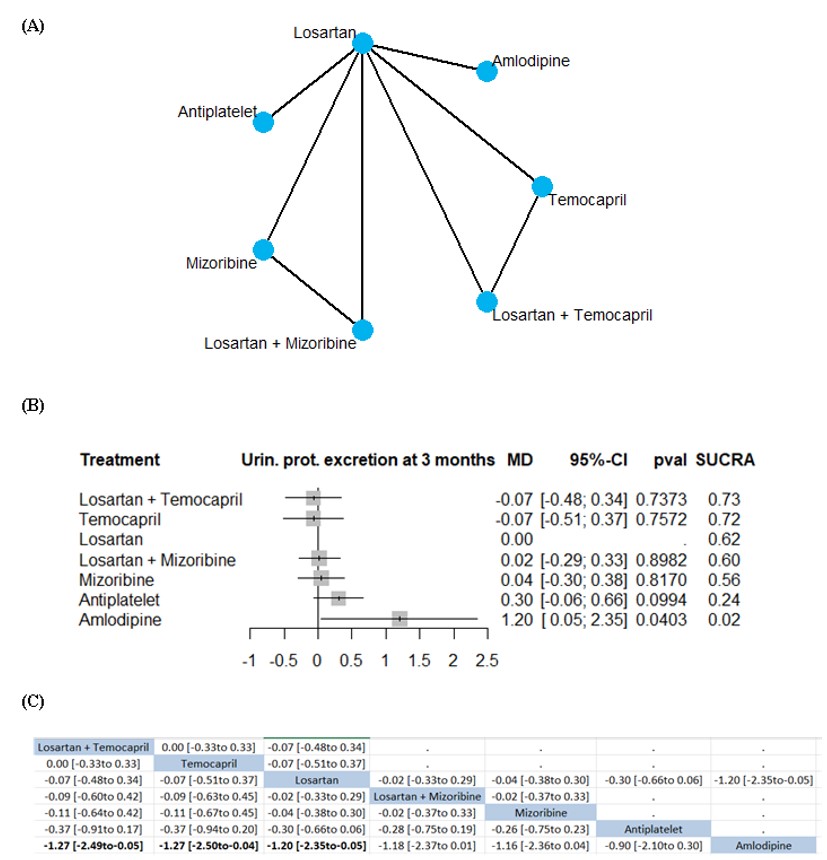
Regarding urinary protein excretion reduction at three months, the NMA included 4 studies, and the network plot is presented in (Figure 1A). Compared with losartan, none of the interventions showed a statistically significant reduction in urinary protein excretion at three months. However, compared to amlodipine, losartan + temocapril, temocapril, and losartan showed statistically significant differences (MD: -1.27, 95% CI: [-2.49, -0.05]), (MD: -1.27, 95% CI: [-2.50, -0.04]), and (MD: -1.20, 95% CI: [-2.35, -0.05]), respectively. According to the surface under the cumulative ranking curve (SUCRA) rankings, losartan + temocapril achieved the highest ranking (SUCRA = 73%), while amlodipine showed the lowest (SUCRA = 2%), as shown in (Figures 1B and 1C).
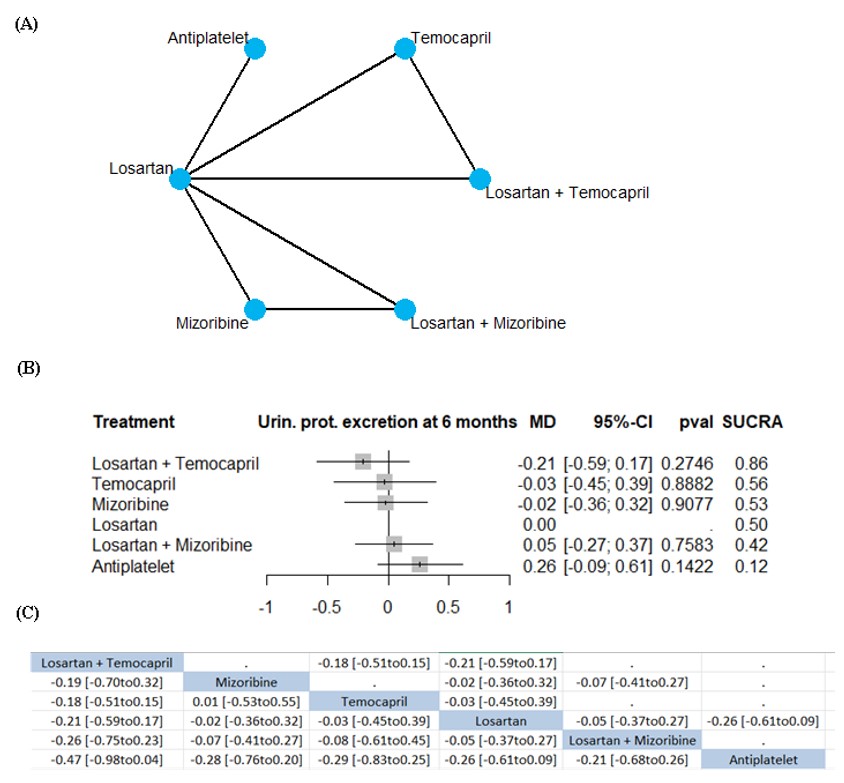
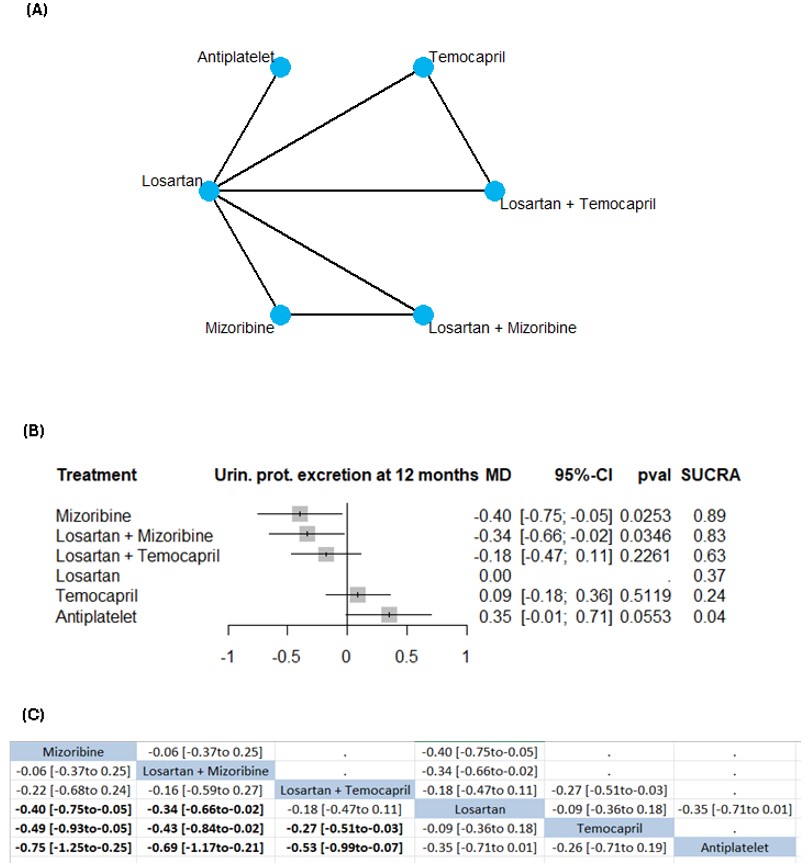
Regarding urinary protein excretion reduction at six and twelve months, the NMA included three studies, and the network plots are presented in (Figures 2A and 3A), respectively. At 6 months, there was no significant reduction compared to losartan or between any of the interventions. losartan + temocapril showed the highest ranking (SUCRA = 86%), while antiplatelet showed the lowest (SUCRA = 12%), as shown in (Figure 2B and 2C). At 12 months, compared to losartan, mizoribine, and losartan + mizoribine showed a statistically significant reduction (MD: -0.40, 95% CI: [-0.75, -0.05], p-value= 0.03) and (MD: -0.34, 95% CI: [-0.66, -0.02], p-value= 0.03), respectively. Additionally, mizoribine, losartan + mizoribine, and losartan + temocapril demonstrated statistically significant reductions compared to temocapril and antiplatelet. Mizoribine achieved the highest ranking (SUCRA = 89%), while antiplatelet showed the lowest (SUCRA = 4%), as shown in (Figure 3B and 3C). Inconsistency statistics could not be reliably estimated because of network sparsity.
Office systolic blood pressure (SBP)
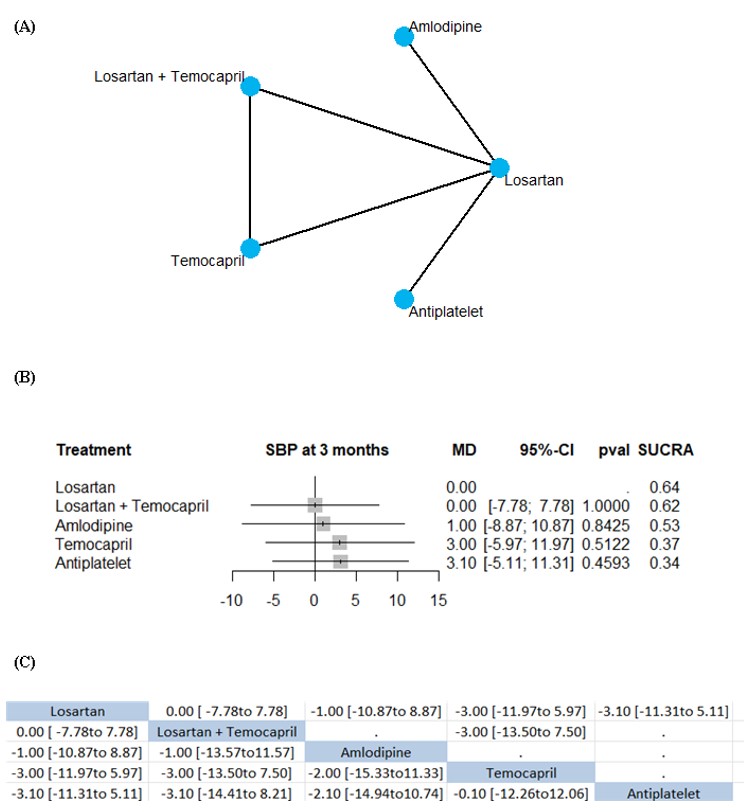
Regarding SBP reduction at three months, the NMA included three studies, and the network plot is shown in (Figure 4A). There were no significant reductions compared with losartan or between interventions. Losartan achieved the highest ranking (SUCRA = 64%), while antiplatelet ranked the lowest (SUCRA = 34%), as shown in (Figure 4B and 4C).
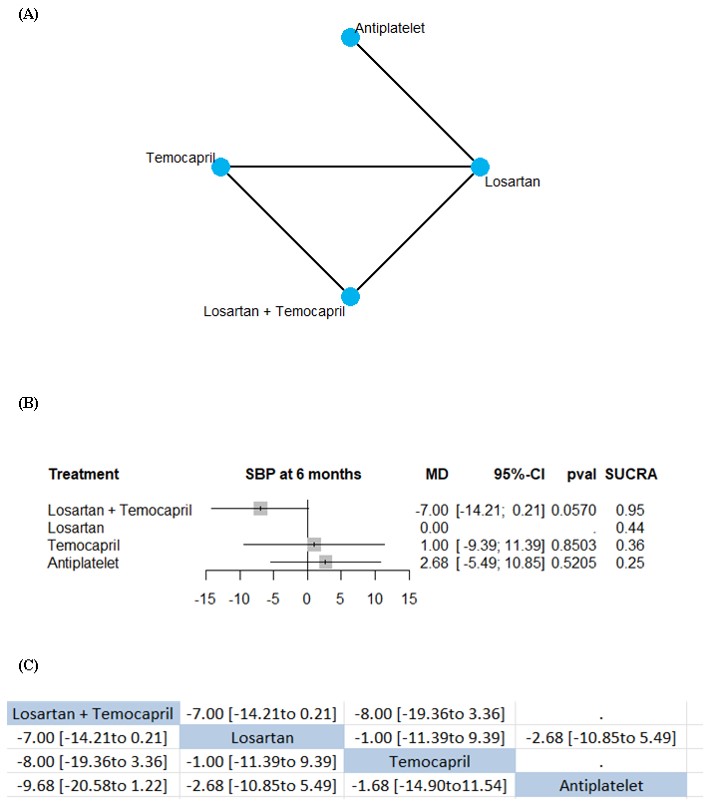
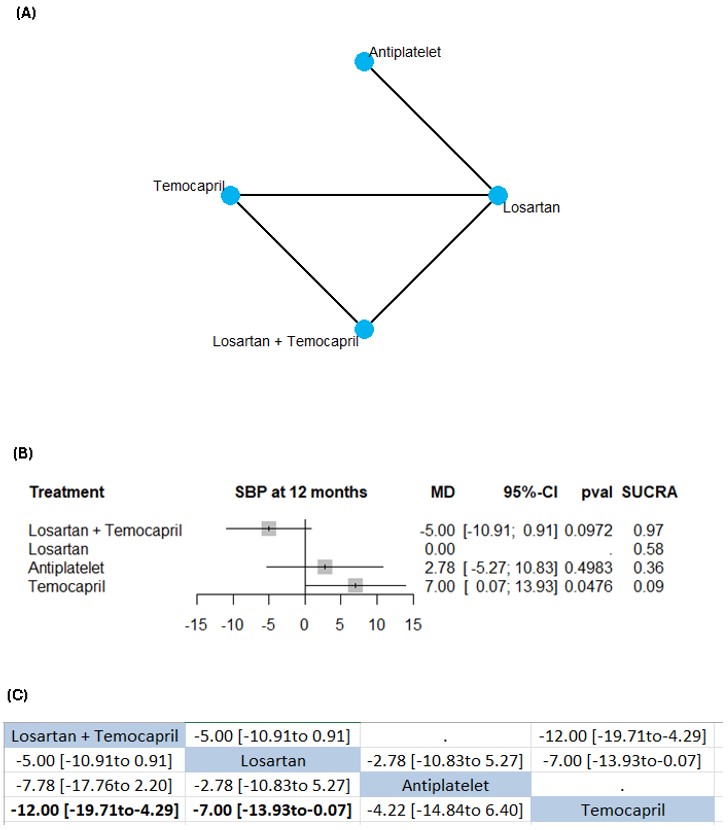
Regarding SBP reduction at six and twelve months, the NMA included 2 studies, and the network plots are shown in (Figures 5A and 6A), respectively. At 6 months, no significant reductions were observed compared to losartan or among the interventions. Losartan + temocapril ranked highest (SUCRA = 95%), whereas antiplatelet therapy ranked lowest (SUCRA = 25%), as shown in (Figure 5B and 5C). Similarly, at 12 months, no significant reductions were detected compared to losartan or among the interventions. However, compared to temocapril, losartan + temocapril and losartan demonstrated both statistically and clinically significant reductions (MD: -12, 95% CI: [-19.71, -4.29]) and (MD: -7.00, 95% CI: [-13.93, -0.07]), respectively. Losartan + temocapril achieved the highest ranking (SUCRA = 97%), while temocapril alone ranked lowest (SUCRA = 9%), as shown in (Figure 6B and 6C). Inconsistency statistics could not be reliably estimated because of network sparsity.
Office diastolic blood pressure (DBP)
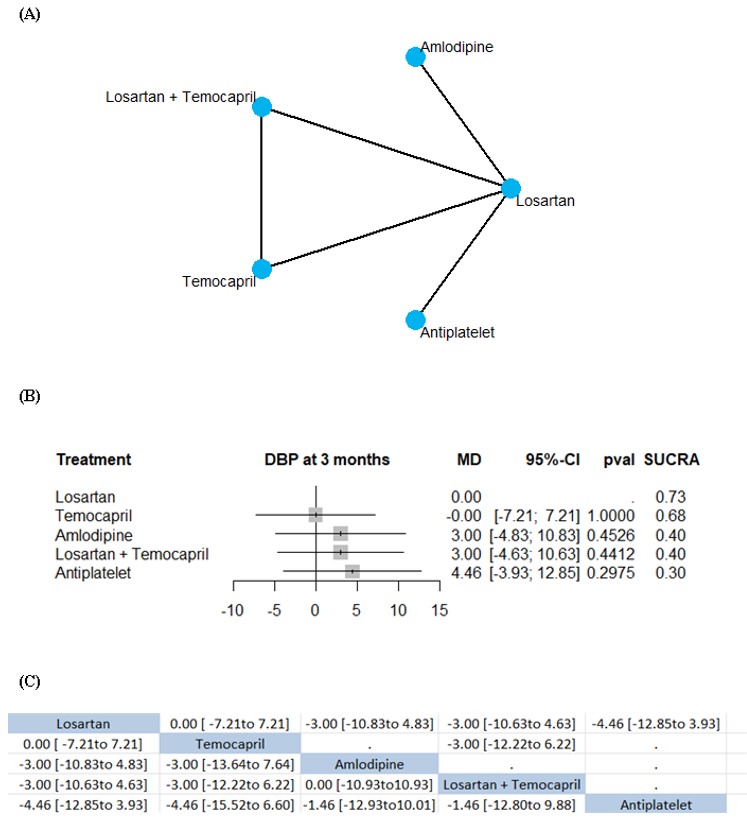
Regarding DBP reduction at three months, the NMA included three studies, and the network plot is presented in (Figure 7A). There were no significant reductions compared with losartan or between interventions. Losartan ranked highest (SUCRA = 73%), while antiplatelet ranked lowest (SUCRA = 30%), as shown in (Figure 7B and 7C).
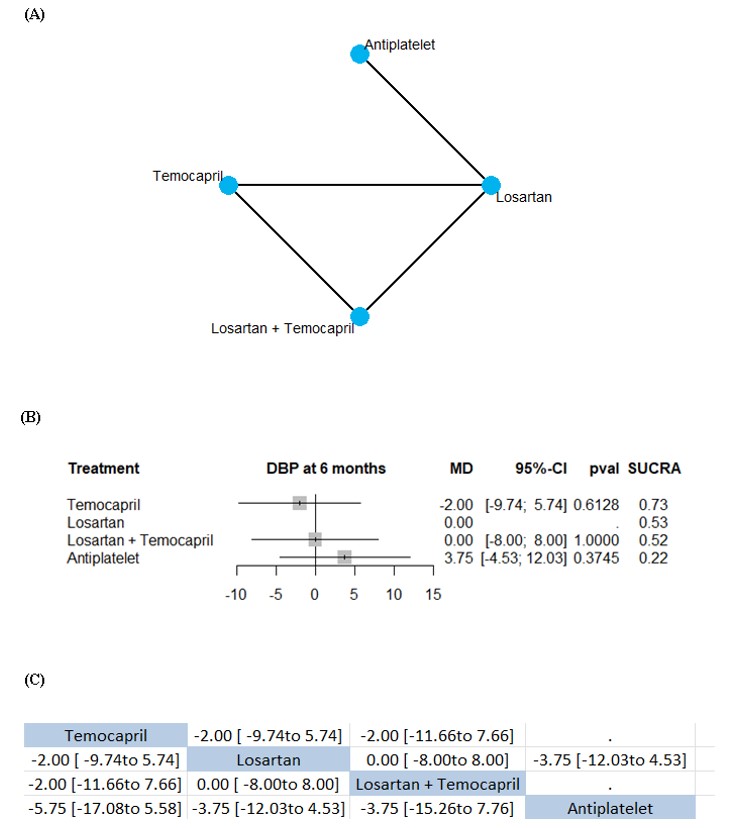
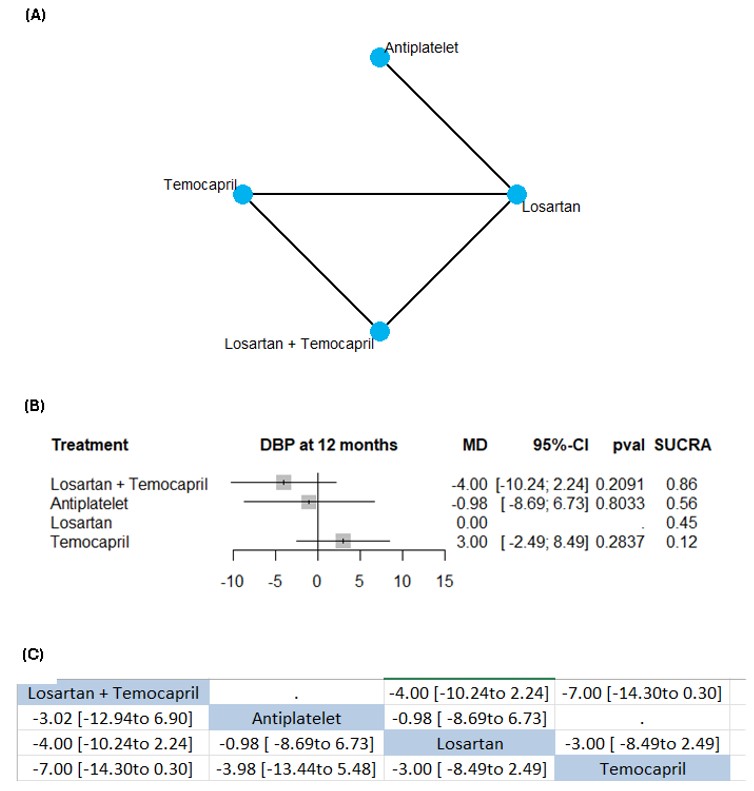
Regarding DBP reduction at six and twelve months, the NMA included two studies, and the network plots are shown in (Figures 8A and 9A), respectively. At 6 months, no significant changes were observed compared to losartan or among the interventions. Temocapril ranked highest (SUCRA = 73%), whereas antiplatelet therapy ranked lowest (SUCRA = 22%), as shown in (Figure 8B and 8C). Similarly, at 12 months, no significant reductions were detected compared to losartan or among the interventions. Losartan + temocapril achieved the highest ranking (SUCRA = 86%), while temocapril ranked lowest (SUCRA = 12%), as shown in (Figure 9B and 9C). Inconsistency statistics could not be reliably estimated because of network sparsity.
Mean blood pressure (MBP)
Concerning MBP at three months, the NMA included three studies, and the network plot is presented in Online Resource 5A. No statistically significant reductions were observed compared with losartan or between interventions. Losartan achieved the highest ranking (SUCRA = 67%), while mizoribine achieved the lowest (SUCRA = 13%), as shown in Online Resources 5B and 5C. At 6 months, the NMA included two studies, and the network plot is presented in Online Resource 6A. No statistically significant reductions were observed when compared to losartan.
| Study Name and Year | Sample Size | Design | Population | Interventions (With doses) | Comparator (With doses) | Study duration | Outcome Measures | Key Findings |
|---|---|---|---|---|---|---|---|---|
| Xie et al. 2011 [17] | Total: 99Losartan group: 30.Mizoribine group: 35combination: 34 | Prospective multicenter open-label randomized controlled trial. | Biopsy-confirmed primary IgA nephropathy; age 14–70 years; proteinuria 0.5–3.5 g/day; serum creatinine 353.6 mol/L. | Losartan group: 100 mg/day orally in the morning as a fixed-dose regimen.Co-interventions: Not reported.. | Mizoribine group:Doses based on body weight and serum creatinine:50 kg: 200 mg/day.50 kg: 250 mg/day. Serum creatinine 176.8 mol/L: 150 mg/day.Combination group:Losartan and Mizoribine regimens combined as per their groups | 12 months with evaluations at 3, 6, 9, and 12 months. | Reduction in 24-hour urinary protein excretion, Changes in serum creatinine,eGFR as calculated by the MDRD equation,blood pressure, serum uric acid, andadverse events. | Combination therapy achieved the highest proteinuria reduction (61% at 12 months), outperforming losartan therapy (52% at 6 months, 25% at 12 months) and Mizoribine (54% at 12 months), with stable renal function and significant blood pressure reduction in losartan and combination groups (p 0.01). |
| Russo et al. 2001 [24] | Total: 10. | Randomized crossover study. | Patients with biopsy-proven IgA nephropathy. Normotensive (blood pressure 140/90 mmHg, mean BP 107 mmHg). Stable, non-nephrotic proteinuria (1–3 g/day). Normal renal function (creatinine clearance 90 mL/min/1.73 m). | Losartan (LOS): Initiated at 50 mg/day for 4 weeks, titrated to a target dose of 100 mg/day for an additional 4 weeks. Co-interventions: Not reported. | Enalapril (E): Initiated at 10 mg/day for 4 weeks, titrated to a target dose of 20 mg/day for an additional 4 weeks. Combination Therapy: Enalapril 10 mg/day + Losartan 50 mg/day for 4 weeks, followed by Enalapril 20 mg/day + Losartan 100 mg/day for 4 weeks. | Each treatment phase lasted 4 weeks, with a 4-week washout between phases. Total duration: Approximately 20 weeks. | Reduction in urinary protein excretion, ambulatory blood pressure changes, creatinine clearance, peripheral plasma renin activity, and plasma aldosterone levels | Combination therapy with a double dose achieved the best proteinuria reduction (to 0.57 0.12 g/day, p 0.05 vs. all other phases), outperforming standard-dose combination therapy (0.72 0.14 g/day), Enalapril (0.98 0.14 g/day), and losartan therapy (1.01 0.14 g/day). Blood pressure remained stable in-office, with significant diastolic and mean ambulatory reductions (p 0.05). Renal function was stable throughout, PRA increased significantly, and aldosterone suppression was most pronounced in the double-dose combination therapy (p 0.05 vs. monotherapy). |
| Shimizu et al.2008 [14] | Total: 36Losartan: 18Control (anti-platelet): 18 | Prospective randomized parallel-group open-label trial | Normotensive patients (BP 140/90 mmHg) with biopsy-proven IgA Nephropathy, eGFR 50 mL/min/1.73m, persistent proteinuria 0.4 g/d [despite anti-platelet treatments] | Losartan group: 12.5mg/day (fixed achieved dose) Co-interventions: All patients were receiving antiplatelet agents | Antiplatelet therapy alone. | Total duration: 12 months Evaluations at baseline (time of biopsy), 3, 6, 9, and 12 months | Reduction in proteinuria, urinary NAG levels (N-acetyl--D-glucosaminidase), eGFR & serum creatinine, systolic & diastolic blood pressure changes | At 12 months post-treatment, proteinuria was significantly lower in the losartan group compared to the control group (p = 0.04), as were urinary NAG levels (p = 0.009), whilst BP, eGFR & serum creatinine remained stable in both groups, with no significant changes throughout the 12 months. |
| Park et al.2003 [16] | Total: 36Losartan: 20Amlodipine: 16 | A randomized controlled trial | Hypertensive patients with biopsy-proven IgA nephropathy; proteinuria 1 g/day, serum creatinine 3 g/day. | Losartan: 50mg/day Co-interventions: Not reported. | Amlodipine: 5mg/day | Total duration: 17 weeks 1-week screening 4-week washout period 12 weeks of active treatment | Changes in Urinary protein excretion (g/day), changes in urinary and serum TGF-1 levels (a marker of intrarenal fibrosis), systolic & diastolic BP, eGFR, and serum creatinine changes. | In the losartan group, a significant reduction in proteinuria from 2.3 1.5 g/day at baseline to 1.2 1.5 g/day at 12 weeks (p 0.05) was observed, whilst no significant change in proteinuria, from 2.1 0.7 g/day at baseline to 2.2 1.6 g/day at 12 weeks, occurred in the amlodipine group. Losartan and amlodipine effectively reduced blood pressure to a similar degree, without a significant difference between the groups, and without significant changes in serum TGF-1 levels, serum creatinine, or eGFR in either group. |
| Horita et al.2004 [10] | Total: 31Temocapril: 10Losartan: 10combination: 11 | Prospective, randomized, parallel-group, open-label trial | Normotensive patients with biopsy-proven IgA nephropathy, persistent mild-moderate proteinuria (0.4 g/day), normal Renal function (eGFR 50 ml/min/1.73 m), and on antiplatelets for 3 months without use of ACEIs or ARBs. | Losartan: 12.5mg/dayCo-interventions: All patients were receiving antiplatelet agents | Temocapril group: 1mg/dayCombination: losartan 12.5 mg/day + temocapril 1 mg/day. | 6 months | Reduction in proteinuria (24-hour urinary protein excretion), changes in serum creatinine & creatinine clearance, eGFR, and systolic & diastolic BP changes | Regarding proteinuria, a 41.3% reduction (p0.05) was observed in the temocapril group, whilst losartan reduced it by 36.6% (p0.05). In combination therapy, proteinuria was reduced by 63.2% (p0.01), with no significant difference among the three groups. Regarding Blood Pressure, no significant change was observed in the temocapril group, whilst in the losartan group, SBP decreased from 124 5 mmHg to 116 5 mmHg (p=0.01). In combination therapy, SBP decreased from 121 9 mmHg to 106 7 mmHg (p0.01). |
|---|---|---|---|---|---|---|---|---|
| Horita et al.2006 [23] | Total: 43 Losartan:16 Temocapril:14 combination: 13 | A prospective randomized parallel-group open-labeled trial. | Patients with biopsy-confirmed IgA nephropathy, normal blood pressure (140/90 mmHg), proteinuria 0.4–1.6 g/day; creatinine clearance 50 mL/min | Losartan 12.5 mg/dayCo-interventions: Not reported. | Temocapril 1 mgCombination: losartan + temocapril at fixed doses | 12 months | Changes in SBP (mmHg), DBP (mmHg), GFR (ml/min/1.73 m), serum creatinine (mg/dL), PRA (ng/mL/h), and PAC (pg/mL), and reduction in Urinary protein excretion (g/24 h) at 12 months. | After 12 months of treatment, the losartan and combination groups demonstrated a substantial reduction in SBP. However, DBP did not differ significantly from baseline in any group. Regarding UPE, all groups showed a considerable decline, with combination therapy resulting in a more significant reduction. |
| Horita et al.2007 [15] | Total: 38 Prednisolone:18 Losartan + Prednisolone: 20 | A prospective, randomized controlled clinical trial. | IgA nephropathy patients, with normal BP (140/90 mmHg), mean arterial pressure 107mmHg, proteinuria 1.0-2.6 g/day; creatinine clearance 50 mL/min | Prednisolone: tapering regimen (initial 30 mg/day)Combination: prednisolone + losartan 50 mg/dayCo-interventions: Corticosteroid therapy | Prednisolone is prescribed orally at 30 mg/day for 2 months, then 25 mg/day for 2 months, then 20 mg/day for 2 months, then 15 mg/day for 6 months, then 10 mg/day for 12 months, and finally 5 mg/day for 1 month. | 24 Months | Changes in SBP (mmHg), DBP (mmHg), urinary protein Excretion (g/day), creatinine clearance (ml/min/1.73 m), and serum creatinine (mg/dL) at 12 and 24 months. | There was a significant reduction from a baseline in SBP in the prednisolone and combination groups at 12 and 24 months. However, DBP was significantly decreased only in the combination group at 24 months. UPE at 24 months showed a significant reduction in 18 out of 20 patients in the combination group and 15 out of 18 in the prednisolone group. |
| Shima et al.2018 [25] | Total: 62 Lisinopril:31 Losartan + Lisinopril: 31 | An open-label, multicenter, prospective, randomized phase II controlled trial. | Patients aged 12-18 years, with biopsy-confirmed IgA nephropathy and early morning urinary protein to creatinine ratio (uP/Cr) 0.2 g/g. | Lisinopril: initiated at 0.1 mg/kg/day, titrated to 0.4 mg/kg/day (max 20 mg/day).Co-interventions: Corticosteroid therapy | Group B (Lisinopril + Losartan): patients started lisinopril at 0.1 mg/kg daily (max 5 mg) plus losartan 0.7 mg/kg body weight (max 50 mg/day), and this regimen was added for 6 months. For the remaining 18 months, doses increased to 0.4 mg/kg (max 20 mg) and 1.0 mg/kg body weight per day (max 100 mg/day) for lisinopril and losartan, respectively. | 24 Months | The disappearance rate of proteinuria (early morning uP/Cr 0.2 g), early morning uP/Cr, eGFR, pathologic features, and safety. | After 24 months, proteinuria resolved in 25 of 28 in the lisinopril group and 25 of 29 in the combination group. Regarding safety, mild dizziness was the most commonly reported adverse event in both groups, and no serious adverse event requiring hospitalization occurred in any group. |
SBP, Systolic Blood Pressure; DBP, Diastolic Blood Pressure; PRA, Plasma Renin Activity; PAC, Plasma Aldosterone Concentration; eGFR, estimated glomerular filtration rate; TGF-β1, Transforming growth factor-β1; uP/Cr, Urinary protein to creatinine ratio.
However, losartan and losartan + mizoribine showed both statistically and clinically significant reductions compared to mizoribine (MD: -6.17, 95% CI: [-11.49, -0.85]) and (MD: -5.49, 95% CI: [-10.85, -0.13]), respectively. Losartan + temocapril achieved the highest ranking (SUCRA = 78%), while mizoribine ranked the lowest (SUCRA = 4%), as shown in Online Resources 6B and 6C. Inconsistency statistics could not be reliably estimated because of network sparsity.
Serum creatinine, plasma aldosterone concentration (PAC), plasma renin activity (PRA), and eGFR: The NMA included two studies, and the network plots are presented in Online Resources 7-10. Concerning serum creatinine at three months, no statistically significant reductions were observed compared to losartan or between any of the interventions. Losartan achieved the highest ranking (SUCRA = 67%), while temocapril achieved the lowest (SUCRA = 34%), as shown in Online Resources 7B and 7C. Regarding PAC at 12 months, there was no significant reduction compared with losartan or between interventions, and temocapril ranked highest (SUCRA = 62%), while losartan + temocapril ranked lowest (SUCRA = 27%), as shown in Online Resources 8B and 8C. Similarly, at 12 months, PRA showed statistically insignificant reductions compared with losartan or between the interventions. Losartan achieved the highest ranking (SUCRA = 69%), while temocapril ranked the lowest (SUCRA = 29%), as shown in Online Resources 9B and 9C. For eGFR at three months, no statistically significant changes were observed compared to losartan or between any of the interventions, as shown in Online Resources 10B and 10C. Inconsistency statistics could not be reliably estimated because of network sparsity. Rankograms are demonstrated in Online Resources 11-15.
Discussion
The present network meta-analysis compares different IgAN monotherapies and combination therapies, including various drugs from several classes (e.g., losartan, temocapril, enalapril, mizoribine, amlodipine, and antiplatelet agents). Regarding urinary protein excretion, although none of the interventions showed a statistically significant difference compared with losartan at 3 months, mizoribine and mizoribine + losartan showed significantly greater reductions than losartan at 12 months. Mizoribine is an imidazole nucleoside extracted from the fungus Eupenicillium brefeldianum [26]. It reduces urinary protein excretion by inhibiting nonhemodynamic activities, including lymphocyte proliferation, mesangial cell activity, and inflammatory markers. [27,28,29] Therefore, whether as monotherapy or in combination, mizoribine requires a sufficiently long treatment period to exert its effects and achieve maximal reduction in protein excretion. Similarly, Yoshikawa et al. [30] demonstrated that children with severe IgAN treated with mizoribine combined with standard therapy for 2 years showed a substantial reduction in protein excretion.
Our analysis revealed that amlodipine resulted in a statistically significant reduction in UPE compared with other interventions at 3 months. This finding aligns with the Praga et al. trial [31], which found that amlodipine resulted in no significant reduction in proteinuria in non-diabetic proteinuric renal diseases. Several reasons might contribute to the interpretation of this finding. Studies showed that dihydropyridine calcium channel blockers (CCBs) such as amlodipine reduced proximal tubular protein reabsorption, evidenced by increased excretion of urinary -microglobulin, a marker of proximal tubular protein reabsorption [32,33,34]. Furthermore, dihydropyridine CCBs dilate afferent and efferent arterioles, which may increase proteinuria [35]. Therefore, despite the considerable reduction in blood pressure, dihydropyridine CCBs provide no additional benefit in reducing proteinuria. However, the observed difference in proteinuria reflects a comparative advantage of other regimens over amlodipine, which is generally considered proteinuria-neutral or, in some cases, proteinuria-worsening.
The comparison between losartan, temocapril, and the combination therapy (losartan + temocapril) revealed no statistically significant differences in urinary protein excretion at 3, 6, and 12 months. However, the combination therapy demonstrated greater antiproteinuric activity and ranked first at 3 and 6 months, with SUCRAS of 73% and 86%, respectively. Similarly, Huo et al. [36] showed that the combination therapy of ACEIs and ARBs best reduced proteinuria compared to ACEIs or ARBs monotherapies. The enhanced effects of dual therapy may be explained by the fact that ACEI or ARB monotherapy results in a partial blockage of the renin-angiotensin-aldosterone system (RAAS), a phenomenon known as ‘‘ACE escape. Consequently, combined therapy may cause more hindrance of angiotensin II’s actions on the kidney by reducing glomerular capillary pressure and hyperfiltration, resulting in better response in terms of proteinuria and blood pressure reduction [37,36]. Moreover, dual therapy seems effective in improving glomerular permselectivity [38,39]. Interestingly, losartan monotherapy resulted in the best decrease in SBP at 3 months. However, combination therapy resulted in higher reductions than monotherapies in SBP at 6 and 12 months. Likewise, losartan and temocapril showed greater reductions in DBP at 3 and 6 months, but at 12 months, losartan + temocapril showed the greatest reduction. Therefore, we can deduce that the combination therapy of losartan + temocapril may require a sufficiently long treatment course to achieve optimal blood pressure reduction. However, due to the sparsity and potential small-study effects, certainty needs to be supported by further RCTs. Additionally, given the limited safety data in our included studies, the safety of dual ACEI + ARB therapy remains unclear and should be investigated further.
The current network meta-analysis stands out in some points. It is the first network meta-analysis to focus on losartan-anchored regimens across several predefined timepoints, aiming to provide evidence on the best regimen for IgAN management. Moreover, we investigated the primary outcomes at multiple time points to evaluate the long-term sustainability of the drugs’ efficacy. Consequently, our study provided valuable clinical implications for the optimal use of the investigated drugs in the management of IgAN. However, the study had several limitations. The study involved a relatively small number of trials and patients, which might affect the generalizability of our findings. The limited number of studies and small sample sizes reduced statistical power and led to wide confidence intervals for several comparisons, limiting the precision of effect estimates and increasing uncertainty around clinically meaningful differences. The sparse nature of the evidence network limits the precision of heterogeneity estimates and reduces the stability of treatment rankings. Consequently, SUCRA values should not be interpreted as definitive evidence of superiority. Instead, clinical decision-making should rely primarily on the magnitude and precision of treatment effects. Besides, the different doses of the interventions included in our study might affect the comparison of interventions. The included trials predominantly evaluated fixed-dose regimens, often at submaximal doses, whereas routine clinical practice involves titration to the maximum tolerated dose. Therefore, the observed treatment effects may differ under dose-optimized regimens, potentially underestimating the effectiveness achieved in real-world practice. Variability in the eligibility criteria of the included studies regarding blood pressure, proteinuria levels, and renal function parameters represented another constraint. For instance, Park et al.2003 included hypertensive patients, while other included studies included patients with normal blood pressure. However, we couldn’t perform meta-regression due to the small sample size and the limited number of included studies. The lack of a comprehensive safety assessment and certainty evaluation represents another limitation of our study and may influence the strength and clinical applicability of the investigated regimens. Subgroup analyses based on key characteristics such as age (pediatric vs. adult), baseline blood pressure (normotensive vs. hypertensive), or proteinuria levels were not feasible due to limited reporting and small numbers of studies. Consequently, potential sources of heterogeneity could not be formally explored, and results should be interpreted with caution. Assessment of publication bias was planned; however, due to the small number of studies per comparison (), formal statistical tests and reliable funnel plot interpretation were not feasible. Moreover, all studies included in this network meta-analysis were conducted in East Asian populations, predominantly from Japan, Korea, and China. Ethnic and geographic differences in the epidemiology and clinical course of IgA nephropathy, background standards of care, and pharmacogenomic responses—particularly to renin–angiotensin system blockade and immunomodulatory therapies—may limit the generalizability of these findings to non-Asian populations. Consequently, the observed comparative effectiveness and safety profiles may not be directly extrapolated to Western or other ethnically diverse cohorts. Future randomized trials, including broader geographic representation, are needed to validate these findings across different populations. Besides, this analysis focused on surrogate outcomes, including blood pressure and proteinuria, which may not fully capture patient-important endpoints such as progression to end-stage kidney disease, mortality, or quality of life. Although reductions in proteinuria are commonly used as treatment targets in IgA nephropathy, their relationship with long-term kidney survival remains uncertain, particularly over short follow-up periods. Moreover, none of the included studies reported adherence or dropout rates, precluding assessment of real-world effectiveness.
Given the limitations of our study, we recommend that future research focus on conducting more RCTs comparing losartan with different classes of drugs, involving larger numbers of IgAN patients. Besides, since we could not evaluate the safety of the various interventions used in IgAN due to the lack of safety data in our included trials, long-term RCTs investigating the safety of IgAN commonly prescribed drugs are highly recommended. In addition, RCTs comparing losartan’s efficacy and safety with those of other ARBs may yield valuable clinical insights into the optimal regimen for IgAN management. We did not assess economic outcomes. Given that dual RAAS blockade is more costly than monotherapy, formal cost-effectiveness analyses would be valuable to guide clinical decision-making, particularly when efficacy differences are modest. Moreover, trials investigating the effectiveness of these interventions in IgAN patients with different comorbidities would be of great value.
Conclusion
In conclusion, among patients with IgAN from East Asian cohorts, the current network meta-analysis revealed that mizoribine and mizoribine + losartan achieved significantly greater reductions in proteinuria than losartan therapy at 12 months. Otherwise, no other interventions showed significant differences in proteinuria compared with losartan at any time point. However, losartan + temocapril combined therapy resulted in a better response than losartan and temocapril monotherapies. In addition, amlodipine did not provide sufficient antiproteinuric effects relative to other interventions. Regarding SBP, DBP, and MBP, none of the interventions showed significant differences relative to losartan at any time point. Nevertheless, losartan + temocapril showed the best reduction in SBP at six and twelve months, DBP at twelve months, and MBP at six months. Therefore, we can conclude that dual therapy with losartan and temocapril may be most effective and achieve maximal BP reduction after a relatively long course of treatment, with considerable uncertainty reflected in wide confidence intervals. However, because the pairwise differences were not significant compared with losartan, confirmatory RCTs are needed. No statistically significant differences compared with losartan were observed for serum creatinine, plasma aldosterone concentration (PAC), plasma renin activity (PRA), and eGFR. Larger long-term RCTs evaluating different losartan regimens are strongly recommended to strengthen the robustness of the current evidence.
Conflicts of Interest
All authors certify that they have no affiliations with or involvement in any organization or entity with any financial interest (such as honoraria; educational grants; participation in speakers’ bureaus; membership, employment, consultancies, stock ownership, or other equity interest; and expert testimony or patent-licensing arrangements), or non-financial interest (such as personal or professional relationships, affiliations, knowledge or beliefs) in the subject matter or materials discussed in this manuscript.
Funding Source
None were received for this study.
Acknowledgments
None.
Institutional Review Board (IRB)
None.
Large Language Model
The authors declare that Grammarly was used solely for grammar checking and language refinement. All content was reviewed and approved by the authors, who take full responsibility for the manuscript.
Authors Contribution
The authors meet the criteria for authorship as recommended by the International Committee of Medical Journal Editors (ICMJE). MEH and HEM contributed equally to this work and were designated as co-first authors. MEH and HEM contributed to the study’s conception and design. HEM conducted the statistical analysis. MEH verified data, designed the graphical abstract, and created figures. MEH, AHH, MN, and NAOA performed studies, screening, and data extraction. MEH, HEM, AHH, and GH wrote the initial draft of the manuscript. All authors revised and prepared the manuscript for submission. All authors provided feedback on earlier drafts of the manuscript. All authors read and approved the final manuscript.
Data Availability
All data generated or analyzed during this study are included in this published manuscript [and its supplementary file]. The code details will be provided by the authors on request.
References
- Julian B. A., Waldo F. B., Rifai A., Mestecky J.. IgA nephropathy, the most common glomerulonephritis worldwide. A neglected disease in the United States?. Am J Med. 1988;84(1):129-32. doi:10.1016/0002-9343(88)90019-8 PMID: 3337116
- Willey C. J., Coppo R., Schaefer F., Mizerska-Wasiak M., Mathur M., Schultz M. J.. The incidence and prevalence of IgA nephropathy in Europe. Nephrol Dial Transplant. 2023;38(10):2340-2349. doi:10.1093/ndt/gfad082 PMID: 37156519 PMCID: PMC10539204
- Kiryluk K., Freedberg D. E., Radhakrishnan J., Segall L., Jacobson J. S., Mathur M., Mohan S., Neugut A. I.. Global Incidence of IgA Nephropathy by Race and Ethnicity: A Systematic Review. Kidney360. 2023;4(8):1112-1122. doi:10.34067/KID.0000000000000165 PMID: 37227924 PMCID: PMC10476677
- Shen P. C., He L. Q., Tang Y., Wang Q., Wang W., Li J.. Clinicopathological characteristics and prognostic factors of asymptomatic IgA nephropathy. J Investig Med. 2010;58(3):560-5. doi:10.231/JIM.0b013e3181d20aa1 PMID: 20215916
- Ohashi N., Urushihara M., Kobori H.. Activated intrarenal reactive oxygen species and renin angiotensin system in IgA nephropathy. Minerva Urol Nefrol. 2009;61(1):55-66. PMID: 19417726 PMCID: PMC2746712
- Suzuki H., Kiryluk K., Novak J., Moldoveanu Z., Herr A. B., Renfrow M. B., Wyatt R. J., Scolari F., Mestecky J., Gharavi A. G., Julian B. A.. The pathophysiology of IgA nephropathy. J Am Soc Nephrol. 2011;22(10):1795-803. doi:10.1681/ASN.2011050464 PMID: 21949093 PMCID: PMC3892742
- Fabiano R. C., Pinheiro S. V., Simoes E. Silva A. C.. Immunoglobulin A nephropathy: a pathophysiology view. Inflamm Res. 2016;65(10):757-70. doi:10.1007/s00011-016-0962-x PMID: 27351940
- D'Amico G.. Natural history of idiopathic IgA nephropathy: role of clinical and histological prognostic factors. Am J Kidney Dis. 2000;36(2):227-37. doi:10.1053/ajkd.2000.8966 PMID: 10922300
- Lv J., Xu D., Perkovic V., Ma X., Johnson D. W., Woodward M., Levin A., Zhang H., Wang H., TESTING Study Group. Corticosteroid therapy in IgA nephropathy. J Am Soc Nephrol. 2012;23(6):1108-16. doi:10.1681/ASN.2011111112 PMID: 22539830 PMCID: PMC3358763
- Horita Y., Tadokoro M., Taura K., Suyama N., Taguchi T., Miyazaki M., Kohno S.. Low-dose combination therapy with temocapril and losartan reduces proteinuria in normotensive patients with immunoglobulin a nephropathy. Hypertens Res. 2004;27(12):963-70. doi:10.1291/hypres.27.963 PMID: 15894837
- Peresuodei T. S., Gill A., Orji C., Reghefaoui M., Saavedra Palacios M. S., Nath T. S.. A Comparative Study of the Safety and Efficacy Between Angiotensin-Converting Enzyme Inhibitors and Angiotensin Receptor Blockers on the Management of Hypertension: A Systematic Review. Cureus. 2024;16(2):e54311. doi:10.7759/cureus.54311 PMID: 38496070 PMCID: PMC10944326
- Rout P., Afzal M.. IgA Nephropathy (Berger Disease). StatPearls. 2025. PMID: 30855802
- Kobori H., Mori H., Masaki T., Nishiyama A.. Angiotensin II blockade and renal protection. Curr Pharm Des. 2013;19(17):3033-42. doi:10.2174/1381612811319170009 PMID: 23176216 PMCID: PMC3651580
- Shimizu A., Takei T., Uchida K., Tsuchiya K., Nitta K.. Low-dose losartan therapy reduces proteinuria in normotensive patients with immunoglobulin A nephropathy. Hypertens Res. 2008;31(9):1711-7. doi:10.1291/hypres.31.1711 PMID: 18971549
- Horita Y., Tadokoro M., Taura K., Ashida R., Hiu M., Taguchi T., Furusu A., Kohno S.. Prednisolone co-administered with losartan confers renoprotection in patients with IgA nephropathy. Ren Fail. 2007;29(4):441-6. doi:10.1080/08860220701260511 PMID: 17497466 PMCID: PMC2409178
- Park H. C., Xu Z. G., Choi S., Goo Y. S., Kang S. W., Choi K. H., Ha S. K., Lee H. Y., Han D. S.. Effect of losartan and amlodipine on proteinuria and transforming growth factor-beta1 in patients with IgA nephropathy. Nephrol Dial Transplant. 2003;18(6):1115-21. doi:10.1093/ndt/gfg090 PMID: 12748343
- Xie Y., Huang S., Wang L., Miao L., Zhang A., Li Y., Wu X., Wang L., Liu S., Lie C., Chen P., Chen X.. Efficacy and safety of mizoribine combined with losartan in the treatment of IgA nephropathy: a multicenter, randomized, controlled study. Am J Med Sci. 2011;341(5):367-72. doi:10.1097/MAJ.0b013e318207e02d PMID: 21293249
- Page M. J., McKenzie J. E., Bossuyt P. M., Boutron I., Hoffmann T. C., Mulrow C. D., Shamseer L., Tetzlaff J. M., Moher D.. Updating guidance for reporting systematic reviews: development of the PRISMA 2020 statement. J Clin Epidemiol. 2021;134:103-112. doi:10.1016/j.jclinepi.2021.02.003 PMID: 33577987
- Blood Pressure Lowering Treatment Trialists' Collaboration. Pharmacological blood pressure lowering for primary and secondary prevention of cardiovascular disease across different levels of blood pressure: an individual participant-level data meta-analysis. Lancet. 2021;397(10285):1625-1636. doi:10.1016/S0140-6736(21)00590-0 PMID: 33933205 PMCID: PMC8102467
- Ettehad D., Emdin C. A., Kiran A., Anderson S. G., Callender T., Emberson J., Chalmers J., Rodgers A., Rahimi K.. Blood pressure lowering for prevention of cardiovascular disease and death: a systematic review and meta-analysis. Lancet. 2016;387(10022):957-967. doi:10.1016/S0140-6736(15)01225-8 PMID: 26724178
- Sterne J. A. C., Savovic J., Page M. J., Elbers R. G., Blencowe N. S., Boutron I., Cates C. J., Cheng H. Y., Corbett M. S., Eldridge S. M., Emberson J. R., Hernan M. A., Hopewell S., Hrobjartsson A., Junqueira D. R., Juni P., Kirkham J. J., Lasserson T., Li T., McAleenan A., Reeves B. C., Shepperd S., Shrier I., Stewart L. A., Tilling K., White I. R., Whiting P. F., Higgins J. P. T.. RoB 2: a revised tool for assessing risk of bias in randomised trials. BMJ. 2019;366:l4898. doi:10.1136/bmj.l4898 PMID: 31462531
- The R Project for Statistical Computing [Internet]. 2025.
- Horita Y., Taura K., Taguchi T., Furusu A., Kohno S.. Aldosterone breakthrough during therapy with angiotensin-converting enzyme inhibitors and angiotensin II receptor blockers in proteinuric patients with immunoglobulin A nephropathy. Nephrology (Carlton). 2006;11(5):462-6. doi:10.1111/j.1440-1797.2006.00665.x PMID: 17014562
- Russo D., Minutolo R., Pisani A., Esposito R., Signoriello G., Andreucci M., Balletta M. M.. Coadministration of losartan and enalapril exerts additive antiproteinuric effect in IgA nephropathy. Am J Kidney Dis. 2001;38(1):18-25. doi:10.1053/ajkd.2001.25176 PMID: 11431176
- Shima Y., Nakanishi K., Sako M., Saito-Oba M., Hamasaki Y., Hataya H., Honda M., Kamei K., Ishikura K., Ito S., Kaito H., Tanaka R., Nozu K., Nakamura H., Ohashi Y., Iijima K., Yoshikawa N., Japanese Study Group of Kidney Disease in Children. Lisinopril versus lisinopril and losartan for mild childhood IgA nephropathy: a randomized controlled trial (JSKDC01 study). Pediatr Nephrol. 2019;34(5):837-846. doi:10.1007/s00467-018-4099-8 PMID: 30284023
- Yokota S.. Mizoribine: mode of action and effects in clinical use. Pediatr Int. 2002;44(2):196-8. doi:10.1046/j.1328-8067.2002.01536.x PMID: 11896886
- Hirohata S., Nakanishi K., Yanagida T.. Inhibition of cyclin A gene expression in human B cells by an immunosuppressant mizoribine. Clin Exp Immunol. 2000;120(3):448-53. doi:10.1046/j.1365-2249.2000.01242.x PMID: 10844522 PMCID: PMC1905568
- Kaneko K., Nagaoka R., Ohtomo Y., Shimizu T., Yamashiro Y.. Effect of mizoribine on IL-6 release by peripheral blood mononuclear cells. Nephron. 2002;91(3):506-8. doi:10.1159/000064297 PMID: 12119487
- Seo K. W., Lee H. K., Choi S. J., So B. J., Kim S. K., Chung S. Y.. Mizoribine-mediated apoptotic signaling pathway in human T-Cell line. Transplant Proc. 2005;37(1):155-8. doi:10.1016/j.transproceed.2005.01.020 PMID: 15808579
- Yoshikawa N., Nakanishi K., Ishikura K., Hataya H., Iijima K., Honda M., Japanese Pediatric Ig A. Nephropathy Treatment Study Group. Combination therapy with mizoribine for severe childhood IgA nephropathy: a pilot study. Pediatr Nephrol. 2008;23(5):757-63. doi:10.1007/s00467-007-0731-8 PMID: 18224343
- Praga M., Andrade C. F., Luno J., Arias M., Poveda R., Mora J., Prat M. V., Rivera F., Galceran J. M., Ara J. M., Aguirre R., Bernis C., Marin R., Campistol J. M.. Antiproteinuric efficacy of losartan in comparison with amlodipine in non-diabetic proteinuric renal diseases: a double-blind, randomized clinical trial. Nephrol Dial Transplant. 2003;18(9):1806-13. doi:10.1093/ndt/gfg284 PMID: 12937228
- Hartmann A., Lund K., Holdaas H., Fauchald P., Reisaeter A., Berg K. J.. Contrasting short-term effects of nifedipine on glomerular and tubular functions in glomerulonephritic patients. J Am Soc Nephrol. 1994;5(6):1385-90. doi:10.1681/ASN.V561385 PMID: 7534496
- Holdaas H., Hartmann A., Lien M. G., Nilsen L., Jervell J., Fauchald P., Endresen L., Djoseland O., Berg K. J.. Contrasting effects of lisinopril and nifedipine on albuminuria and tubular transport functions in insulin dependent diabetics with nephropathy. J Intern Med. 1991;229(2):163-70. doi:10.1111/j.1365-2796.1991.tb00325.x PMID: 1847721
- Krusell L. R., Christensen C. K., Lederballe Pedersen O.. Acute natriuretic effect of nifedipine in hypertensive patients and normotensive controls--a proximal tubular effect?. Eur J Clin Pharmacol. 1987;32(2):121-6. doi:10.1007/BF00542183 PMID: 3556192
- Hoelscher D., Bakris G.. Antihypertensive therapy and progression of diabetic renal disease. J Cardiovasc Pharmacol. 1994;23 Suppl 1(Supplement 1):S34-8. doi:10.1097/00005344-199423001-00008 PMID: 7519695
- Huo Z., Ye H., Ye P., Xiao G., Zhang Z., Kong Y.. Comparative efficacy of different renin angiotensin system blockade therapies in patients with IgA nephropathy: a Bayesian network meta-analysis of 17 RCTs. PeerJ. 2021;9:e11661. doi:10.7717/peerj.11661 PMID: 34268008 PMCID: PMC8269645
- Cheng J., Zhang X., Tian J., Li Q., Chen J.. Combination therapy an ACE inhibitor and an angiotensin receptor blocker for IgA nephropathy: a meta-analysis. Int J Clin Pract. 2012;66(10):917-23. doi:10.1111/j.1742-1241.2012.02970.x PMID: 22994326
- Remuzzi A., Perico N., Sangalli F., Vendramin G., Moriggi M., Ruggenenti P., Remuzzi G.. ACE inhibition and ANG II receptor blockade improve glomerular size-selectivity in IgA nephropathy. Am J Physiol. 1999;276(3):F457-66. doi:10.1152/ajprenal.1999.276.3.F457 PMID: 10070170
- Woo K. T., Lau Y. K., Wong K. S., Chiang G. S.. ACEI/ATRA therapy decreases proteinuria by improving glomerular permselectivity in IgA nephritis. Kidney Int. 2000;58(6):2485-91. doi:10.1046/j.1523-1755.2000.00432.x PMID: 11115082