Long-Term Trends in Sepsis Mortality Among Older U.S. Adults with Chronic Kidney Disease, 1999–2023
Umar AzizⒾ1*, Roshni Riaz MemonⒾ2, Muhammad Mussawir Khuhro3, Huda AhmedⒾ3, Sarah AzharⒾ4, Hamama Waseem5, Maryam WaqarⒾ3, Muhammad Waaiz3, Mominah Majid3, Raveen MujeebⒾ3
- 1Jinnah Sindh Medical University, Karachi, Pakistan
- 2Ziauddin University, Karachi, Pakistan
- 3Dow University of Health Sciences, Karachi, Pakistan
- 4Jinnah Medical and Dental College, Karachi, Pakistan
- 5United Medical & Dental College, Karachi, Pakistan
Abstract
Background: Sepsis causes 1 in 3 U.S. hospital deaths, especially deadly among adults ≥65 with CKD, affecting over 30% of over-70s. Long-term trends in this group are understudied. This study examines the national mortality trends (1999–2023) among older U.S. adults with sepsis and CKD.
Methods: We conducted a retrospective cohort study using the CDC WONDER database (1999–2023). Older adults with sepsis and CKD were identified using ICD-10 codes for sepsis (A40–41) and chronic kidney disease (N18). Mortality rates were stratified by geography and demographics. Age-adjusted mortality rates (AAMRs) per 100,000 and 95% confidence intervals were calculated. Annual percent change (APC) and average APC (AAPC) were derived using Joinpoint regression software to assess temporal trends.
Results: Among 201,637 deaths from CKD and sepsis, 83.00% occurred in medical facilities. AAMRs rose from 14.45 (1999) to 20.68 (2023) (AAPC: 1.37%; 95% CI: 0.78–1.97). Men’s average AAMR (22.72) exceeded women’s (15.64). Non-Hispanic Whites had the highest AAPC, and Blacks had the highest AAMR. AAMRs were higher in metropolitan areas, with faster increases in non-metropolitan areas (available only for 1999–2020). The South had the highest average AAMR (19.94), while the Midwest recorded the steepest rise. Substantial variation in AAMRs was observed across U.S. states.
Conclusion: Mortality involving sepsis among older adults with CKD increased between 1999 and 2023. Considerable demographic and geographic disparities were observed, underscoring the need for targeted interventions in high-risk populations.
Keywords: Sepsis, CKD, Mortality, Trends, Disparities
Article information
Introduction
Sepsis remains a leading cause of mortality in the United States, particularly among older adults. It arises when the host’s immune response to infection becomes dysregulated, resulting in organ dysfunction and rapid clinical decline. In 2020, sepsis was implicated in approximately one-third of all hospital deaths nationwide, underscoring its substantial burden on healthcare systems and vulnerable populations such as the elderly and immunocompromised [1].
Adults aged 65 years and older are at heightened risk due to age-related immune senescence and the high prevalence of chronic comorbidities [2]. Among these, chronic kidney disease (CKD) is of particular concern, affecting more than 30% of U.S. adults over the age of 70 [3]. CKD impairs immune cell function and reduces host defence mechanisms, thereby increasing susceptibility to infections and worsening outcomes in sepsis [4,5].
Although the association between CKD and adverse sepsis outcomes is well recognised, population-level evidence specifically quantifying sepsis-related mortality among older adults with CKD remains limited. Furthermore, temporal trends and demographic or regional disparities in this high-risk group have not been systematically documented.
To address this gap, we conducted a nationwide analysis of mortality records from the CDC WONDER database (1999 – 2023) to evaluate these parameters in sepsis-related deaths among U.S. adults aged 65 years and older with comorbid CKD.
Methods
Data Source
We analyzed data from the CDC WONDER (Wide-ranging Online Data for Epidemiologic Research) platform, an openly available database managed by the Centers for Disease Control and Prevention (CDC). Mortality statistics were extracted from the Multiple Cause of Death dataset covering the period 1999 to 2023 [6]. This information is extracted from official death certificates as maintained by the National Center for Health Statistics (NCHS). The dataset offers extensive demographic and epidemiological variables, including age-adjusted mortality rates (AAMRs), sex, region, and underlying as well as multiple causes of death (MCD). Deaths are coded according to the International Classification of Diseases, 10th Revision (ICD-10) [7]. Because the study period spans the ICD-9 to ICD-10 transition (1999 – 2002), we documented code lists used in both eras and harmonised them to ICD-10 definitions.
For this study, ICD-10 codes for sepsis and CKD were both included in multiple causes of death. This allowed death certificates with sepsis and CKD listed either under UCD or MCD to be included. Therefore, comprehensive search results that covered all deaths with sepsis and CKD as documented contributors were produced. Deaths attributed to sepsis were identified using codes MCD-ICD-10 Codes: A40.0, A40.1, A40.2, A40.3, A40.8, A40.9, A41.0, A41.1, A41.2, A41.3, A41.4, A41.5, A41.8, A41.9 while CKD was defined by the MCD-ICD-10 Codes: N18.0, N18.1, N18.2, N18.3, N18.4, N18.5, N18.8, N18.9 (Table S1). These ICD codes have been used to identify sepsis and CKD in prior studies [8,9]. Only individuals aged 65 years or older with septicemia and CKD were included in the final analysis, keeping in line with the objectives of this study.
This study used de-identified data provided by the US government for public use and adhered to the Strengthening the Reporting of Observational Studies in Epidemiology (STROBE) guidelines for reporting [10]. Therefore, this study was exempt from institutional review board approval.
Data Extraction
We extracted data from the CDC WONDER platform based on specific inclusion criteria, including population size, death rates, and demographic information such as sex, race, ethnicity, and geographic location. Sex stratification included classification into male and female, as indicated on death certificates. Race and ethnicity were divided into non-Hispanic (NH) White, NH Black or African American, NH Asian or Pacific Islander, NH American Indian or Alaska Native, and Hispanic or Latino. These classifications are frequently used in epidemiologic studies utilizing CDC WONDER data [11,12]. Furthermore, in compliance with OMB standards, race data was converted from bridged-race categories from 1999 to 2002 to single-race categories from 2003 onwards [13]. Therefore, we used it with the acknowledgement of its limitations when being compared across this transition. Place of death was categorized into: medical facility, decedent’s home, hospice facility, nursing home/long term care, and other.
Geographic analysis included division into urban and rural areas, census regions, and states. Urban and rural classifications used the National Center for Health Statistics (NCHS) Urban-Rural Classification Scheme based on the 2013 US Census [14]. This was applied to all years and counties that underwent any change in their classification, and maintained their 2013 classification. Additionally, due to historical limitations in the CDC WONDER database stratifications, urban-rural data were only extracted for the years 1999–2020 [15]. Urban areas included: large central metropolitan, large fringe metropolitan, medium metropolitan, and small metropolitan areas; rural areas included micropolitan and NonCore areas. Census regions were grouped into four regions defined by the U.S. Census Bureau: Northeast, Midwest, South, and West [16].
Statistical Analysis
We calculated crude mortality rates (CMRs) and age-adjusted mortality rates (AAMRs) per 100,000 persons for the years 1999 to 2023, by sex, race/ethnicity, and state, with corresponding 95% confidence intervals (CIs). A similar analysis was conducted for urbanization status for the period 1999 to 2020. These standards established consistency with the CDC WONDER database and allowed comparisons with other published literature [17]. All calculations were age-adjusted to the 2000 U.S. population as the standard [18]. The CMR was found by dividing the number of deaths by the total U.S. population for that year. This allowed fair comparisons of mortality across years. Data were grouped by age, sex, race or ethnicity, and region to see how mortality differed between groups.
To study changes from 1999 to 2023, we used the Joinpoint Regression Program developed by the National Cancer Institute. It identified significant changes (joinpoints) in trends and the rate of change for death rates every year using log-linear regression models [19]. We calculated the Annual Percent Change (APC) and Average Annual Percent Change (AAPC) to analyse temporal trends in AAMRs. APCs showed the rate of change of AAMRs, and AAPC represented the long-term trends from 1999 to 2023. For both variables, positive values increased, and negative values decreased. 95% CIs were also calculated to determine the reliability of results. In accordance with the software’s recommendations, one jointpoint was used for each trend. These recommendations are based on permutation tests that determine the suitable number of joinpoints [19]. To determine statistical significance, the Monte Carlo permutation test was used. Joinpoints were considered significant if the p-value was less than 0.05 in a two-tailed t-test.
Results
Between 1999 and 2023, a total of 201,637 deaths involving sepsis were reported among older adults (aged ≥65 years) with chronic kidney disease (CKD). Mortality varied by sex, race, state, census region, urbanization status, and place of death. Temporal patterns in mortality and differences across population subgroups are described in the following sections.
Overall Mortality
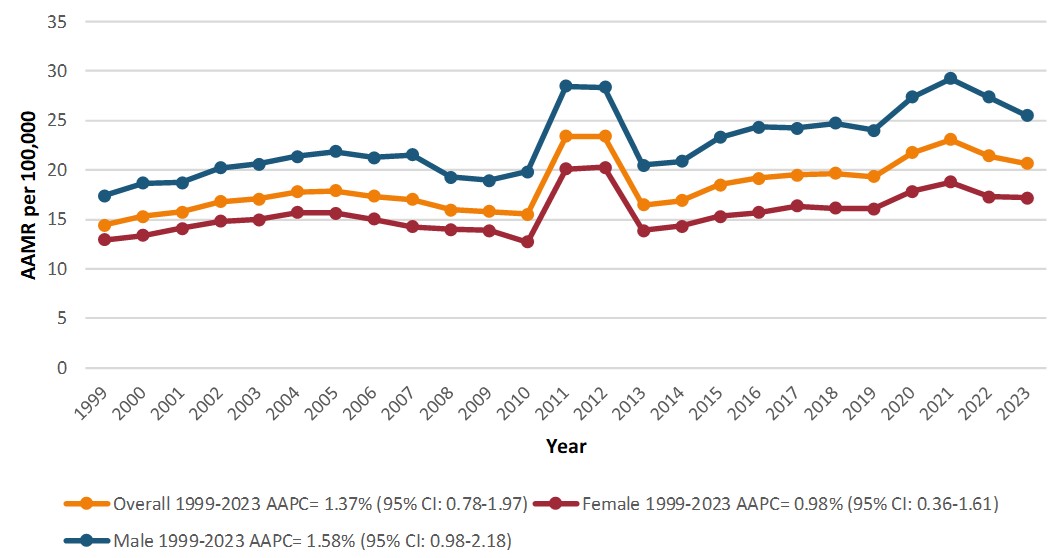
From 1999 to 2023, age-adjusted mortality rates (AAMRs) showed a significant increasing trend. Joinpoint regression analysis showed that AAMRs increased at an average annual percent change (AAPC) of 1.37% (95% CI: 0.78-1.97; p < 0.001), indicating a sustained rise in mortality over the 24 years Figure 1 and (Supplement Table S2, S3).
Demographic differences
Mortality trends stratified by Sex
AAMRs were higher among males than females, with increasing trends observed for both sexes from 1999 to 2023.
Among females, AAMRs increased by 0.98% (95% CI: 0.36-1.61; p = 0.003). In contrast, males showed a steeper increase in mortality, with an AAPC of 1.58% (95% CI: 0.98-2.18; p < 0.001) Figure 1 and (Supplement Tables S2, S3).
Mortality trends stratified by Race
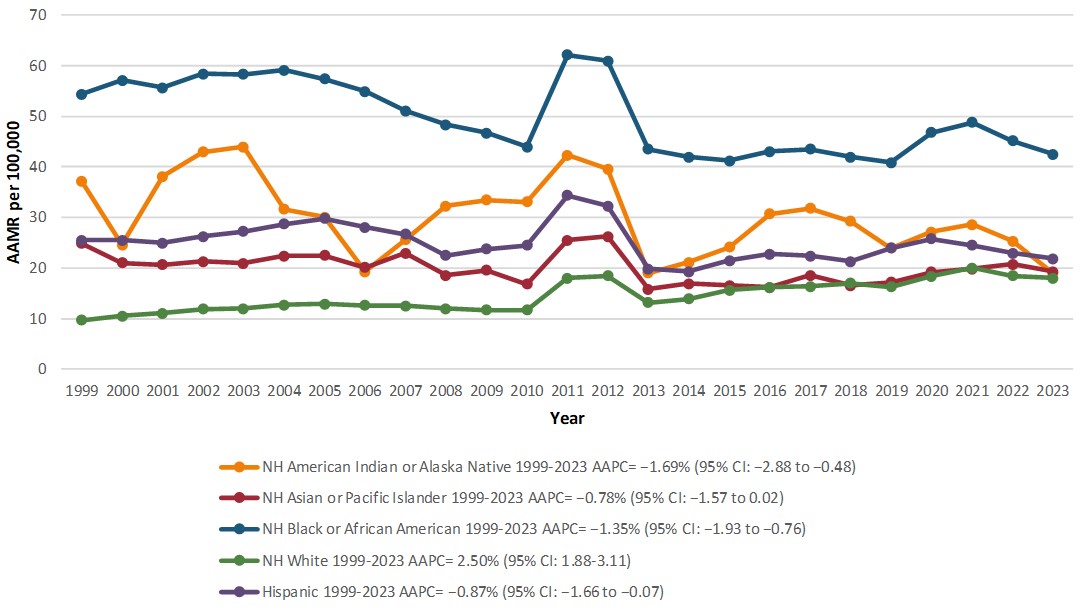
From 1999 to 2023, mortality rates varied by race and ethnicity, with Whites experiencing an increase and other groups experiencing a decline.
Among NH White individuals, AAMRs increased significantly over time (AAPC = 2.50%; 95% CI: 1.88-3.11; p < 0.001). In contrast, significant declines were observed among NH Black or African American individuals (AAPC = -1.35%; 95% CI: -1.93 to -0.76; p < 0.001), NH American Indian or Alaska Native individuals (AAPC = -1.69%; 95% CI: -2.88 to -0.48; p = 0.009), and Hispanic or Latino individuals (AAPC = -0.87%; 95% CI: -1.66 to -0.07; p = 0.034). A decreasing but non-significant trend was observed among NH Asian or Pacific Islander individuals (AAPC = -0.78%; 95% CI: -1.57 to 0.02; p = 0.06) Figure 2 and (Supplement Tables S2, S4).
Regional variation
Mortality trends stratified by state
AAMRs differed substantially across U.S. states and the District of Columbia during the study period.
Between 1999 and 2020, AAMRs ranged from a low of 8.05 in Montana to a high of 46.02 in the District of Columbia. States in the top 90th percentile included the District of Columbia (46.02), Maryland (27.16), South Carolina (26.37), Texas (25.20), and California (24.02). In contrast, states in the bottom 10th percentile included Montana (8.05), Arizona (9.48), Oregon (10.19), Maine (10.33), and Wyoming (10.44) (Supplement Table S5). From 2021 to 2023, AAMRs ranged from 4.49 in Maine to 40.74 in Kentucky. States in the top 90th percentile during this period included Kentucky (40.74), the District of Columbia (38.15), Maryland (30.89), Mississippi (29.38), and California (28.07). States in the bottom 10th percentile included Maine (4.49), Rhode Island (13.13), Hawaii (11.67), New York (14.38), and Vermont (14.12) (Supplement Table S5).
Mortality trends stratified by Census Region
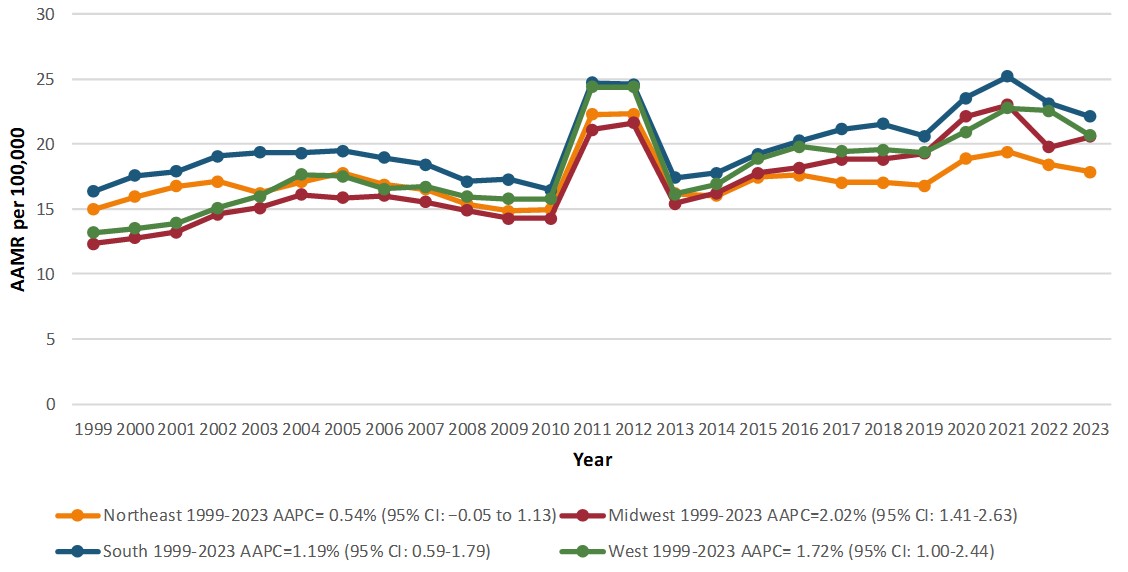
Census region-specific analyses showed significant increases in AAMRs in the Midwest, South, and West, while the Northeast showed a non-significant increase from 1999 to 2023.
The Midwest had the largest increase in mortality, with an AAPC of 2.02% (95% CI: 1.41-2.63; p < 0.001). The South also showed a significant increase, with an AAPC of 1.19% (95% CI: 0.59-1.79; p < 0.001). Similarly, the West demonstrated a significant rising trend, with an AAPC of 1.72% (95% CI: 1.00-2.44; p < 0.001).
In contrast, the Northeast exhibited a smaller and non-significant increase in AAMRs, with an AAPC of 0.54% (95% CI: -0.05 to 1.13; p = 0.07) Figure 3 and (Supplement Table S6).
Mortality trends stratified by urbanization
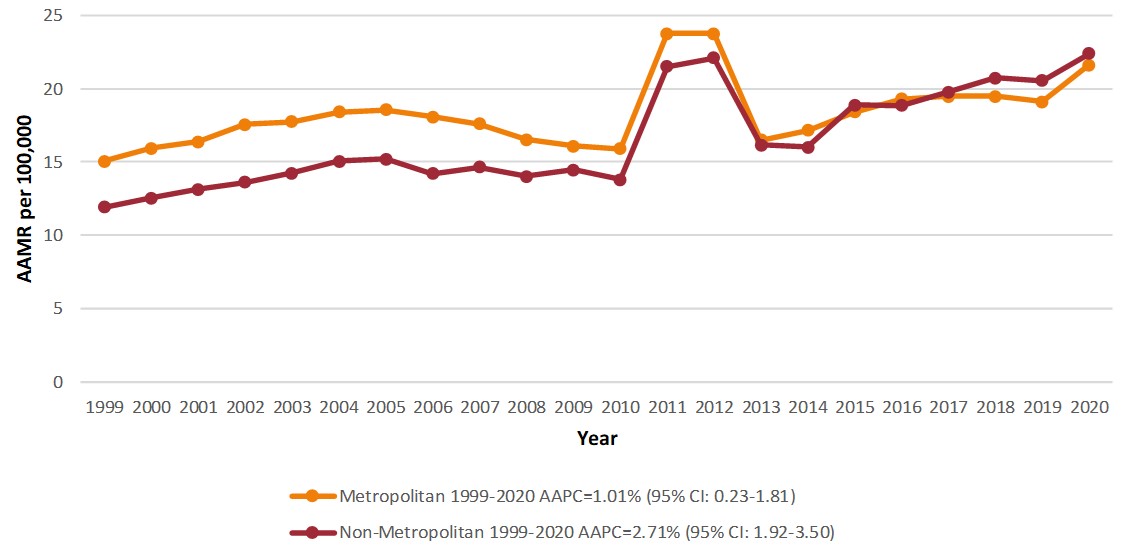
Mortality rose in both metropolitan and non-metropolitan areas between 1999 and 2020, the period for which urbanization data were available, with larger increases in non-metropolitan areas.
Non-metropolitan areas exhibited an AAPC of 2.71% (95% CI: 1.92-3.50; p < 0.001). In contrast, metropolitan areas experienced a more modest but statistically significant increase, with an AAPC of 1.01% (95% CI: 0.23-1.81; p = 0.014) Figure 4 and (Supplement Table S7).
Mortality trends stratified by Place of Death
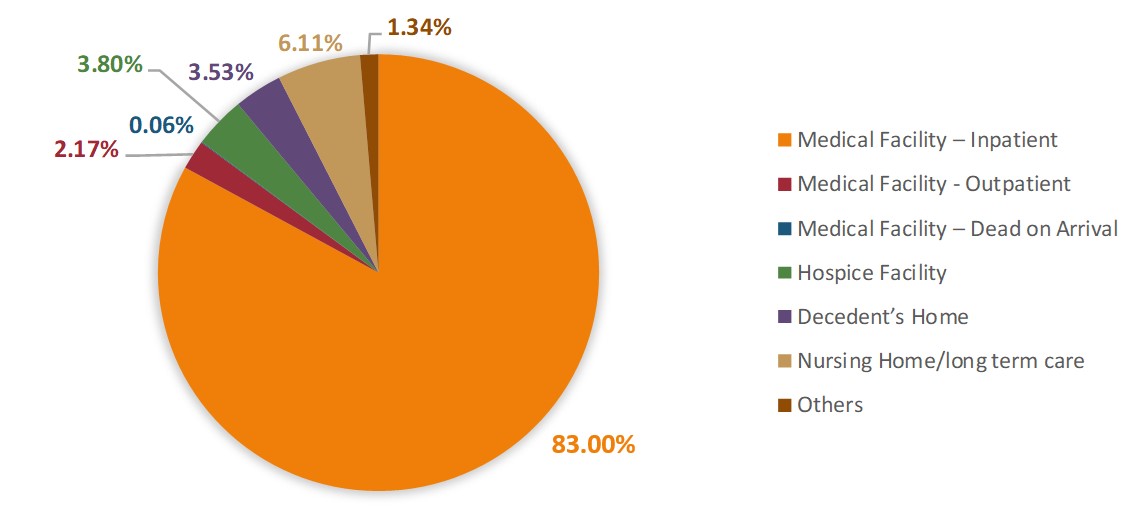
From 1999 to 2023, the highest number of deaths occurred in medical facilities - inpatient, accounting for 167,376 deaths (83.00%). This was followed by 12,318 deaths (6.11%) occurring in nursing homes or long-term care facilities, 7,652 deaths (3.80%) in hospice facilities, and 7,108 deaths (3.53%) occurring at the decedents’ homes. A lesser number of deaths occurred in medical facilities - outpatient or ER, totaling 4,373 deaths (2.17%), while 115 deaths (0.06%) were recorded as dead on arrival. Deaths occurring in other locations accounted for 2,695 deaths (1.34%) Figure 5 and (Supplement Table S8).
Discussion
Our analysis shows a 1.37-fold increase in mortality from sepsis with chronic kidney disease among older adults aged 65 and above in the US, with significant variations over time. Males consistently exhibited higher mortality rates than females (for men: AAPC: 1.58%, for women: AAPC: 0.98%). Racial disparities were also evident, with NH White individuals (AAPC = 2.50%) demonstrating a sustained increase in mortality trend over time, suggesting a shifting burden in this group. In contrast, NH Black or African American individuals, despite declining trends (AAPC = -1.35%), continued to experience significantly higher mortality rates than other groups, indicating that reductions in trends have not translated into equal health outcomes. Similar patterns were observed in NH American Indian or Alaskan Native and Hispanic or Latino individuals, with a decreasing but non-significant trend among NH Asian or Pacific Islander individuals. Additionally, regional and geographic differences were evident, with the Southern region (AAPC: 1.19%) and urban areas (AAPC: 1.01%) consistently reporting higher AAMRs than other regions and rural areas during the study period. States such as the District of Columbia, Maryland, South Carolina, Texas, and California showed persistently high mortality rates until 2020. From 2021 to 2023, the top 90th percentile included Kentucky, the District of Columbia, Maryland, Mississippi, and California. Conversely, states such as Montana, Arizona, Oregon, Maine, and Wyoming exhibited lower mortality rates until 2020; from 2021 to 2023, the bottom 10th percentile included Maine, Rhode Island, Hawaii, New York, and Vermont.
Overall, the age-adjusted mortality rates for CKD and sepsis have not followed a linear trajectory. Instead, they have shown a gradual upward trend with notable fluctuations, including a significant peak around 2011 – 2012, followed by a period of relative stabilisation before rising again after 2019. The initial increase can be attributed to several factors, such as a rise in the prevalence of risk factors for CKD, including diabetes, ageing, Hypertension, and Obesity [20,21]. Additionally, the lack of early detection of CKD during this period [20], along with the development of a new sepsis definition at the first sepsis conference, contributed to this issue. The conference introduced a simplistic criterion based on the construct of ’systemic inflammatory response syndrome’ (SIRS), which required at least two of four basic variables: temperature, heart rate, respiratory rate, and white blood cell (WBC) count. Patients meeting the SIRS criteria with a presumed or documented infection were considered to have sepsis, which may also contribute to inflated AAMR figures [22]. This pattern has improved since 2006 owing to increased awareness, improved healthcare infrastructure, advances in sepsis management, enhanced intervention strategies for CKD, enhanced ICU protocols, and global health initiatives [23,24].
Notably, our analysis showed a surge in AAMR between 2010 and 2012, which could be attributed to increased sepsis cases due to seasonal endemic infections. Moreover, revisions in coding practices may have contributed to the variability observed in mortality trends [8,7]. With time, documentation of comorbidities has improved, and so has the awareness of CKD; this may also have led to more accurate attribution of deaths to CKD-associated sepsis, thereby reflecting an increase in reported mortality.
Following a period of relative stabilisation, the notable surge after 2019 corresponds with the impact of the COVID-19 pandemic. The pandemic put an unmatched strain on healthcare and influenced the hospital visit frequency in CKD patients. Simultaneously, the prevalence of multidrug-resistant organisms may have increased the severity and frequency of sepsis episodes. These factors, combined with COVID, might have surged the demand for healthcare resources, leading to limitations affecting mortality due to sepsis in CKD patients, underscoring that sepsis wasn’t the sole reason for deaths but external factors as well. [25] Although our analysis highlights the synergistic lethality of CKD and sepsis in elderly patients, residual confounding from comorbidities and evolving healthcare system factors may influence observed mortality trends. Prior to this, antibiotic resistance was a serious problem that overwhelmed healthcare systems [26]. The pandemic further exacerbated health inequalities, strained healthcare systems, and interrupted the management of chronic conditions, contributing to the rise in deaths [27,28] Sepsis is the leading cause of mortality among critically ill patients, and its incidence is increasing [29]. Chronic kidney disease (CKD) is observed in approximately 30% of patients with acute kidney injury (AKI) in the Intensive Care Unit (ICU) [30]. Moreover, severe sepsis in patients with pre-existing chronic conditions such as CKD, liver disease, and diabetes exhibits a substantially elevated mortality rate [31]. Pathophysiologically, these two conditions are connected through complex symptoms and mechanisms. Sepsis-related acute kidney injury (AKI) arises from interactions within immune, vascular, and cellular systems. PAMPs and DAMPs trigger pattern recognition receptors, leading to a systemic inflammatory response that can exceed the immune system’s regulatory capacity [32]. This leads to endothelial activation, cytokine release, and microvascular thrombosis, ultimately impairing renal perfusion and oxygen delivery. In CKD patients, sepsis-associated AKI serves as a “second hit," further damaging kidney function and overall health. This combined injury raises mortality, speeds up progression to ESRD, and increases the risk of multi-organ failure and death [33]. Elderly individuals are particularly susceptible to developing sepsis due to pre-existing comorbidities, weakened immune function, sarcopenia, reduced physiological reserves associated with ageing, malnutrition, and polypharmacy, underscoring the selection of this patient demographic [2].
Our analysis indicates that from 1999 to 2023, men consistently exhibited higher adult age-adjusted mortality rates than women. Studies suggest that testosterone in males suppresses both innate and adaptive immunity, increasing susceptibility to infections like sepsis and resulting in poorer outcomes [34]. Conversely, estrogen in females enhances immune responses, facilitating faster pathogen clearance and a more robust inflammatory response, thereby reducing sepsis-related mortality [35]. Behavioral factors also significantly contribute: men tend to have higher rates of co-morbidities like cardiovascular disease (CVD) and chronic kidney disease (CKD), which are independent risk factors for sepsis severity and death [34]. Additionally, men are more likely to engage in risky health behaviors such as higher alcohol intake and delayed healthcare seeking, increasing their vulnerability [36].
In addition, we also uncovered racial disparities, with the Black population being the most at risk. This multifaceted issue involves factors like comorbidity burden, geographic, cultural, and socioeconomic influences [37]. Multiple studies report that this population accounts for various comorbidities prevalence, especially cardiovascular pathologies, Diabetes Mellitus, and CKD, three strong adjuncts for sepsis-associated mortality [38,39]. Over 80% of non-Hispanic Black (NHB) patients are treated at large urban teaching hospitals, which are often underfunded, understaffed, and serve as non-profit safety nets [40]. Such conditions may contribute to unequal care and outcomes for sepsis. Studies by Mayr et al. and others indicate that hospitals serving minority groups report higher severity of illness, multi-organ failure, and death rates [41]. Recent research indicates that Non-Hispanic Black (NHB) and minority patients frequently do not receive standard sepsis treatment [37]. NHB and Hispanic patients tend to have lower income levels and rely more heavily on Medicaid. Socioeconomic factors contribute to healthcare disparities by influencing the social determinants of health, including access to education, healthy living conditions, and preventive care, thereby leading to diagnostic and treatment delays [42].
Geographic disparities were evident, with AAMR rates rising in Southern states and urban areas, in contrast to most studies that attribute rural healthcare inadequacies as the primary factor driving the increase in AAMR [43,44]. The South comprises a diverse population from various ethnic groups, each with differing levels of comorbidity, which adds complexity to health issues [45]. Additionally, Southern states tend to have higher poverty rates and lower educational achievement, which are linked to limited access to preventive services and early intervention [46]. There are fewer hospitals and specialists per capita, particularly nephrologists and infectious disease experts, which hampers timely diagnosis and treatment [46,45]. Differences in Medicaid expansion and public health funding across states also impact access to care and health outcomes. Metropolitan areas reported higher numbers due to population growth, increased disease-reporting burden, comorbidities, pollution-related infections, and varying hospital practices [47,40,33]. Earlier diagnosis in the tertiary center leads to rapid initiation of treatment of sepsis and a decline in CKD complications. In contrast, rural areas may face a surge in risk of complications due to resource limitations and transfer time to tertiary care facilities and delayed decision-making, leading to disparities in mortality. The variability in these infrastructure differences interacts with socioeconomic and demographic factors, contributing to the observed geographic patterns in sepsis-related mortality [48,49].
It should be noted that trend evaluation is limited, as the CDC WONDER database doesn’t include clinical measures of severity. Sequential Organ Failure Assessment (SOFA) or APACHE scores provide vital information on end-organ dysfunction and illness severity, yet death certificates lack these details [50]. As a result, our analysis cannot differentiate mild from severe cases, nor can it comment on how severity affects mortality trends in CKD patients. Inadequacy of stratification of severity limits the granularity of risk assessment and leads to hidden heterogeneity in outcomes.
The sepsis management protocols have evolved over the past two decades, which may influence mortality trends. Early identification, timely use of antibiotics, fluid resuscitation, and advances in critical care-based nephrology practices might have altered survival rates independent of underlying disease burden. Improvements have altered outcomes over time, reflecting shifts in clinical practice and variations in patient fragility rather than true changes in sepsis incidence or lethality alone [51,52].
Public Health Implications
Public health interventions serve as the critical method to decrease sepsis deaths, which affect patients suffering from CKD. Sepsis risk increases for this group because their immune systems do not function properly, and they receive medical treatment more often, especially in dialysis environments [53]. Implementing hand hygiene standards and vascular access maintenance procedures, along with antimicrobial stewardship initiatives, may lead to a significant reduction in infectious diseases, which frequently result in sepsis among CKD patients [54,53]. Similarly, the expanding coverage of influenza and pneumococcal vaccines provides important health benefits, yet this group continues to have low vaccination rates despite established medical guidelines [54,55].
Improving early recognition of sepsis signs among both patients and healthcare providers requires attention, as delayed care-seeking remains a key gap among CKD patients [56,54]. Implementing sepsis education through standard CKD treatment procedures and dialysis center operations will enable doctors to deliver faster medical treatment [56]. The public health sector needs sepsis surveillance data that connects with current CKD registries to track health outcomes between groups, identify people most at risk, and evaluate the efficacy of interventions. These goals are highlighted by the ongoing racial and ethnic disparities in sepsis outcomes among CKD patients [57]. The field of sepsis prevention needs to develop effective solutions that call for collaboration between sepsis control strategies and chronic disease treatment systems.
Limitations
Several limitations should be considered when interpreting our findings. First, this study relied on death certificate data, which may misclassify sepsis and other conditions (e.g., stroke) as the underlying cause of death. Reliance on ICD coding introduces further challenges, as sensitivity and specificity vary, particularly for sepsis, and clinical validation is lacking. Coding practices and diagnostic criteria have also evolved, including the transition from ICD-9 to ICD-10 and changes in sepsis definitions, which may influence observed trends.
Second, the CDC WONDER database provides aggregated, population-level data without detailed clinical information. Important variables such as comorbidities (e.g., diabetes mellitus, hypertension), disease severity scores (SOFA, APACHE II), hospital-level factors, treatment modalities, and socioeconomic indicators were unavailable. As a result, individual-level causal inferences cannot be made, and our findings reflect population-level associations rather than patient-level prognostic factors. This limitation raises the possibility of ecological fallacy when interpreting subgroup differences.
Third, our analysis was restricted to inpatient and facility-based deaths, excluding outpatient sepsis cases. This may underestimate the true mortality burden among older adults with CKD, particularly in community settings. Additionally, reporting delays and data incompleteness may affect more recent years, potentially underestimating mortality rates in 2021 – 2023.
Finally, unmeasured external factors, including the effects of pandemics, changes in the healthcare system, and policy shifts, were not accounted for. The lack of contextual data, such as trends in U.S. life expectancy, environmental exposures, and health behaviours (e.g., smoking, diet, substance use), further limits interpretation. Taken together, these constraints indicate that our results should be viewed as descriptive of national mortality patterns rather than definitive causal estimates.
Conclusion
This study demonstrates a sustained rise in sepsis‑related mortality among U.S. adults aged 65 years and older with chronic kidney disease between 1999 and 2023, underscoring the growing burden in this vulnerable population. Mortality increases were more pronounced among males and varied geographically, with the steepest rises observed in the Midwest and West. Racial and ethnic trends diverged: rates increased among non‑Hispanic White populations, while declines were noted among non‑Hispanic Black, Hispanic or Latino, American Indian or Alaska Native, and Asian or Pacific Islander populations, highlighting evolving disparities that require further investigation. Both metropolitan and non‑metropolitan areas experienced rising mortality, with sharper increases in rural regions, suggesting inequities in healthcare access. Most deaths occurred in healthcare facilities, reflecting the severity of sepsis in older adults with CKD.
These findings emphasise the need for targeted prevention and management strategies in high‑risk populations and regions. Results should be interpreted in light of methodological constraints, including reliance on ICD‑10 coding (A40 – A41 for sepsis; N18.x for CKD), limited urbanisation data available only through 2020, and the inherent limitations of death certificate records. Misclassification, lack of clinical detail, and potential reporting delays may affect accuracy, particularly in recent years. Thus, while our analysis provides valuable insights into national mortality patterns, caution is warranted in drawing causal inferences, and future studies incorporating richer clinical and contextual data are needed.
Conflicts of Interest
The authors declare no competing interests that could have influenced the objectivity or outcome of this research.
Funding Source
The authors declare that no specific grant or funding was received for this research from any public, commercial, or not-for-profit funding agency.
Acknowledgments
None.
Institutional Review Board (IRB)
This study used publicly available, de-identified mortality data from the CDC WONDER Multiple Cause of Death database and did not involve direct interaction with human participants or access to identifiable personal information. Therefore, the study was exempt from Institutional Review Board approval, and informed consent was not required. The study was conducted and reported in accordance with accepted standards for secondary analysis of public-use data, including adherence to STROBE reporting guidance.
Large Language Model
None.
Authors Contribution
UA contributed to project administration, writing the original draft, tables, and visualization. RRM contributed to writing, review and editing, validation, supervision, and correspondence. MMK contributed to writing the original draft. HA contributed to writing the original draft and methodology. SA contributed to writing the original draft. HW contributed to data extraction and JP analysis. MW contributed to writing the original draft. MW contributed to writing the original draft. MM contributed to writing the original draft. RM contributed to writing the original draft.
Data Availability
The data supporting the findings of this study are openly available in CDC-WONDER at https://wonder.cdc.gov/. The data supporting the findings of this study were obtained from the CDC WONDER online database (Centers for Disease Control and Prevention Wide-ranging Online Data for Epidemiologic Research). The datasets used and analyzed in the current study are publicly available and can be accessed at CDC WONDER. Further inquiries can be directed to the corresponding author.
References
- Chan H. K., Khose S., Chavez S., Patel B., Wang H. E.. Updated estimates of sepsis hospitalizations at United States academic medical centers. J Am Coll Emerg Physicians Open. 2022;3(4):e12782. doi:10.1002/emp2.12782 PMID: 35859855 PMCID: PMC9288236
- Ibarz M., Haas L. E. M., Ceccato A., Artigas A.. The critically ill older patient with sepsis: a narrative review. Ann Intensive Care. 2024;14(1):6. doi:10.1186/s13613-023-01233-7 PMID: 38200360 PMCID: PMC10781658
- Centers for Disease Control and Prevention. Chronic Kidney Disease Surveillance System-United States [Internet].
- Dalrymple L. S., Katz R., Kestenbaum B., de Boer I. H., Fried L., Sarnak M. J., Shlipak M. G.. The risk of infection-related hospitalization with decreased kidney function. Am J Kidney Dis. 2012;59(3):356-63. doi:10.1053/j.ajkd.2011.07.012 PMID: 21906862 PMCID: PMC3288732
- Liyanarachi K. V., Mohus R. M., Rogne T., Gustad L. T., Asvold B. O., Romundstad S., Solligard E., Hallan S., Damas J. K.. Chronic kidney disease and risk of bloodstream infections and sepsis: a 17-year follow-up of the population-based Trondelag Health Study in Norway. Infection. 2024;52(5):1983-1993. doi:10.1007/s15010-024-02265-2 PMID: 38679665 PMCID: PMC11499395
- Centers for Disease Control and Prevention. Multiple Cause of Death Data on CDC WONDER [Internet]. 2018.
- Centers for Disease Control and Prevention. ICD-10 [Internet]. 2024.
- Afzaal Z., Khan A., Patel T., Rauf S., Kritika F., Zaman Khan A., Irshad A., Hashim A., Aslam F., Sohail H., Zaffar H., Khan A., Hassan S., Ahmed U., Rizvi K.. Geographic and demographic disparities in sepsis and renal failure mortality: a CDC WONDER-based narrative review of 1999-2020 trends. Ann Med Surg (Lond). 2026;88(1):561-568. doi:10.1097/MS9.0000000000004483 PMID: 41496986 PMCID: PMC12768082
- Ahtsham A., Ahmed U., Haider M., Alrashid M. M., Tauqeer N.. Demographic Disparities in Mortality Trends of Obesity-Related Chronic Kidney Disease Among Adults in the United States From 2018 to 2023. Cureus. 2025;17(10):e95300. doi:10.7759/cureus.95300 PMID: 41287735 PMCID: PMC12640554
- von Elm E., Altman D. G., Egger M., Pocock S. J., Gotzsche P. C., Vandenbroucke J. P., STROBE Initiative. The Strengthening the Reporting of Observational Studies in Epidemiology (STROBE) statement: guidelines for reporting observational studies. J Clin Epidemiol. 2008;61(4):344-9. doi:10.1016/j.jclinepi.2007.11.008 PMID: 18313558
- Hashmi Shahnawaz, Safdar Iqra, Kazmi Muhammad Hazqeel, Zulfiqar Eeshal, Shahzad Maryam, Hurjkaliani Sonia, Ayyad Mennatalla, Zuberi Nimra, Ahmed Toqeer, Sujay Gauri Balan, Talal Hamid, Kazmi Syeda Hazqah, Khan Muhammad Farooq, Imbianozor Gabriel, Ahmed Mushood, Ahmed Raheel. Rising Mortality Related to Diabetes Mellitus and Hypertension: Trends and Disparities in the United States (1999−2023). Clinical Cardiology. 2025;48(4). doi:10.1002/clc.70132
- Nasser I. A., Asghar S., Masud L., Hafeez M. A., Hurjkaliani S., Zulfiqar E., Shahzad M., Ahmed H., Khan S., Ahmed S., Abdul Q., Noushad M. A., Nusrat R., Azhar S., Ward C. D., Ahmed M., Ahmed R.. The Interplay of Cancer and Hypertension: Rising Mortality and Widening Disparities Across the United States (1999-2023). Medicina (Kaunas). 2025;61(5). doi:10.3390/medicina61050917 PMID: 40428874 PMCID: PMC12113302
- Centers for Disease Control and Prevention. Race and Ethnicity Measurement Methods - NCHS Rapid Surveys System [Internet]. 2025.
- Ingram D. D., Franco S. J.. 2013 NCHS Urban-Rural Classification Scheme for Counties [Internet]. Vital and Health Statistics Series 2, Data Evaluation and Methods Research. 2017.
- Aggarwal R., Chiu N., Loccoh E. C., Kazi D. S., Yeh R. W., Wadhera R. K.. Rural-Urban Disparities: Diabetes, Hypertension, Heart Disease, and Stroke Mortality Among Black and White Adults, 1999-2018. J Am Coll Cardiol. 2021;77(11):1480-1481. doi:10.1016/j.jacc.2021.01.032 PMID: 33736831 PMCID: PMC8210746
- U.S. Census Bureau. Census regions and divisions of the United States [Internet]. 1984.
- Hemida Mohamed Fawzi, Khan Ayesha, Ibrahim Alyaa Ahmed, Goel Anika, Patel Krish, Shahriar Zahin, Hageen Ahmed W., Alsaadi Mustafa, Rahman Saif Ur, Arafa Amr, Kholeif Zeyad, Bahnasy Ahmed. Trends in Mortality from Leukemia and Ischemic Heart Disease: A 22-Year Analysis in the U.S. (1999-2020). ASIDE Internal Medicine. 2025;2(2):21-30. doi:10.71079/aside.Im.091425163
- Anderson R. N., Rosenberg H. M.. Age-standardization of death rates: implementation of the 2000 standard [Internet]. National Vital Statistics Reports. 1998;47(3):1-20.
- Surveillance Research Program, National Cancer Institute. Joinpoint Regression Program [Internet]. 2025.
- Mallamaci F., Tripepi G.. Risk Factors of Chronic Kidney Disease Progression: Between Old and New Concepts. J Clin Med. 2024;13(3). doi:10.3390/jcm13030678 PMID: 38337372 PMCID: PMC10856768
- Qin K., Qing J., Wang Q., Li Y.. Epidemiological shifts in chronic kidney disease: a 30-year global and regional assessment. BMC Public Health. 2024;24(1):3519. doi:10.1186/s12889-024-21065-9 PMID: 39695543 PMCID: PMC11657796
- Vincent J. L.. Evolution of the Concept of Sepsis. Antibiotics (Basel). 2022;11(11). doi:10.3390/antibiotics11111581 PMID: 36358234 PMCID: PMC9686931
- Takeuchi T., Flannery A. H., Liu L. J., Ghazi L., Cama-Olivares A., Fushimi K., Chen J., Huen S. C., Tolwani A. J., Neyra J. A.. Epidemiology of sepsis-associated acute kidney injury in the ICU with contemporary consensus definitions. Crit Care. 2025;29(1):128. doi:10.1186/s13054-025-05351-5 PMID: 40114218 PMCID: PMC11924826
- Tungsanga S., Ghimire A., Hariramani V. K., Abdulrahman A., Khan A. S., Ye F., Kung J. Y., Klarenbach S., Thompson S., Collister D., Srisawat N., Okpechi I. G., Bello A. K.. Global trends in chronic kidney disease-related mortality: a systematic review protocol. BMJ Open. 2024;14(4):e078485. doi:10.1136/bmjopen-2023-078485 PMID: 38569707 PMCID: PMC11146367
- Oud L., Garza J.. The Impact of COVID-19 on Sepsis-Related Mortality in the United States. J Clin Med Res. 2023;15(6):328-331. doi:10.14740/jocmr4937 PMID: 37434769 PMCID: PMC10332882
- Antimicrobial Resistance Collaborators. Global burden of bacterial antimicrobial resistance in 2019: a systematic analysis. Lancet. 2022;399(10325):629-655. doi:10.1016/S0140-6736(21)02724-0 PMID: 35065702 PMCID: PMC8841637
- Angelo S., Kadri S. S.. Hospital Strain and Disparities in Sepsis Outcomes. JAMA Netw Open. 2024;7(10):e2438526. doi:10.1001/jamanetworkopen.2024.38526 PMID: 39405066
- Bell S., Perkins G. B., Anandh U., Coates P. T.. COVID and the Kidney: An Update. Semin Nephrol. 2023;43(5):151471. doi:10.1016/j.semnephrol.2023.151471 PMID: 38199827
- Angus D. C., Linde-Zwirble W. T., Lidicker J., Clermont G., Carcillo J., Pinsky M. R.. Epidemiology of severe sepsis in the United States: analysis of incidence, outcome, and associated costs of care. Crit Care Med. 2001;29(7):1303-10. doi:10.1097/00003246-200107000-00002 PMID: 11445675
- Uchino S., Kellum J. A., Bellomo R., Doig G. S., Morimatsu H., Morgera S., Schetz M., Tan I., Bouman C., Macedo E., Gibney N., Tolwani A., Ronco C., Beginning and Ending Supportive Therapy for the Kidney Investigators. Acute renal failure in critically ill patients: a multinational, multicenter study. JAMA. 2005;294(7):813-8. doi:10.1001/jama.294.7.813 PMID: 16106006
- Doi K., Leelahavanichkul A., Hu X., Sidransky K. L., Zhou H., Qin Y., Eisner C., Schnermann J., Yuen P. S., Star R. A.. Pre-existing renal disease promotes sepsis-induced acute kidney injury and worsens outcome. Kidney Int. 2008;74(8):1017-25. doi:10.1038/ki.2008.346 PMID: 18633340 PMCID: PMC2614371
- Balkrishna A., Sinha S., Kumar A., Arya V., Gautam A. K., Valis M., Kuca K., Kumar D., Amarowicz R.. Sepsis-mediated renal dysfunction: Pathophysiology, biomarkers and role of phytoconstituents in its management. Biomed Pharmacother. 2023;165:115183. doi:10.1016/j.biopha.2023.115183 PMID: 37487442
- Ou S. M., Lee K. H., Tsai M. T., Tseng W. C., Chu Y. C., Tarng D. C.. Sepsis and the Risks of Long-Term Renal Adverse Outcomes in Patients With Chronic Kidney Disease. Front Med (Lausanne). 2022;9:809292. doi:10.3389/fmed.2022.809292 PMID: 35280875 PMCID: PMC8908417
- Angele M. K., Pratschke S., Hubbard W. J., Chaudry I. H.. Gender differences in sepsis: cardiovascular and immunological aspects. Virulence. 2014;5(1):12-9. doi:10.4161/viru.26982 PMID: 24193307 PMCID: PMC3916365
- Kovats S.. Estrogen receptors regulate an inflammatory pathway of dendritic cell differentiation: mechanisms and implications for immunity. Horm Behav. 2012;62(3):254-62. doi:10.1016/j.yhbeh.2012.04.011 PMID: 22561458 PMCID: PMC3415586
- Michishita R., Matsuda T., Kawakami S., Tanaka S., Kiyonaga A., Tanaka H., Morito N., Higaki Y.. The association between changes in lifestyle behaviors and the incidence of chronic kidney disease (CKD) in middle-aged and older men. J Epidemiol. 2017;27(8):389-397. doi:10.1016/j.je.2016.08.013 PMID: 28385348 PMCID: PMC5549247
- Ang S. P., Chia J. E., Iglesias J.. Racial differences in outcomes among patients with septic shock: A national cohort study. World J Crit Care Med. 2025;14(3):106387. doi:10.5492/wjccm.v14.i3.106387 PMID: 40880577 PMCID: PMC12305100
- Brancati Frederick L.. The Excess Incidence of Diabetic End-Stage Renal Disease Among Blacks. Jama. 1992;268(21). doi:10.1001/jama.1992.03490210061036
- Laster M., Shen J. I., Norris K. C.. Kidney Disease Among African Americans: A Population Perspective. Am J Kidney Dis. 2018;72(5 Suppl 1):S3-S7. doi:10.1053/j.ajkd.2018.06.021 PMID: 30343720 PMCID: PMC6200351
- Law A. C., Bosch N. A., Song Y., Tale A., Lasser K. E., Walkey A. J.. In-Hospital vs 30-Day Sepsis Mortality at US Safety-Net and Non-Safety-Net Hospitals. JAMA Netw Open. 2024;7(5):e2412873. doi:10.1001/jamanetworkopen.2024.12873 PMID: 38819826 PMCID: PMC11143462
- Mayr F. B., Yende S., Linde-Zwirble W. T., Peck-Palmer O. M., Barnato A. E., Weissfeld L. A., Angus D. C.. Infection rate and acute organ dysfunction risk as explanations for racial differences in severe sepsis. JAMA. 2010;303(24):2495-503. doi:10.1001/jama.2010.851 PMID: 20571016 PMCID: PMC3910506
- McMaughan D. J., Oloruntoba O., Smith M. L.. Socioeconomic Status and Access to Healthcare: Interrelated Drivers for Healthy Aging. Front Public Health. 2020;8:231. doi:10.3389/fpubh.2020.00231 PMID: 32626678 PMCID: PMC7314918
- Ogundipe F., Kodadhala V., Ogundipe T., Mehari A., Gillum R.. Disparities in Sepsis Mortality by Region, Urbanization, and Race in the USA: a Multiple Cause of Death Analysis. J Racial Ethn Health Disparities. 2019;6(3):546-551. doi:10.1007/s40615-018-00553-w PMID: 30607577
- Oud L., Garza J.. Temporal Trends in Rural vs Urban Sepsis-Related Mortality in the United States, 2010-2019. Chest. 2022;162(1):132-135. doi:10.1016/j.chest.2022.02.015 PMID: 35181278
- Rhee C., Jones T. M., Hamad Y., Pande A., Varon J., O'Brien C., Anderson D. J., Warren D. K., Dantes R. B., Epstein L., Klompas M., Centers for Disease Control and Prevention Prevention Epicenters Program. Prevalence, Underlying Causes, and Preventability of Sepsis-Associated Mortality in US Acute Care Hospitals. JAMA Netw Open. 2019;2(2):e187571. doi:10.1001/jamanetworkopen.2018.7571 PMID: 30768188 PMCID: PMC6484603
- Lippert A. M.. System Failure: The Geographic Distribution of Sepsis-Associated Death in the USA and Factors Contributing to the Mortality Burden of Black Communities. J Racial Ethn Health Disparities. 2023;10(5):2397-2406. doi:10.1007/s40615-022-01418-z PMID: 36171498 PMCID: PMC9518946
- Esper A. M., Moss M., Lewis C. A., Nisbet R., Mannino D. M., Martin G. S.. The role of infection and comorbidity: Factors that influence disparities in sepsis. Crit Care Med. 2006;34(10):2576-82. doi:10.1097/01.CCM.0000239114.50519.0E PMID: 16915108 PMCID: PMC3926300
- Burdick K. J., Rees C. A., Lee L. K., Monuteaux M. C., Mannix R., Mills D., Hirsh M. P., Fleegler E. W.. Racial & ethnic disparities in geographic access to critical care in the United States: A geographic information systems analysis. PLoS One. 2023;18(11):e0287720. doi:10.1371/journal.pone.0287720 PMID: 37910455 PMCID: PMC10619775
- Yoshida S., Babazono A., Liu N., Yamao R., Ishihara R.. Regional Differences and Mortality-associated Risk Factors among Older Patients with Septic Shock: Administrative Data Analysis with Multilevel Logistic Regression Modelling [Internet]. JMA J. 2025;8(3):708.
- Cirik M. O., Doganay G. E., Doganci M., Ozdemir T., Yildiz M., Kahraman A., Hazer S., Tunc M., Ensarioglu K., Ozanbarci A., Mentes O.. Comparison of Intensive Care Scoring Systems in Predicting Overall Mortality of Sepsis. Diagnostics (Basel). 2025;15(13). doi:10.3390/diagnostics15131660 PMID: 40647659 PMCID: PMC12248853
- World Health Organization. Global antibiotic resistance surveillance report 2025: summary [Internet].
- Levy M. M., Rhodes A., Phillips G. S., Townsend S. R., Schorr C. A., Beale R., Osborn T., Lemeshow S., Chiche J. D., Artigas A., Dellinger R. P.. Surviving Sepsis Campaign: association between performance metrics and outcomes in a 7.5-year study. Intensive Care Med. 2014;40(11):1623-33. doi:10.1007/s00134-014-3496-0 PMID: 25270221
- Rudd K. E., Johnson S. C., Agesa K. M., Shackelford K. A., Tsoi D., Kievlan D. R., Colombara D. V., Ikuta K. S., Kissoon N., Finfer S., Fleischmann-Struzek C., Machado F. R., Reinhart K. K., Rowan K., Seymour C. W., Watson R. S., West T. E., Marinho F., Hay S. I., Lozano R., Lopez A. D., Angus D. C., Murray C. J. L., Naghavi M.. Global, regional, and national sepsis incidence and mortality, 1990-2017: analysis for the Global Burden of Disease Study. Lancet. 2020;395(10219):200-211. doi:10.1016/S0140-6736(19)32989-7 PMID: 31954465 PMCID: PMC6970225
- Reinhart K., Daniels R., Kissoon N., Machado F. R., Schachter R. D., Finfer S.. Recognizing Sepsis as a Global Health Priority - A WHO Resolution. N Engl J Med. 2017;377(5):414-417. doi:10.1056/NEJMp1707170 PMID: 28658587
- Saito H.. Sepsis in Global Health: Current global strategies to fight against sepsis. Acute Med Surg. 2025;12(1):e70045. doi:10.1002/ams2.70045 PMID: 39975520 PMCID: PMC11836564
- Haley M., Foroutan N. K., Gronquist J. M., Reddy R., Wusirika R., Khan A.. Fluid Resuscitation and Sepsis Management in Patients with Chronic Kidney Disease or End-Stage Renal Disease: Scoping Review. Am J Crit Care. 2024;33(1):45-53. doi:10.4037/ajcc2024756 PMID: 38161173
- DiMeglio M., Dubensky J., Schadt S., Potdar R., Laudanski K.. Factors Underlying Racial Disparities in Sepsis Management. Healthcare (Basel). 2018;6(4). doi:10.3390/healthcare6040133 PMID: 30463180 PMCID: PMC6315577