Development and Preliminary Evaluation of a Behavioral Lifestyle Assessment Tool: A Methodological Case Study with Graduate-Level Women
Md Rakibul HasanⒾ1*, Andrew Harrison2
- 1Department of Health Promotion and Behavioural Sciences, University of Louisville, Louisville, KY, USA
- 2Department of Neuro-Ophthalmology, Washington University, St. Louis, MO, USA
Abstract
Introduction: Obesity in adults remains a pressing public health issue in the United States, closely linked to modifiable behaviors such as diet, physical activity, stress, sleep, and substance use. This study aimed to develop and pilot a brief, multidimensional assessment tool to identify lifestyle risk factors associated with obesity and inform future prevention efforts.
Methods: A 30-item Behavioral Lifestyle Risk Assessment (BLRA) survey was developed to measure six domains: physical activity, diet, screen time, sleep, stress, and substance use. The survey was administered online via Microsoft Forms to a purposive sample of six adults. The small sample size was intentionally selected based on cognitive interviewing methodology, which recommends 5–10 participants for early-stage instrument clarity and feasibility testing. Descriptive statistics were used to summarize behavioral patterns and survey usability.
Results: All six participants (100% female, aged 18–33) completed the survey without missing data or technical issues. Half reported low physical activity (1–2 days/week), 33% consumed fewer than two servings of fruits and vegetables daily, and another 33% had screen time exceeding eight hours daily. All participants reported moderate to high stress; 83% consumed alcohol, and 17% reported tobacco use. The average survey completion time was 6.8 minutes (SD = 0.6), with positive feedback on clarity and flow.
Conclusion: Pilot findings suggest the BLRA is a feasible and user-friendly tool for assessing obesity-related behavioral risks. Broader testing in larger, diverse populations is recommended to validate its public health application.
Keywords: Adult obesity, Behavioral risk assessment, Lifestyle factors, Public health, Pilot study, Survey instrument
Article information
Introduction
Introduction Obesity is a significant public health concern of the 21st century, with serious consequences for human health, healthcare systems, and global economic stability. Obesity, acknowledged by the World Health Organization (WHO) as a significant risk factor for several chronic illnesses, has reached epidemic levels globally [1]. The condition contributes to the increasing prevalence of non-communicable illnesses, including type 2 diabetes, cardiovascular disease, and certain malignancies, while also intensifying healthcare disparities, social stigmatization, and economic productivity declines [2]. In 2022, over one billion individuals worldwide were deemed obese, a number that has more than quadrupled since 1990, highlighting the need for extensive preventative and intervention programs [3]. In the United States, obesity impacts over 42% of individuals and strongly contributes to the primary causes of avoidable early mortality [4]. Obesity is a complex, multifaceted problem that requires coordinated efforts across healthcare, education, urban planning, food systems, and social frameworks. Understanding the behavioral motivators and sociocultural elements that drive this epidemic is essential for creating effective, fair public health solutions. Obesity is clinically defined as a chronic condition marked by the excessive buildup of body fat that negatively affects health. The predominant instrument for categorizing obesity is the Body Mass Index (BMI), computed by dividing an individual’s weight in kilograms by the square of their height in meters [5]. According to guidelines from the Centers for Disease Control and Prevention (CDC), adults with a BMI of 30.0 or higher are classified as obese [4]. Obesity is further stratified into three classes based on severity: Class 1 (BMI 30.0–34.9), Class 2 (BMI 35.0–39.9), and Class 3 (BMI ≥40.0), the latter commonly referred to as severe or morbid obesity. BMI is a valuable population-level screening tool but does not distinguish between fat and lean mass. Thus, clinical judgment using other health markers is essential. However, BMI criteria are extensively used in public health research and policy to standardize monitoring, risk stratification, and obesity prevention and treatment [6].
Complex interactions between biological, behavioral, and environmental variables cause obesity. Modifiable risk factors drive the worldwide obesity pandemic in each of them. Poor dietary habits, such as eating too many ultra-processed foods, sugary drinks, and calories, and insufficient fiber, fruits, and vegetables, are major causes. Risk is further compounded by physical inactivity driven by sedentary lifestyles and technology use in urban living [7]. Research emerges and underscores that sleep disturbances predict obesity independently, and specifically inadequate duration and poor quality mediate such prediction through hormonal dysregulation affecting appetite and metabolism. Chronic psychological stress has also been linked. This influences neuroendocrine pathways, promoting emotional eating and decreasing physical activity. Poor nutrition is connected to excessive screen time on devices and reduced physical exercise. People utilize drugs, particularly if they drink too much and smoke. These behaviors relate to metabolic dysfunction and adiposity [8]. Genes predispose bodies to metabolize at some basal rate and store fat readily to regulate satiety. Hormonal changes and reduced lean body mass enhance susceptibility with age. Sex-based variations affect obesity trends, such as hormonal changes during pregnancy or menopause and women’s greater fat percentages. Medical conditions like hypothyroidism, Cushing’s syndrome, and polycystic ovary syndrome (PCOS) elevate obesity risk independently of lifestyle behaviors [9].
Along with biological and behavioral variables, social determinants of health (SDOH) significantly impact obesity risk and prevalence. Social class affects food, exercise, healthcare, and health literacy. For low-income and uneducated individuals, food deserts and unsafe locales hinder access to inexpensive, healthful food and leisure. Home walkability and green places strongly affect an active lifestyle [10]. Systemic racism, employment insecurity, and inadequate healthcare access worsen obesity-related health disparities [11], particularly among impoverished people [12]. Obesity is a pressing concern in public health and clinical practice because of the wide-ranging negative effects it may have on people’s physical, mental, and social health, both in the short and long term. Obesity is physically associated with an increased risk of developing many chronic conditions. These include type 2 diabetes mellitus, hypertension (high blood pressure), dyslipidemia (a medical condition characterized by abnormal lipid levels in the blood), coronary artery disease, ischemic stroke, numerous cancers (including endometrial, colorectal, and breast cancer), osteoarthritis (a degenerative joint condition) and obstructive sleep apnea (airway blockage caused by fat deposition) [13]. When these diseases occur together, it’s known as metabolic syndrome, and it may shorten a person’s life expectancy by 8-10 years in extreme cases [14]. Beyond physical health, obesity has major mental health repercussions. Interiorized stigma, social isolation, and weight-based discrimination make overweight people more likely to suffer depression, anxiety, eating disorders, and low self-esteem. Mental illness may compromise quality of life and make weight loss and medical treatment harder. Hospitals, schools, and organizations that discriminate against obese people diminish incomes, employment, education, and social mobility. These effects compromise health and raise healthcare costs, productivity, and inequality. [15].
Globally, the prevalence of obesity has been rising at an alarming rate. In 2022, more than 1 billion people worldwide were living with obesity, a figure that has more than doubled since 1990. In the United States, recent data indicate that approximately 40.3% of adults aged 20 and over are classified as obese [3]. The prevalence is slightly higher among women (41.3%) than men (39.2%). Age-wise, adults aged 40–59 years exhibit the highest obesity rates at 46.4%, followed by those aged 60 and over at 38.9%, and adults aged 20–39 years at 35.5%. Focusing on Kentucky, the state has one of the highest adult obesity rates in the nation[16]. According to the CDC’s Behavioral Risk Factor Surveillance System, the prevalence of adult obesity in Kentucky was 37.7% in 2022, placing it among the top states with obesity rates exceeding 35% [4,17]. Inactivity, a diet high in energy-dense, nutrient-poor foods, poor sleep, chronic psychological stress, excessive screen time, and drug use—including alcohol and tobacco—all raise the risk of obesity [18,19]. Moreover, these factors frequently cluster together, creating synergistic effects that amplify obesity risk far beyond the impact of any single behavior. Behavior is formed and restrained by social and environmental variables such as food deserts, limited recreational space, and limited access to inexpensive, excellent healthcare[20]. Substance use, particularly alcohol and tobacco consumption, is increasingly recognized as a contributing factor to obesity through both behavioral and physiological mechanisms [21]. These include increased caloric intake, appetite dysregulation, poor sleep quality, and reduced impulse control. Targeting behavioral risk factors allows for both individualized approaches, such as counseling and behavior modification, and population-level strategies, including urban planning, policy reform, and community-based programs [22].
Over the last four decades, obesity has increasingly become a multifaceted health concern among U.S. adults. Over 42% of Americans are obese, a number that continues to rise despite public health initiatives [4]. Research, including the National Health and Nutrition Examination Survey (NHANES), has yielded comprehensive surveillance data that elucidate these behavioral trends on a national scale [23]. Recent literature continues to emphasize the complex interplay between behavioral, psychosocial, and environmental factors in the development and persistence of adult obesity. National surveillance reports, such as the CDC’s Behavioral Risk Factor Surveillance System (BRFSS) and NHANES studies, have consistently identified low physical activity, poor dietary quality, inadequate sleep, high levels of perceived stress, and excessive screen time as dominant behavioral risk factors [23,24]. Recent large-scale meta-analyses have also pointed to screen time, particularly among adults aged 18–49, as an increasingly significant independent risk factor beyond its association with reduced physical activity [25]. Although these studies provide valuable epidemiologic evidence, concise, integrated survey instruments that holistically assess these overlapping behavioral domains practically and ethically for rapid community-level surveillance and intervention planning are scarce [26].
Despite these contributions, notable gaps remain in existing literature. Much of the current research relies heavily on large-scale datasets that, while powerful, often lack specificity in behavioral measurement. Variables such as physical activity and dietary intake are frequently captured through broad or general questions that may not fully reflect nuanced behavioral patterns necessary for designing targeted interventions[27]. Moreover, there is a relative lack of studies that integrate multiple behavioral domains, including screen time, stress, and substance use, into a single, comprehensive risk assessment instrument. Most available tools tend to focus on isolated behaviors, such as physical activity measured by the International Physical Activity Questionnaire (IPAQ), or emphasize clinical risk factors without integrating broader lifestyle dimensions[28]. Furthermore, few research has used brief, human-centered surveys to assess adult obesity’s behavioral and lifestyle risk variables. Developing simplified, morally acceptable instruments that are behaviorally complete and feasible for quick delivery across varied adult groups is hindered by this methodological gap [29]. Few techniques incorporate physical activity, food, stress, screen time, and drug use into a single evaluation. Traditional instrument design neglects ethical issues such as participant confidentiality, responder burden, and confidence in self-reported health practices. Community-level risk monitoring and intervention planning for adult obesity need adaptive survey tools that combine rigor and usability [30].
The present pilot study addressed a specific and pressing gap within the current literature: the absence of a concise, behaviorally integrated, and practically adaptable survey instrument focused explicitly on modifiable risk factors for adult obesity. While large national surveillance systems, such as NHANES and BRFSS, provide important prevalence estimates, they often lack the behavioral specificity and participant-centered design necessary for effective use at the community level [31]. This study develops and tests a structured behavioral risk assessment tool that includes several lifestyle factors in a time-efficient, ethical, and user-friendly framework. It reduces participant tiredness, clarifies data, and improves field adaptability to connect broad surveillance research and community-based public health activities. It helps localized programs monitor and treat adult obesity in rural Kentucky, where behavioral risk clusters and access barriers cause health disparities [32]. Despite the rising prevalence of obesity and related health concerns, brief, human-centered survey tools that are behaviorally thorough and feasible for fast administration and adaptation across varied community settings are lacking. Validated instruments generally stress epidemiological breadth above usability, creating a methodological void in creating simplified, morally acceptable community-level risk monitoring tools [33].
Focusing on behavioral specificity and practicality, this initiative innovates large-scale surveillance with actionable community-based research. It also adapts the instrument to diverse, at-risk groups, particularly in disadvantaged areas like rural Kentucky, benefiting public health and behavioral epidemiology. The main goal was to create, implement, and evaluate a structured behavioral survey instrument for measuring adult obesity risk factors. The goal was to test the new tool’s feasibility, usability, and clarity in a pilot population, identify key behavioral risk factors trends, and refine its structure and content for future research on larger and more diverse adult populations.
Methods
Study Design
This study was designed as a cross-sectional, online pilot survey to assess behavioral and lifestyle risk factors associated with adult obesity among adults residing in the United States. The primary objectives were to develop and test the feasibility, clarity, and analytic potential of a newly created behavioral risk assessment instrument targeting obesity-related factors. Despite its pilot scope, the study emphasized the methodological rigor of real-world epidemiological survey research. The study was classified as minimal risk, as it involved anonymous participation and did not collect identifiable personal information. The research was conducted entirely online to ensure participant safety, confidentiality, and accessibility.
Population Selection Criteria
The study population comprised adults aged 18 years or older with English proficiency and access to an internet-enabled device, including smartphones, tablets, laptops, or desktop computers. Eligibility criteria specifically required participants to reside within the United States to ensure cultural and behavioral relevance to national public health contexts. Participants were also required to have basic digital literacy, as the survey was administered through an online platform. Individuals who could not consent independently or indicated any cognitive limitations impairing their ability to complete a self-administered survey were excluded. Participants were six graduate-level women recruited via convenience sampling at the University of Louisville. While this homogeneous sample limits broader generalizability, it effectively provides preliminary insights into the survey instrument’s clarity, usability, and administrative feasibility within this demographic group. No restrictions were placed on gender, race, ethnicity, or socioeconomic status, given the exploratory nature of the pilot study.
Sample Size and Participant Selection Rationale
The sample size of six participants was purposefully chosen based on established methodological guidelines for preliminary survey development and cognitive interviewing, which typically recommend small samples (5–10 participants) to initially assess item clarity, comprehension, and survey usability prior to extensive validation (Willis, 2005). Graduate-level women were specifically selected through convenience sampling at the University of Louisville due to their accessibility, higher likelihood of familiarity with digital survey platforms, and capacity to provide detailed, informed feedback during this preliminary phase. Although this homogeneous sample limits broader generalizability, it effectively supports the intended methodological purpose of refining the survey instrument for future validation with larger and more diverse populations.
Survey Instrument Development
The Adult Obesity Risk Assessment Questionnaire was a newly developed 30-item tool designed to assess key behaviors linked to obesity risk. It covered four domains: (1) demographics (e.g., age, gender, race/ethnicity, education, employment, marital status, insurance); (2) lifestyle behaviors (physical activity, fruit and vegetable intake, sleep); (3) psychosocial and behavioral factors (stress, screen time, tobacco and alcohol use); and (4) health self-monitoring and healthcare access (check-up frequency, self-weighing). (See Appendix 2). The survey items were adapted from previously validated instruments to enhance construct validity and measurement reliability. Physical activity measures were informed by the International Physical Activity Questionnaire [27], psychological stress by the Patient Health Questionnaire, and dietary intake behaviors by food frequency indices validated in obesity research [34]. The survey design emphasized clarity, brevity, and logical flow, aiming to minimize participant burden and maximize response accuracy.
Instrument Validity Check
To ensure face and content validity, the draft survey instrument underwent expert review by two faculty members specializing in public health and behavioral epidemiology. Reviewers assessed each item for relevance, clarity, and appropriateness for the target population. Feedback was incorporated to improve question wording, reduce ambiguity, and align response options with best practices for survey design. In addition, internal consistency across similar constructs was examined during the pilot phase through a preliminary reliability check using Cronbach’s alpha. However, given the small sample size, these results were interpreted descriptively rather than inferentially.
Pilot Testing Process
The pilot testing phase was conducted with six adult participants recruited through convenience sampling. The sample size of six participants was selected based on established guidelines for cognitive interviewing in initial instrument development phases, where samples of 5-10 participants are standard practice to preliminarily assess item comprehension, usability, and survey flow (Willis, 2005). Participants completed the full survey online in a single sitting. The primary goals of the pilot were to evaluate the technical functionality of the survey platform (Microsoft Forms), assess participant comprehension of survey items, ensure logical flow and skip patterns operated correctly, and measure average completion time. Participants were encouraged to report any confusion or technical difficulties encountered during survey completion, although no such issues were ultimately reported. The average completion time was five to seven minutes, consistent with the survey design expectations. Pilot feedback was used to confirm the instrument’s readiness for broader field application in future studies. (See Appendix-1 for pilot data summary)
Sampling Method, Sampling Frame, and Sampling Strategy
A non-probability convenience sampling method was employed for this pilot study. The sampling frame consisted of adult individuals within the United States who had access to the survey link, primarily through academic networks and community outreach. Convenience sampling was deemed appropriate given the pilot nature of the study, which prioritized instrument testing overpopulation representativeness. Recruitment focused on adults familiar with online surveys and willing to participate voluntarily without incentives. Although this method introduced potential biases related to self-selection and digital access, it was appropriate for the methodological goals of assessing survey usability and initial data trends.
Data Collection
Data collection occurred entirely through Microsoft Forms, which allowed for secure, anonymous, and user-friendly administration of the survey instrument. Participants accessed the survey via a secure web link and were required to review and electronically agree to an informed consent preamble before proceeding. The consent document outlined the purpose of the study, the voluntary nature of participation, data anonymity, lack of personal data collection, and contact information for questions or withdrawal. No identifiable information, such as names, email addresses, device information, or IP addresses, was collected at any stage. All submitted survey responses were encrypted and stored securely within the Microsoft cloud platform, accessible only by authorized research team members. Using an online platform enabled flexible participation across geographic locations while ensuring adherence to privacy and security standards.
Data Analysis
Upon completion of data collection, responses were exported into Microsoft Excel for cleaning and initial analysis. Data cleaning procedures involved checking duplicate entries, reviewing skip logic adherence, validating categorical variable coding, and confirming the completeness of responses. No missing or invalid responses were identified, and all participants successfully completed the full survey. Descriptive statistical analyses were conducted to summarize participant demographics and behavioral patterns. Given the small sample size and developmental intent of this pilot study, the analysis was limited strictly to descriptive statistics aimed at assessing feasibility and usability. No inferential statistical tests were conducted as the study was not powered to detect statistical relationships or validate hypotheses. Frequencies and percentages were calculated for each categorical variable, including physical activity levels, dietary intake, sleep duration, screen time, stress perception, tobacco and alcohol use, and self-monitoring behaviors. Cross-tabulations were prepared to explore potential relationships between demographic variables and key behavioral factors, although no inferential testing was conducted due to the limited sample size. Trends were visually reviewed to identify areas of concern, such as the high prevalence of sedentary behavior or excessive screen time, that might warrant further investigation in larger samples [35]. The evaluation of pilot data also included an internal check of logical consistency across related items. For instance, participants reporting no physical activity were expected also to report lower levels of self-monitoring of weight, allowing the research team to assess the internal coherence of survey responses informally [36]. In addition, preliminary observations regarding the variability and spread of responses were recorded to inform necessary revisions or additions to the survey instrument before scaling for larger applications [37].
Ethical Considerations
This study was conducted in accordance with the highest ethical standards for research involving human participants. Approval was granted by the University of Louisville Institutional Review Board under protocol reference number PHEP-6273264. Participation was entirely voluntary, with participants retaining the right to withdraw at any point without penalty. All participants provided electronic informed consent prior to survey initiation. Privacy and confidentiality were rigorously protected, with no collection of personally identifiable information and full encryption of response data. In addition, the survey was designed to minimize psychological or social risk by avoiding sensitive or stigmatizing language, particularly in questions related to mental health, substance use, and weight-related behaviors. The researchers maintained a strong commitment to transparency, respect, and participant autonomy throughout the study process. (See Appendix 2)
Results
The results presented here strictly represent preliminary insights regarding survey feasibility and usability. Interpretations about specific behavioral patterns are exploratory and do not imply validated associations with obesity outcomes.
Participant Demographic Characteristics
A total of six adult participants completed the pilot survey in full. All participants identified as female, representing 100% of the sample. Age distribution indicated that all respondents were 18–33 years old, reflecting a relatively young adult cohort. In terms of racial and ethnic identity, half of the participants (50%) identified as White, 33% identified as Asian, and 17% identified as Black or African American. Educational attainment was uniformly high among participants, with 100% reporting possession of a graduate-level degree. Regarding employment status, the majority (67%) were employed part-time, while the remaining 33% reported full-time employment. Health insurance coverage was reported by 83% of participants, indicating that most had access to regular healthcare services. Marital and family structures varied, with 33% identifying as single with no children, 17% as married with children, 17% as married without children, and 17% as single with children. These demographic patterns suggest a highly educated, predominantly young, and professionally engaged group, though not fully representative of the broader U.S. adult population [17] Table 1.
Behavioral and Lifestyle Factors
Physical Activity
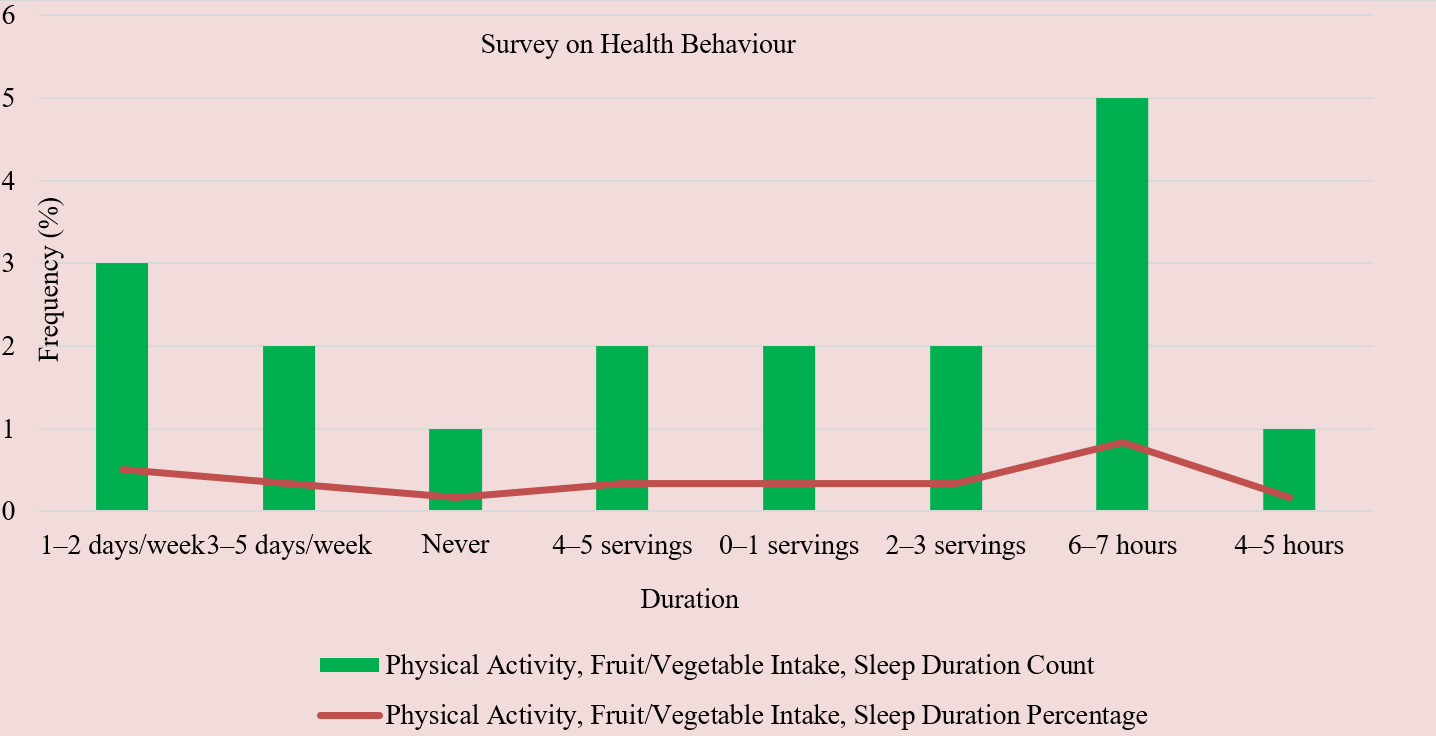
Physical activity data analysis revealed trends toward low engagement in regular exercise. Half of the participants (50%) reported engaging in physical activity only 1–2 days per week. An additional 33% reported 3–5 days of physical activity per week, suggesting some adherence to recommended guidelines. However, 17% of participants indicated no physical activity engagement, highlighting a critical area for behavioral intervention. These findings parallel national data indicating that insufficient physical activity remains a major public health challenge among adults in the United States [4,38] Table 2 Figure 1.
| Characteristic | Category | Frequency (%) |
|---|---|---|
| Gender | Female | 6 (100%) |
| Age Range | 18–33 years | 6 (100%) |
| Race/Ethnicity | White | 3 (50%) |
| Asian | 2 (33%) | |
| Black or African American | 1 (17%) | |
| Education Level | Graduate degree | 6 (100%) |
| Employment Status | Part-time | 4 (67%) |
| Full-time | 2 (33%) | |
| Health Insurance Coverage | Yes | 5 (83%) |
| No Response | 1 (17%) | |
| Marital/Family Structure | Single no children | 2 (33%) |
| Single with children | 1 (17%) | |
| Married with children | 1 (17%) | |
| Married no children | 1 (17%) | |
| Missing/Other | 1 (17%) |
Survey performance metrics were strong, with no missing data, average completion time under seven minutes, and no technical issues reported. Participants’ qualitative feedback indicated clear item comprehension and acceptable respondent burden.
Fruit and Vegetable Intake
Dietary behaviors related to fruit and vegetable consumption were notably inconsistent. Responses were evenly distributed across three intake categories: 33% of participants reported consuming 0–1 serving daily, another 33% reported 2–3 servings, and the remaining 33% reported 4–5 servings daily. No participants reported consuming six or more servings daily, despite public health recommendations encouraging at least five servings per day for chronic disease prevention. These findings mirror broader dietary trends in the United States, where inadequate fruit and vegetable intake remains a persistent challenge contributing to obesity risk [39].
Sleep Duration
Sleep patterns among participants were generally within the recommended range. Five of the six participants (83%) reported receiving 6–7 hours of sleep per night, while one participant (17%) reported only 4–5 hours of sleep per night. Although most participants achieved relatively sufficient sleep, the presence of even one individual reporting short sleep duration underscores the need to integrate sleep hygiene promotion into obesity prevention efforts [40].
Screen Time
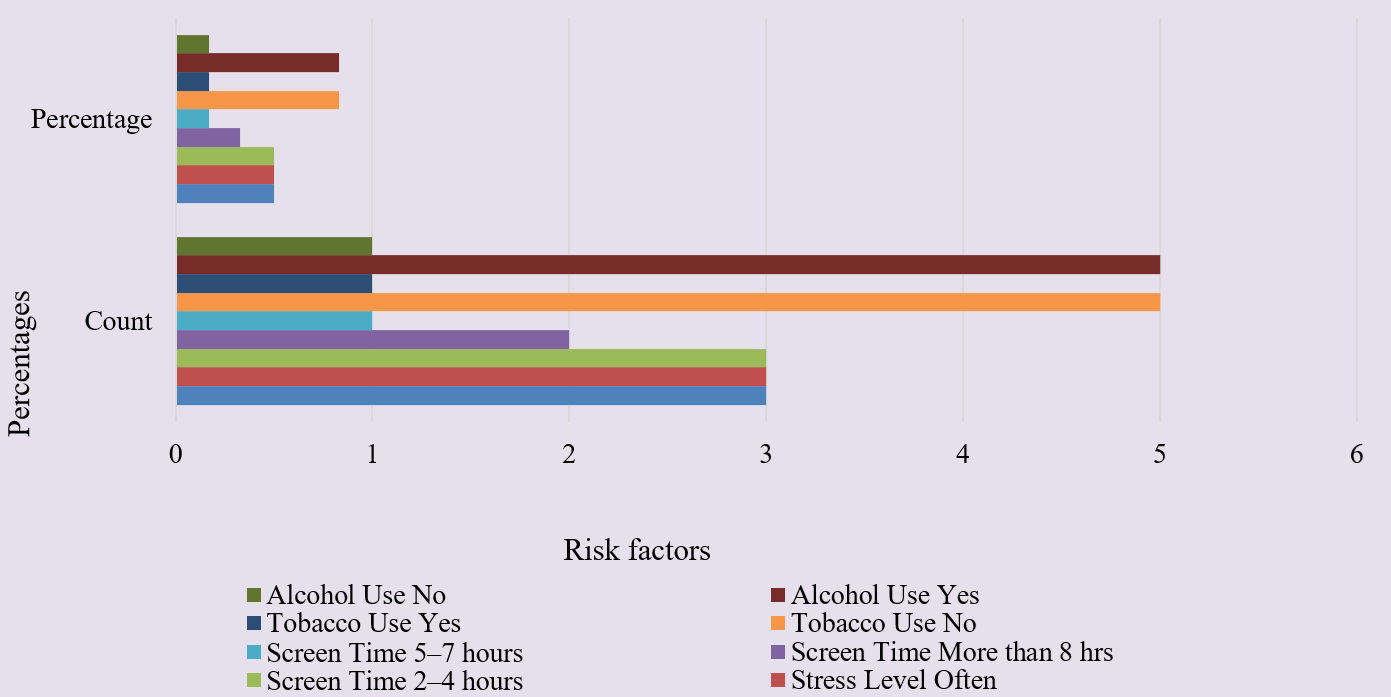
Excessive screen time emerged as a significant behavioral concern. Half of the sample (50%) reported spending 2–4 hours daily on digital devices, while an additional 33% reported more than 8 hours of screen time daily. Only 17% reported moderate screen exposure of 5–7 hours daily. Given the well-documented link between prolonged screen time, physical inactivity, disrupted sleep patterns, and increased obesity risk, this finding highlights a critical intervention target for behavioral modification [35].
| Behavior | Category | Frequency (%) |
|---|---|---|
| Physical Activity | 1–2 days/week | 3 (50%) |
| 3–5 days/week | 2 (33%) | |
| Never | 1 (17%) | |
| Fruit/Vegetable Intake | 0–1 servings/day | 2 (33%) |
| 2–3 servings/day | 2 (33%) | |
| 4–5 servings/day | 2 (33%) | |
| Sleep Duration | 6–7 hours | 5 (83%) |
| 4–5 hours | 1 (17%) | |
| Screen Time | 2–4 hours/day | 3 (50%) |
| 5–7 hours/day | 1 (17%) | |
| >8 hours/day | 2 (33%) | |
| Stress Level | Occasionally | 3 (50%) |
| Often | 3 (50%) | |
| Alcohol Use | Yes | 5 (83%) |
| No | 1 (17%) | |
| Tobacco Use | Yes | 1 (17%) |
| No | 5 (83%) |
Integrated Behavioral Patterns
Psychosocial and Behavioral Factors
Stress levels were substantial among participants. Exactly half (50%) reported feeling stressed "often," while the other half reported stress "occasionally." No participants reported feeling stress "rarely" or "never." Chronic stress is known to influence hormonal pathways, dietary behaviors, and physical activity patterns, contributing indirectly but powerfully to obesity risk [13] Figure 2.
Alcohol and Tobacco Use
Alcohol consumption was reported by 83% of participants, with most indicating moderate intake (1–2 drinks per session). Only one participant (17%) reported no alcohol use. Tobacco use was low, with only one participant (17%) reporting use of tobacco products within the past six months. While the rates of tobacco use were encouragingly low, the high prevalence of alcohol use suggests the importance of integrating alcohol-related behavioral counseling into obesity prevention programming where relevant [41]. Substance use behaviors, particularly alcohol consumption and tobacco use, have been associated in epidemiological studies with metabolic alterations and obesity risk, highlighting the need for their inclusion in holistic obesity risk assessments.
When examining integrated behavioral patterns, a concerning synergy among multiple risk factors became evident. Participants with lower physical activity levels also reported higher screen time and inconsistent fruit and vegetable intake. Those who reported feeling stressed "often" were also more likely to report inadequate sleep or greater use of digital devices late into the night. These interconnected behavioral profiles highlight the complex clustering of risk behaviors that may compound obesity risk if not addressed holistically.
Participants who consumed 0–1 serving of fruits and vegetables daily also frequently reported higher levels of screen time and occasional or frequent stress, suggesting potential dietary coping mechanisms reinforcing obesogenic patterns. Meanwhile, individuals who were physically active 3–5 days per week tended to report higher fruit and vegetable intake and moderate screen time, indicating some alignment with healthier lifestyle patterns [42].
Data Quality and Survey Performance
From a methodological standpoint, the pilot demonstrated strong survey functionality and data quality. All six participants completed the survey without skipping any items. Logic pathways functioned correctly in Microsoft Forms, ensuring only relevant questions were displayed based on previous responses. The average completion time was between five and seven minutes, meeting the design expectation for minimal participant burden. No discrepancies or contradictions were detected across related survey items, such as consistency between self-reported health behaviors and perceived stress levels. This internal coherence further validated the survey’s content structure and skipped logic programming. Overall, the pilot findings confirmed that the Adult Obesity Risk Assessment Questionnaire was both feasible and practically applicable for future larger-scale deployment.
Discussion
This pilot study represents an initial methodological step focused on evaluating the feasibility and clarity of a new behavioral lifestyle assessment tool. Findings are strictly preliminary and limited to feasibility insights, not comprehensive behavioral patterns or validated relationships with obesity outcomes. The findings from this pilot survey provide foundational insight into behavioral and lifestyle risk factors associated with adult obesity and demonstrate the potential value of the instrument for future field deployment. Although the sample size was small and purposively selected, the behavioral patterns observed—such as low physical activity levels, inconsistent dietary intake, high screen time, and self-reported stress—closely mirrored broader national and state-level trends, particularly those documented in Kentucky and similarly affected regions [4,23]. These parallels suggest that, even in a limited pilot setting, the instrument was able to capture meaningful and relevant risk behaviors. Furthermore, the high rate of item completion, logical consistency of responses, and positive user experience reinforced the survey tool’s usability, clarity, and interpretability. These outcomes collectively support its readiness for further refinement and scaled implementation across more diverse and representative populations. In doing so, the tool can serve as a practical, ethically grounded resource for identifying at-risk groups and informing the development of tailored community-based obesity prevention strategies.
One of the most striking patterns emerging from the pilot was the prevalence of sedentary behavior. Fifty percent of participants reported engaging in physical activity only 1–2 days per week, while another reported no physical activity at all. This aligns with long-standing evidence that inadequate physical activity is a key contributor to obesity and related chronic conditions[24]. Similarly, fruit and vegetable intake showed inconsistent trends, with one-third of respondents reporting as few as 0–1 serving per day. These findings echo concerns highlighted by the CDC and other national surveillance systems about dietary quality as a determinant of poor health outcomes [4]. Excessive consumption of sugar-sweetened beverages (SSBs) is strongly associated with increased obesity risk, as these drinks contribute significant added sugars and empty calories with minimal satiety, often leading to weight gain over time [43]. The metabolic effects of high sugar intake, including insulin resistance and elevated fat storage, further compound this risk[44]. Beyond physical health, individuals with obesity often experience psychosocial consequences such as low self-esteem, body dissatisfaction, and social stigma, which can contribute to mental health conditions like depression and anxiety [45]. This bidirectional relationship—where obesity can both lead to and be exacerbated by poor mental health—underscores the need for integrated approaches that address both nutritional behaviors and emotional well-being. Substance use, particularly alcohol and tobacco consumption, has been increasingly recognized as a contributing factor to adult obesity [46]. Alcohol introduces excess calories, alters appetite regulation, and is often associated with binge eating behaviors, while tobacco use can disrupt metabolic processes and promote weight cycling [47]. These behaviors are further complicated when combined with chronic stress or poor mental health, which may drive emotional eating and physical inactivity. Acknowledging the role of substance use in the development of obesity allows for a more comprehensive and realistic understanding of the behavioral patterns that shape health outcomes [48]. Its inclusion in this assessment tool supports a multidimensional approach to identifying modifiable risk factors within diverse populations.
High screen time was another notable outcome, with more than 80% of participants reporting over 2 hours per day and 33% exceeding 8 hours. Excessive screen time has been repeatedly linked with sedentary lifestyles, disrupted sleep, and metabolic dysfunction [49]. In this project, its measurement served as both a behavioral risk indicator and a window into how modern digital life may be shaping obesity trajectories. From a methodological perspective, the survey instrument performed reliably. Participants completed the tool within the intended timeframe (5–7 minutes), and no logic errors or technical issues were identified. The clarity of the questions, supported by the use of familiar response structures such as Likert scales and multiple-choice formats, allowed for smooth participant navigation. The high completion rate and consistency of data indicate strong face and content validity [50,37].
This pilot study revealed several critical behavioral gaps that, if unaddressed, may contribute to the onset and persistence of obesity among young adult populations [51]. Notably, half of the participants engaged in physical activity only 1–2 days per week, and one reported no activity. Dietary behaviors were equally fragmented, with no respondents meeting the recommended daily intake of fruits and vegetables, and one-third reported as few as 0–1 serving per day. Although sleep duration was relatively adequate, elevated stress levels and screen time exceeding 8 hours per day among several respondents suggest psychosocial strain and sedentary routines that may reinforce obesogenic behaviors [52]. These patterns, especially when clustered—highlight the importance of integrative, multi-domain interventions. Policymakers and public health stakeholders can play a pivotal role by supporting access to affordable, nutritious food, investing in safe and inclusive recreational infrastructure, and promoting workplace wellness programs that reduce digital overexposure and support stress reduction [53]. Additionally, the behavioral domains captured in this tool—screen time, stress, dietary habits, and physical activity—can inform targeted messaging in community health campaigns [54]. From a research perspective, this pilot identified the need for scalable, behaviorally inclusive instruments that not only measure individual risk factors but also detect patterns across interrelated domains [55]. Future applications of this tool in larger, more diverse samples can support the development of tailored strategies to mitigate modifiable risk factors early and equitably.
This pilot study’s survey development and administration process reinforced the centrality of ethical integrity in public health research. Even within an educational research context, deliberate attention was given to ensuring participant anonymity, transparency, and informed participation. Including a clear consent preamble, excluding personally identifiable data, and using neutrally worded items for sensitive topics such as substance use and stress were crucial in fostering trust and eliciting honest responses. These ethical safeguards aligned with institutional standards and enhanced the collected data’s validity and reliability. This experience underscores a key principle in behavioral epidemiology: ethical rigor is inseparable from data quality, particularly in community-based health assessments where respondent trust directly influences disclosure [56]. The findings from this pilot also highlight the importance of behavioral specificity in survey instrument design. Rather than relying on general or vague assessments, the tool employed clearly defined frequency-based response options (e.g., "1–2 days of physical activity per week," "2–3 servings of fruits and vegetables per day"). This approach improved the interpretability of responses and increased the potential for translating data into practical public health recommendations. In the context of obesity research—where behavioral patterns are highly variable—precise questioning identifies concrete intervention points. Generic or overly broad survey items risk diluting actionable insights and may fail to capture the behavioral nuances needed to inform targeted programs or policies [57].
Furthermore, the pilot reinforced the value of localizing public health tools to reflect target populations’ specific sociocultural and environmental conditions. In Kentucky, obesity prevalence is among the highest nationally, exacerbated by intersecting challenges such as rural geographic distribution, food insecurity, transportation barriers, and limited access to preventive care services [58]. Although the current sample consisted of graduate-level participants, future iterations of the instrument should be adapted to address diverse community contexts by incorporating items on community infrastructure, neighborhood safety, access to affordable healthy food, and transportation to health services. While descriptive statistics were suitable for the initial pilot phase, subsequent instrument deployments could benefit from inferential statistical analyses—including logistic regression and multivariable modeling—to identify predictors and correlates of obesity risk across demographic and behavioral strata. Such analyses would facilitate the development of evidence-informed, population-specific interventions that move beyond general health promotion toward precision public health.
Study Limitations
This pilot study has several important limitations that should be acknowledged when interpreting the findings. First, this study’s key limitation was its notably homogeneous and small sample, consisting exclusively of graduate-level female students aged 18-33. This does not reflect the demographic diversity or socioeconomic variation present in the general adult population, particularly within high-risk regions such as rural Kentucky. The absence of male participants, the narrow educational and age ranges, and the lack of socioeconomic and geographic diversity significantly constrain the generalizability of findings. Future research must prioritize recruiting larger, diverse samples across genders, educational backgrounds, socioeconomic statuses, and geographic locations to ensure broader applicability and validity of the instrument. Additionally, the cross-sectional design and self-reported nature of the data introduce the potential for recall bias, social desirability bias, and underreporting of sensitive behaviors such as tobacco or alcohol use. Because the study relied solely on descriptive statistics, no causal inferences can be drawn regarding the relationships between behavioral patterns and obesity risk. These limitations are typical of pilot studies but underscore the need for more extensive validation in future research.
Recommendations and Implications
Despite inherent limitations, this pilot study provides valuable insights that can inform future research, public health planning, and policy development. Future applications of the behavioral risk assessment tool should prioritize larger, demographically diverse samples that capture variation in age, race/ethnicity, gender, education, income, and geographic context, particularly extending to high-risk rural areas. Employing multivariate analyses will allow researchers to identify behavioral clusters that act synergistically to elevate obesity risk, enabling more targeted and efficient intervention strategies [2]. Public health experts and policymakers should recognize the interconnectedness of risk behaviors—such as the coupling of low physical activity, high screen time, dietary inconsistency, and elevated stress—and avoid isolated or siloed programmatic responses. Integrating concise, behaviorally specific surveys into community health assessments and surveillance systems can enhance local needs mapping and support more responsive public health initiatives. Strategic policy investments should focus on improving environmental supports for healthy living, such as expanding access to affordable fresh foods, creating safe and accessible recreational spaces, addressing digital overexposure, and increasing the availability of preventive healthcare services in underserved areas [51]. By bridging behavioral data collection with structural interventions, future efforts can move toward more equitable, systemic reductions in adult obesity prevalence. Future research directions must involve larger-scale evaluations with diverse demographic groups—including varied genders, ages, educational levels, and geographic locations—to rigorously test the tool’s psychometric properties, measurement invariance, and construct validity.
Conclusions
This pilot study successfully developed, implemented, and evaluated a 30-item behavioral risk assessment tool to identify lifestyle factors associated with adult obesity. Despite the intentionally limited sample of six graduate-level women, the instrument demonstrated strong feasibility, full response completion, and the ability to capture meaningful behavioral trends. Findings echoed national concerns around inconsistent dietary habits, low physical activity, prolonged screen exposure, and elevated stress levels among young adults. The study also highlighted the importance of ethical integrity, behavioral specificity, and practical usability in public health survey design. While preliminary, this work lays a foundation for future research involving larger, more diverse populations across gender, socioeconomic status, and geographic regions. Refinement and broader application of the instrument can support the development of targeted, community-centered interventions, especially in high-risk areas such as Kentucky. Ultimately, by translating behavioral science into practical tools, this study contributes to bridging the gap between research and real-world public health action in chronic disease prevention.
Conflicts of Interest
The authors declare no conflicts of interest related to this study.
Funding Source
This research did not receive any specific grant from funding agencies in the public, commercial, or not-for-profit sectors.
Acknowledgments
The authors would like to sincerely thank Dr. Nicholas Peiper, Assistant Professor of Epidemiology at the University of Louisville, KY, USA, for his valuable mentorship and guidance throughout the development of this project. The authors also thank Dr. Saifur Rahman from the Department of Clinical Neuroscience, University of Cambridge, England, for his thoughtful feedback and encouragement, which helped strengthen the final study.
Institutional Review Board (IRB)
This study received ethical approval from the University of Louisville Institutional Review Board (Protocol No. PHEP-6273264). All procedures followed appropriate ethical guidelines and informed electronic consent was obtained from all participants prior to data collection.
Large Language Model
The authors used Microsoft Copilot to improve language clarity and grammar while preparing this manuscript. The authors have reviewed and edited the content accordingly and are fully responsible for the final version of the manuscript.
Authors Contribution
MRH led the development of the study, including survey design, literature review, data collection, analysis, and manuscript drafting. AH supported the methodological planning and provided critical feedback during manuscript revisions. Both authors reviewed and approved the final version of the manuscript.
Data Availability
The data supporting the findings of this study are available from the corresponding author upon reasonable request. The survey data was collected anonymously and has been securely stored by ethical guidelines.
References
- Tiwari A., Balasundaram P.. Public health considerations regarding obesity 2021. StatPearls. 2025.
- Singh A., Hardin B. I., Singh D., Keyes D.. Epidemiologic and etiologic considerations of obesity 2022. StatPearls. 2025.
- World Health Organization. Obesity and Overweight. 2025.
- Emmerich Samuel D., Fryar Cheryl D., Stierman Bryan, Ogden Cynthia L.. Prevalence of Obesity and Severe Obesity Among Adults: United States, August 2021–August 2023. 2024. doi:10.15620/cdc/159281
- Hruby A., Hu F. B.. The Epidemiology of Obesity: A Big Picture. Pharmacoeconomics. 2015;33(7):673-89. doi:10.1007/s40273-014-0243-x PMID: 25471927 PMCID: PMC4859313
- Kruk M. E., Gage A. D., Arsenault C., Jordan K., Leslie H. H., Roder-DeWan S., Adeyi O., Barker P., Daelmans B., Doubova S. V., English M., Garcia-Elorrio E., Guanais F., Gureje O., Hirschhorn L. R., Jiang L., Kelley E., Lemango E. T., Liljestrand J., Malata A., Marchant T., Matsoso M. P., Meara J. G., Mohanan M., Ndiaye Y., Norheim O. F., Reddy K. S., Rowe A. K., Salomon J. A., Thapa G., Twum-Danso N. A. Y., Pate M.. High-quality health systems in the Sustainable Development Goals era: time for a revolution. Lancet Glob Health. 2018;6(11):e1196-e1252. doi:10.1016/S2214-109X(18)30386-3 PMID: 30196093 PMCID: PMC7734391
- Cizza G., Marincola P., Mattingly M., Williams L., Mitler M., Skarulis M., Csako G.. Treatment of obesity with extension of sleep duration: a randomized, prospective, controlled trial. Clin Trials. 2010;7(3):274-85. doi:10.1177/1740774510368298 PMID: 20423926 PMCID: PMC3120054
- Carpenter C. A., Eastman A., Ross K. M.. Consistency With and Disengagement From Self-monitoring of Weight, Dietary Intake, and Physical Activity in a Technology-Based Weight Loss Program: Exploratory Study. JMIR Form Res. 2022;6(2):e33603. doi:10.2196/33603 PMID: 35179513 PMCID: PMC8900900
- Cardarelli K., DeWitt E., Gillespie R., Norman-Burgdolf H., Jones N., Mullins J. T.. "We're, Like, the Most Unhealthy People in the Country": Using an Equity Lens to Reduce Barriers to Healthy Food Access in Rural Appalachia. Prev Chronic Dis. 2020;17:E165. doi:10.5888/pcd17.200340 PMID: 33357305 PMCID: PMC7784552
- Dreher M. L., Ford N. A.. A Comprehensive Critical Assessment of Increased Fruit and Vegetable Intake on Weight Loss in Women. Nutrients. 2020;12(7). doi:10.3390/nu12071919 PMID: 32610460 PMCID: PMC7399879
- Tekeci Y., Torpil B., Altuntas O.. The Impact of Screen Exposure on Screen Addiction and Sensory Processing in Typically Developing Children Aged 6-10 Years. Children (Basel). 2024;11(4). doi:10.3390/children11040464 PMID: 38671681 PMCID: PMC11049253
- Amauchi Juliana F., Gauthier Maeva, Ghezeljeh Abdolzaher, Giatti Leandro L., Keats Katlyn, Sholanke Dare, Zachari Danae, Gutberlet Jutta. The power of community-based participatory research: Ethical and effective ways of researching. Community Development. 2021;53(1):3-20. doi:10.1080/15575330.2021.1936102
- Bertakis K. D., Azari R.. The influence of obesity, alcohol abuse, and smoking on utilization of health care services. Fam Med. 2006;38(6):427-34. PMID: 16741842
- Esposito F., Sanmarchi F., Marini S., Masini A., Scrimaglia S., Adorno E., Solda G., Arrichiello F., Ferretti F., Rangone M., Celenza F., Guberti E., Tiso D., Toselli S., Lorenzini A., Dallolio L., Sacchetti R.. Weekday and Weekend Differences in Eating Habits, Physical Activity and Screen Time Behavior among a Sample of Primary School Children: The "Seven Days for My Health" Project. Int J Environ Res Public Health. 2022;19(7):4215. doi:10.3390/ijerph19074215 PMID: 35409899 PMCID: PMC8998659
- Swinburn B. A., Kraak V. I., Allender S., Atkins V. J., Baker P. I., Bogard J. R., Brinsden H., Calvillo A., De Schutter O., Devarajan R., Ezzati M., Friel S., Goenka S., Hammond R. A., Hastings G., Hawkes C., Herrero M., Hovmand P. S., Howden M., Jaacks L. M., Kapetanaki A. B., Kasman M., Kuhnlein H. V., Kumanyika S. K., Larijani B., Lobstein T., Long M. W., Matsudo V. K. R., Mills S. D. H., Morgan G., Morshed A., Nece P. M., Pan A., Patterson D. W., Sacks G., Shekar M., Simmons G. L., Smit W., Tootee A., Vandevijvere S., Waterlander W. E., Wolfenden L., Dietz W. H.. The Global Syndemic of Obesity, Undernutrition, and Climate Change: The Lancet Commission report. Lancet. 2019;393(10173):791-846. doi:10.1016/S0140-6736(18)32822-8 PMID: 30700377
- Agurs-Collins T., Alvidrez J., ElShourbagy Ferreira S., Evans M., Gibbs K., Kowtha B., Pratt C., Reedy J., Shams-White M., Brown A. G.. Perspective: Nutrition Health Disparities Framework: A Model to Advance Health Equity. Adv Nutr. 2024;15(4):100194. doi:10.1016/j.advnut.2024.100194 PMID: 38616067 PMCID: PMC11031378
- National Academies of Sciences, Engineering, and Medicine. Implementing strategies to enhance public health surveillance of physical activity in the United States. 2019. doi:10.17226/25444
- Boone-Heinonen J., Gordon-Larsen P., Adair L. S.. Obesogenic clusters: multidimensional adolescent obesity-related behaviors in the U.S. Ann Behav Med. 2008;36(3):217-30. doi:10.1007/s12160-008-9074-3 PMID: 19067096 PMCID: PMC2769258
- Hasan Md Rakibul, Rogers Whitney, Egbury Gerald, Akter Muna Moryom, Pendlebury Sarah. Exploring Major Mental Health Challenges and Social Stigma Faced by Healthcare Professionals in Clinics and Hospital Facilities in South Asia: A Comprehensive Content Analysis. International Journal of Advanced Multidisciplinary Research and Studies. 2025;5(1):274-284. doi:10.62225/2583049x.2025.5.1.3651
- Zierle-Ghosh A., Jan A.. Physiology, body mass index 2018. StatPearls. 2025.
- Hasan M. R., Mason K., Egbury G., Brown E. L., Rogers W., Harrison A., Muna M. A., Hassan S., Rahman S.. Exploring meta-cognitive resilience and psycho-social well-being among Bangladeshi university students during COVID-19: a mixed-methods primary study of adaptive cognitive strategies. Journal of Mental Health and Resilience. 2025.
- National Academies of Sciences, Engineering, and Medicine. Capturing social and behavioral domains and measures in electronic health records: phase 2. 2015.
- Jones A., Armstrong B., Weaver R. G., Parker H., von Klinggraeff L., Beets M. W.. Identifying effective intervention strategies to reduce children's screen time: a systematic review and meta-analysis. Int J Behav Nutr Phys Act. 2021;18(1):126. doi:10.1186/s12966-021-01189-6 PMID: 34530867 PMCID: PMC8447784
- Robinson T. N., Banda J. A., Hale L., Lu A. S., Fleming-Milici F., Calvert S. L., Wartella E.. Screen Media Exposure and Obesity in Children and Adolescents. Pediatrics. 2017;140(Suppl 2):S97-S101. doi:10.1542/peds.2016-1758K PMID: 29093041 PMCID: PMC5769928
- Almajwal Ali, Al-zahrani Saeed, Abulmeaty Mahmoud, Alam Iftikhar, Razzak Suhail, Alqahtani Aayed. Development of Food Frequency Questionnaire (FFQ) for the assessment of dietary intake among overweight and obese Saudi young children. Nutrire. 2018;43(1). doi:10.1186/s41110-018-0088-8
- Cheng X., Guo Q., Ju L., Gong W., Wei X., Xu X., Zhao L., Fang H.. Association between sedentary behavior, screen time and metabolic syndrome among Chinese children and adolescents. BMC Public Health. 2024;24(1):1715. doi:10.1186/s12889-024-19227-w PMID: 38937700 PMCID: PMC11210024
- Craig C. L., Marshall A. L., Sjostrom M., Bauman A. E., Booth M. L., Ainsworth B. E., Pratt M., Ekelund U., Yngve A., Sallis J. F., Oja P.. International physical activity questionnaire: 12-country reliability and validity. Med Sci Sports Exerc. 2003;35(8):1381-95. doi:10.1249/01.MSS.0000078924.61453.FB PMID: 12900694
- Valicente V. M., Peng C. H., Pacheco K. N., Lin L., Kielb E. I., Dawoodani E., Abdollahi A., Mattes R. D.. Ultraprocessed Foods and Obesity Risk: A Critical Review of Reported Mechanisms. Adv Nutr. 2023;14(4):718-738. doi:10.1016/j.advnut.2023.04.006 PMID: 37080461 PMCID: PMC10334162
- Barrera Jr., M., Castro F. G., Strycker L. A., Toobert D. J.. Cultural adaptations of behavioral health interventions: a progress report. J Consult Clin Psychol. 2013;81(2):196-205. doi:10.1037/a0027085 PMID: 22289132 PMCID: PMC3965302
- Armstrong A., Jungbluth Rodriguez K., Sabag A., Mavros Y., Parker H. M., Keating S. E., Johnson N. A.. Effect of aerobic exercise on waist circumference in adults with overweight or obesity: A systematic review and meta-analysis. Obes Rev. 2022;23(8):e13446. doi:10.1111/obr.13446 PMID: 35383401 PMCID: PMC9540641
- Medvedyuk Stella, Ali Ahmednur, Raphael Dennis. Ideology, obesity and the social determinants of health: a critical analysis of the obesity and health relationship. Critical Public Health. 2017;28(5):573-585. doi:10.1080/09581596.2017.1356910
- Smith J. D., St George S. M., Prado G.. Family-Centered Positive Behavior Support Interventions in Early Childhood To Prevent Obesity. Child Dev. 2017;88(2):427-435. doi:10.1111/cdev.12738 PMID: 28195411 PMCID: PMC5342923
- Wu Y., Li D., Vermund S. H.. Advantages and Limitations of the Body Mass Index (BMI) to Assess Adult Obesity. Int J Environ Res Public Health. 2024;21(6). doi:10.3390/ijerph21060757 PMID: 38929003 PMCID: PMC11204233
- Almajwal Ali, Al-zahrani Saeed, Abulmeaty Mahmoud, Alam Iftikhar, Razzak Suhail, Alqahtani Aayed. Development of Food Frequency Questionnaire (FFQ) for the assessment of dietary intake among overweight and obese Saudi young children. Nutrire. 2018;43(1):11. doi:10.1186/s41110-018-0088-8
- Mattes R. D., Rowe S. B., Ohlhorst S. D., Brown A. W., Hoffman D. J., Liska D. J., Feskens E. J. M., Dhillon J., Tucker K. L., Epstein L. H., Neufeld L. M., Kelley M., Fukagawa N. K., Sunde R. A., Zeisel S. H., Basile A. J., Borth L. E., Jackson E.. Valuing the Diversity of Research Methods to Advance Nutrition Science. Adv Nutr. 2022;13(4):1324-1393. doi:10.1093/advances/nmac043 PMID: 35802522 PMCID: PMC9340992
- Haghjoo P., Siri G., Soleimani E., Farhangi M. A., Alesaeidi S.. Screen time increases overweight and obesity risk among adolescents: a systematic review and dose-response meta-analysis. BMC Prim Care. 2022;23(1):161. doi:10.1186/s12875-022-01761-4 PMID: 35761176 PMCID: PMC9238177
- Norman-Burgdolf H., DeWitt E., Gillespie R., Cardarelli K. M., Slone S., Gustafson A.. Impact of community-driven interventions on dietary and physical activity outcomes among a cohort of adults in a rural Appalachian county in Eastern Kentucky, 2019-2022. Front Public Health. 2023;11:1142478. doi:10.3389/fpubh.2023.1142478 PMID: 37124781 PMCID: PMC10140309
- Koliaki C., Dalamaga M., Liatis S.. Update on the Obesity Epidemic: After the Sudden Rise, Is the Upward Trajectory Beginning to Flatten?. Curr Obes Rep. 2023;12(4):514-527. doi:10.1007/s13679-023-00527-y PMID: 37779155 PMCID: PMC10748771
- Kumanyika S. K.. Advancing Health Equity Efforts to Reduce Obesity: Changing the Course. Annu Rev Nutr. 2022;42:453-480. doi:10.1146/annurev-nutr-092021-050805 PMID: 35417194 PMCID: PMC9824466
- Tappy L.. Metabolism of sugars: A window to the regulation of glucose and lipid homeostasis by splanchnic organs. Clin Nutr. 2021;40(4):1691-1698. doi:10.1016/j.clnu.2020.12.022 PMID: 33413911
- GBD US Obesity Forecasting Collaborators. National-level and state-level prevalence of overweight and obesity among children, adolescents, and adults in the USA, 1990-2021, and forecasts up to 2050. Lancet. 2024;404(10469):2278-2298. doi:10.1016/S0140-6736(24)01548-4 PMID: 39551059 PMCID: PMC11694015
- Hasan Md Rakibul, Rony Samir Kumar Sarker. Exploring Parental Perspectives on Factors Influencing Sugar-Sweetened Beverage Consumption in Children Aged 8 to 14. Asian Journal of Public Health and Nursing. 2025;1(3). doi:10.62377/9h2t9407
- Hasan Md Rakibul. Mental Health Challenges in Bangladesh Based on the Integrated Examination of Illicit Drug Use, Substance Abuse, Tobacco Consumption, and Escalating Suicidal Tendencies: A Comprehensive Review. Bangladesh Journal of Infectious Diseases. 2024;11(1):65-70. doi:10.3329/bjid.v11i1.73795
- Vallis M.. Quality of life and psychological well-being in obesity management: improving the odds of success by managing distress. Int J Clin Pract. 2016;70(3):196-205. doi:10.1111/ijcp.12765 PMID: 26842304 PMCID: PMC5067635
- Wilborn C., Beckham J., Campbell B., Harvey T., Galbreath M., La Bounty P., Nassar E., Wismann J., Kreider R.. Obesity: prevalence, theories, medical consequences, management, and research directions. J Int Soc Sports Nutr. 2005;2(2):4-31. doi:10.1186/1550-2783-2-2-4 PMID: 18500955 PMCID: PMC2129146
- Barry D., Clarke M., Petry N. M.. Obesity and its relationship to addictions: is overeating a form of addictive behavior?. Am J Addict. 2009;18(6):439-51. doi:10.3109/10550490903205579 PMID: 19874165 PMCID: PMC2910406
- Schreiber L. R., Odlaug B. L., Grant J. E.. The overlap between binge eating disorder and substance use disorders: Diagnosis and neurobiology. J Behav Addict. 2013;2(4):191-8. doi:10.1556/JBA.2.2013.015 PMID: 25215200 PMCID: PMC4154572
- Linke S. E., Ussher M.. Exercise-based treatments for substance use disorders: evidence, theory, and practicality. Am J Drug Alcohol Abuse. 2015;41(1):7-15. doi:10.3109/00952990.2014.976708 PMID: 25397661 PMCID: PMC4831948
- DeVellis R. F., Thorpe C. T.. Scale development: theory and applications. 2021.
- Haldane V., Chuah F. L. H., Srivastava A., Singh S. R., Koh G. C. H., Seng C. K., Legido-Quigley H.. Community participation in health services development, implementation, and evaluation: A systematic review of empowerment, health, community, and process outcomes. PLoS One. 2019;14(5):e0216112. doi:10.1371/journal.pone.0216112 PMID: 31075120 PMCID: PMC6510456
- Baciu A., Negussie Y., Geller A., Weinstein J. N.. Communities in action: pathways to health equity. 2017. doi:10.17226/24624
- Washington T. B., Johnson V. R., Kendrick K., Ibrahim A. A., Tu L., Sun K., Stanford F. C.. Disparities in Access and Quality of Obesity Care. Gastroenterol Clin North Am. 2023;52(2):429-441. doi:10.1016/j.gtc.2023.02.003 PMID: 37197884 PMCID: PMC10198472
- Segal Y., Gunturu S.. Psychological Issues Associated With Obesity. StatPearls. 2025. PMID: 38753901
- Hasan Md Rakibul, Rony Samir Kumar Sarker, Muna Moryom Akter, Hassan Sajid. A Descriptive Study on Childhood Obesity: Examining Research Gaps, Evaluating Interventions, and Informing Policy for Sustainable Health Outcomes. Asian Journal of Public Health and Nursing. 2025;2(1). doi:10.62377/ttgnvb55
- Apovian C. M., Istfan N. W.. Ethnic and Racial Disparities in the Behavioral, Pharmacologic, and Surgical Treatment of Obesity. Endocr Pract. 2016;22(11):1347-1349. doi:10.4158/EP161531.CO PMID: 27631851
- Fowler Jr., F. J.. Survey research methods. 2013.
- Rosin M., Mackay S., Gerritsen S., Te Morenga L., Terry G., Ni Mhurchu C.. Barriers and facilitators to implementation of healthy food and drink policies in public sector workplaces: a systematic literature review. Nutr Rev. 2024;82(4):503-535. doi:10.1093/nutrit/nuad062 PMID: 37335857 PMCID: PMC10925903
- Rezaei M., Ghadamgahi F., Jayedi A., Arzhang P., Yekaninejad M. S., Azadbakht L.. The association between food insecurity and obesity, a body shape index and body roundness index among US adults. Sci Rep. 2024;14(1):23631. doi:10.1038/s41598-024-74108-x PMID: 39384863 PMCID: PMC11464524