Improving Adherence to Venous Thromboembolism Prophylaxis Guidelines in Medical Inpatients: A Single-center, Prospective, Closed-loop Clinical Audit in a Medical Department
Fahad Naim1, Suleman KhanⒾ1, Muhammad SaqibⒾ1*, Shabnam ShahjehanⒾ1, Farwa Aftab1, Muhammad Adeel Khan1, Nisar Ahmad1, Adam SaeedⒾ1, Khaqan Ahmed1
- 1Department of Medicine, MTI-Khyber Teaching Hospital, Peshawar, Pakistan
Abstract
Background: Venous thromboembolism (VTE) is a major cause of preventable morbidity and mortality in hospitalized patients. Evidence-based guidelines recommend systematic risk assessment and appropriate prophylaxis; however, adherence in routine clinical practice remains inconsistent.
Methods: A prospective, closed-loop clinical audit was conducted in the Department of Medicine at Khyber Teaching Hospital. Adherence to the National Institute for Health and Care Excellence guideline NG89 for VTE prevention was evaluated through a baseline point-prevalence audit of 237 adult medical inpatients. This was followed by a targeted educational intervention consisting of structured teaching sessions for interns and residents. A re-audit of 237 patients using identical inclusion criteria and data collection methods was conducted four weeks after the intervention.
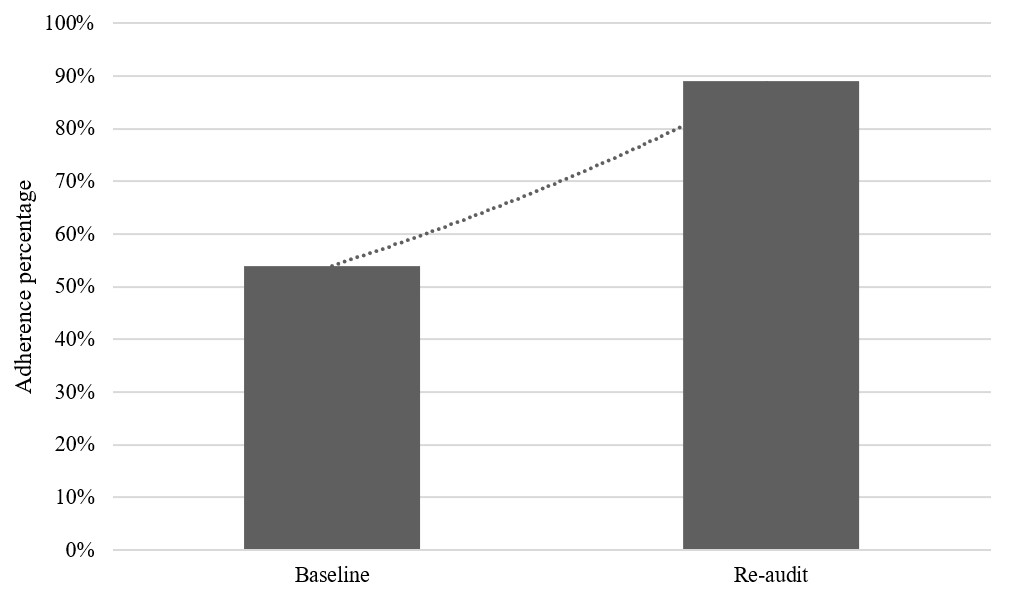
Results: Baseline adherence to NICE NG89 recommendations was 54% (128/237). Following the educational intervention, adherence increased to 89% (211/237), representing an absolute improvement of 35 percentage points.
Conclusion: A focused educational intervention was associated with improved adherence to NICE NG89 VTE prophylaxis recommendations during the re-audit period. These findings suggest that structured educational strategies may improve guideline-based practice in resource-limited settings. However, the short follow-up period and pre–post design without a control group introduced the possibility of Hawthorne and secular effects, and longer-term sustainability was not assessed.
Keywords: Venous thromboembolism prophylaxis, NICE NG89 guideline adherence, Quality improvement, Provider education, Clinical audit
Article information
Introduction
Venous thromboembolism (VTE), encompassing deep vein thrombosis and pulmonary embolism, is a leading cause of preventable morbidity and mortality among hospitalized patients [1]. Hospital-acquired VTE contributes substantially to the healthcare burden worldwide and is associated with prolonged hospital stay, increased treatment costs, and significant mortality [2,3,4]. Medical inpatients are particularly vulnerable due to factors such as reduced mobility, acute inflammatory illness, infection, heart failure, and multiple comorbidities [5].
The National Institute for Health and Care Excellence (NICE) guideline NG89 provides evidence-based recommendations for preventing hospital-acquired VTE in adults. The guideline recommends that all patients aged 16 years and older admitted to hospital should undergo documented VTE risk assessment, followed by appropriate pharmacological or mechanical prophylaxis where indicated, unless contraindications are present [6]. Despite the availability of such guidelines, studies from multiple healthcare systems have demonstrated persistent gaps between recommended practice and real-world clinical implementation [7,8,9].
In many low- and middle-income healthcare settings, several structural barriers may limit consistent implementation of guidelines. These include reliance on paper-based documentation systems, absence of electronic clinical decision support tools, heavy clinical workloads, and variable awareness of guideline-based risk assessment among junior physicians responsible for admission documentation [10,11,12]. In our institution, prescribing decisions regarding VTE prophylaxis were primarily dependent on individual clinician judgment, with no standardized risk-assessment checklist or routine audit mechanism in place.
Quality improvement methodologies, including closed-loop clinical audit and targeted educational interventions, have been increasingly utilized to bridge this implementation gap. However, most published interventions rely on electronic decision support systems or complex institutional policies, which may not be feasible in resource-limited settings. Therefore, this study aimed to evaluate whether a simple, education-based quality improvement intervention could improve adherence to NICE NG89 VTE prophylaxis recommendations among medical inpatients at a tertiary care hospital.
Methods
This study was designed as a prospective, closed-loop clinical audit, reported in accordance with SQUIRE 2.0 guidelines [13]. The project consisted of a baseline audit of current practice, implementation of a targeted educational intervention, and a re-audit using the same methodology to assess changes in adherence.
Setting
The project was conducted in the Department of Medicine at Khyber Teaching Hospital, a tertiary-care teaching hospital that provides inpatient medical services for a large regional population. The Medicine and Allied Departments admit more than 150,000 patients on an annual basis [14].
Study Population and Sampling
Data were collected using a point-prevalence sampling approach. All adult medical inpatients present in the medical wards at the time of each audit cycle were eligible for inclusion. Patients aged under 18 years were excluded. Each patient was counted once per audit cycle, and repeat admissions were not counted multiple times within the same audit period.
Both the baseline audit and the re-audit included 237 inpatients, ensuring comparable sample sizes between the two assessment periods.
Standard of Care
Adherence was assessed according to recommendations from NICE guideline NG89 (2018), which requires:
Appropriate prophylaxis was implemented in accordance with the NICE guideline NG89 recommendations. Pharmacological prophylaxis was considered appropriate if eligible at-risk patients received low-molecular-weight heparin (LMWH), specifically enoxaparin 40 mg subcutaneously once daily, initiated within 24 hours of admission. Dose adjustment to 20 mg once daily was considered appropriate in patients with significant renal impairment (estimated glomerular filtration rate <30 mL/min/1.73 m²). Unfractionated heparin (5000 units subcutaneously two or three times daily) was accepted as an alternative where LMWH was contraindicated or unavailable.
Mechanical prophylaxis was considered appropriate in patients with contraindications to pharmacological prophylaxis and included the use of graduated compression stockings or intermittent pneumatic compression devices where available.
Withholding pharmacological prophylaxis was considered appropriate if a valid contraindication was documented, including active bleeding, severe thrombocytopenia, recent hemorrhagic stroke, or clinically significant coagulopathy.
Timing was defined as initiation of prophylaxis within 24 hours of hospital admission.
In patients assessed as low risk for VTE according to NICE NG89, omission of prophylaxis was considered appropriate provided that risk assessment was documented.
Due to limitations in documentation and resource availability, weight-based dose adjustments and obesity-specific dosing were not consistently assessable and were therefore not included in adherence classification.
Data Collection
Data were collected for the entire month of January, 2026, through a retrospective review of patient medical records using a standardized paper-based audit pro forma developed for this quality improvement project. The proforma was designed to align with NICE NG89 recommendations and was piloted on a small sample of records to ensure clarity and consistency.
The audit tool captured:
Data were abstracted from medical records by members of the quality improvement team who were not involved in delivering the educational intervention. Although the same abstraction methodology was used in both audit cycles, blinding of abstractors to cycle status was not feasible in this quality improvement setting. Data abstraction was performed using a standardized, pre-piloted VTE prophylaxis audit proforma accompanied by a predefined data dictionary to ensure consistent interpretation of all variables. All data collectors were members of the quality improvement team (medical residents) and underwent a brief training session prior to data collection, during which the audit tool, NICE NG89 criteria, and adherence definitions were reviewed using sample case scenarios. To enhance consistency, an initial subset of patient records (approximately 10%) was independently reviewed by two abstractors, and discrepancies were discussed and resolved by consensus, resulting in minor clarifications to the data dictionary. Following this calibration step, the remaining records were abstracted by single reviewers. Formal inter-rater reliability statistics were not calculated, which is acknowledged as a limitation.
Outcome Definition
The primary outcome measure was guideline-adherent VTE prophylaxis management. Patients were classified as adherent if one of the following conditions was met:
Intervention
Following the baseline audit, a targeted educational intervention was implemented in February 2026. The intervention consisted of three educational sessions, each lasting approximately one hour, delivered to interns and resident physicians responsible for admission documentation and prescribing decisions.
The sessions included:
Printed summaries of the guideline were also distributed to clinical teams to facilitate reference during routine clinical practice. The educational sessions were delivered by senior members of the quality improvement team, including senior medical residents with experience in VTE prophylaxis and guideline implementation. A total of three one-hour interactive sessions were conducted over two weeks, aligned with the department’s routine teaching schedule to maximize attendance. The sessions targeted interns and residents, who are the primary prescribers in the medical wards. Attendance was recorded informally, and it was estimated that approximately 70 – 80% of interns and residents rotating through the department during the study period attended at least one session. Educational materials, including simplified NICE NG89 summaries, were also shared in print and via ward-based communication channels to reinforce learning among those unable to attend.
Re-audit
Following completion of the educational intervention, a re-audit was conducted using the same point-prevalence sampling method, inclusion criteria, and data collection tools as the baseline audit towards the end of February 2026. Following review of re-audit findings, the educational materials were retained for ongoing use and informal reinforcement within the department; however, no additional structured intervention cycle was implemented during the study period.
Data Analysis
Results were analyzed descriptively. Adherence proportions were calculated for both audit cycles, and 95% confidence intervals were estimated for key proportions to provide additional context for the observed changes.
Results
Baseline and re-audit patient characteristics were broadly comparable across key demographic and clinical variables, as shown in Table 1. There were no major differences in age distribution, sex, ward allocation, or prevalence of common VTE risk factors, suggesting that the observed improvement in adherence was unlikely to be explained by differences in case mix between the two audit periods.
| Characteristic | Baseline Audit (n=237) | Re-audit (n=237) |
|---|---|---|
| Mean age (years) | 56.8 ± 17.2 | 55.9 ± 16.8 |
| Male sex, n (%) | 134 (56.5%) | 129 (54.4%) |
| Female sex, n (%) | 103 (43.5%) | 108 (45.6%) |
| General medical wards, n (%) | 237 (100%) | 237 (100%) |
| Reduced mobility, n (%) | 148 (62.4%) | 152 (64.1%) |
| Active infection/inflammation, n (%) | 121 (51.1%) | 118 (49.8%) |
| Heart or respiratory failure, n (%) | 72 (30.4%) | 69 (29.1%) |
| Malignancy, n (%) | 38 (16.0%) | 41 (17.3%) |
| Previous VTE, n (%) | 19 (8.0%) | 17 (7.2%) |
VTE, venous thromboembolism.
Baseline Audit
A total of 237 adult medical inpatients were included in the baseline audit. Of these, 128 patients (54%; 95% CI: 48 – 60%) met NICE NG89 criteria for guideline-adherent VTE prophylaxis management. The remaining 109 patients (46%) were classified as non-adherent due to the absence of documented risk assessment, failure to prescribe indicated prophylaxis, or incomplete documentation of contraindications, as shown in Table 2
| Measure | Number (%) |
|---|---|
| Guideline-adherent management | 128 (54%) |
| Non-adherent management | 109 (46%) |
n, number.
| Measure | Number (%) |
|---|---|
| Guideline-adherent management | 211 (89%) |
| Non-adherent management | 26 (11%) |
n, number.
Post-Intervention Re-audit
Following the educational intervention, a re-audit was conducted, including 237 adult medical inpatients. Of these, 211 patients (89%; 95% CI: 85 – 93%) met the criteria for guideline-adherent VTE prophylaxis management. Non-adherence was observed in 26 patients (11%) as shown in Table 3.
Overall, adherence improved from 54% to 89%, representing an absolute increase of 35 percentage points as shown in Figure 1.
To better understand the drivers of improvement, the composite adherence outcome was disaggregated into its key components Table 4. Documentation of VTE risk assessment improved substantially from 59.9% at baseline to 92.0% on re-audit. Similarly, appropriate prescribing of prophylaxis in eligible patients increased from 55.3% to 86.5%. Documentation of contraindications and correct identification of low-risk patients also showed marked improvement. These findings suggest that the observed increase in overall adherence was driven by improvements across multiple steps in the clinical decision-making and documentation process rather than a single component.
| Component | Baseline (n=237) | Re-audit (n=237) |
|---|---|---|
| VTE risk assessment documented | 142 (59.9%) | 218 (92.0%) |
| Appropriate prophylaxis prescribed (when indicated) | 131 (55.3%) | 205 (86.5%) |
| Contraindications appropriately documented | 36/58 (62.1%) | 49/54 (90.7%) |
| Low-risk patients were not given prophylaxis | 21/37 (56.8%) | 30/34 (88.2%) |
VTE, venous thromboembolism; n, number.
Discussion
This quality improvement project demonstrated a substantial increase in adherence to NICE NG89 VTE prophylaxis recommendations following a targeted educational intervention. The observed improvement from 54% to 89% suggests that relatively simple educational strategies may influence clinician behavior and documentation practices within a short time frame.
Similar initiatives have reported improvements in VTE prophylaxis adherence following educational, audit-feedback, or informatics-based interventions [7,8,9]. However, many previously reported programs relied heavily on electronic decision-support systems and automated alerts embedded within electronic health records. Such infrastructure may not be available in many healthcare institutions in low- and middle-income countries. Our findings suggest that even in the absence of advanced informatics tools, education-focused interventions can lead to meaningful improvements in adherence to guideline-based practice.
The feasibility and scalability of this intervention should also be considered in the context of resource limitations typical of similar healthcare settings. In addition to reliance on paper-based documentation, the implementation of guideline-adherent VTE prophylaxis may be influenced by the availability and consistent supply of pharmacological agents, such as low-molecular-weight heparin, as well as access to mechanical prophylaxis devices, including graduated compression stockings or intermittent pneumatic compression devices. Workflow-related factors, such as high patient turnover, time constraints during admission clerking, and variability in clinical staffing, may further impact the consistent application of risk assessment and prescribing practices. While the educational intervention used in this study was low-cost and easily implementable within existing teaching structures, its scalability beyond a single department may require integration with institutional policies, periodic reinforcement, and alignment with pharmacy and nursing workflows to ensure sustained adherence.
Nevertheless, several alternative explanations for the observed improvement should be considered. The presence of an ongoing audit process may have introduced a Hawthorne effect, whereby clinicians modified their behavior due to awareness of being observed. Additionally, changes in staffing patterns or clinical rotations during the study period could have contributed to variation in prescribing behavior. Because the study design did not include a control group, these factors cannot be excluded.
This study is subject to potential ascertainment bias because blinding of data abstractors was not feasible, and although the audit team was separate from those delivering the educational sessions, awareness of the intervention period may still have influenced outcome classification. Another important consideration is that the study assessed process measures rather than patient outcomes. Although improved guideline adherence is generally associated with better patient safety, this project did not measure the incidence of hospital-acquired VTE, bleeding complications, or inappropriate prophylaxis in low-risk patients. This study did not include formal balancing measures, such as rates of bleeding complications, inappropriate prophylaxis in low-risk patients, or missed contraindications. As a result, while adherence to guideline-recommended prophylaxis improved, the potential for unintended consequences, such as overtreatment or harm, could not be evaluated. Future studies should incorporate balancing and patient outcome measures to ensure that improvements in process metrics do not adversely affect patient safety.
Despite these limitations, the study provides useful insights into practical strategies to improve guideline adherence in resource-limited settings. Educational interventions targeting junior clinicians responsible for admission documentation may represent an accessible first step toward improving implementation of evidence-based VTE prevention strategies.
Conclusion
This single-center quality improvement project demonstrated that a targeted educational intervention was associated with improved adherence to NICE NG89 VTE prophylaxis recommendations during the re-audit period in a medical department. While these findings suggest that education-based strategies may improve guideline implementation in resource-limited settings, further quality improvement cycles and longer-term monitoring are required to evaluate sustainability and potential effects on patient outcomes.
Conflicts of Interest
The authors declare that they have no conflicts of interest relevant to this study.
Funding Source
This research received no external funding.
Acknowledgments
The authors would like to thank the medical staff of the Department of Medicine at Khyber Teaching Hospital for their participation in the educational sessions and for their cooperation during the audit and re-audit process.
Institutional Review Board (IRB)
This project was conducted as a quality improvement audit to evaluate and improve adherence to established clinical guidelines within the Department of Medicine at Khyber Teaching Hospital. This study was reviewed and approved at the departmental level in accordance with local institutional quality improvement governance procedures. As the project involved retrospective review of anonymized patient records and no direct patient contact or intervention, formal Institutional Review Board approval was not required. All data were handled in a de-identified format, and no patient-identifiable information was collected, stored, or used during data abstraction or analysis. Confidentiality was maintained throughout the study by restricting data access to members of the quality improvement team only.
Large Language Model
The authors used a large language model (ChatGPT, OpenAI) to assist with language editing and manuscript organization. All scientific content, data interpretation, and final manuscript revisions were reviewed and approved by the authors.
Authors Contribution
Conceptualization MS, methodology MS and SK, data collection SS, FA, MS, MA K and SK, data analysis MS, writing original draft preparation MS and SK, writing review and editing all authors. All authors have read and approved the final manuscript.
Data Availability
The data supporting the findings of this quality improvement audit were derived from de-identified patient record abstractions collected at Khyber Teaching Hospital. Because these data originate from local institutional clinical records and were used under institutional quality improvement governance, they are not publicly available. De-identified summary data may be made available from the corresponding author on reasonable request, subject to institutional approval and applicable confidentiality requirements.
References
- Alfehaid L., Alsuhebany N., Tawfik Y. M. K., Alowais S. A., Adnan S., Alfriah J., Alabdelmuhsin L., Alshehri A. M., Alyami M.. A comprehensive review of venous thromboembolism risk assessment models for hospitalized medical patients: comparative evidence, implementation challenges, and future directions. Front Cardiovasc Med. 2025;12:1738139. doi:10.3389/fcvm.2025.1738139 PMID: 41602342 PMCID: PMC12833051
- Nana M., Shute C., Williams R., Kokwaro F., Riddick K., Lane H.. Multidisciplinary, patient-centred approach to improving compliance with venous thromboembolism (VTE) prophylaxis in a district general hospital. BMJ Open Qual. 2020;9(3). doi:10.1136/bmjoq-2019-000680 PMID: 32718914 PMCID: PMC7371024
- Narayan S. W., Gad F., Chong J., Chen V. M., Patanwala A. E.. Preventability of venous thromboembolism in hospitalised patients. Intern Med J. 2023;53(4):577-583. doi:10.1111/imj.15600 PMID: 34719859
- Yamamoto Y., Ogawa M., Okamoto T., Tsuboi M., Momosaki R.. Acute-Phase Interventions and Clinical Implementation Challenges for Hospital-Associated Sarcopenia: A Narrative Review of a Multifaceted Approach to a Preventable Condition. Geriatr Gerontol Int. 2026;26(1):e70330. doi:10.1111/ggi.70330 PMID: 41566894 PMCID: PMC12824560
- Smythe M. A., Koerber J. M., Roberts A., Hoffman J. L., Batke J.. Hospital Acquired Venous Thromboembolism: A Preventability Assessment. Hosp Pharm. 2024;59(2):183-187. doi:10.1177/00185787231198164 PMID: 38450351 PMCID: PMC10913888
- National Institute for Health and Care Excellence. Venous thromboembolism in over 16s: Reducing the risk of hospital-acquired deep vein thrombosis or pulmonary embolism | guidance | NICE. 2018.
- Abdujawad Aimn W., Al Raizah Abdulrahman, Al Saleh Abdullah S., Al Zahrani Mohsen, Hejazi Ayman, Alotaibi Saad, Alkatheri Mufareh edhah, Alaskar Ahmed. A quality improvement project to optimize VTE prophylaxis in surgical patients. Blood. 2025;146(Supplement 1):2617-2617. doi:10.1182/blood-2025-2617
- Abuzied Y., Deeb A., AlAnizy L., Al-Amer R., AlSheef M.. Improving Venous Thromboembolism Prophylaxis Through Service Integration, Policy Enhancement, and Health Informatics. Glob J Qual Saf Healthc. 2024;7(1):22-27. doi:10.36401/JQSH-23-16 PMID: 38406656 PMCID: PMC10887485
- Taha H., Govindraj E., Jaber F., Shehadeh G., Kelly B., Krishnan S., Hamed W. K.. Improving venous thromboembolism prophylaxis through critical thinking and health informatics. BMJ Open Qual. 2020;9(2). doi:10.1136/bmjoq-2019-000885 PMID: 32487571 PMCID: PMC7269548
- Ghobadi M., Behzadi A., Sabermahani A.. The Outcomes, Barriers, and Facilitators of Implementing Clinical Practice Guidelines in Iran: A Comprehensive Review. Iran J Public Health. 2024;53(2):323-334. doi:10.18502/ijph.v53i2.14917 PMID: 38894831 PMCID: PMC11182465
- Odhus C. O., Kapanga R. R., Oele E.. Barriers to and enablers of quality improvement in primary health care in low- and middle-income countries: A systematic review. PLOS Glob Public Health. 2024;4(1):e0002756. doi:10.1371/journal.pgph.0002756 PMID: 38236832 PMCID: PMC10796071
- Stokes T., Shaw E. J., Camosso-Stefinovic J., Imamura M., Kanguru L., Hussein J.. Barriers and enablers to guideline implementation strategies to improve obstetric care practice in low- and middle-income countries: a systematic review of qualitative evidence. Implement Sci. 2016;11(1):144. doi:10.1186/s13012-016-0508-1 PMID: 27770807 PMCID: PMC5075167
- Ogrinc G., Davies L., Goodman D., Batalden P., Davidoff F., Stevens D.. SQUIRE 2.0 (Standards for QUality Improvement Reporting Excellence): revised publication guidelines from a detailed consensus process. BMJ Qual Saf. 2016;25(12):986-992. doi:10.1136/bmjqs-2015-004411 PMID: 26369893 PMCID: PMC5256233
- Haroon M. Z., Thaver I. H.. An assessment of existing surge capacity of tertiary healthcare system of Khyber Pakhtunkhwa Province of Pakistan using workload indicators for staffing need method. Hum Resour Health. 2022;19(Suppl 1):120. doi:10.1186/s12960-021-00663-3 PMID: 35090470 PMCID: PMC8796324