Robotic Versus Laparoscopic Hysterectomy for Extremely Large Uteri: A Systematic Review
Arwa Mohamed Amer IbrahimⒾ1, Mohamed WagdyⒾ2*, Fathia Ghaleb Rabah ElatrashⒾ3, Hana SmedaⒾ4, Asem Mohammad Abedalqader Qannas5
- 1College of Medicine, University of Sharjah, Sharjah, United Arab Emirates
- 2Faculty of Medicine, Modern University for Technology and Information, Cairo, Egypt
- 3Faculty of Medicine, Alexandria University, Alexandria, Egypt
- 4Department of Pharmacology and Toxicology, Faculty of Pharmacy, University of Zawia, Zawia, Libya
- 5College of Medicine, New Vision University, Tbilisi, Georgia
Abstract
Introduction: Hysterectomy for very large uteri is technically challenging and often requires open surgery. Minimally invasive approaches, such as robotic and laparoscopic techniques, provide alternatives, but their comparative safety and effectiveness for extremely large uteri remain uncertain.
Methods: A systematic review was conducted following PRISMA 2020 guidelines. “PubMed and Scopus were searched through June 2025 using predefined keywords (e.g., ‘hysterectomy,’ ‘robotic,’ ‘robot-assisted,’ ‘laparoscopic,’ ‘uterus,’ ‘large,’ ‘enlarged,’ ‘size,’ ‘weight’); no prospective or randomized trials were identified.” for studies comparing robotic and laparoscopic hysterectomy in women with large or extremely large uteri.
Results: Robotic hysterectomy (RH) showed advantages in selected outcomes for extremely large uteri. One study reported a 70-minute reduction in operative time with RH for uteri >1000 g. RH was also associated with lower conversion rates (0–4.3%) compared to laparoscopic hysterectomy (LH) (5.3–10.9%). In moderately large uteri ( 500–750 g), RH reduced hemoglobin drops but had longer operative times. Complication rates were generally low, although ureteral injury was more frequent with RH in two studies. Length of hospital stay was similar across approaches.
Conclusion: Robotic hysterectomy may offer clinical and economic advantages over conventional laparoscopy for extremely large uteri but the impact of surgical experience should be carefully considered. Limitations include the retrospective design of all four cohorts, small sample sizes, the absence of randomized trials, and clinical and methodological heterogeneity precluding meta-analysis.
Keywords: Robotic hysterectomy, Laparoscopic hysterectomy, Large uterus, Minimally invasive surgery, Gynecologic surgery
Article information
Introduction
Uterine fibroids are the most common benign gynecologic tumors, [1] with ultrasound-based lifetime prevalence approaching 70% in White women and over 80% in women of African descent by age 50, underscoring marked racial disparities in burden and presentation[2,1,3]. Globally, the age-standardized incidence varies widely by region—from approximately 85.6 per 100,000 in Australasia to 582.0 per 100,000 in Eastern Europe—highlighting substantial geographic heterogeneity and public health impact. Although many fibroids are asymptomatic, an estimated 25–30% of affected women experience clinically significant symptoms such as abnormal uterine bleeding, pelvic pain/pressure, urinary frequency, and fertility issues, driving care seeking and resource use [2,4].
About 30% of women with uterine fibroids develop clinically significant symptoms, including abnormal uterine bleeding, pelvic pain and pressure, urinary frequency, anemia, and fertility issues, which drive most care seeking and procedures. In the United States, fibroids impose a substantial annual societal cost, which includes direct medical spending and significant productivity losses. Estimates for 2010 range from approximately $ 6 to $ 34 billion, with updated analyses suggesting increases to around $ 41–42 billion by 2022–2023 [5]. Large uterine fibroids have historically presented considerable surgical challenges. Because of the technical difficulties given by the uterine size and distorted anatomy, conventional methods frequently require an open abdominal hysterectomy [6]. Large fibroids, especially those weighing more than 1000g, provide special surgical challenges because of their restricted pelvic area, elevated vascularity, and anatomical distortion that makes it difficult to see and reach vital organs like the ureters and main blood vessels. Even with these technical advancements, it is still uncertain whether a minimally invasive procedure is best for larger or extremely big uteri: robotic vs conventional laparoscopic hysterectomy.[4]. Hysterectomy is one of the most commonly performed gynecological procedures worldwide, yet optimal surgical approaches continue to evolve in response to patient needs, technological advancements, and clinical outcomes [5]. Regarding operating time, blood loss, conversion rates, complications, and costs, prior research has produced conflicting findings. While some have suggested that robotic surgery may be advantageous in complex cases, others have pointed out that it is more expensive or yields results comparable to those of laparoscopy.
There is limited high-quality evidence comparing long-term outcomes of robotic-assisted hysterectomy versus conventional laparoscopic hysterectomy, particularly in complex or high-risk patient populations. Decision-making in the presence of an enlarged uterus—particularly uteri exceeding 250–500 grams—lacks standardized guidelines [7]. The impact of surgeon experience and learning curves on perioperative outcomes across different MIS modalities is underexplored. Additionally, there is a lack of exploration of patient-reported outcomes and satisfaction related to different surgical routes. Disparities in access to robotic surgery and their implications for surgical equity have not been adequately studied. The influence of anatomical challenges such as dense adhesions, distorted pelvic anatomy, or coexisting pathologies on the feasibility of MIS remains understudied in current comparative analyses [8].
Our rationale for Minimally Invasive Procedures for Large Uteri —Robotic vs. Conventional Laparoscopy Managing hysterectomy in patients with large or extremely enlarged uteri poses technical challenges that can compromise the feasibility and safety of conventional laparoscopy. In such cases, robotic-assisted hysterectomy has emerged as a potentially superior alternative due to enhanced visualization, greater instrument dexterity, and improved ergonomics.
This systematic review aims to synthesize the current evidence comparing robotic and laparoscopic hysterectomy for large and extremely large uteri, focusing on key clinical outcomes, including operative time, blood loss, conversion rates, complications, hospital stay, and cost. This study aims to improve patient care and surgical decision-making for women who need a hysterectomy by elucidating the relative advantages and disadvantages of each approach.
Methods
Search Strategy
The review was conducted and reported following the PRISMA (Preferred Reporting Items for Systematic reviews and Meta-Analyses) 2020 guidelines [9]. To clearly define the clinical question addressed in this review with Prospero registration CRD420
The PICO framework was applied as follows
Population: Women undergoing hysterectomy for large or extremely large; Intervention: Robotic-assisted hysterectomy; Comparison: Conventional laparoscopic hysterectomy; Outcomes: Key endpoints included operative time, estimated blood loss or hemoglobin drop, conversion rate to open surgery, intraoperative and postoperative complications, length of hospital stay, and cost.
A comprehensive literature search was conducted in PubMed and Scopus using broad and specific search strings designed to capture studies comparing robotic and laparoscopic hysterectomy for large or extremely large uteri. The search included terms such as "hysterectomy," "robotic," "robot-assisted," "laparoscopic," "uterus," "large," "enlarged," "size," and "weight." Both databases were searched up to June 2025 to identify relevant studies.
Eligibility and Exclusion Criteria
Studies were eligible for inclusion if they directly compared robotic hysterectomy with laparoscopic hysterectomy, included women undergoing hysterectomy for large or extremely large, and reported on at least one relevant outcome such as operative time, estimated blood loss (EBL) or hemoglobin drop, conversion rate, complications, hospital stay, or cost. Only studies published in English were considered, and studies were retrospective in nature Studies were excluded if they did not provide a direct comparison between robotic and laparoscopic hysterectomy, involved only open or vaginal approaches without a minimally invasive comparator, failed to report relevant outcomes or sufficient data for extraction, or were case reports, reviews, editorials, or conference abstracts without complete data. No prospective cohort or randomized controlled trials meeting criteria were identified; all included studies were retrospective cohorts.
Study Selection
All records identified through the database searches were exported to Rayyan [10]. Qatar Computing Research Institute for screening. Titles and abstracts were independently reviewed for eligibility. All records identified through the database searches were exported to Rayyan for screening. Duplicate records were removed prior to screening. Two independent reviewers screened all titles and abstracts, with disagreements resolved by consensus or by consulting a third reviewer. Full-text screening was then performed to confirm inclusion based on the above criteria. Discrepancies were resolved by consensus.
Data Extraction
Data were extracted into a standardized Excel sheet. Extracted variables included study design, total number of patients, and number in each intervention group (robotic and laparoscopic), median uterine weight, median age, median BMI, and proportion with prior abdominal surgery. Outcomes extracted were operative time (minutes), estimated blood loss (mL) or hemoglobin drop (g/dL), conversion rate (%), complication rate (%), hospital stay (days), and cost (USD).
Risk of bias
A formal ROBINS-I assessment was not conducted because the evidence base comprised a small number of heterogeneous retrospective cohorts with variable outcome definitions, and the review used a narrative (non-pooled) synthesis; instead, risks related to confounding, selection, and outcome measurement were qualitatively appraised and incorporated into interpretation. Consistent with this rationale, a meta-analysis was not undertaken due to between-study clinical and methodological heterogeneity and inconsistent outcome metrics, and results are presented as a structured narrative synthesis.
The primary outcomes
Assessed were operative time (in minutes), estimated blood loss (in mL) or hemoglobin drop (in g/dL), conversion rate to open surgery (%), intraoperative and postoperative complications (%), length of hospital stay (in days), and cost (in USD).
These outcomes were chosen to reflect key clinical and resource-related endpoints relevant to the comparison of minimally invasive hysterectomy techniques for extremely large uteri.
Due to the small number of eligible studies (n = 4) and the considerable heterogeneity in study designs, populations, and outcome measures, quantitative pooling of data through meta-analysis was not appropriate. Instead, a qualitative (narrative) synthesis was undertaken to summarize and compare the findings across studies, highlighting areas of consistency and divergence. Given the limited number of included studies, assessing publication bias (e.g., using a funnel plot or statistical methods) was not possible. Given only four included studies, assessment of publication bias (e.g., funnel plot) was not feasible. No prespecified subgroup or sensitivity analyses could be conducted due to inconsistent thresholds and definitions across studies.
Results:
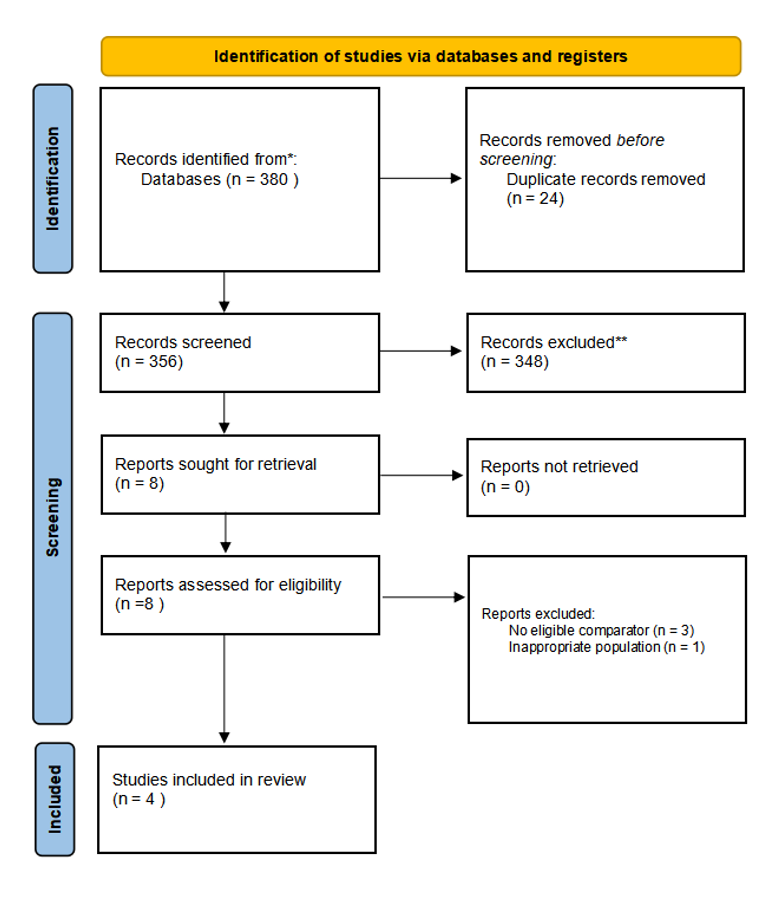
A total of 380 records were identified through database searches, 356 from PubMed and 24 from Scopus. After removing 24 duplicates, 356 unique records remained for screening.
Titles and abstracts were screened for relevance, resulting in the exclusion of 348 records that did not meet the eligibility criteria. The full texts of 8 articles were then assessed for eligibility.
Of these, 4 articles were excluded for the following reasons: three articles did not directly compare robotic and laparoscopic hysterectomy. One article did not include patients with large or extremely large uteri Ultimately, 4 studies met all inclusion criteria and were included in the final review [11,12,13,14].
The study selection process is illustrated in the PRISMA 2020 flow diagram Figure 1, which details the number of records identified, screened, assessed for eligibility, included, and excluded at each stage, along with reasons for exclusion at the full-text review phase.
Study Characteristics
The included studies comprised four retrospective cohort studies and no prospective studies, published between 2017 and 2022. Sample sizes ranged from 95 to 397 patients, with a total of 853 women undergoing hysterectomy for large or extremely large uteri (median uterine weight >1000 g in two studies [Ito et al., 2017; Moawad et al., 2017] [11,12], and >250 g in the others [Jeong et al., 2022; Sinha et al., 2019] [13,14].
Baseline Characteristics
The four included studies encompassed a total of 853 patients undergoing minimally invasive hysterectomy for large uteri, with uterine weights ranging from 250g to over 4800g. All studies were retrospective cohort analyses published between 2017 and 2022. The median patient age across studies was 45-47 years, with similar age distributions between robotic and laparoscopic groups. Body mass index (BMI) values were generally elevated, ranging from a median of 23.6 kg/m² in Jeong et al. (2022) [14] to 32.9 kg/m² in the robotic cohort of Moawad et al. (2017) [11], reflecting the typical patient population requiring hysterectomy for large fibroids Table 1.
Prior abdominal surgery rates varied from 13.4% to 46.3% across studies, with no significant differences between surgical approaches. Uterine weights showed considerable variation, with median values of 400g in Jeong et al. (2022), 1326g in Ito et al. (2017) [12], and comparable ranges in other studies. The largest uteri (>1000g) were specifically examined in two studies (Ito et al., 2017; Moawad et al., 2017) [12], while others included broader ranges with subgroup analyses. All procedures were performed by experienced minimally invasive surgeons, with case numbers per surgeon exceeding 200 for their respective approaches, suggesting technical proficiency in both robotic and laparoscopic techniques.
| Study | Total R/L** | Median Uterine Weight (g) | Median Age (years) | Median BMI (kg/m) | Prior Abdominal Surgery (%) |
|---|---|---|---|---|---|
| Ito et al. (2017) [11] | 12/83 | 1326 (1000–4800) | 45 (27–64) | 32 (19.8–49.9) | 33.70% |
| Sinha et al. (2019) [14] | 46/119 | ∼750–1000* (≥16-week size) | 45.7 (RH), 44.5 (LH) | 30.2 (RH), 27.8 (LH) | 15.2% (RH), 13.4% (LH) |
| Jeong et al. (2022) [15] | 197/200 | 400 (250–2720) | 46 (35–74) | 23.6 (15.4–42.7) | 46.3% (≥1 prior surgery) |
| Moawad et al. (2017) [16] | 101/95 | 365 (RH), 330 (LH) | 45.3 (RH), 42.3 (LH) | 32.9 (RH), 30.4 (LH) | 21.8% (RH), 16.8% (LH) |
* Sinha et al. [14] used clinical size (weeks) rather than weight; estimated conversion: 16 weeks ≈ 500–750 g. ** R, robotic; L, laparoscopic; RH, robotic hysterectomy; LH, laparoscopic hysterectomy; EBL, estimated blood loss; Hb, hemoglobin; LOS, length of stay; BMI, body mass index; OR, odds ratio.
Outcomes
Operative Time
Operative times varied significantly based on uterine size and surgical approach. For uteri >1000 g, Moawad et al. (2017) reported a 70-minute reduction in operative time with RH compared to LH (161 vs. 231 min, *p* < 0.005). In contrast, Sinha et al. (2019) [13] found RH took longer (131 vs. 110.6 min, *p* = 0.006) for uteri ≥16 weeks (∼500–750 g), while Jeong et al. (2022) observed no difference (120 min for both) Table 2.
Blood Loss and Transfusion Rates
Estimated blood loss (EBL) was lower in RH for uteri ≥16 weeks (hemoglobin drop: 1.0 vs. 1.8 g/dL, *p* < 0.001) (Sinha et al., 2019) [13]. However, no significant differences were observed in other studies, including those with uteri weighing more than 1000 g (Ito et al., 2017; Moawad et al., 2017) [12]. Transfusion rates were low overall (3.0–6.3%), with no clear advantage for either approach.
Conversion to Laparotomy
Conversion rates were higher in LH (5.3–10.9%) than in RH (0–4.3%), although statistical significance was not consistently achieved. Notably, Ito et al. (2017) reported no conversions after 2011 in their RH cohort, suggesting a learning curve effect.
Complications
Ureteral injuries were more frequent in RH (2.0% vs. 0.5–1.1% in LH) (Jeong et al., 2022; Sinha et al., 2019) [14]. Hemorrhage requiring intervention occurred in 7.3% of cases (Ito et al., 2017) [12], with no significant differences between approaches. Other complications (e.g., infection, ileus) were rare (<3%) and similar across groups.
Hospital Stay and Cost
The length of stay (LOS) was shorter for RH in Moawad et al. (2017) (OR 2.94, *p* = 0.007), whereas other studies reported comparable stays (1–5 days). Cost: RH was significantly cheaper for uteri >1000 g (9,390, *p* = 0.004) due to reduced operative time (Moawad et al., 2017). In contrast, Jeong et al. (2022) noted RH costs were >10× higher at their institution, though uterine weights were smaller (median 400 g).
| Study | Operative Time (min) | EBL (mL) / Hb Drop (g/dL) | Conversion Rate (%) | Complications (%) | Hospital Stay (days) | Cost (USD) |
|---|---|---|---|---|---|---|
| Ito et al. (2017) [11] | 191 (75–478) | 200 (20–2000) | 5.3% (all LH) | 7.3% intraoperative (hemorrhage) | 1 (0–6) | Not reported |
| Sinha et al. (2019) [14] | RH: 131, LH: 110.6* | Hb drop: RH 1.0, LH 1.8* | RH: 4.3%, LH: 10.9% | Ureteral injury: RH 2.0%, LH 0.5% | 1.4 (both) | Not reported |
| Jeong et al. (2022) [15] | 120 (both) | RH: 100, LH: 150 | RH: 0%, LH: 0.5% | Ureteral injury: RH 2.0%, LH 0.5% | 5 (both) | RH >10× LH (institution data) |
| Moawad et al. (2017) [16]** | RH: 161, LH: 231* (≥1000 g) | No difference | 0% (both) | Transfusion: RH 3.0%, LH 3.0% | RH shorter (OR 2.94*) | RH: $4880, LH: $9390* (≥1000 g) |
* Statistically significant (p<0.05). ** Operative time and cost outcomes reported by Moawad et al. (2017) [16] specifically apply to the ≥1000 g uterine weight stratum. EBL, Estimated blood loss; Hb, Hemoglobin; LOS, Length of stay; RH, Robotic Hysterectomy; LH, Laparoscopic Hysterectomy.
Discussion
Summary of Findings
This systematic review examining robotic versus laparoscopic hysterectomy for large or extremely large uteri encompassed 853 patients across four retrospective cohort studies. For extremely large uteri, robotic hysterectomy demonstrated superior operative efficiency with a 70-minute reduction in operative time compared to laparoscopic hysterectomy (161 vs. 231 minutes). However, for moderately large uteri (≥16 weeks in size or ∼500–750 g), robotic hysterectomy required longer operative times (131 vs. 110.6 minutes). Blood loss patterns favored robotic hysterectomy in the moderate size category, with significantly reduced hemoglobin drop (1.0 vs. 1.8 g/dL), while no differences were observed for extremely large uteri. Conversion rates consistently favored robotic hysterectomy across all size categories, though statistical significance was not uniformly achieved.
Clinical Significance and Justification
The size-dependent results that have been found indicate that the therapeutic advantages of robotic hysterectomy could be greatest at the most extremities of surgical complexity. This result is consistent with established surgical ergonomics principles, which state that as technical demands increase, the advantages of advanced technology become more obvious. Although it doesn’t always achieve statistical significance, the steady decline in conversion rates across all size groups raises the possibility that robotic technology might provide surgeons with greater confidence and the capacity to handle challenging cases with less invasive techniques. From a clinical standpoint, special consideration should be given to the reported variations in blood loss patterns. The notable preservation of hemoglobin in robotic instances for moderately sized uteri is probably due to the better viewing capabilities and increased accuracy of robotic instrumentation. The lack of this effect in patients with very large uteri, however, raises the possibility that surgical skill and experience, rather than technical advancements, may be more important in controlling bleeding in these situations.
Comparison with Previous Literature
The findings from this review demonstrate both concordance and divergence with existing literature on robotic versus laparoscopic hysterectomy. Large-scale meta-analyses have consistently shown that robotic hysterectomy is primarily comparable to laparoscopic hysterectomy in terms of major perioperative outcomes [7], which aligns with our findings for most outcome measures. However, the size-specific advantages observed in this review for extremely large uteri represent a novel finding that extends beyond general population studies.
Given that they appear higher than the 0.02%–0.4% documented in the broader literature on laparoscopic hysterectomy, the ureteral injury rates found in this review (2.0% for RH vs. 0.5–1.1% for LH) demand special consideration[15,16]. The greater complexity of situations with large uteri, where anatomical distortion and surgical difficulties are intrinsically enhanced, may be the cause of this disparity. Concerns expressed in recent work regarding the learning curve of robotic surgery and the potential for overconfidence in complex situations are consistent with the higher injury rates associated with robotic surgeries [5].
Regarding cost-effectiveness, the dramatic cost reduction observed for extremely large uteri in robotic cases (9,390) contradicts the general literature trend showing higher costs for robotic procedures [11,17,18]This data implies that cost-effectiveness may vary depending on the complexity of the case rather than being generally applicable, since it probably reflects the significant surgical time savings and decreased complication rates in the most complicated cases.
Cost findings are not generalizable across health systems because total costs depend on local pricing and reimbursement structures, accounting practices for operating room time, inclusion and amortization of capital and maintenance costs for robotic platforms, case volume and utilization, and institutional access to technology; consequently, relative costs of RH versus LH can differ widely by setting.
Learning curve and volume confounding
None of the included studies adjusted for surgeon or institutional volume or for learning-curve phase—factors known to affect operative time, blood loss, complications, and costs—so unmeasured confounding from experience and case volume may bias RH versus LH comparisons.
Consistent with prior learning-curve research, operative time for robotic hysterectomy tends to plateau after approximately 50 cases, with some larger series suggesting further improvements in complications with experience up to around 150 cases.[16]. According to earlier studies, robotic technology may decrease the barrier for undertaking complex minimally invasive operations, as seen by the reported improvements in conversion rates in robotic cases. Our results, however, regarding operative time advantages for extremely large uteri, contradict several studies that have repeatedly demonstrated that robotic operations need longer operative times[16,19,7]. This review’s safety profile, especially the low conversion rates in robotic cases, is consistent with high-volume surgeon studies showing better results when skilled operators perform robotic procedures [20]. This agreement highlights the importance of institutional volume and surgeon expertise in determining the outcomes of complex robotic procedures. Accordingly, any practice recommendations from this review remain provisional and should be revisited as prospective comparative studies, ideally randomized trials, become available.
Study Strengths and Limitations
This review offers several strengths, most notably its focused evaluation of a high-complexity patient group—women undergoing minimally invasive hysterectomy for large or extremely large uteri. By examining a range of clinical, safety, and economic outcomes across studies with varying uterine size thresholds, the review provides valuable insights into how surgical results may change depending on uterine size. Notably, all included studies involved experienced surgeons, which helps make the findings relevant to specialized centers that routinely perform advanced minimally invasive gynecologic surgery.
However, there are significant limitations to consider. All included studies were retrospective cohort designs, which can introduce selection bias and limit the ability to draw firm cause-and-effect conclusions. The review is also limited by the small number of eligible studies and the differences in how each defined "large" or "extremely large" uteri. Notably, no randomized controlled trials were identified till the time this review was done, and the lack of prospective data means that unmeasured factors could have influenced the results. Furthermore, differences in surgical techniques and institutional practices may have affected the outcomes, and the learning curve for advanced minimally invasive surgery could also play a role. A key methodological limitation of this systematic review is the absence of a formal quality assessment of the included studies. Without such appraisal, the risk of bias within individual studies could not be systematically evaluated, which may affect the reliability and strength of the overall conclusions.
Future Research Directions
The findings of this review highlight several highly critical areas for future research. Prospective randomized controlled trials specifically designed for large uteri populations are urgently needed to eliminate selection bias and provide definitive evidence regarding the comparative effectiveness of robotic versus laparoscopic approaches. Such studies should stratify patients by uterine size categories to better understand the size-dependent nature of outcomes observed in this review. Additionally, Cost-effectiveness analyses should be conducted across diverse healthcare systems to validate the surprising cost advantages observed for extremely large uteri.
Limitation
The major limitation of our study is the retrospective design of all included studies, the small number of studies (n=4) and sample sizes, the absence of prospective or randomized trials, and substantial heterogeneity in populations, definitions, and outcomes, which precluded meta-analysis and tempered the certainty of conclusions.
Conclusions
This systematic review demonstrates that the comparative effectiveness of robotic versus laparoscopic hysterectomy for large uteri is highly dependent on uterine size, with robotic approaches showing particular advantages for extremely large uteri in terms of operative efficiency and cost-effectiveness. While robotic hysterectomy shows real promise—especially in lowering conversion rates and making surgery more feasible for complex, large uteri—there are important caveats to keep in mind. Notably, the risk of ureteral injury appears to be somewhat higher with the robotic approach, and the skill and experience of the surgeon remain critical to achieving good outcomes. Based on the current body of evidence, which is drawn from retrospective studies, robotic hysterectomy may be a valuable option for carefully selected patients with extremely large uteri, but ideally only when performed by highly experienced surgeons in specialized, high-volume centers. To truly know which approach is best for which patients, we need more high-quality, prospective research that can provide stronger, evidence-based guidance for this challenging clinical scenario. The choice between RH and LH should prioritize patient selection (uterine size/adhesions), surgeon experience, and case volume, as well as institutional resources/robot access.
Conflicts of Interest
The authors declare no competing interests that could have influenced the objectivity or outcome of this research
Funding Source
The authors declare that no specific grant or funding was received for this research from any public, commercial, or not-for-profit funding agency.
Acknowledgments
None
Institutional Review Board (IRB)
This article is based on previously conducted studies and does not contain any new studies with human participants or animals performed by any of the authors.
Large Language Model
None
Authors Contribution
AMA contributed to the conception and design of the study, data collection, and drafting of the manuscript. MW performed data analysis, interpretation of results, and critical revision of the manuscript. FRE provided supervision, methodological guidance, and manuscript editing. HS was responsible for the literature review, data validation, and preparation of tables and figures. AMQ conducted statistical analysis, offered technical support, and gave final approval of the manuscript.
Data Availability
All data generated or analyzed during this study are included in this published article and its supplementary files.
References
- Donnez J., Taylor H. S., Marcellin L., Dolmans M. M.. Uterine fibroid-related infertility: mechanisms and management. Fertil Steril. 2024;122(1):31-39. doi:10.1016/j.fertnstert.2024.02.049 PMID: 38453041
- Borah B. J., Nicholson W. K., Bradley L., Stewart E. A.. The impact of uterine leiomyomas: a national survey of affected women. Am J Obstet Gynecol. 2013;209(4):319 e1-319 e20. doi:10.1016/j.ajog.2013.07.017 PMID: 23891629 PMCID: PMC4167669
- Eltoukhi H. M., Modi M. N., Weston M., Armstrong A. Y., Stewart E. A.. The health disparities of uterine fibroid tumors for African American women: a public health issue. Am J Obstet Gynecol. 2014;210(3):194-9. doi:10.1016/j.ajog.2013.08.008 PMID: 23942040 PMCID: PMC3874080
- Li B., Wang F., Chen L., Tong H.. Global epidemiological characteristics of uterine fibroids. Arch Med Sci. 2023;19(6):1802-1810. doi:10.5114/aoms/171786 PMID: 38058724 PMCID: PMC10696973
- Hazimeh D., Coco A., Casubhoy I., Segars J., Singh B.. The Annual Economic Burden of Uterine Fibroids in the United States (2010 Versus 2022): A Comparative Cost-Analysis. Reprod Sci. 2024;31(12):3743-3756. doi:10.1007/s43032-024-01727-0 PMID: 39455488
- Do T. K., Estevez J. P., Canlorbe G., Gonthier C., Koskas M.. Robotic versus open hysterectomy for very large uterus (more than 1000 g): A bicentric retrospective study of 150 patients. Int J Gynaecol Obstet. 2025. doi:10.1002/ijgo.70310 PMID: 40515535
- Yadav P., Agrawal M., Chaudhari K., Sindhu A.. Challenging Surgical Management of Giant Uterine Leiomyomas With Ileal Resection: A Clinical Case Study. Cureus. 2024;16(8):e66017. doi:10.7759/cureus.66017 PMID: 39221356 PMCID: PMC11366259
- Soomro N. A., Hashimoto D. A., Porteous A. J., Ridley C. J. A., Marsh W. J., Ditto R., Roy S.. Systematic review of learning curves in robot-assisted surgery. BJS Open. 2020;4(1):27-44. doi:10.1002/bjs5.50235 PMID: 32011823 PMCID: PMC6996634
- Lenfant L., Canlorbe G., Belghiti J., Kreaden U. S., Hebert A. E., Nikpayam M., Uzan C., Azais H.. Robotic-assisted benign hysterectomy compared with laparoscopic, vaginal, and open surgery: a systematic review and meta-analysis. J Robot Surg. 2023;17(6):2647-2662. doi:10.1007/s11701-023-01724-6 PMID: 37856058 PMCID: PMC10678826
- Wright J. D., Ananth C. V., Lewin S. N., Burke W. M., Lu Y. S., Neugut A. I., Herzog T. J., Hershman D. L.. Robotically assisted vs laparoscopic hysterectomy among women with benign gynecologic disease. JAMA. 2013;309(7):689-98. doi:10.1001/jama.2013.186 PMID: 23423414
- Ito T. E., Vargas M. V., Moawad G. N., Opoku-Anane J., Shu M. K., Marfori C. Q., Robinson 3rd, J. K.. Minimally Invasive Hysterectomy for Uteri Greater Than One Kilogram. JSLS. 2017;21(1). doi:10.4293/JSLS.2016.00098 PMID: 28352147 PMCID: PMC5346020
- Ouzzani M., Hammady H., Fedorowicz Z., Elmagarmid A.. Rayyan-a web and mobile app for systematic reviews. Syst Rev. 2016;5(1):210. doi:10.1186/s13643-016-0384-4 PMID: 27919275 PMCID: PMC5139140
- Page M. J., McKenzie J. E., Bossuyt P. M., Boutron I., Hoffmann T. C., Mulrow C. D., Shamseer L., Tetzlaff J. M., Akl E. A., Brennan S. E., Chou R., Glanville J., Grimshaw J. M., Hrobjartsson A., Lalu M. M., Li T., Loder E. W., Mayo-Wilson E., McDonald S., McGuinness L. A., Stewart L. A., Thomas J., Tricco A. C., Welch V. A., Whiting P., Moher D.. The PRISMA 2020 statement: an updated guideline for reporting systematic reviews. Rev Esp Cardiol (Engl Ed). 2021;74(9):790-799. doi:10.1016/j.rec.2021.07.010 PMID: 34446261
- Sinha R., Bana R., Sanjay M.. Comparison of Robotic and Laparoscopic Hysterectomy for the Large Uterus. JSLS. 2019;23(1). doi:10.4293/JSLS.2018.00068 PMID: 30675091 PMCID: PMC6328360
- Jeong S. Y., Kim K., Ryu J. W., Cha J., Park S. T., Park S. H.. Comparison of Surgical Outcomes of Robotic versus Conventional Laparoscopic Hysterectomy of Large Uterus with Gynecologic Benign Disease. J Pers Med. 2022;12(12). doi:10.3390/jpm12122042 PMID: 36556262 PMCID: PMC9783652
- Moawad G. N., Abi Khalil E. D., Tyan P., Shu M. K., Samuel D., Amdur R., Scheib S. A., Marfori C. Q.. Comparison of cost and operative outcomes of robotic hysterectomy compared to laparoscopic hysterectomy across different uterine weights. J Robot Surg. 2017;11(4):433-439. doi:10.1007/s11701-017-0674-4 PMID: 28144809
- Manoucheri E., Cohen S. L., Sandberg E. M., Kibel A. S., Einarsson J.. Ureteral injury in laparoscopic gynecologic surgery. Rev Obstet Gynecol. 2012;5(2):106-11. PMID: 22866190 PMCID: PMC3410510
- Tang F. H., Tsai E. M.. Learning Curve Analysis of Different Stages of Robotic-Assisted Laparoscopic Hysterectomy. Biomed Res Int. 2017;2017:1827913. doi:10.1155/2017/1827913 PMID: 28373977 PMCID: PMC5360940
- Paul-Dehlinger R., Vappereau A., Bras A. L., Oliveira J., Favier A., Belghiti J., Uzan C., Durand-Zaleski I., Canlorbe G.. Cost-effectiveness of robot-assisted total hysterectomy for benign pathologies compared to laparoscopic surgery: A retrospective study with propensity score. J Gynecol Obstet Hum Reprod. 2024;53(9):102821. doi:10.1016/j.jogoh.2024.102821 PMID: 39038739
- Chen C., Zhang M., Tang J., Pu K.. Cost-effectiveness of robotic surgery compared to conventional laparoscopy for the management of early-stage cervical cancer: a model-based economic evaluation in China. BMJ Open. 2024;14(11):e087113. doi:10.1136/bmjopen-2024-087113 PMID: 39572093 PMCID: PMC11580275