Dexmedetomidine as an Adjunctive Sedative in Patients Undergoing Endoscopic Submucosal Dissection: A Systematic Review and Meta-Analysis
Hazem AbosheaishaaⒾ1*, Abdallfatah AbdallfatahⒾ2, Abdelmalek AbdelghanyⒾ2, Arshia SethiⒾ1, Abdellatif IsmailⒾ3, Doha MohamedⒾ2, Moataz AboeldahbⒾ4, Omar AbdelhalimⒾ1, Islam MohamedⒾ5, Ahmed Y. AzzamⒾ6, Muhammed Amir EssibayiⒾ7, David J. AltschulⒾ7, Mahmoud NassarⒾ8, Mohammad Bilal9
- 1Department of Internal Medicine, Icahn School of Medicine at Mount Sinai / NYC Health + Hospitals Queens, New York, NY, USA
- 2Faculty of Medicine, October 6 University, Giza, Egypt
- 3University of Maryland Medical Center Midtown Campus, Baltimore, MD, USA
- 4Gastroenterology and Hepatology Department, Mayo Clinic, Rochester, MN, USA
- 5Department of Gastroenterology, University of Missouri, Columbia, MO, USA
- 6Montefiore-Einstein Cerebrovascular Research Lab, Albert Einstein College of Medicine, Bronx, NY, USA
- 7Department of Neurological Surgery, Montefiore Medical Center, Albert Einstein College of Medicine, Bronx, NY, USA
- 8Department of Medicine, Jacobs School of Medicine and Biomedical Sciences, University at Buffalo, Buffalo, NY, USA
- 9Division of Gastroenterology and Hepatology, Minneapolis Veterans Affairs Medical Center, Minneapolis, MN, USA
Abstract
Introduction: Endoscopic submucosal dissection (ESD) is a technique for removing dysplastic lesions in the gastrointestinal tract, but it carries risks like pain and perforation. Dexmedetomidine, an α2-receptor agonist, offers potential benefits as an adjunct sedative during ESD by providing anxiolysis and analgesia. This systematic review and meta-analysis assess its efficacy and safety.
Methodology: We searched databases including Embase, Medline/PubMed, Scopus, and Web of Science up to April 21, 2024, following PRISMA guidelines. Eligible studies used dexmedetomidine with other sedatives for ESD. We analyzed outcomes such as en-bloc and complete resection rates, sedation duration, and adverse events, using RevMan for meta-analysis with a random-effects model.
Results: The initial search retrieved 216 studies, and eight studies were included in the final analysis after screening. Dexmedetomidine showed no significant difference in en-bloc or complete resection rates compared to controls. Sedation and procedure times were similar between the two groups as well. Dexmedetomidine significantly reduced restlessness (OR 0.15, 95% CI:0.07 to 0.29) and increased bradycardia (OR 7.15, 95% CI 3.17 to 16.11) compared to controls. Upon subgroup analysis, Dexmedetomidine plus Propofol and Dexmedetomidine plus Midazolam revealed the same findings regarding restlessness and bradycardia compared to controls, which confirmed the adjunctive effects of Dexmedetomidine.
Conclusion: Dexmedetomidine appears safe and effective as an adjunctive sedative in ESD, reducing restlessness without significant adverse events. The risk of bradycardia is increased, which may reflect reduced physiological stress. Future studies should explore optimal dosing and compare Dexmedetomidine with other sedatives in diverse populations.
Keywords: Dexmedetomidine, Endoscopic submucosal dissection, ESD, Precedex, Systematic Review, Meta-Analysis
Article information
Introduction
Endoscopic tumor resection is one of the most common modalities in GI tumor management. Endoscopic submucosal dissection (ESD) is considered superior to mucosal resection, given that it offers complete resection with negative histological margins irrespective of the size of the original lesion [1]. Despite these overwhelming advantages, ESD is associated with multiple postoperative complications, including bleeding, postoperative perforation, and minor complications like abdominal pain, nausea, vomiting, and stricture, which limit its use [2]. Post-operative abdominal pain is a debilitating complication associated with ESD, which is severely underestimated and results in decreased patient satisfaction and longer hospital stays. Studies show the incidence of postoperative pain in 44.9 62.8% of patients, especially in the early post-operative period, necessitating the use of aggressive pain management [3,4]. Dexmedetomidine is a new α2-receptor agonist that has anxiolytic, sedative, and analgesic properties, which, when used in combination with other anesthetics, help lower their dose and also decrease postoperative opioid consumption and pain intensity [5,6]. A study by Chang et al. also shows a better cardiovascular profile of dexmedetomidine than propofol [7]. In our study, we reviewed the possible benefits of dexmedetomidine as an adjunct sedative perioperatively in patients undergoing ESD for GI adenomas and early-stage neoplastic lesions. We evaluated its efficacy by assessing variables like en-bloc resection, Complete resection, sedation time, procedure time, patient restlessness, and other adverse events.
Methods
Search Strategy and Data Extraction:
A systematic search of relevant literature was conducted across multiple databases, including Embase, Scopus, Web of Science, Medline/PubMed, and Cochrane, from their inception to February 28, 2024. The search strategy utilized Boolean operators to combine terms related to the population, intervention, and outcomes of interest. The following search strategy was employed: ("endoscopic submucosal dissection" OR "ESD" OR "submucosal dissection") AND ("dexmedetomidine" OR "dexmedetomidine" OR "sedative") Table 1. The search strategy aimed to identify studies investigating the use of dexmedetomidine as an adjunctive sedative in endoscopic submucosal dissection procedures. Our research adhered to the recommended guidelines for reporting systematic reviews and meta-analyses. The Preferred Reporting Items for Systematic Reviews and Meta-Analyses (PRISMA) checklist and Cochrane criteria were followed to ensure transparency and completeness in reporting [8,9].
Two independent reviewers screened titles, abstracts, and full-text articles for inclusion based on predefined eligibility criteria. Any disagreements were resolved through discussion or consultation with a third reviewer. Two co-authors independently conducted data extraction using a standardized data extraction form, with discrepancies resolved through consensus. Extracted data included study characteristics, patient demographics, intervention and comparator details, and interest outcomes.
Inclusion Criteria and Study Outcomes:
Studies eligible for inclusion in this meta-analysis focused on patients with gastrointestinal adenomas and early-stage neoplastic lesions who were eligible for endoscopic submucosal dissection (ESD) treatment. The intervention of interest was the use of dexmedetomidine as an adjunctive medication in combination with other sedatives in submucosal endoscopic dissection. There was no specific comparator for this review. The primary outcome of interest was the en-bloc resection (successful removal of the entirety of a tumor without violation of its capsule). Secondary outcomes included Complete resection )excision of all affected tissue, including the tumor and healthy surrounding tissue( sedative time )duration during which a sedative medication exerts its effects on a patient in minutes) procedure time (total duration taken to complete the surgery), restlessness, inability to remain still, and different adverse events(eg, Hypoxia, bradycardia, Hypotension, Perforation, and bleeding). Study designs included randomized controlled trials (RCTs) and observational studies if applicable. Studies not written in English or with inadequate translation, Systematic reviews, Meta-analyses, Case reports, editorials, letters, or conference abstracts without full-text availability, animal studies, or studies conducted on non-human subjects were excluded.
Risk of Bias Assessment:
The risk of bias and methodological quality of the included studies were assessed independently by two authors. The Cochrane risk-of-bias tool version 2 (ROB 2) was employed for RCTs. For observational studies, we used the Newcastle-Ottawa Scale; any discrepancies were resolved through discussion or consultation with a third reviewer [10].
Statistical Analysis:
A meta-analysis was conducted using Review Manager 5.4 (Cochrane Collaboration, Copenhagen, The Nordic Cochrane Centre). Given the anticipated heterogeneity in study designs and populations, a random-effects model was utilized. Summary measures were expressed as pooled odds ratios (OR) with corresponding 95% confidence intervals (CI) for proportional variables and mean differences with corresponding 95% CIs for continuous variables. Statistical significance was set at a p-value <0.05. Heterogeneity was assessed using the I2 statistic, with an I2 value of ≥50% indicating significant heterogeneity defined by the Cochrane Handbook for systematic reviews Deeks JJ, Bossuyt PM, Leeflang MM, Takwoingi Y (editors). Cochrane Handbook for Systematic Reviews of Diagnostic Test Accuracy. Version 2.0 (updated July 2023). Cochrane, 2023. Available from https://training.cochrane.org/handbook-diagnostic-test-accuracy/current.
Results
Search results:
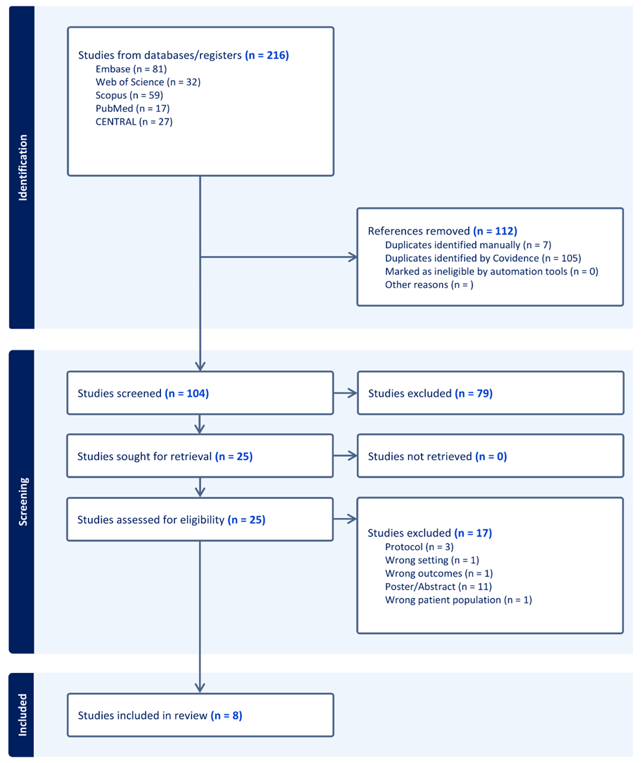
The initial search retrieved 216 studies, 105 duplicates were removed automatically with Covidence, and 7 duplicates were removed manually. The remaining 104 underwent title and abstract screening, and 25 full texts were assessed for inclusion. Eight studies [11,12,13,14,15,4,16,17] were included in our final analysis Figure 1.
Study and patient characteristics:
Our meta-analysis included 836 patients. Of these, 412 (49.2%) were assigned to the Dexmedetomidine group, whereas 424 (50.7%) were assigned to the placebo group. Table 2 displays the characteristics of the eight included studies.
Quality of included studies:
Quality assessment of included studies was assessed using (the Cochrane RoB 2 tool) for Randomized clinical trials. Four studies had a total low risk of bias, and one study had a moderate risk of bias. Another three Cohort studies were assessed using the Newcastle–Ottawa Scale with a low risk of bias Table 3.
Meta-analysis outcomes:
En-bloc resection
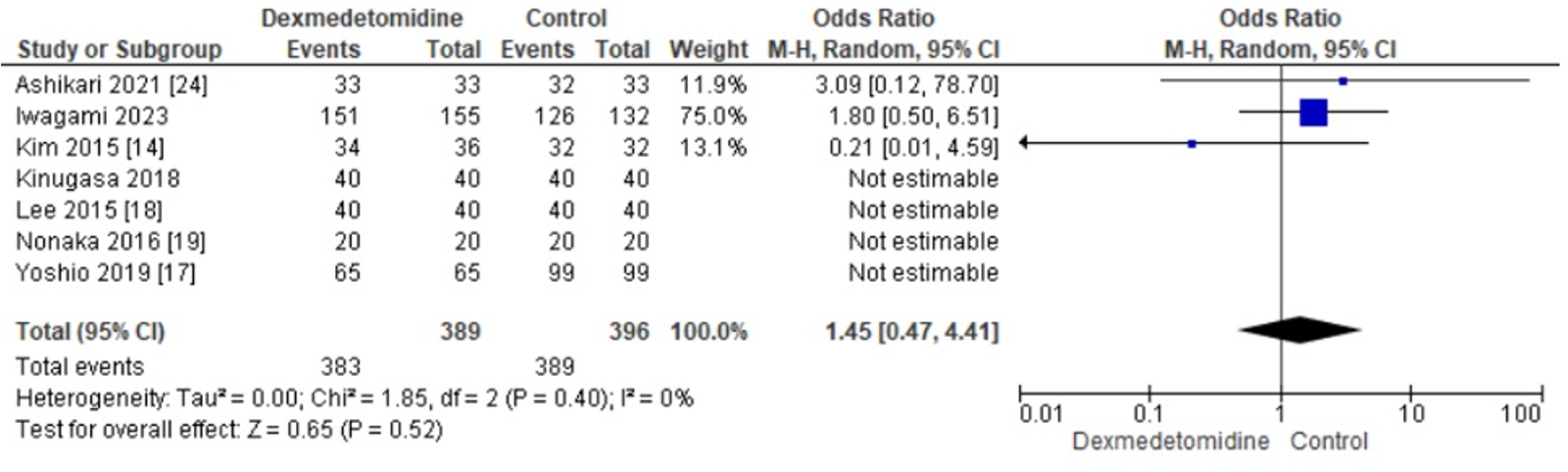
The data from 7 studies were analyzed for En-bloc resection. The odds ratio was 1.45, with a 95% confidence interval (CI) of 0.47 to 4.41, which revealed no significant difference between the two groups (p=0.52) at random effect, as shown in Figure 2.
Complete resection:
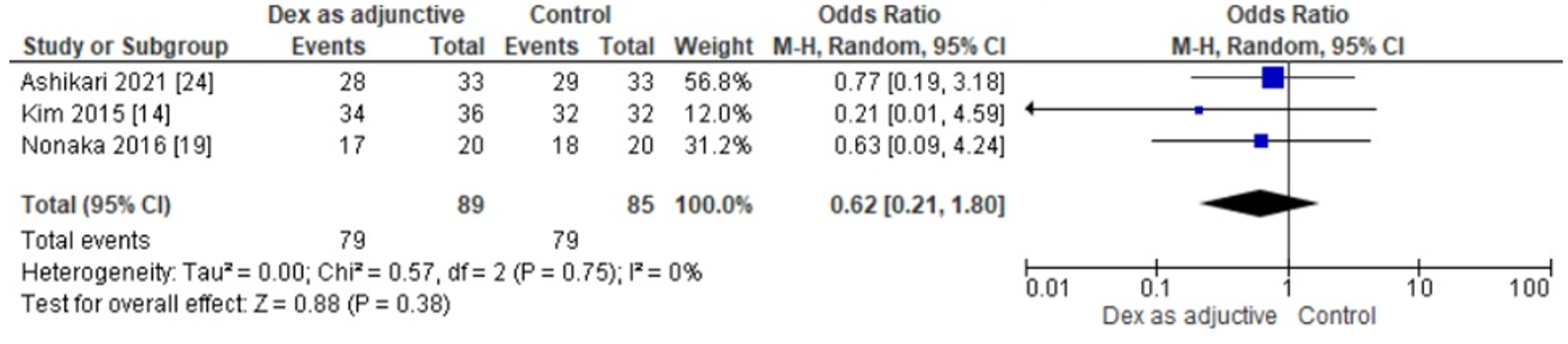
Three studies reported a complete resection rate, and the odds ratio was 0.62 with a 95% confidence interval (CI) of 0.21 to 1.80. This revealed no significant difference between the two groups (p=0.38), as shown in Figure 3.
Sedation time:
The pooled results from four studies reporting on sedation time revealed no significant difference between the two groups, as shown in Figure 4 (Mean Difference (MD): 7.36, 95% CI: -1.42 to 16.15; I2 0%; P=0.10).

Procedure Time:
Five studies reporting procedure time revealed no significant difference between the two groups, as shown in Table 3 (MD: 3.21, 95% CI: -6.32-12.74; I2 0%; P=0.51).
Restlessness:
Four studies reported a restlessness rate; the odds ratio was 0.15 with a 95% CI of 0.07 to 0.29 which revealed a significant difference between the two groups (p<0.00001). as shown in Table 4.
Bradycardia:
Seven studies reported the bradycardia rate. The odds ratio was 7.15 with a 95% CI of 3.17 to 16.11 which revealed a significant difference between the two groups (p<0.00001) as shown in Table 4.
Hypoxia:
Four studies reported the Hypoxia rate. The odds ratio was 0.95 with a 95% CI of 0.38 to 2.36 which revealed no significant difference between the two groups (p=0.91) as shown in Table 4.
| Database | Search Terms | Search Field | Search Results |
|---|---|---|---|
| Medline | ("endoscopic submucosal dissection" OR "ESD" OR "endoscopic dissection") AND ("dexmedetomidine" OR "Dexmedetomidine Hydrochloride" OR “Precedex” OR "MPV-1440" OR "MPV 1440" OR "MPV1440"). | All Field | 17 |
| Cochrane | ("endoscopic submucosal dissection" OR "ESD" OR "endoscopic dissection") AND ("dexmedetomidine" OR "Dexmedetomidine Hydrochloride" OR "MPV-1440" OR "MPV 1440" OR "MPV1440") | All Text | 27 |
| WOS | ((ALL= (((endoscopic submucosal dissection OR ESD OR endoscopic dissection)))) AND ALL= (((Dexmedetomidine OR Dexmedetomidine Hydrochloride OR MPV-1440 OR MPV 1440 OR MPV1440)))) | All Fields | 32 |
| SCOPUS | ("endoscopic submucosal dissection" OR "ESD" OR "endoscopic dissection") AND ("dexmedetomidine" OR "Dexmedetomidine Hydrochloride" OR "MPV-1440" OR "MPV 1440" OR "MPV1440") | Title, Abstract, Keywords | 59 |
| EMBASE | ("endoscopic submucosal dissection" OR "ESD" OR "endoscopic dissection") AND ("dexmedetomidine" OR "Dexmedetomidine Hydrochloride" OR "MPV-1440" OR "MPV 1440" OR "MPV1440") | All Field | 81 |
ESD, Endoscopic Submucosal Dissection; WOS, Web of Science
Table 2: Baseline characteristics of included studies
| Author | Country | Study design | Age Mean (SD) | Intervention (t/control) | Procedure location | Size of lesion Mean (SD) | ||
|---|---|---|---|---|---|---|---|---|
| Cases | Control | Cases | Control | |||||
| Ashikari 2021 [11] | Japan | RCT | 21.25 (8.29) | 22.97 (12.78) | propofol plus DEX; propofol alone. | Superficial esophageal cancers | 68.86 (30.99) | 8 (24.24) |
| Iwagami 2023 [12] | Japan | Retrospective | NA | NA | MDZ and pethidine hydrochloride + DEX; MDZ and pethidine hydrochloride | Colorectal lesions | 64.4(38.2) | 85 (55) |
| Kim 2015 [13] | Korea | RCT | 62.8 (8.5) | 65.1 (10.2) | DEX- remifentanil; propofol-remifentanil | Esophagus | 62.9 (12.3) | 10 (34.5) |
| Kinugasa 2018 [14] | Japan | RCT | 22.4 (4.3) | 22.5 (2.77) | DEX + Pethidine; Pethidine | Colorectal | 67.9 (33.8) | 21 (52%) |
| Lee 2015 [15] | Korea | RCT | 23.79 (2.70) | 24.32 (2.07) | DEX with on-demand MDZ; MDZ alone | Gastric Tumor | 15 | 22.5 |
| Luo 2023 [4] | China | RCT | 57 (7) | 55.8 (7.5) | DEX bolus + maintenance intraop; Normal saline | Stomach - gastric | 3.4 (1.2) | 2.8 (1.3) |
| Nonaka 2016 [16] | Japan | Retrospective | 66.3 (7.7) | 68.4 (8.5) | Combination of propofol and DEX; Benzodiazepines | Esophagus | 40.1 (12) | 40.8 (15.2) |
| Yoshio 2019 [17] | Japan | Prospective confirmatory single-arm | 67.7 (5.7) | N/A | Bolus MDZ and pethidine + DEX infusion; MDZ and pethidine boluses | Esophagus | 17.3 (8.5) | N/A |
SD, Standard Deviation; RCT, Randomized Controlled Trial; DEX, Dexmedetomidine; MDZ, Midazolam; NA, Not Available; intraop, Intraoperative.
Table 3: Risk of bias assessment for included studies.
| Author name, year | Study design | Tool used | Overall ROB |
|---|---|---|---|
| Ashikari, 2021 [11] | RCT | Cochrane RoB 2 | Low |
| Iwagami, 2023 [12] | Cohort | Newcastle–Ottawa Scale | Low |
| Kim, 2015 [13] | RCT | Cochrane RoB 2 | Low |
| Kinugasa, 2018 [14] | RCT | Cochrane RoB 2 | Low |
| Lee, 2015 [15] | RCT | Cochrane RoB 2 | Low |
| Luo, 2023 [4] | RCT | Cochrane RoB 2 | Moderate |
| Nonaka, 2016 [16] | Cohort | Newcastle–Ottawa Scale | Low |
| Yoshio, 2019 [17] | Cohort | Newcastle–Ottawa Scale | Moderate |
RCT, Randomized Controlled Trial; ROB, Risk of Bias
| Subgroup | Outcome | Odds Ratio / Mean Difference (95% CI) | P-value |
|---|---|---|---|
| General | Procedure time | 3.21 (-6.32 to 12.74) | 0.51 |
| Restlessness | 0.15 (0.07 to 0.29) | <0.00001 | |
| Bradycardia | 7.15 (3.17 to 16.11) | <0.00001 | |
| Hypoxia | 0.95 (0.38 to 2.36) | 0.91 | |
| Hypotension | 2.73 (0.79 to 9.43) | 0.11 | |
| Perforation | 0.51 (0.05 to 5.44) | 0.58 | |
| Bleeding | 0.41 (0.12 to 1.39) | 0.15 | |
| Dexmedetomidine plus Propofol | En-bloc resection | 3.09 (0.12 to 78.70) | 0.49 |
| Complete resection | 0.72 (0.23 to 2.24) | 0.57 | |
| Procedure time | -4.05 (-27.57 to 19.47) | 0.74 | |
| Restlessness | 0.14 (0.05 to 0.45) | 0.0009 | |
| Bradycardia | 10.04 (2.92 to 34.54) | 0.0003 | |
| Hypoxia | 0.28 (0.11 to 0.71) | 0.007 |
Hypotension:
Seven studies reported the Hypotension rate. The odds ratio was 2.73 with a 95% CI of 0.79 to 9.43 which revealed no significant difference between the two groups (p=0.11) as shown in Table 4.
Perforation:
Five studies reported the perforation rate. The odds ratio was 0.51, with a 95% confidence interval (CI) of 0.05 to 5.44, which revealed no significant difference between the two groups (p=0.58), as shown in Table 4.
Bleeding:
Three studies reported the Bleeding rate, the odds ratio was 0.41 with a 95% CI of 0.12 to 1.39 which revealed no significant difference between the two groups (p=0.15) as shown in Table 4.
Subgroup Analysis Outcomes:
Dexmedetomidine plus Propofol
En-bloc resection: Two studies reported the en-bloc resection rate for Dexmedetomidine in combination with propofol. The odds ratio was 3.09, with a 95% confidence interval (CI) of 0.12 to 78.70, which revealed no significant difference between the two groups (p=0.49), as shown in Table 4.
Complete resection: Two studies reported a complete resection rate for Dexmedetomidine in combination with propofol, the odds ratio was 0.72 with a 95% CI of .23 to 2,24 which revealed no significant difference between the two groups (p=0.57) as shown in Table 4.
Procedure Time: Two studies reporting on procedure time for Dexmedetomidine in combination with propofol revealed no significant difference between the two groups, as shown in Table 3 (MD: -4.05, 95% CI: -27.57-19.47; I2=63%; P=0.74).
Restlessness: Two studies reported Restlessness for Dexmedetomidine in combination with propofol. The odds ratio was 0.14, with a 95% confidence interval (CI) of 0.05 to 0.45, which revealed a significant difference between the two groups (p=0.0009), as shown in Table 4.
Bradycardia: Two studies reported Bradycardia for Dexmedetomidine in combination with propofol. The odds ratio was 10.04, with a 95% confidence interval (CI) of 2.92 to 34.54, which revealed a significant difference between the two groups (p=0.0003), as shown in Table 4.
Hypoxemia: Two studies reported hypoxemia for Dexmedetomidine in combination with propofol, the odds ratio was 0.28 with a 95% CI of 0.11 to 0.71 which revealed a significant difference between the two groups (p=0.007) as shown in Table 4.
Hypotension: Two studies reported Hypotension for Dexmedetomidine in combination with propofol. The odds ratio was 3.83, with a 95% confidence interval (CI) of 1.00 to 14.69, which revealed a significant difference between the two groups (p=0.05), as shown in Table 4.
Dexmedetomidine plus Midazolam
En-bloc resection: Two studies reported en-bloc resection for Dexmedetomidine in combination with Midazolam. The odds ratio was 1.80, with a 95% confidence interval (CI) of 0.50 to 6.51, which revealed no significant difference between the two groups (p=0.37), as shown in Table 4.
Restlessness: Two studies reported Restlessness for Dexmedetomidine in combination with Midazolam, the odds ratio was 0.15 with a 95% CI of 0.06 to 0.35 which revealed a significant difference between the two groups (p < 0.0001) as shown in Table 4.
Bradycardia: Two studies reported Bradycardia for Dexmedetomidine in combination with Midazolam. The odds ratio was 14.97, with a 95% confidence interval (CI) of 2.44 to 91.68, which revealed a significant difference between the two groups (p=0.003), as shown in Table 4.
Hypoxia: Two studies reported Hypoxia for Dexmedetomidine in combination with Midazolam, the odds ratio was 0.80 with a 95% CI of 0.33 to 1.94 which revealed no significant difference between the two groups (p=0.62) as shown in Table 4.
Bleeding: Two studies reported bleeding for Dexmedetomidine in combination with Midazolam. The odds ratio was 0.42, with a 95% confidence interval (CI) of 0.11 to 1.60, which revealed no significant difference between the two groups (p=0.20), as shown in Table 4.
Perforation: Two studies reported Perforation for Dexmedetomidine in combination with Midazolam. The odds ratio was 0.24, with a 95% confidence interval (CI) of 0.01 to 4.13, which revealed no significant difference between the two groups (p=0.32), as shown in Table 4.
Discussion
Although the debilitating pain associated with ESD warrants aggressive pain management, physicians are hesitant due to the possibility of masking the pain of perforation. This not only causes patient discomfort but also increases the burden on healthcare by prolonging discharge time [3,2]. A study done by Seiichiro et al. shows an increased incidence of metachronous gastric cancer in patients who underwent curative ESD of early gastric cancer [18]. These warrant further endoscopic surveillance and possible repeat ESD. However, poorly managed post-operative pain increases apprehension in patients for further endoscopic procedures. As previously described, a few studies have been done describing the incidence of postoperative pain after ESD, but there is no consensus on the management of this pain. Studies done by Lee and Kim recommend a single dose of dexamethasone or postoperative local bupivacaine and triamcinolone [13,19].
Our study found a significant reduction in restlessness and bradycardia associated with dexmedetomidine, highlighting its potential as an effective sedative agent for endoscopic procedures. A study that investigated the effect of local anesthesia in ESD procedures showed that local anesthesia decreased the incidence of bradycardia (OR = 0.16, 95% CI = 0.03, 0.95) [20]. We also observed a statistically significant decrease in tachycardia, which could indicate less anxiety and pain, thus providing a more comfortable sedative experience for the patients. These properties could be attributed to its selective alpha two adrenergic agonist and sympatholytic properties [20]. The non-significant difference found in en bloc resection rates between dexmedetomidine, and the comparator groups alleviated concerns regarding the influence of the sedation regimen on the technical aspects of the procedure [21].
The subgroup analysis also revealed better outcomes, particularly regarding reduced restlessness and bradycardia, with Dexmedetomidine in combination with Midazolam compared to other combinations. Midazolam’s anxiolytic and amnestic properties, coupled with Dexmedetomidine’s sedative and analgesic effects, may offer superior patient comfort and procedural tolerance. Additionally, considering the favorable safety profile of Midazolam in terms of respiratory depression compared to Propofol, this combination presents a compelling option for optimizing sedation strategies in endoscopic settings [17].
Our review suggests that dexmedetomidine is an effective sedative agent for ESD. Lee et al. [15] on the other hand, compared the outcomes of sedation using dexmedetomidine infusion plus on-demand midazolam versus sedation using midazolam infusion plus on-demand midazolam. They concluded that the sedation effect of dexmedetomidine with midazolam was superior to the sedation effect with midazolam alone. Furthermore, four studies reported sedation time as an outcome, while five studies reported procedure time as an outcome, Table 4. The pooled results from these studies showed no statistically significant difference in sedation or procedure time between the dexmedetomidine and the control group. Despite the significant reduction in intraoperative restlessness in the dexmedetomidine group in our review, as mentioned above, this did not translate into a shorter sedation or procedure time Table 4.
Nonaka et al. [16] reported a significantly shorter procedure time in the combination group (dexmedetomidine and propofol) compared to the benzodiazepine group; nevertheless, this finding was lost after pooling with other studies in the analysis, as shown in Table 4.
In terms of safety, our findings support the use of dexmedetomidine as an adjunctive agent in procedural sedation for ESD procedures, consistent with previous studies [22,23]. As noted by Candiotti et al. [22], the Dexmedetomidine group demonstrated a higher incidence of bradycardia. However, there was no statistically significant increase in the occurrence of other adverse events such as hypoxia, hypotension, bleeding, or perforation. Additionally, Dexmedetomidine’s cardiovascular and hemodynamic effects are well-known and are attributed to its strong alpha 2-adrenergic agonist effect and include bradycardia, hypotension, and hypoxia [24,22,25,23]. Kim et al. evaluated risk factors for dexmedetomidine-associated bradycardia during spinal anesthesia [25] and found that a long tourniquet time and low baseline heart rate were associated with an increased incidence of bradycardia during procedures under spinal anesthesia. Notably, Alshikaria et al. [11] reported that no serious adverse events were observed in patients in the dexmedetomidine group who experienced bradycardia and that their clinical outcomes were not altered due to it, which is also consistent with previous literature [26,27].
The use of Dexmedetomidine as an adjunctive sedative has shown promising results in our meta-analysis, yet this type of intervention needs further exploration. The included studies in this review have already explored the combination of Dexmedetomidine with the two main sedatives, propofol and midazolam. The results are extraordinary in terms of restlessness and bradycardia incidence, the latter being a good sign of less stress and discomfort during the procedure. Fewer movements (restlessness) during the ESD procedure lead to more convenient and accurate procedures for the operator. So, this therapy should be explored more to reach the best results possible for the patient.
More exploration means more multicenter randomized controlled trials and observational studies comparing this type of adjunctive therapy with other adjunctive sedatives and even other types of pain management methods, like local anesthesia in the region of intervention, to test this intervention’s safety and efficacy, to standardize its use during ESD procedures in the near future. Limitations: To our knowledge, this is the first meta-analysis to assess the safety and efficacy of Dexmedetomidine as an adjunctive sedative after ESD. Additionally, we performed subgroup analysis according to each general therapy. Most included articles (6 out of 8) did not conduct a head-to-head comparison between dexmedetomidine and other agents. Also, the limited number of published clinical trials and the number of patients included in certain subgroups limit our evidence and conclusions on some outcomes. All eight included trials were conducted in eastern Asia, including 5 in Japan, two in Korea, and one in China. Thus, the generalizability of these study results to other regions with different ethnicities and medical environments may be affected. A standardized dosage of dexmedetomidine as an adjuvant sedative has not yet been established, resulting in a wide variety of dexmedetomidine regimens.
Conclusions
In conclusion, our meta-analysis supports the safe use of dexmedetomidine as an adjunctive sedative in ESD procedures. Dexmedetomidine, when combined with other sedatives, appears to reduce restlessness without increasing the risk of hypoxia, hypotension, bleeding, or perforation. The increased risk of bradycardia noted with dexmedetomidine can be perceived as less physiological stress and tachycardia during procedures. However, our findings are limited by the lack of direct comparisons with other sedatives and the predominantly Eastern Asian study populations. Further research, including multicenter trials, is needed to establish optimal dosing regimens and evaluate dexmedetomidine’s efficacy compared to other sedatives and pain management methods in diverse patient populations.
Conflicts of Interest
The authors declare no conflicts of interest related to this work.
Funding Source
The National Center for Advancing Translational Sciences (NCATS), National Institutes of Health, supported the project described through CTSA award number: UM1TR004400. The content is solely the responsibility of the authors and does not necessarily represent the official views of the NIH.
Acknowledgments
None
Institutional Review Board (IRB)
None
Large Language Model
None
Authors Contribution
HA, AA, AA, AS, AI, DM, MA, OA, IM, AYA, MN, and MB equally contributed to the conception, design, data acquisition, analysis, and interpretation of this research. All authors were involved in drafting the manuscript and revising it critically for important intellectual content. They have also given final approval of the version to be published and agree to be accountable for all aspects of the work to ensure that questions related to the accuracy or integrity of any part of the work are appropriately investigated and resolved.
Data Availability
All data generated or analyzed during this study are included in this published article. The data are publicly available and have been cited appropriately within the document’s text.
References
- Isomoto H., Shikuwa S., Yamaguchi N., Fukuda E., Ikeda K., Nishiyama H., Ohnita K., Mizuta Y., Shiozawa J., Kohno S.. Endoscopic submucosal dissection for early gastric cancer: a large-scale feasibility study. Gut. 2009;58(3):331-6. doi:10.1136/gut.2008.165381 PMID: 19001058
- Nishizawa T., Yahagi N.. Endoscopic mucosal resection and endoscopic submucosal dissection: technique and new directions. Curr Opin Gastroenterol. 2017;33(5):315-319. doi:10.1097/MOG.0000000000000388 PMID: 28704212
- Kim J. W., Jang J. Y., Park Y. M., Shim J. J., Chang Y. W.. Clinicopathological characteristics of patients with pain after endoscopic submucosal dissection for gastric epithelial neoplasm. Surg Endosc. 2019;33(3):794-801. doi:10.1007/s00464-018-6345-3 PMID: 30014330
- Luo X., An L. X., Chen P. S., Chang X. L., Li Y.. Efficacy of dexmedetomidine on postoperative pain in patients undergoing gastric and esophageal endoscopic submucosal dissection: a study protocol for a randomized controlled prospective trial. Trials. 2022;23(1):491. doi:10.1186/s13063-022-06432-4 PMID: 35698203 PMCID: PMC9195240
- Liu Y., Liang F., Liu X., Shao X., Jiang N., Gan X.. Dexmedetomidine Reduces Perioperative Opioid Consumption and Postoperative Pain Intensity in Neurosurgery: A Meta-analysis. J Neurosurg Anesthesiol. 2018;30(2):146-155. doi:10.1097/ANA.0000000000000403 PMID: 28079737
- Ramsay M. A., Luterman D. L.. Dexmedetomidine as a total intravenous anesthetic agent. Anesthesiology. 2004;101(3):787-90. doi:10.1097/00000542-200409000-00028 PMID: 15329604
- Chang E. T., Certal V., Song S. A., Zaghi S., Carrasco-Llatas M., Torre C., Capasso R., Camacho M.. Dexmedetomidine versus propofol during drug-induced sleep endoscopy and sedation: a systematic review. Sleep Breath. 2017;21(3):727-735. doi:10.1007/s11325-017-1465-x PMID: 28130737
- Cumpston M., Li T., Page M. J., Chandler J., Welch V. A., Higgins J. P., Thomas J.. Updated guidance for trusted systematic reviews: a new edition of the Cochrane Handbook for Systematic Reviews of Interventions. Cochrane Database Syst Rev. 2019;10(10):ED000142. doi:10.1002/14651858.ED000142 PMID: 31643080 PMCID: PMC10284251
- Moher D., Liberati A., Tetzlaff J., Altman D. G., PRISMA Group. Preferred reporting items for systematic reviews and meta-analyses: the PRISMA statement. Int J Surg. 2010;8(5):336-41. doi:10.1016/j.ijsu.2010.02.007 PMID: 20171303
- Sterne J. A. C., Savovic J., Page M. J., Elbers R. G., Blencowe N. S., Boutron I., Cates C. J., Cheng H. Y., Corbett M. S., Eldridge S. M., Emberson J. R., Hernan M. A., Hopewell S., Hrobjartsson A., Junqueira D. R., Juni P., Kirkham J. J., Lasserson T., Li T., McAleenan A., Reeves B. C., Shepperd S., Shrier I., Stewart L. A., Tilling K., White I. R., Whiting P. F., Higgins J. P. T.. RoB 2: a revised tool for assessing risk of bias in randomised trials. BMJ. 2019;366:l4898. doi:10.1136/bmj.l4898 PMID: 31462531
- Ashikari K., Nonaka T., Higurashi T., Takatsu T., Yoshihara T., Misawa N., Arimoto J., Kanoshima K., Matsuura T., Fuyuki A., Ohkubo H., Chiba H., Nakajima A.. Efficacy of sedation with dexmedetomidine plus propofol during esophageal endoscopic submucosal dissection. J Gastroenterol Hepatol. 2021;36(7):1920-1926. doi:10.1111/jgh.15417 PMID: 33506496
- Iwagami H., Akamatsu T., Matsuyama K., Hanawa Y., Tonomura K., Chikugo E., Ogino S., Morimura H., Shimoyama M., Terashita T., Nakano S., Wakita M., Edagawa T., Konishi T., Matsumoto H., Nakatani Y., Urai S., Seta T., Uenoyama Y., Yamashita Y.. Dexmedetomidine is safe and effective for reducing intraprocedural pain in colorectal endoscopic submucosal dissection. DEN Open. 2023;3(1):e223. doi:10.1002/deo2.223 PMID: 36992692 PMCID: PMC10041156
- Kim B., Lee H., Chung H., Park J. C., Shin S. K., Lee S. K., Lee Y. C.. The efficacy of topical bupivacaine and triamcinolone acetonide injection in the relief of pain after endoscopic submucosal dissection for gastric neoplasia: a randomized double-blind, placebo-controlled trial. Surg Endosc. 2015;29(3):714-22. doi:10.1007/s00464-014-3730-4 PMID: 25060683
- Kinugasa Hideaki, Higashi Reiji, Miyahara Koji, Moritou Yuki, Hirao Ken, Ogawa Tsuneyoshi, Kunihiro Masaki, Nakagawa Masahiro. Dexmedetomidine for conscious sedation with colorectal endoscopic submucosal dissection: a prospective double-blind randomized controlled study. Clinical and Translational Gastroenterology. 2018;9(7). doi:10.1038/s41424-018-0032-5
- Lee S. P., Sung I. K., Kim J. H., Lee S. Y., Park H. S., Shim C. S., Hwang H. K., Kim T. Y., Shim S. G.. Comparison of dexmedetomidine with on-demand midazolam versus midazolam alone for procedural sedation during endoscopic submucosal dissection of gastric tumor. J Dig Dis. 2015;16(7):377-84. doi:10.1111/1751-2980.12254 PMID: 25944073
- Nonaka T., Inamori M., Miyashita T., Harada S., Inoh Y., Kanoshima K., Matsuura M., Higurashi T., Ohkubo H., Iida H., Endo H., Kusakabe A., Maeda S., Gotoh T., Nakajima A.. Feasibility of deep sedation with a combination of propofol and dexmedetomidine hydrochloride for esophageal endoscopic submucosal dissection. Dig Endosc. 2016;28(2):145-51. doi:10.1111/den.12559 PMID: 26476104
- Yoshio T., Ishiyama A., Tsuchida T., Yoshimizu S., Horiuchi Y., Omae M., Hirasawa T., Yamamoto Y., Sano H., Yokota M., Fujisaki J.. Efficacy of novel sedation using the combination of dexmedetomidine and midazolam during endoscopic submucosal dissection for esophageal squamous cell carcinoma. Esophagus. 2019;16(3):285-291. doi:10.1007/s10388-019-00666-z PMID: 30937573
- Abe S., Oda I., Suzuki H., Nonaka S., Yoshinaga S., Nakajima T., Sekiguchi M., Mori G., Taniguchi H., Sekine S., Katai H., Saito Y.. Long-term surveillance and treatment outcomes of metachronous gastric cancer occurring after curative endoscopic submucosal dissection. Endoscopy. 2015;47(12):1113-8. doi:10.1055/s-0034-1392484 PMID: 26165734
- Lee H. W., Lee H., Chung H., Park J. C., Shin S. K., Lee S. K., Lee Y. C., Hong J. H., Kim D. W.. The efficacy of single-dose postoperative intravenous dexamethasone for pain relief after endoscopic submucosal dissection for gastric neoplasm. Surg Endosc. 2014;28(8):2334-41. doi:10.1007/s00464-014-3463-4 PMID: 24570015
- Afonso J., Reis F.. Dexmedetomidine: current role in anesthesia and intensive care. Rev Bras Anestesiol. 2012;62(1):118-33. doi:10.1016/S0034-7094(12)70110-1 PMID: 22248773
- Dumoulin F. L., Hildenbrand R.. Endoscopic resection techniques for colorectal neoplasia: Current developments. World J Gastroenterol. 2019;25(3):300-307. doi:10.3748/wjg.v25.i3.300 PMID: 30686899 PMCID: PMC6343101
- Candiotti K. A., Bergese S. D., Bokesch P. M., Feldman M. A., Wisemandle W., Bekker A. Y., MAC Study Group. Monitored anesthesia care with dexmedetomidine: a prospective, randomized, double-blind, multicenter trial. Anesth Analg. 2010;110(1):47-56. doi:10.1213/ane.0b013e3181ae0856 PMID: 19713256
- Riker R. R., Shehabi Y., Bokesch P. M., Ceraso D., Wisemandle W., Koura F., Whitten P., Margolis B. D., Byrne D. W., Ely E. W., Rocha M. G., SEDCOM Study Group. Dexmedetomidine vs midazolam for sedation of critically ill patients: a randomized trial. JAMA. 2009;301(5):489-99. doi:10.1001/jama.2009.56 PMID: 19188334
- Bloor B. C., Ward D. S., Belleville J. P., Maze M.. Effects of intravenous dexmedetomidine in humans. II. Hemodynamic changes. Anesthesiology. 1992;77(6):1134-42. doi:10.1097/00000542-199212000-00014 PMID: 1361311
- Kim H. J., Ahn E.. Risk factors for dexmedetomidine-associated bradycardia during spinal anesthesia: A retrospective study. Medicine (Baltimore). 2022;101(43):e31306. doi:10.1097/MD.0000000000031306 PMID: 36316937 PMCID: PMC9622596
- Mason K. P., Robinson F., Fontaine P., Prescilla R.. Dexmedetomidine offers an option for safe and effective sedation for nuclear medicine imaging in children. Radiology. 2013;267(3):911-7. doi:10.1148/radiol.13121232 PMID: 23449958
- Talon M. D., Woodson L. C., Sherwood E. R., Aarsland A., McRae L., Benham T.. Intranasal dexmedetomidine premedication is comparable with midazolam in burn children undergoing reconstructive surgery. J Burn Care Res. 2009;30(4):599-605. doi:10.1097/BCR.0b013e3181abff90 PMID: 19506498