Efficacy and Safety of Lower- versus Higher-Dose Baxdrostat in Adults with Resistant or Uncontrolled Hypertension, Including a CKD-Enriched Population: An Indirect Subgroup Comparison from Placebo-Controlled Trials — A Systematic Review and Meta-Analysis with GRADE Assessment
Ahmed L YouseifⒾ1*, Mohamed EldahrawyⒾ2, Abdallah Al Ghnaimat3, Alaa Ashraf MohamedⒾ1, Mohamed Nabil HamoudaⒾ4, Karim A KhalilⒾ5, Ahmed F YounisⒾ1
- 1Faculty of Medicine, Al-Azhar University, Egypt
- 2Faculty of Medicine, Mansoura University, Egypt
- 3Faculty of Medicine, Hashemite University, Jordan
- 4Faculty of Medicine, Misr University for Science and Technology, Egypt
- 5Faculty of Medicine, Tanta University, Egypt
Abstract
Background: Baxdrostat is a selective aldosterone synthase inhibitor proposed for the treatment of resistant and uncontrolled hypertension. However, evidence regarding the safety and efficacy of low doses (0.5–1 mg) and high doses (2–4 mg) compared with placebo remains limited.
Methods: Major bibliographic databases were searched for randomized controlled trials (RCTs) through January 2026. Eligible RCTs compared baxdrostat with placebo. Pooled effect estimates were calculated using mean difference (MD) or risk ratio (RR) with 95% confidence intervals (CIs).
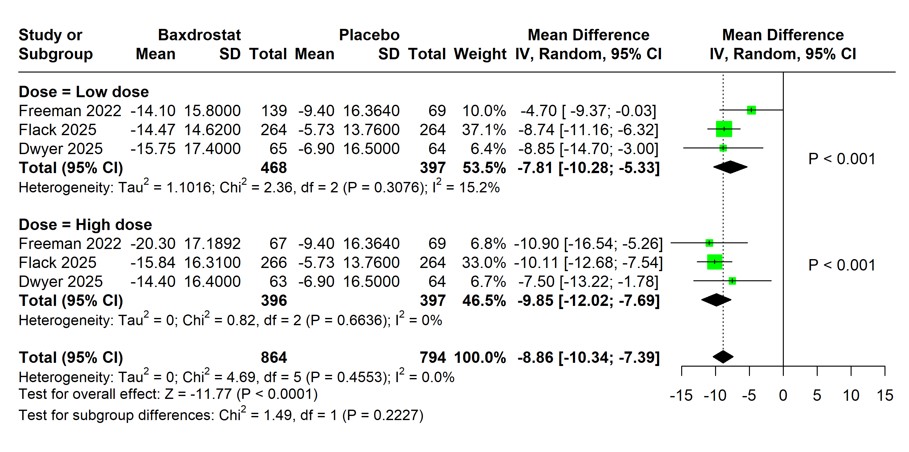
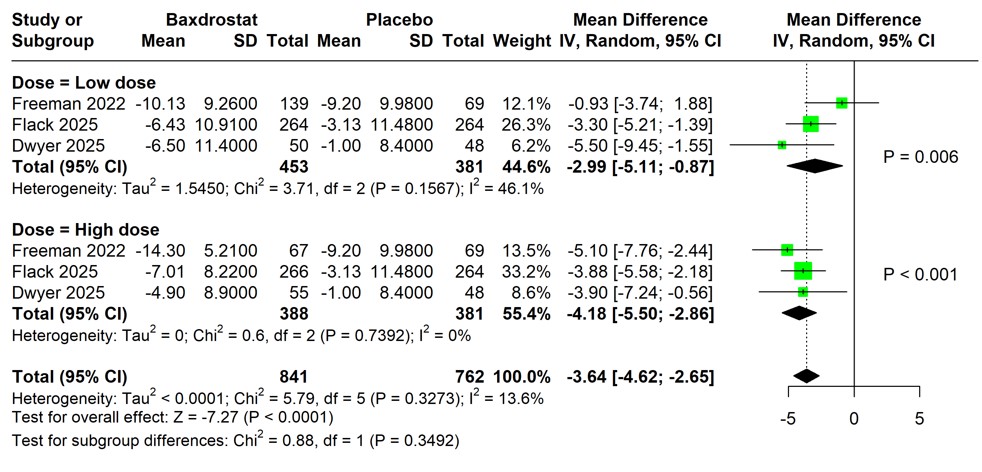
Results: Three RCTs involving patients with resistant or uncontrolled hypertension were included. Baxdrostat significantly reduced systolic blood pressure at low dose [MD: –7.81 mmHg (95% CI: –10.28, –5.33); p<0.001] and high dose [MD: –9.85 mmHg (95% CI: –12.02, –7.69); p<0.001]. Diastolic blood pressure was also significantly reduced at low dose [MD: –2.99 mmHg (95% CI: –5.11, –0.87); p=0.006] and high dose [MD: –4.18 mmHg (95% CI: –5.50, –2.86); p<0.001]. Baxdrostat decreased serum aldosterone and eGFR and increased plasma renin activity, serum potassium, adverse events, and hyperkalemia risk.
Conclusions: Compared with placebo, baxdrostat lowered systolic and diastolic blood pressure in adults with resistant or uncontrolled hypertension, including a CKD-enriched population. The apparent lack of a dose-response difference is based on indirect subgroup analyses of only three trials and should be considered hypothesis-generating rather than evidence of dose equivalence. Hyperkalemia occurred more frequently with baxdrostat, while other safety outcomes remained imprecise. Larger head-to-head dose-comparison trials are needed.
Keywords: Baxdrostat, Aldosterone synthase inhibitor, Resistant hypertension, Uncontrolled hypertension, Meta-analysis
Article information
Introduction
Hypertension is among the most prevalent chronic diseases worldwide and remains a leading modifiable risk factor for cardiovascular and all-cause mortality [1,2,3].
Among individuals with chronic kidney disease (CKD), poorly controlled hypertension is one of the most prevalent modifiable risk factors contributing to cardiovascular morbidity and the progression of renal disease, regardless of the underlying etiology. According to the latest statistics, more than 840 million people worldwide are affected by CKD, with hypertension occurring in up to 90% of these patients [4,5].
Patients with treatment-resistant hypertension are typically managed with a regimen of at least four antihypertensive medications. The goal, according to United States guidelines, is to achieve an office-based blood pressure of less than 130/80 mm Hg. Current clinical guidelines recommend spironolactone, a mineralocorticoid receptor antagonist, as the preferred fourth-line therapeutic agent – a recommendation that guidelines since 2007 [6,7,8] have consistently supported.
Recently, a new class of drugs has emerged: aldosterone synthase inhibitors. Baxdrostat is a selective inhibitor of aldosterone synthase that reduces aldosterone production without significantly affecting cortisol synthesis. Excess aldosterone plays a central role in the pathogenesis of treatment-resistant hypertension through its effects on sodium retention, vascular remodeling, and inflammation [9,10].
Within this clinical context, available placebo-controlled trials of baxdrostat have used a range of doses (0.5 – 4 mg) across populations with varying renal function and diuretic backgrounds. Whether lower-dose regimens provide blood-pressure reductions and a safety profile broadly similar to higher-dose regimens has not yet been examined in a synthesis. We therefore performed a systematic review and meta-analysis of placebo-controlled randomized trials of baxdrostat in adults with resistant or uncontrolled hypertension, with a prespecified indirect subgroup comparison of lower- versus higher-dose regimens for blood pressure, biochemical, and safety outcomes. We frame this as an indirect, hypothesis-generating dose comparison rather than as evidence on the positioning of baxdrostat relative to existing fourth-line therapies such as spironolactone, since none of the included trials include such a comparator.
Methods
This systematic review and meta-analysis were conducted according to the PRISMA 2020 (Preferred Reporting Items for Systematic Reviews and Meta-Analyses) guidelines [11], following the PRISMA checklist and based on the Cochrane Handbook for Systematic Reviews and Meta-Analyses [12]. The protocol of this study was prospectively registered in the International Register of Systematic Reviews (CRD420261293460).
Search strategy and study selection
Our search strategy was performed across five major databases (Embase, Scopus, MEDLINE, the Cochrane Library, and Web of Science) covering the period from their inception to Jan 2026 using the following terms: ((Baxdrostat OR “aldosterone synthase inhibitors” OR ASI) AND (Hypertension OR “blood pressure”)). Duplicates were removed using EndNote software, and, following our predefined eligibility criteria, two authors independently reviewed and retrieved all studies from title, abstract, and full-text searches on the Rayyan website. The third senior author resolved any conflicts. Forward and backward citation analyses were conducted for the included studies and the most recent review articles to identify additional included studies. In addition, we searched ClinicalTrials.gov and the WHO International Clinical Trials Registry Platform (ICTRP) using the term “baxdrostat” to identify any completed, ongoing, or unpublished randomized trials of baxdrostat in hypertension. The disposition of all relevant registered trials retrieved from this search, including any without a peer-reviewed publication, is summarized in Supplementary (Table S2).
Eligibility criteria
All the studies that met the following criteria based on the Population, Intervention, Comparator, and Outcome (PICO) framework were included:
We excluded animal studies, conference abstracts, and non-RCTs. There were no restrictions regarding the included articles’ geographical region, publication date, or foreign language. Resistant hypertension, uncontrolled hypertension on at least two antihypertensive agents, and CKD-associated uncontrolled hypertension were considered eligible because all three populations share the clinical phenotype of inadequate blood-pressure control on guideline-directed background therapy and are the populations in which baxdrostat has been tested in placebo-controlled randomized trials. We acknowledge that these populations differ in baseline renal function and in concomitant therapy and are therefore not directly interchangeable; We pre-specified sensitivity analyses by population type (resistant or uncontrolled hypertension with preserved renal function vs. CKD-enriched population); however, these analyses could not be robustly performed because of the limited number of included trials and substantial clinical heterogeneity across studies.
Data extraction
Data were independently extracted by two authors using a standardized data extraction sheet. Extracted information included:
Biochemical outcomes were extracted according to the laboratory methodologies reported in each original trial. In BaxHTN, serum aldosterone, plasma renin activity, serum creatinine, and baxdrostat drug levels were measured at a central laboratory blinded to treatment allocation. In contrast, serum potassium was assessed at both local and central laboratories. In the CKD-enriched Dwyer et al. trial and the BrigHTN trial, biochemical and laboratory evaluations including serum potassium, aldosterone-related biomarkers, plasma renin activity, and renal function parameters were performed according to protocol-specified laboratory procedures described in the original publications and supplementary appendices. However, detailed assay platform specifications and calibration procedures were not uniformly reported across all included trials, which may introduce some inter-trial laboratory variability.
Risk of bias assessment
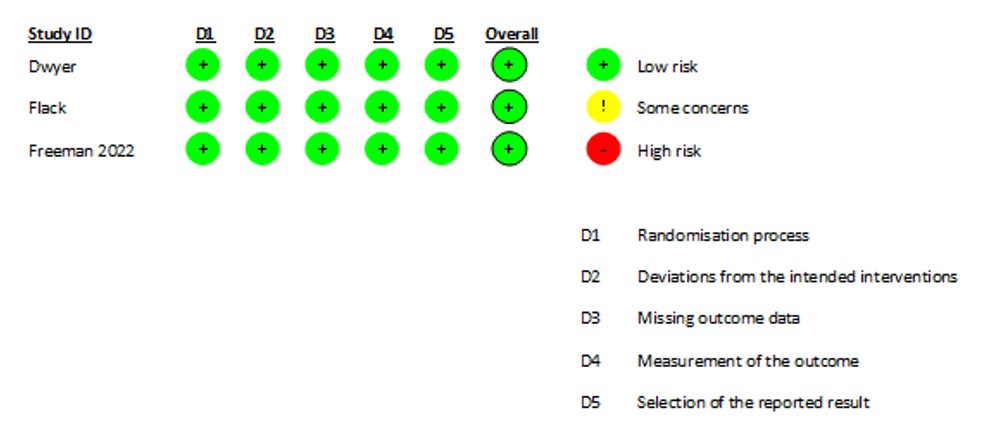
We used the Cochrane Risk of Bias 2.0 (ROB 2) [13] tool to evaluate the quality of included trials. Five bias domains were assessed: (1) randomization process,(2) deviations from intended interventions, (3) missing outcome data, (4) measurement of the outcome, and (5) selection of the reported results. Each domain was rated as having low risk, some concerns, or high risk of bias. All assessments were independently conducted by two reviewers (ALY and AAM), with any discrepancies resolved through discussion and consensus by the senior investigator (AFY).
Statistical analysis
We used R statistical software (version 4.4.2 Build 764) and the ‘meta’ package (version 7.0-0) [14] for all statistical analyses. Continuous data were extracted as mean and standard deviation (SD), while categorical data were extracted as the number of events and the total number in each group. All continuous data reported as medians were converted to means and SDs. We pooled the estimates as risk ratios (RRs) with 95% confidence intervals (CIs) for all dichotomous outcomes, and as mean differences (MDs) with 95% CIs for all continuous outcomes. The overall effect size was significant if the p-value was < 0.05. Heterogeneity was assessed using the I-square and chi-square (Cochrane’s Q) tests [15]. A chi-square p-value less than 0.1 and I-square values 50% were considered to be significant heterogeneity. We conducted a Baujat plot assessment to evaluate the robustness of our meta-analysis. For all available outcomes, subgroup analysis was conducted by dose (low vs. high). We performed a GRADE assessment to evaluate the quality of evidence for each outcome following the Grading of Recommendations Assessment, Development, and Evaluation approach [16]. Quality was assessed based on ROB, inconsistency, indirectness, imprecision, and other considerations, and each outcome was rated as very low, low, moderate, or high. The specific reasons for any downgrading on each domain (risk of bias, inconsistency, indirectness, imprecision, publication bias) for every outcome are reported in the footnotes of Table 2 to make the GRADE judgments transparent. For continuous outcomes, the absolute-effect column of the GRADE summary-of-findings table was anchored to the pooled placebo-arm baseline rather than to zero, so that the displayed mean difference is interpretable. Random-effects models were fitted using the DerSimonian – Laird estimator. We pre-specified that pooled estimates would be reported as change-from-baseline values for continuous outcomes; where a trial reported only end-of-treatment values, change-from-baseline values were reconstructed using the trial-reported standard deviations. For binary outcomes, a continuity correction of 0.5 was applied to studies with zero events in one arm; analyses with zero events in both arms were excluded from pooling for that outcome. Because two of the three included trials are multi-arm studies with more than one baxdrostat dose group sharing a single placebo arm (Freeman 2022; Dwyer 2025), the placebo group was split proportionally to the size of the corresponding baxdrostat arm whenever both low- and high-dose subgroups drew from the same trial, in line with Cochrane Handbook guidance, to avoid double-counting placebo participants in the indirect dose comparison. The Dwyer 2025 trial used a forced dose-escalation regimen at week 3 (0.51 mg and 24 mg) and a longer follow-up window (26 weeks) than the other two trials (12 weeks); we therefore label these as “lower-dose” and “higher-dose” subgroups rather than as fixed-dose arms. Subgroup-difference tests with only three trials are underpowered, and non-significant subgroup-difference results should be interpreted as a failure to detect a difference, not as evidence of dose equivalence. Trial-level units of measurement for the continuous biochemical outcomes (serum aldosterone in ng/dL, plasma renin activity in ng/mL/h, eGFR in mL/min/1.73 m², serum potassium in mmol/L) were harmonized across the included trials before pooling so that all pooled mean differences are reported in a single, clinically interpretable unit per outcome. Binary safety outcomes (any adverse event, any serious adverse event, hyperkalemia, hyponatremia, symptomatic hypotension, mortality) were pooled across all baxdrostat arms versus placebo; dose-stratified safety meta-analyses were not performed because the included trials reported pooled safety counts across all baxdrostat arms versus placebo, and per-arm safety counts were not separately available for every outcome. Sensitivity analysis by trial duration (12 vs. 26 weeks) was likewise not performed because only one trial used a 26-week follow-up, leaving insufficient data for a duration-stratified pooled estimate. The study-level extracted dataset and the R analysis script are provided as a supplementary computational appendix named "R analysis" to support independent reproduction. We redefined the primary clinical endpoint as the change in seated office systolic blood pressure at the end of follow-up; biochemical biomarkers (serum aldosterone, plasma renin activity, serum potassium, eGFR) are treated as supportive mechanistic outcomes rather than co-primary endpoints.
Results
Literature search and baseline characteristics
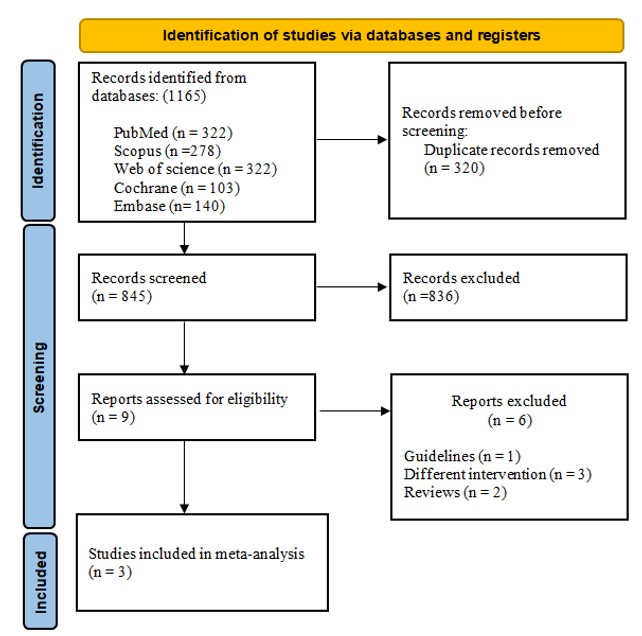
In total, 1165 records were identified through five electronic database searches. 320 duplicates were removed, leaving 845 for title and abstract screening, followed by full-text assessment for eligibility where appropriate. Finally, three studies met the inclusion criteria and were included in this meta-analysis [17,18,19] Figure 1. These randomized controlled trials were all conducted in the UK and US, and published between 2022 and 2025, enrolling a total of 1,264 patients with a mean age of 62 years. All summary details are provided in Supplementary Table 1. The summary of included studies is detailed in Table 1, and all trials were assessed as low risk of bias, as shown in Figure 2.
Meta-analysis
Primary outcomes
Secondary outcomes
All three RCTs provided data on any adverse events, any serious adverse event, death, and hyperkalemia; symptomatic hypotension and hyponatremia were reported in two RCTs. The risk of adverse events and hyperkalemia was significantly higher in the baxdrostat group, whereas the differences for other adverse events did not reach statistical significance (Supplementary Figure 8). Pooled analysis on any adverse events showed [RR: 1.22 (95% CI: 1.01, 1.49); P=0.043] with moderate heterogeneity (I2=50.9, p=0.1307). Pooled analysis on any serious adverse event showed [RR: 1.35 (95% CI: 0.68, 2.68); P=0.384] with low heterogeneity (I²=0, p=0.4277). No deaths were reported in Freeman 2022 [18] or Dwyer 2025 [19] in either study arm. Baxdrostat was not associated with an increased risk of mortality compared with placebo in Flack 2025 [17] [RR: 0.17 (95% CI: 0.01, 4.07); P=0.271]. Pooled analysis on symptomatic hypotension showed [RR: 2.29 (95% CI: 0.59, 8.88); P=0.232] with low heterogeneity (I²=0, p=0.5788). Pooled analysis on hyperkalemia showed [RR: 9.84 (95% CI: 3.70, 26.18); P<0.001] with low heterogeneity (I²=0, p=0.6774). Pooled analysis on hyponatremia did not reach statistical significance [RR: 3.50 (95% CI: 0.76, 16.10); P=0.108] with low heterogeneity (I²=0, p=0.8559).
| Study ID | Flack 2025 | Freeman 2022 | Dwyer 2025 | ||||||||
|---|---|---|---|---|---|---|---|---|---|---|---|
| Study Arms | Baxdrostat 1 mg | Baxdrostat 2 mg | Placebo | Baxdrostat 0.5 mg | Baxdrostat 1 mg | Baxdrostat 2 mg | Placebo | Baxdrostat low dose | Baxdrostat high dose | Placebo | |
| Sample Size | 264 | 266 | 264 | 69 | 70 | 67 | 69 | 65 | 64 | 66 | |
| Age (years) | mean (SD) | 59.8 (11.8) | 61.8 (11.7) | 61.9 (11.6) | 61.5 (10.3) | 62.7 (10.1) | 61.2 (10.8) | 63.8 (10.8) | 67 (13) | 67 (11) | 66 (11) |
| Male | No. (%) | 169 (64.0) | 163 (61.3) | 162 (61.4) | 36 (52) | 37 (53) | 38 (57) | 42 (61) | 42 (65) | 43 (67) | 47 (71) |
| Race or ethnic | Black / AA | 23 (8.7) | 21 (7.9) | 15 (5.7) | 22 (32) | 20 (29) | 19 (28) | 16 (23) | 19 (29) | 24 (38) | 20 (30) |
| group | White | 165 (62.5) | 168 (63.2) | 167 (63.3) | 45 (65) | 48 (69) | 47 (70) | 51 (74) | 41 (63) | 34 (53) | 38 (58) |
| No. (%) | Asian | 65 (24.6) | 72 (27.1) | 72 (27.3) | 1 (1) | 2 (3) | 1 (1) | 2 (3) | 4 (6) | 3 (5) | 5 (8) |
| Office BP | Systolic | 149.7 (10.1) | 149.1 (9.1) | 149.0 (8.7) | 147.6 (12.5) | 147.7 (13.1) | 147.3 (11.8) | 148.9 (12.4) | 150.7 (13.3) | 151.0 (13.0) | 151.9 (13.1) |
| (mm Hg) | Diastolic | 88.0 (10.5) | 85.8 (10.5) | 85.8 (10.5) | 87.6 (7.7) | 87.7 (6) | 88.2 (7.1) | 88.2 (6.1) | 80.8 (9.5) | 80.8 (9.9) | 81.7 (11.1) |
| BMI () | mean (SD) | 31.5 (6.4) | 31.2 (6.2) | 31.1 (6.0) | 33.2 (5.3) | 31.9 (5.2) | 33.3 (5.1) | 32.1 (5.3) | 31.1 (6.3) | 31.0 (6.3) | 31.7 (6.4) |
| eGFR | mean (SD) | 86.6 (18.5) | 84.3 (17.9) | 84.1 (18.0) | 81 (20.4) | 83.2 (20.6) | 85.2 (19.4) | 85.5 (17.5) | 46 (15) | 44 (14) | 44 (15) |
| Comorbidities | Diabetes | 83 (31.4) | 110 (41.4) | 110 (41.7) | 26 (38) | 20 (29) | 31 (46) | 28 (41) | 52 (80) | 45 (70) | 59 (89) |
| No. (%) | Heart failure | NR | NR | NR | NR | NR | NR | NR | 1 (2) | 2 (3) | 3 (5) |
| Medications | Thiazide / TLD | NR | NR | NR | 69 (100) | 70 (100) | 67 (100) | 69 (100) | 30 (46) | 24 (38) | 31 (47) |
| No. (%) | ACEi or ARB | 236 (89.4) | 240 (90.9) | 240 (90.2) | 64 (93) | 65 (93) | 64 (96) | 63 (91) | 65 (100) | 64 (100) | 66 (100) |
| CCB | 177 (67.0) | 184 (69.7) | 191 (71.8) | 44 (64) | 49 (70) | 47 (70) | 47 (68) | NR | NR | NR | |
AA, Black or African American; ACEi, Angiotensin-Converting Enzyme Inhibitors; ARB, Angiotensin Receptor Blocker; BMI, Body Mass Index; BP, Blood Pressure; CCB, Calcium channel blocker; NR, Not reported; SD, Standard deviation; TLD, Thiazide-like diuretic; ^ eGFR units are ml/min/1.73 m².
Additional assessment
GRADE assessment results for the certainty of the evidence are provided in the summary of the findings table Table 2.
| Outcome | No. of participants (studies) | Certainty of the evidence (GRADE) | Relative effect (95% CI) | Anticipated absolute effects (Assumed risk) | |
|---|---|---|---|---|---|
| Placebo | Risk difference with Baxdrostat | ||||
| Systolic BP Low dose | 865(3 RCTs) | Moderate | – | The mean systolic BP Low dose was 149.8 | MD 7.81 lower(10.28 lower to 5.33 lower) |
| Systolic BP High dose | 793(3 RCTs) | Moderate | – | The mean systolic BP High dose was 149.8 | MD 9.85 lower(12.02 lower to 7.69 lower) |
| Diastolic BP Low dose | 834(3 RCTs) | Low | – | The mean diastolic BP Low dose was 80.3 | MD 2.99 lower(5.11 lower to 0.87 lower) |
| Diastolic BP High dose | 769(3 RCTs) | Moderate | – | The mean diastolic BP High dose was 80.3 | MD 4.18 lower(5.5 lower to 2.86 lower) |
| Serum aldosterone Low dose | 585(2 RCTs) | High | – | The mean serum aldosterone Low dose was 6.4 | MD 4.37 lower(5.14 lower to 3.6 lower) |
| Serum aldosterone High dose | 495(2 RCTs) | High | – | The mean serum aldosterone High dose was 6.4 | MD 4.94 lower(5.77 lower to 4.12 lower) |
| Plasma renin activity Low dose | 556(2 RCTs) | High | – | The mean plasma renin activity Low dose was 3.12 | MD 5.54 higher(4.06 higher to 7.01 higher) |
| Plasma renin activity High dose | 481(2 RCTs) | Very low | – | The mean plasma renin activity High dose was 3.12 | MD 8.55 higher(1.09 lower to 18.2 higher) |
| eGFR Low dose | 838(3 RCTs) | Low | – | The mean eGFR Low dose was 44 | MD 5.85 lower(11.1 lower to 0.6 lower) |
| eGFR High dose | 763(3 RCTs) | Low | – | The mean eGFR High dose was 44 | MD 6.79 lower(12 lower to 1.53 lower) |
| Serum potassium Low dose | 657(2 RCTs) | High | – | The mean serum potassium Low dose was 4.2 | MD 0.51 higher(0.41 higher to 0.62 higher) |
| Serum potassium High dose | 657(2 RCTs) | Moderate | – | The mean serum potassium High dose was 4.2 | MD 0.59 higher(0.37 higher to 0.82 higher) |
| Any adverse events | 1256(3 RCTs) | Low | RR 1.22(1.01 to 1.49) | 433 per 1,000 | 95 more per 1,000(from 4 more to 212 more) |
| Any serious adverse events | 1256(3 RCTs) | Moderate | RR 1.35(0.68 to 2.68) | 28 per 1,000 | 10 more per 1,000(from 9 fewer to 47 more) |
| Symptomatic hypotension | 1069(2 RCTs) | Moderate | RR 2.29(0.59 to 8.88) | 6 per 1,000 | 8 more per 1,000(from 2 fewer to 47 more) |
| Hyperkalemia | 1256(3 RCTs) | Moderate | RR 9.84(3.70 to 26.18) | 8 per 1,000 | 67 more per 1,000(from 20 more to 190 more) |
| Hyponatremia | 1206(2 RCTs) | Moderate | RR 3.50(0.76 to 16.10) | 4 per 1,000 | 11 more per 1,000(from 1 fewer to 64 more) |
BP, Blood Pressure; CI, Confidence Interval; eGFR, estimated glomerular filtration rate; MD, Mean Difference; RCTs, Randomized Controlled Trials; RR, Risk Ratio.
Discussion
Our meta-analysis, encompassing data from 1,264 patients across three randomized controlled trials, provides an exploratory indirect comparison of lower- versus higher-dose baxdrostat regimens in uncontrolled and resistant hypertension. While previous meta-analyses [20,21,22] have largely established the efficacy of aldosterone synthase inhibitors (ASIs) against placebo, our specific comparison of low doses (0.5 mg and 1 mg) against high doses (2 mg and 4 mg) provides exploratory observations regarding dose-related effects. We found that Baxdrostat significantly reduces systolic and diastolic blood pressure compared to placebo regardless of the dosage. However, a crucial finding of our analysis is that increasing the dose did not yield a statistically significant advantage in lowering blood pressure. Specifically, the difference in systolic blood pressure reduction between the low and high-dose groups was statistically insignificant (p=0.22), as was the difference in diastolic pressure (p=0.34). Similarly, biochemical markers including serum aldosterone suppression and changes in plasma renin activity did not differ significantly between the two dosing regimens. These results suggest that the present indirect comparison did not demonstrate a statistically detectable advantage of higher-dose regimens. However, given the indirect and underpowered nature of the comparison, these findings should be considered exploratory and hypothesis-generating rather than evidence of dose equivalence, particularly when balancing efficacy against safety risks like hyperkalemia.
The lack of a significant difference between high and low doses contrasts with the initial Phase 2 findings from the BrigHTN [18], which observed a clear linear dose-response where 2 mg was superior to 1 mg. Our pooled analysis, which incorporates newer data from the BaxHTN [17] and FigHTN [19] trials, suggests that the currently available placebo-controlled trials do not consistently demonstrate a clear dose-gradient across heterogeneous populations.
One possible – but speculative – explanation for the apparent absence of a low- versus higher-dose difference relates to differences in trial populations rather than to a true biological dose ceiling, although this interpretation is not directly tested by the present meta-analysis. In the FigHTN trial, which enrolled patients with chronic kidney disease (CKD), the lower-dose group achieved numerically greater blood-pressure reductions than the higher-dose group. Differential responses across populations may therefore reflect population heterogeneity rather than a true biological dose-threshold effect. We note that our meta-analysis is consistent with this idea but does not formally test it: renin activity increased in both subgroups, and the high heterogeneity observed in the high-dose renin analysis (I = 91.2%) is compatible with variable renin-angiotensin-aldosterone system (RAAS) feedback across different patient types but does not establish it. We therefore label these mechanistic explanations as hypotheses to be tested in future trials rather than as conclusions of our analysis.
These observations are exploratory and should not be read as a clinical dosing recommendation. The dose comparison in this review is an indirect subgroup comparison across only three placebo-controlled trials, one of which used dose escalation rather than fixed-dose arms; the absence of a statistically detectable low- versus higher-dose difference does not establish that lower doses are equivalent to higher doses for individual patients. Whether a lower-dose regimen offers a comparable benefit – risk balance to higher-dose regimens in routine care is a hypothesis that requires confirmation in adequately powered, direct head-to-head dose-comparison trials.
Safety is an important consideration with this drug class, but our pooled safety estimates are based on a very small number of trials () and should be interpreted with caution. Hyperkalemia was reported more frequently with baxdrostat than with placebo (pooled RR 9.84, 95% CI 3.70 – 26.18), with a small absolute event rate but a wide confidence interval. Other clinical safety estimates – including any adverse events, serious adverse events, symptomatic hypotension, hyponatremia, and mortality – are imprecise, and several have confidence intervals that cross the null; we therefore do not draw firm comparative safety conclusions from these estimates. We also note that the binary safety estimates were pooled across all baxdrostat arms (any-dose) rather than separately by dose because the included trials reported pooled safety counts across baxdrostat arms versus placebo; we therefore avoid drawing dose-level safety inferences from these any-dose estimates. Mean serum potassium increased in both lower-dose (+0.51 mmol/L) and higher-dose (+0.59 mmol/L) subgroups; the test for subgroup difference was not statistically significant, but with only two trials this comparison is underpowered, and the inclusion of a CKD-enriched trial (Dwyer 2025) introduces an important confounder, since baseline kidney function is itself a strong determinant of potassium response and likely contributes to the high heterogeneity observed in the high-dose subgroup. The same caveat applies to the eGFR signal: the pooled reduction in eGFR observed in both subgroups is heavily influenced by the CKD-enriched trial, and a dose effect cannot be disentangled from a population effect with the present data. Although the eGFR decline may, by analogy with ACE inhibitors and SGLT2 inhibitors [23], it necessitates vigilant monitoring, particularly in the early weeks of treatment.
Several limitations should be taken into account when interpreting these findings. First, only three placebo-controlled randomized trials of baxdrostat were eligible for inclusion. With this number of trials, subgroup-difference tests are underpowered, and a non-significant test for subgroup difference cannot be interpreted as evidence of equivalence between lower- and higher-dose regimens. Second, the dose comparison reported here is an indirect subgroup comparison across placebo-controlled trials rather than a direct head-to-head dose comparison; there is no randomized within-trial evidence that lower-dose regimens are non-inferior to higher-dose regimens. Third, one of the three included trials (Dwyer 2025) used forced dose escalation at week 3 (0.51 mg and 24 mg) and a longer follow-up (26 weeks) than the other two trials (12 weeks); the “lower-dose” and “higher-dose” subgroups are therefore not strictly fixed-dose categories, and results may have been influenced by the additional follow-up and dose-escalation design of that trial. Fourth, the included trials enrolled clinically heterogeneous populations, including resistant or uncontrolled hypertension with preserved renal function and a CKD-enriched population, which limits comparability across studies. Although population- and duration-based sensitivity analyses were pre-specified, these analyses could not be robustly performed because of the small number of eligible trials and the fact that only one study included 26-week follow-up. Fifth, two of the three trials are multi-arm studies with a single shared placebo arm, which is a known unit-of-analysis issue in subgroup meta-analyses and limits the precision achievable from this indirect dose comparison relative to a head-to-head trial design. Sixth, the binary safety outcomes were pooled across all baxdrostat arms in the included trials because per-arm event counts were not separately reported for every outcome; we therefore avoid drawing dose-level safety inferences from these any-dose pooled estimates. Seventh, sensitivity analysis by trial duration (12 vs 26 weeks) could not be performed because only one trial used a 26-week follow-up, and the long-term durability of the observed blood-pressure benefit therefore remains uncertain. Finally, the search did not include conference abstracts; even with the trial-registry search added in this revision, undiscovered or not-yet-published trials could materially influence the conclusions, and we therefore cannot exclude unpublished-data bias.
These observations have implications for the design of future trials. Adequately powered direct head-to-head dose-comparison trials are needed to determine whether a lower-dose regimen offers a comparable benefit – risk balance to a higher-dose regimen, with stratification by baseline renal function. Trials should also include longer follow-up and patient-important endpoints (cardiovascular events, kidney outcomes beyond short-term eGFR change, and longer-term persistence of blood-pressure benefit) rather than relying on short-term blood-pressure and biochemical surrogates alone. Strategies to mitigate the hyperkalemia signal observed in baxdrostat trials warrant prospective evaluation; we note, however, that finerenone is itself a non-steroidal mineralocorticoid receptor antagonist and is associated with hyperkalemia rather than with a lower potassium risk, so co-administration with another agent acting on the same axis would not be expected to reduce hyperkalemia and is not a strategy supported by current evidence. We therefore do not recommend this combination, and any future combination strategy should be selected on the basis of a sound pharmacological rationale and direct trial evidence [24].
Conclusion
In adults with resistant or uncontrolled hypertension, including a CKD-enriched population, baxdrostat reduced systolic and diastolic blood pressure compared with placebo at both lower and higher doses. In an indirect subgroup comparison across these placebo-controlled trials, lower-dose regimens were not statistically distinguishable from higher-dose regimens for blood-pressure or biochemical outcomes; however, this conclusion is limited by the very small number of trials (n = 3), the indirect nature of the dose comparison, the use of dose escalation rather than fixed-dose arms in one trial, the longer follow-up of that trial relative to the others, and the mixed patient populations spanning preserved renal function and CKD. Lower-dose regimens therefore appear promising but cannot be recommended as the preferred strategy in routine care on the basis of this evidence; this finding is hypothesis-generating and requires confirmation in adequately powered, direct head-to-head dose-comparison trials with patient-important endpoints. Hyperkalemia was more frequent with baxdrostat, while estimates for other clinical safety events were imprecise and should not be used to draw firm comparative safety conclusions.
Conflicts of Interest
The authors have no conflicts of interest to declare.
Funding Source
This research received no external funding.
Acknowledgments
None.
Institutional Review Board (IRB)
None.
Large Language Model
None.
Authors Contribution
ALY contributed to conceptualization, methodology, investigation, formal analysis, data curation, writing original draft preparation, and visualization. ME contributed to investigation, data curation, validation, and writing review and editing. AAG contributed to investigation, data curation, validation, and writing review and editing. AAM contributed to validation, quality assessment, and writing review and editing. MNH contributed to validation, quality assessment, and writing review and editing. KAK contributed to methodology, validation, and writing review and editing. AFY contributed to writing review and editing and project administration. All authors read and approved the final manuscript.
Data Availability
All data extracted from the included trials are reported in this article and its supplementary information files. To support independent reproduction, the study-level extracted dataset (per-trial means, standard deviations, event counts, and arm-level sample sizes for every outcome reported here) and the R analysis script used to generate every pooled estimate, forest plot, Baujat plot, and GRADE judgment have been made available as a supplementary computational appendix named “R analysis”
References
- Fryar C. D., Kit B., Carroll M. D., Afful J.. Hypertension Prevalence, Awareness, Treatment, and Control Among Adults Age 18 and Older: United States, August 2021–August 2023. 2024.
- Mancia G., Kreutz R., Brunstrom M., Burnier M., Grassi G., Januszewicz A., Muiesan M. L., Tsioufis K., Agabiti-Rosei E., Algharably E. A. E., Azizi M., Benetos A., Borghi C., Hitij J. B., Cifkova R., Coca A., Cornelissen V., Cruickshank J. K., Cunha P. G., Danser A. H. J., Pinho R. M., Delles C., Dominiczak A. F., Dorobantu M., Doumas M., Fernandez-Alfonso M. S., Halimi J. M., Jarai Z., Jelakovic B., Jordan J., Kuznetsova T., Laurent S., Lovic D., Lurbe E., Mahfoud F., Manolis A., Miglinas M., Narkiewicz K., Niiranen T., Palatini P., Parati G., Pathak A., Persu A., Polonia J., Redon J., Sarafidis P., Schmieder R., Spronck B., Stabouli S., Stergiou G., Taddei S., Thomopoulos C., Tomaszewski M., Van de Borne P., Wanner C., Weber T., Williams B., Zhang Z. Y., Kjeldsen S. E.. 2023 ESH Guidelines for the management of arterial hypertension The Task Force for the management of arterial hypertension of the European Society of Hypertension: Endorsed by the International Society of Hypertension (ISH) and the European Renal Association (ERA). J Hypertens. 2023;41(12):1874-2071. doi:10.1097/HJH.0000000000003480 PMID: 37345492
- Unger T., Borghi C., Charchar F., Khan N. A., Poulter N. R., Prabhakaran D., Ramirez A., Schlaich M., Stergiou G. S., Tomaszewski M., Wainford R. D., Williams B., Schutte A. E.. 2020 International Society of Hypertension Global Hypertension Practice Guidelines. Hypertension. 2020;75(6):1334-1357. doi:10.1161/HYPERTENSIONAHA.120.15026 PMID: 32370572
- Francis A., Harhay M. N., Ong A. C. M., Tummalapalli S. L., Ortiz A., Fogo A. B., Fliser D., Roy-Chaudhury P., Fontana M., Nangaku M., Wanner C., Malik C., Hradsky A., Adu D., Bavanandan S., Cusumano A., Sola L., Ulasi I., Jha V., American Society of Nephrology, European Renal Association, International Society of Nephrology. Chronic kidney disease and the global public health agenda: an international consensus. Nat Rev Nephrol. 2024;20(7):473-485. doi:10.1038/s41581-024-00820-6 PMID: 38570631
- Muntner P., Anderson A., Charleston J., Chen Z., Ford V., Makos G., O'Connor A., Perumal K., Rahman M., Steigerwalt S., Teal V., Townsend R., Weir M., Wright J. T., Jr., Chronic Renal Insufficiency Cohort Study Investigators. Hypertension awareness, treatment, and control in adults with CKD: results from the Chronic Renal Insufficiency Cohort (CRIC) Study. Am J Kidney Dis. 2010;55(3):441-51. doi:10.1053/j.ajkd.2009.09.014 PMID: 19962808 PMCID: PMC2866514
- Azizi M., Riancho J., Amar L.. Aldosterone Synthase Inhibitors: A Revival for Treatment of Renal and Cardiovascular Diseases. J Clin Endocrinol Metab. 2025;110(3):e557-e565. doi:10.1210/clinem/dgae823 PMID: 39656736
- Centers for Disease Control and Prevention. Hypertension Prevalence in the U.S. | Million Hearts® [Internet]. 2023.
- Freeman M. W., Bond M., Murphy B., Hui J., Isaacsohn J.. Results from a phase 1, randomized, double-blind, multiple ascending dose study characterizing the pharmacokinetics and demonstrating the safety and selectivity of the aldosterone synthase inhibitor baxdrostat in healthy volunteers. Hypertens Res. 2023;46(1):108-118. doi:10.1038/s41440-022-01070-4 PMID: 36266539 PMCID: PMC9747611
- Bogman K., Schwab D., Delporte M. L., Palermo G., Amrein K., Mohr S., De Vera Mudry M. C., Brown M. J., Ferber P.. Preclinical and Early Clinical Profile of a Highly Selective and Potent Oral Inhibitor of Aldosterone Synthase (CYP11B2). Hypertension. 2017;69(1):189-196. doi:10.1161/HYPERTENSIONAHA.116.07716 PMID: 27872236 PMCID: PMC5142369
- Sterne J. A. C., Savovic J., Page M. J., Elbers R. G., Blencowe N. S., Boutron I., Cates C. J., Cheng H. Y., Corbett M. S., Eldridge S. M., Emberson J. R., Hernan M. A., Hopewell S., Hrobjartsson A., Junqueira D. R., Juni P., Kirkham J. J., Lasserson T., Li T., McAleenan A., Reeves B. C., Shepperd S., Shrier I., Stewart L. A., Tilling K., White I. R., Whiting P. F., Higgins J. P. T.. RoB 2: a revised tool for assessing risk of bias in randomised trials. BMJ. 2019;366:l4898. doi:10.1136/bmj.l4898 PMID: 31462531
- Shamim Muhammad Aaqib, Gandhi Aravind P., Dwivedi Pradeep, Padhi Bijaya Kumar. How to perform meta-analysis in R: a simple yet comprehensive guide. The Evidence. 2023;1(1):93-113. doi:10.61505/evidence.2023.1.1.6
- Prasad Manya. Introduction to the GRADE tool for rating certainty in evidence and recommendations. Clinical Epidemiology and Global Health. 2024;25. doi:10.1016/j.cegh.2023.101484
- Dwyer J. P., Maklad N., Vedin O., Monyak J., Myte R., Chertow G. M., Heerspink H. J. L., Little D. J.. Efficacy and Safety of Baxdrostat in Participants with CKD and Uncontrolled Hypertension: A Randomized, Double-Blind, Placebo-Controlled Trial. J Am Soc Nephrol. 2026;37(2):299-311. doi:10.1681/ASN.0000000849 PMID: 40913594 PMCID: PMC12889919
- Flack J. M., Azizi M., Brown J. M., Dwyer J. P., Fronczek J., Jones E. S. W., Olsson D. S., Perl S., Shibata H., Wang J. G., Wilderang U., Wittes J., Williams B., Bax H. T. N. Investigators. Efficacy and Safety of Baxdrostat in Uncontrolled and Resistant Hypertension. N Engl J Med. 2025;393(14):1363-1374. doi:10.1056/NEJMoa2507109 PMID: 40888730 PMCID: PMC7618089
- Freeman M. W., Halvorsen Y. D., Marshall W., Pater M., Isaacsohn J., Pearce C., Murphy B., Alp N., Srivastava A., Bhatt D. L., Brown M. J., Brig H. T. N. Investigators. Phase 2 Trial of Baxdrostat for Treatment-Resistant Hypertension. N Engl J Med. 2023;388(5):395-405. doi:10.1056/NEJMoa2213169 PMID: 36342143
- Gao Y., Mu X., Pang X.. Efficacy and safety of aldosterone synthase inhibitors for uncontrolled hypertension: a meta-analysis of randomized controlled trials and systematic review. Front Pharmacol. 2025;16:1664810. doi:10.3389/fphar.2025.1664810 PMID: 41059210 PMCID: PMC12497756
- Goh J. S., Sohail S., Ayub H., Cheema Z. Z., Paray N. B., Adikari S., Mesmar A., Atout M., Qazi A. R., Aldalqamouni A., Younas B., Rauf M. A., Khan M. A. W., Abouayana A., Abouayana A. E. A., Hasan A., Shahzad M., Ahmed M., Ahmed R., Ahmed S.. Efficacy and Safety of Aldosterone Synthase Inhibitors in Hypertension: A Systematic Review and Meta-Analysis. Endocrinol Diabetes Metab. 2025;8(5):e70094. doi:10.1002/edm2.70094 PMID: 40944342 PMCID: PMC12432333
- Lytvyn Y., Kimura K., Peter N., Lai V., Tse J., Cham L., Perkins B. A., Soleymanlou N., Cherney D. Z. I.. Renal and Vascular Effects of Combined SGLT2 and Angiotensin-Converting Enzyme Inhibition. Circulation. 2022;146(6):450-462. doi:10.1161/CIRCULATIONAHA.122.059150 PMID: 35862082 PMCID: PMC9354594
- Siddiqui R., Nadeem H., Sattar M. A., Rehan M., Sheikh D. N., Jawed S., Akram A.. Efficacy and safety of aldosterone synthase inhibitors in hypertension: A systematic review and meta- analysis. Curr Probl Cardiol. 2024;49(12):102875. doi:10.1016/j.cpcardiol.2024.102875 PMID: 39384143
- Moher D., Liberati A., Tetzlaff J., Altman D. G.. Preferred reporting items for systematic reviews and meta-analyses: the PRISMA statement. Int J Surg. 2010;8(5):336-41. doi:10.1016/j.ijsu.2010.02.007 PMID: 20171303
- Tuttle K. R., Hauske S. J., Canziani M. E., Caramori M. L., Cherney D., Cronin L., Heerspink H. J. L., Hugo C., Nangaku M., Rotter R. C., Silva A., Shah S. V., Sun Z., Urbach D., de Zeeuw D., Rossing P., group A. Si in CKD. Efficacy and safety of aldosterone synthase inhibition with and without empagliflozin for chronic kidney disease: a randomised, controlled, phase 2 trial. Lancet. 2024;403(10424):379-390. doi:10.1016/S0140-6736(23)02408-X PMID: 38109916
- Whelton P. K., Carey R. M., Aronow W. S., Casey D. E., Jr., Collins K. J., Dennison Himmelfarb C., DePalma S. M., Gidding S., Jamerson K. A., Jones D. W., MacLaughlin E. J., Muntner P., Ovbiagele B., Smith S. C., Jr., Spencer C. C., Stafford R. S., Taler S. J., Thomas R. J., Williams K. A., Sr., Williamson J. D., Wright J. T., Jr.. 2017 ACC/AHA/AAPA/ABC/ACPM/AGS/APhA/ASH/ASPC/NMA/PCNA Guideline for the Prevention, Detection, Evaluation, and Management of High Blood Pressure in Adults: A Report of the American College of Cardiology/American Heart Association Task Force on Clinical Practice Guidelines. J Am Coll Cardiol. 2018;71(19):e127-e248. doi:10.1016/j.jacc.2017.11.006 PMID: 29146535
- Chandler Jacqueline, Cumpston Miranda, Li Tianjing. Cochrane handbook for systematic reviews of interventions.
- Deeks Jonathan J, Higgins Julian PT, Altman Douglas G, Cochrane Statistical Methods Group. Analysing data and undertaking meta‐analyses. Cochrane handbook for systematic reviews of interventions. 2019:241-284.