Trends and Sociodemographic Differences in Mortality Among U.S. Adults with Mitral Regurgitation as the Underlying Cause and Heart Failure as a Contributing Cause of Death, 1999–2024
Muhammad Salman MustafaⒾ1*, Fakhar LatifⒾ1, Laxmi MehrajⒾ2, Fatima Mashhood2, Manaal Waheed2, Ayesha Siddiqui2, Zainab Usman2, Harsh Kumar2
- 1Department of Medicine and Surgery, Dow University of Health Sciences, Karachi, Sindh, Pakistan
- 2Department of Medicine and Surgery, Jinnah Sindh Medical University, Karachi, Sindh, Pakistan
Abstract
Background: The coexistence of heart failure (HF) and mitral regurgitation (MR) contributes substantially to cardiovascular mortality in the United States.
Methods: We analyzed CDC WONDER multiple-cause-of-death data (1999–2024) for U.S. adults with MR listed as the underlying cause of death and HF as a contributing cause. We standardized age-adjusted mortality rates (AAMRs) per 100,000 to the 2000 U.S. standard population. Joinpoint regression estimated annual percentage changes (APCs) and average annual percentage changes (AAPCs).
Results: Among 48,128 deaths, AAMR declined significantly from 1.11 in 1999 to 0.72 in 2024 (AAPC: -1.60; 95% CI: -1.92 to -1.28). Mortality was higher among females than males (average AAMR: 0.83 vs 0.74). NH White adults had the highest mortality (0.86), whereas Hispanic or Latino individuals had the lowest (0.47). Older adults had the greatest burden (3.95). Rural mortality exceeded urban mortality (0.87 vs 0.84) through 2020. The West reported the highest regional average AAMR (1.03); Oregon and Louisiana recorded the highest and lowest state-level mean annual AAMRs, respectively (1.67 and 0.51).
Conclusions: Mortality showed a biphasic pattern, declining significantly from 1999–2012 (APC: -3.29; p<0.001), followed by a non-significant increase through 2024 (APC: 0.26; p=0.319). Burdens were higher among females, older adults, rural populations, NH White individuals, and western residents. NH Black adults showed a significant increase after 2013 (APC: +3.10; p<0.001), suggesting an emerging disparity. These findings support earlier detection, equitable access to advanced therapies including transcatheter edge-to-edge repair (TEER), and targeted strategies to reduce mortality disparities.
Keywords: Heart Failure, Mitral Regurgitation, Sociodemographic Variations, Cardiology, Epidemiology
Article information
Abbreviations
CDC WONDER, Centers for Disease Control and Prevention Wide-Ranging Online Data for Epidemiologic Research; HF, Heart Failure; MR, Mitral Regurgitation; AAMR, Age-Adjusted Mortality Rate; APC, Annual Percentage Change; CI, Confidence Interval; NH, Non-Hispanic; ICD-10, International Statistical Classification of Diseases, Tenth Revision; TEER, Transcatheter Edge-to-Edge Repair; CVD, Cardiovascular Disease; POD, Place of Death.
Introduction
Mitral regurgitation (MR) is the most common valvular heart disease in the United States and frequently coexists with heart failure (HF) [1]. MR arises from incomplete coaptation of the mitral valve leaflets, resulting in retrograde blood flow into the left atrium during systole, which may precipitate atrial fibrillation, progressive left ventricular dysfunction, and ultimately overt HF [2]. Together, MR and HF represent a clinically significant and pathophysiologically interrelated disease state associated with adverse cardiovascular outcomes. Population-based data indicate that moderate-to-severe MR is present in a substantial proportion of patients with established cardiovascular disease, contributing to increased rates of hospitalization and death [3]. As the U.S. population continues to age, the rising prevalence of cardiovascular risk factors, including hypertension, diabetes mellitus, obesity, and coronary artery disease, further amplifies the burden of both HF and valvular conditions such as MR [4].
Despite the clinical significance of this comorbid relationship, existing national mortality analyses have focused predominantly on either HF or MR in isolation. Parcha et al. (2020) examined MR-related mortality trends in the United States from 1999 to 2018 using CDC WONDER, while Tan et al. (2024) described valvular heart disease mortality trends through 2020. Critically, neither study defined the specific death certificate coding framework in which MR serves as the underlying cause of death and HF as a contributing cause, nor did either analysis extend to the post-COVID period (2020–2024), during which pandemic-related disruptions may have altered mortality trajectories [5,6]. Consequently, the combined impact of MR and HF on mortality, as well as associated sociodemographic disparities, remains incompletely characterized. By analyzing 25 years of national mortality data through 2024, this study addresses a distinct and previously uncharacterized epidemiological gap.
In this study, we evaluated national mortality trends associated with the co-occurrence of MR as the underlying cause of death and HF as a contributing cause among U.S. adults from 1999 to 2024 — a period encompassing major therapeutic advances, including transcatheter edge-to-edge repair (TEER) approval and updated ACC/AHA heart failure guidelines, the COVID-19 pandemic, and a secular rise in cardiometabolic risk burden. We further assessed disparities across sex, race and ethnicity, age, urbanization, census region, and state to identify populations at disproportionate risk that may benefit from targeted clinical and public health strategies.
Methods
Study Design
We conducted a retrospective population-based analysis of national mortality data obtained from the CDC WONDER (Centers for Disease Control and Prevention Wide-Ranging Online Data for Epidemiologic Research) database [7]. Mortality records from 1999 to 2024 were analyzed to identify deaths among U.S. adults in whom both MR and HF were reported on the death certificate. ICD-10 (International Classification of Diseases, Tenth Revision) codes were used to identify each condition: HF was defined using codes I11.0, I50.0, I50.1, and I50.9, while MR was defined using codes I05.1, I05.2, I05.9, I34.0, I34.9, Q23.3, and Q23.9, consistent with previously published epidemiological studies of valvular heart disease and heart failure mortality [8,9,10].
In this analysis, MR-related conditions were designated as the underlying cause of death (UCD)—defined as the condition that initiated the chain of events leading to death—while HF codes were included as multiple causes of death (MCD), representing contributing conditions listed on the death certificate. We selected this analytical framework to capture deaths in which structural or degenerative MR plausibly initiated a pathophysiological sequence culminating in HF, consistent with the approach used in prior analyses of valvular disease-mediated HF mortality [1,11]. We acknowledge that UCD attribution on death certificates involves physician judgment and may not uniformly capture cases in which HF is the primary clinical driver and MR a secondary contributor. This limitation is inherent to all death certificate-based analyses and is addressed further in the Limitations section.
The CDC WONDER mortality dataset compiles cause-of-death information from death certificates across all 50 U.S. states and the District of Columbia, and it has been widely used to evaluate national mortality trends in cardiovascular diseases. Because this study utilized publicly available, de-identified secondary data, institutional review board approval and informed consent were not required. The study followed the STROBE (Strengthening the Reporting of Observational Studies in Epidemiology) reporting guidelines for observational studies [12].
Data Extraction
We stratified data by place of death (POD), race and ethnicity, sex, urbanization, age group, census region, and state. Place of death was categorized as medical facilities (inpatient), decedent’s home, hospice facility, nursing home or long-term care facility, other locations, and unknown. Race/ethnicity was classified using the mutually exclusive Hispanic Origin–Race recode variable in CDC WONDER, yielding the following non-overlapping groups: Non-Hispanic White, NH Black or African American, NH Asian or Pacific Islander, and Hispanic or Latino. NH American Indian or Alaska Native deaths were suppressed by CDC WONDER due to cell counts below 10 and were excluded from race-stratified analyses. We categorized age groups as middle-aged adults (45–64 years) and older adults, the latter further subdivided into three narrower bands (65–74 years, 75–84 years, and 85 years) to assess within-group heterogeneity. We classified census regions as Midwest, South, West, and Northeast per U.S. Census Bureau definitions [13]. We classified urbanization using the 2013 National Center for Health Statistics Urban–Rural Classification Scheme for Counties, which distinguishes urban areas (population 1 million) from rural areas (population <50,000) [14]. Urbanization data were available only through 2020, as the 2013 NCHS scheme had not been updated with a newer vintage in CDC WONDER at the time of this analysis; consequently, all urban-rural analyses in this study are restricted to 1999–2020. All geographic analyses (state, census region, and urban-rural) used the decedent’s state of residence as recorded on the death certificate, consistent with standard epidemiological practice of matching mortality counts to residence-based population denominators. Mortality data obtained from CDC WONDER were final at the time of extraction and were accessed on March 3, 2026.
Statistical Analysis
We calculated age-adjusted mortality rates (AAMRs) per 100,000 population to evaluate annual mortality trends from 1999 to 2024. We standardized AAMRs to the 2000 U.S. standard population using direct standardization via the CDC WONDER platform, in accordance with accepted national mortality surveillance procedures. We then stratified mean annual AAMRs by sex, race and ethnicity, age group, urbanization (data available for 1999–2020 only), state, and census region. Where reported, mean annual AAMR values represent the arithmetic average of yearly age-adjusted mortality rates across the study period.
The primary outcome was the overall national AAMR trend from 1999 to 2024. We conducted exploratory secondary analyses stratified by sex, race/ethnicity, age group, urbanization, census region, and state.
Temporal trends in AAMR were analyzed using Joinpoint Regression software (version 4.9.0.0; National Cancer Institute, Bethesda, MD), which identifies statistically significant inflection points in mortality trends and estimates the Annual Percent Change (APC) and Average Annual Percent Change (AAPC) with 95% confidence intervals (CIs) for each trend segment. We set the maximum number of joinpoints to four and selected the optimal model using the permutation test method described by Kim et al. We accounted for heteroscedastic and correlated errors using the standard errors provided in the CDC extraction sheet, and we also weighted annual AAMRs accordingly. We excluded CDC-suppressed data points entirely and did not incorporate them into model fitting. For APC and AAPC estimation, we used a parametric permutation model with an overall significance level of 0.05 and a maximum of 4,499 permutations. We used a two-tailed t-test to assess statistical significance, with the null hypothesis that the APC equals zero; we considered p-values <0.05 statistically significant. No formal adjustment for multiple comparisons was applied, as this study is descriptive and hypothesis-generating; accordingly, interpret findings from subgroup analyses with caution. Estimates based on fewer than 10 deaths were suppressed by CDC WONDER and excluded from analysis. To address potential confounding from shifting age composition within the older adult group, we conducted a sensitivity analysis presenting crude mortality rates (per 100,000) across three narrower age bands (65–74, 75–84, and 85 years) from 1999 to 2024.
Because this analysis used publicly available, aggregated mortality data, we could not adjust for individual-level covariates. Unmeasured confounders such as socioeconomic status, insurance coverage, comorbidity burden, and variability in death certificate coding practices may influence the observed associations between demographic or geographic variables and AAMR. Interpret all findings as descriptive epidemiological associations rather than causal estimates, and consider the potential for residual confounding when evaluating subgroup differences.
Results
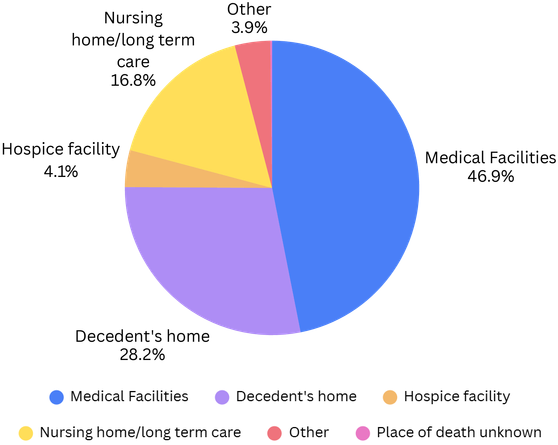
From 1999 to 2024, a total of 48,128 deaths were attributed to the co-occurrence of MR as the underlying cause of death and HF as a contributing cause among U.S. adults. Of these, 65.32% (n=31,441) occurred among females and 34.67% (n=16,687) among males (Supplemental Table 1). Regarding place of death, 22,568 (46.89%) deaths occurred in medical facilities, 13,573 (28.20%) at the decedent’s home, 8,073 (16.77%) in nursing homes or long-term care facilities, 1,951 (4.05%) in hospice facilities, 1,873 (3.90%) at other locations, and 90 (0.19%) at unknown locations (Supplemental Table 2, Figure Figure 1). The predominance of in-hospital deaths is consistent with the advanced disease burden typically observed in this patient population.
Overall Trend for AAMR
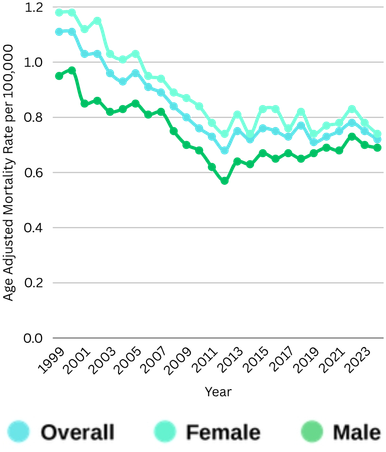
The overall AAMR declined significantly from 1.11 per 100,000 in 1999 to 0.72 per 100,000 in 2024 (AAPC: 1.60; 95% CI: 1.92 to 1.28; p<0.001). Joinpoint analysis identified a biphasic pattern: a significant decline from 1.11 in 1999 to 0.68 in 2012 (APC: 3.29; 95% CI: 3.71 to 2.87; p<0.001), followed by a non-significant trend toward increase from 0.68 in 2012 to 0.72 in 2024 (APC: 0.26; 95% CI: 0.27 to 0.80; p=0.319) (Supplemental Tables 3, 4; Figure Figure 2). The initial decline likely reflects the implementation of evidence-based HF therapies and expanded valvular disease surveillance during this period, while the subsequent plateau warrants continued epidemiological monitoring.
Demographic Differences
Sex-Stratified Analysis
Throughout the study period, females consistently had a higher AAMR than males. Among females, AAMR declined significantly from 1.18 in 1999 to 0.74 in 2012 (APC: 3.29; 95% CI: 3.90 to 2.68; p<0.001), followed by a statistically stable period from 2012 to 2024, during which the AAMR remained unchanged at 0.74 (APC: 0.01; 95% CI: 0.65 to 0.64; p=0.985). Among males, AAMR declined from 0.95 in 1999 to 0.82 in 2007 (APC: 1.92; 95% CI: 2.98 to 0.84; p=0.002), followed by a steeper and significant decline from 0.82 in 2007 to 0.62 in 2011 (APC: 6.23; 95% CI: 10.87 to 1.35; p=0.016). A significant increase was subsequently observed from 0.62 in 2011 to 0.69 in 2024 (APC: 1.03; 95% CI: 0.51 to 1.57; p=0.001) (Supplemental Tables 3, 4; Figure Figure 2). The persistently higher AAMR among females, combined with the rising trend among males after 2011, suggests sex-specific differences in disease trajectory that merit further investigation.
Race and Ethnicity-Stratified Analysis
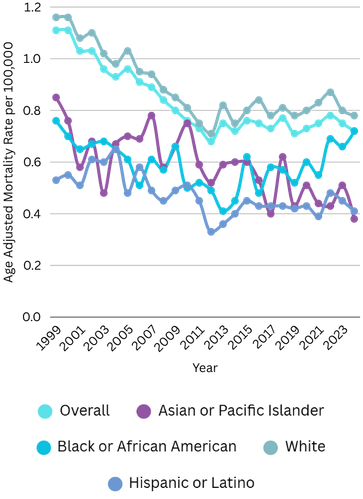
Throughout the study period, NH White adults exhibited the highest AAMR across all racial and ethnic groups, while Hispanic or Latino individuals demonstrated the lowest.
Among NH White individuals, AAMR declined significantly from 1.14 in 1999 to 0.70 in 2012 (APC: 3.43; 95% CI: 3.99 to 2.86; p<0.001), followed by a non-significant trend toward increase from 0.70 to 0.75 between 2012 and 2024 (APC: 0.45; 95% CI: 0.22 to 1.12; p=0.176). The overall AAMR declined significantly across the full study period (AAPC: 1.59; 95% CI: 1.99 to 1.18; p<0.001). Among NH Asian or Pacific Islander individuals, AAMR declined from 0.87 (95% CI: 0.58–1.25) in 1999 to 0.37 (95% CI: 0.28–0.48) in 2024, representing a significant overall decrease (AAPC: 2.14; 95% CI: 2.95 to 1.33; p=0.001). Among NH Black or African American individuals, AAMR declined significantly from 0.77 in 1999 to 0.40 in 2013 (APC: 3.10; 95% CI: 4.32 to 1.87; p=0.001), followed by a significant increase from 0.40 in 2013 to 0.67 in 2024 (APC: +3.10; 95% CI: +1.41 to +4.82; p<0.001). The overall AAMR trend across the full study period was not statistically significant (AAPC: 0.42; 95% CI: 1.37 to 0.54; p=0.389). Among Hispanic or Latino individuals, AAMR declined from 0.53 in 1999 to 0.36 in 2013 (APC: 2.91; 95% CI: 4.47 to 1.32; p<0.001), followed by a non-significant trend toward increase from 0.36 to 0.41 between 2013 and 2024 (APC: 0.56; 95% CI: 1.15 to 2.30; p=0.506). The overall AAMR declined significantly across the full study period (AAPC: 1.40; 95% CI: 2.49 to 0.29; p=0.013) (Supplemental Tables 3, 5; Figure Figure 3).
Notably, the significant post-2013 increase in AAMR among NH Black adults, in contrast to the stable or improving trends among other racial and ethnic groups, represents an important and emerging disparity warranting further investigation.
Age-Stratified Analysis
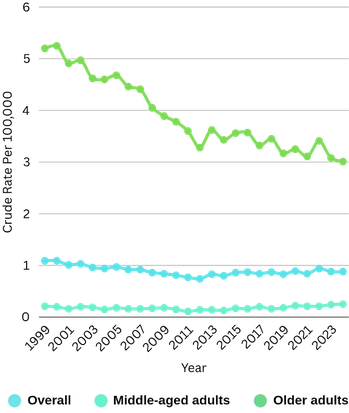
Older adults consistently exhibited substantially higher AAMRs than middle-aged adults throughout the study period, reflecting the markedly greater burden of HF- and MR-related mortality with advancing age. Among middle-aged adults (45–64 years), AAMR declined significantly from 0.22 in 1999 to 0.14 in 2013 (APC: 2.49; 95% CI: 4.04 to 0.92; p=0.003), followed by a significant increase from 0.14 in 2013 to 0.22 in 2024 (APC: +3.45; 95% CI: +1.39 to +5.56; p=0.002). Among older adults (65 years), AAMR declined significantly from 5.30 in 1999 to 3.26 in 2012 (APC: 3.35; 95% CI: 3.78 to 2.91; p<0.001), followed by a non-significant and essentially stable period from 3.26 in 2012 to 3.32 in 2024 (APC: +0.02; 95% CI: 0.49 to 0.54; p=0.924). Overall, older adults had substantially higher AAMRs than middle-aged adults across the entire study period, with mean AAMRs of 3.95 (95% CI: 3.76–4.14) and 0.18 (95% CI: 0.14–0.20), respectively (Supplemental Tables 3, 6; Figure Figure 4). The significant post-2013 rise in AAMR among middle-aged adults parallels the trend observed in NH Black adults. It may reflect the converging influence of rising cardiometabolic risk factors in this age group.
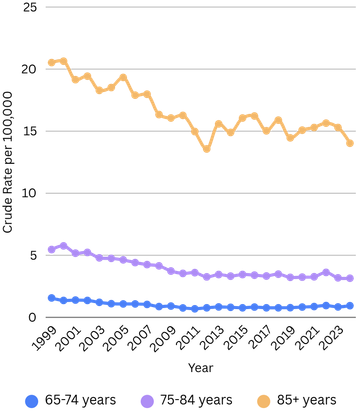
To evaluate whether the observed stabilization in older adult mortality after 2012 reflected true within-band trends rather than shifts in age composition, we performed a sensitivity analysis stratifying older adults into three narrower bands (Supplemental Table 10; Figure Figure 5). Among adults aged 65–74 years, crude mortality rates declined markedly from 1.56 per 100,000 in 1999 to 0.76 in 2010, then stabilized through 2024 (0.94). Among adults aged 75–84 years, rates declined from 5.46 in 1999 to 3.15 in 2024, with a plateau apparent after approximately 2012. The steepest absolute decline was observed among adults aged 85 years, with rates falling from 20.53 in 1999 to 14.03 in 2024, though rates have remained relatively stable since approximately 2013–2015. Importantly, the parallel declining-then-stabilizing trajectory observed across all three narrower bands suggests that the pattern observed in the aggregate older adult group reflects genuine within-stratum trends rather than compositional age-structure changes.
Regional Variation
Stratified by Urbanization
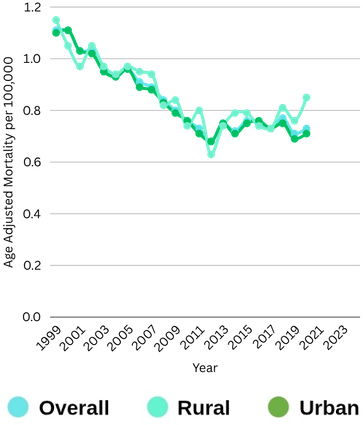
Urban-rural analyses are limited to 1999–2020 due to data availability. AAMR declined in both urban and rural areas over this period, with rural areas consistently showing higher rates. In urban areas, the AAMR decreased from 1.10 (95% CI: 1.04–1.15) in 1999 to 0.71 (95% CI: 0.68–0.75) in 2020. In rural areas, AAMR declined from 1.15 (95% CI: 1.03–1.26) in 1999 to 0.85 (95% CI: 0.76–0.94) in 2020.
In urban areas, the overall AAMR declined significantly across the study period (AAPC: 2.03; 95% CI: 2.49 to 1.57; p<0.001), driven by a significant decline from 1999 to 2012 (APC: 3.33; 95% CI: 3.81 to 2.85; p<0.001), followed by a non-significant trend toward increase from 2012 to 2020 (APC: 0.13; 95% CI: 0.93 to 1.19; p=0.805). In rural areas, the overall AAMR also declined significantly (AAPC: 1.59; 95% CI: 2.32 to 0.85; p<0.001), with a significant decline from 1999 to 2012 (APC: 3.24; 95% CI: 4.03 to 2.45; p<0.001), followed by a non-significant trend toward increase from 2012 to 2020 (APC: 1.16; 95% CI: 0.50 to 2.84; p=0.159) (Supplemental Tables 3, 8; Figure Figure 6). The persistently higher AAMR in rural areas, despite an overall declining trend, suggests that structural barriers to cardiovascular care access continue to contribute to excess mortality in rural populations.
Stratified by Census Region
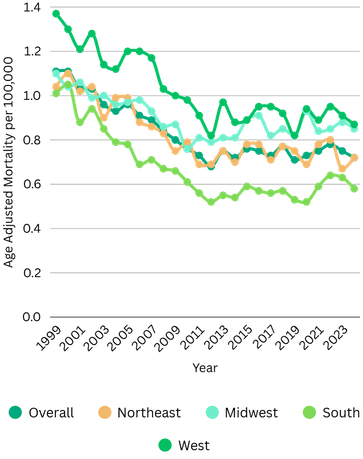
AAMR declined across all four U.S. census regions from 1999 to 2024. End-point AAMRs were as follows: Northeast, 1.04 (95% CI: 0.94–1.14) in 1999 to 0.72 (95% CI: 0.65–0.80) in 2024; Midwest, 1.10 (95% CI: 1.00–1.20) to 0.85 (95% CI: 0.78–0.93); South, 1.01 (95% CI: 0.93–1.09) to 0.58 (95% CI: 0.54–0.63); and West, 1.37 (95% CI: 1.25–1.50) to 0.87 (95% CI: 0.80–0.95).
In the Northeast, AAMR declined significantly from 1.04 in 1999 to 0.69 in 2011 (APC: 3.34; 95% CI: 4.21 to 2.45; p<0.001), followed by a non-significant and stable period from 2011 to 2024 (APC: 0.03; 95% CI: 0.87 to 0.93; p=0.947); overall AAPC: 1.60 (95% CI: 2.19 to 1.00; p<0.001). In the Midwest, AAMR declined significantly from 1.10 in 1999 to 0.81 in 2011 (APC: 2.44; 95% CI: 3.19 to 1.68; p<0.001), followed by a non-significant trend toward increase from 0.81 to 0.85 between 2011 and 2024 (APC: 0.58; 95% CI: 0.11 to 1.27; p=0.094); overall AAPC: 0.88 (95% CI: 1.36 to 0.40; p<0.001). In the South, AAMR declined markedly from 1.01 in 1999 to 0.52 in 2012 (APC: 4.96; 95% CI: 5.76 to 4.16; p<0.001), followed by a non-significant trend toward increase from 0.52 to 0.58 between 2012 and 2024 (APC: 0.86; 95% CI: 0.07 to 1.80; p=0.070); overall AAPC: 2.21 (95% CI: 2.78 to 1.63; p<0.001). In the West, AAMR declined significantly from 1.37 in 1999 to 0.82 in 2012 (APC: 2.98; 95% CI: 3.74 to 2.22; p<0.001), followed by a non-significant period from 2012 to 2024 (APC: 0.11; 95% CI: 0.95 to 0.73; p=0.779); overall AAPC: 1.62 (95% CI: 2.15 to 1.08; p<0.001) (Supplemental Tables 3, 7; Figure Figure 7). The West consistently maintained the highest AAMR among all census regions throughout the study period.
Stratified by State
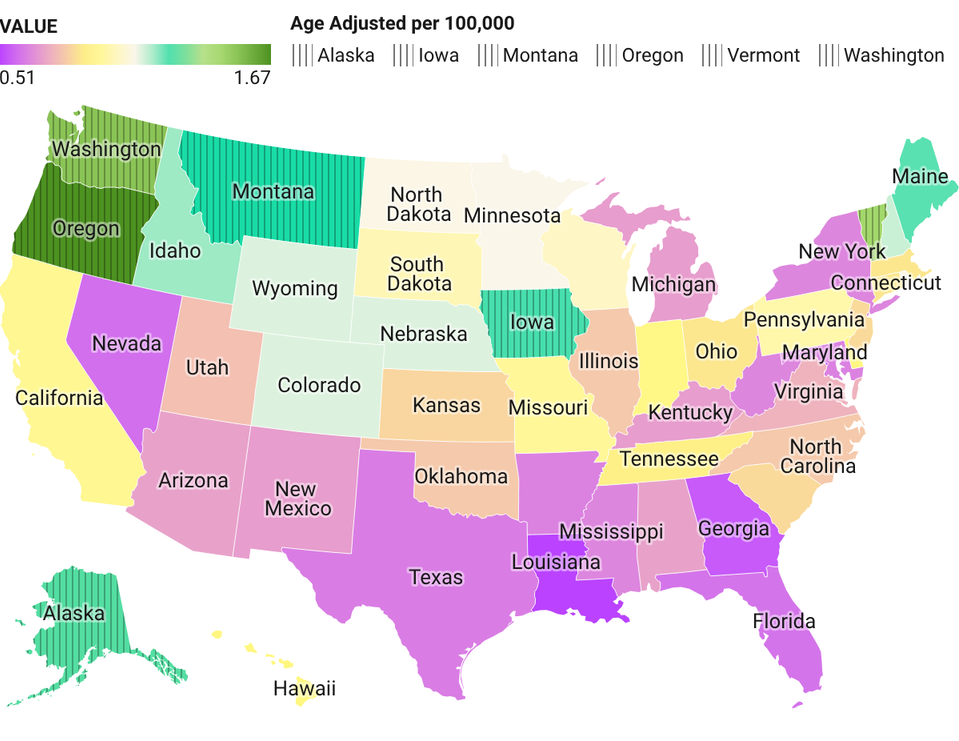
AAMR varied substantially across U.S. states, ranging from 0.51 (95% CI: 0.45–0.56) in Louisiana to 1.67 (95% CI: 1.57–1.77) in Oregon. States in the highest AAMR decile included Oregon (1.67), Washington (1.53), Vermont (1.47), Alaska (1.28), and Montana (1.26), while those in the lowest decile included Louisiana (0.51), Georgia (0.55), the District of Columbia (0.57), Nevada (0.59), and Florida (0.60). Pacific and Northwestern states had the highest AAMR concentrations, whereas Southern states generally had lower rates. Midwest, Northeast, and Mountain West states demonstrated intermediate AAMR levels (Supplemental Tables 7, 9; Figure Figure 8). This geographic heterogeneity likely reflects regional differences in population demographics, cardiovascular risk factor burden, and access to specialized cardiac care.
Discussion
This retrospective population-based analysis of 48,128 deaths characterizes mortality trends attributable to the co-occurrence of MR as the underlying cause of death (UCD) and HF as a contributing cause (MCD) among U.S. adults from 1999 to 2024. Three principal findings emerge. First, overall AAMR declined significantly across the study period (AAPC: 1.60; p<0.001), following a biphasic pattern: a steep initial decline from 1999 to 2012 (APC: 3.29; p<0.001) and a subsequent non-significant plateau from 2012 to 2024 (APC: 0.26; p=0.319). This pattern broadly aligns with overall HF mortality trends reported by Sayed et al. (2024) and MR-specific trends reported by Parcha et al. (2020) [15,5].
Second, mortality was not uniformly distributed across the population; higher rates were observed among females, older adults, NH White individuals, rural populations, and residents of western states. Third, and most clinically notable, NH Black adults experienced a significant reversal from declining to rising AAMR after 2013 (APC: +3.10; p<0.001). Similarly, middle-aged adults (45–64 years) demonstrated a significant post-2013 rise in AAMR (APC: +3.45; p=0.002). These findings collectively underscore the need for targeted clinical and public health strategies.
The initial decline in AAMR from 1999 to 2012 is consistent with several concurrent advances in cardiovascular care, including updated ACC/AHA HF guidelines, expanded echocardiographic screening, and improved surgical criteria for mitral valve repair [16,17].
The non-significant plateau observed from 2012 to 2024 may reflect several converging factors, including rising cardiometabolic risk factors [18,19] and COVID-19 pandemic disruptions [15]. However, these explanations are speculative in this observational analysis and cannot be confirmed without linkage to procedural and clinical data.
Results show women having higher AAMR compared to men, highlighting sex-based differences in the epidemiology of HF and MR in the U.S. This may be explained by the higher likelihood of women developing heart failure with preserved ejection fraction (HFpEF), which is strongly related to aging, hypertension, and valvular diseases including MR [20]. In contrast, men are more likely to develop HF with reduced ejection fraction (HFrEF), a condition characterized by impaired left ventricular contraction, ventricular dilation, and reduced cardiac output [21]. Although arterial and ventricular stiffness increases with age in both sexes, research suggests that women are disproportionately affected, particularly post-menopause when estrogen levels are decreased, contributing to increased cardiovascular stiffness and dysfunction, hence elevating the risk of HFpEF and MR [22]. Furthermore, despite increased participation of females in clinical trials related to HF, women remain underrepresented compared with men, which may contribute to less optimized treatment guidelines for females and consequently lead to suboptimal management outcomes [23]. Women with HF tend to be older than men at the time of hospitalization and thus exhibit a higher mortality risk, further contributing to the elevated risk of valvular diseases including MR observed in women [24].
Racial differences in mortality rates were observed, with NH White adults experiencing markedly higher rates of death due to MR compared with other racial groups. In older studies, an association was made with White individuals having a higher occurrence of mitral prolapse and chordal rupture (due to genetic differences affecting valve structure and disease development), which are major causes of MR [25]. MR is also closely associated with advancing age [26]. Notably, in the U.S., the older adult population is disproportionately White, which may contribute to observed epidemiological patterns in this study [27].
On the other hand, Hispanic individuals showed the lowest mortality rates compared with other racial groups, a pattern that may reflect several factors. Studies have documented that Hispanic patients, along with other minority groups, receive fewer specialist consultations than NH White patients, reflecting observed differences in follow-up and referral patterns [28,29]. These differences in documented diagnostic encounters may reflect a lower recorded prevalence of valvular conditions like MR in clinical datasets, without necessarily indicating lower true disease prevalence.
When comparing trends between NH Black and NH White adults after 2013, a significant divergence emerges with important public health implications. While mortality continued to improve among NH White adults, mortality among NH Black adults continued to increase (APC: +3.10; 95% CI: +1.41 to +4.82; p<0.001). The temporal inflection point in 2013 is noteworthy because the MitraClip device (transcatheter edge-to-edge repair; TEER) received FDA approval in October 2013 for high-risk surgical patients with degenerative MR. Previous data suggest that White patients with valvular heart disease are more likely to be referred for advanced surgical procedures than NH Black patients with comparable clinical profiles [28]. Whether differential access to TEER contributed to the post-2013 racial divergence is an intriguing but unconfirmed hypothesis, as this study did not directly analyze procedural utilization and cannot infer causality from death-certificate data alone. However, this study did not analyze procedural utilization data, so this interpretation remains speculative; mortality data alone cannot establish a causal relationship. Additionally, HFpEF has been reported to be underdiagnosed in Black patients due to potential biases in diagnostic tools, which may contribute to undertreatment of MR and consequently higher mortality rates in Black adults [30]. These observed mortality rate differences warrant further investigation, including procedural utilization analyses, to determine whether differences in receipt of advanced therapies such as TEER are associated with the diverging racial mortality trends. While these variables could be plausible explanations of higher mortality in NH Black individuals, they are not evaluated in the current dataset.
Age-related differences in mortality rates were observed, with older adults experiencing substantially higher mortality rates from HF and MR compared with middle-aged adults throughout the study period. This pattern may largely reflect progressive structural and functional changes in the cardiovascular system associated with aging. Degenerative alterations of the mitral valve, including leaflet thickening, annular calcification, and chordal degeneration, become increasingly common in elderly populations and significantly increase the risk of MR development [31,32]. Epidemiological studies further demonstrate that the prevalence of MR rises markedly with age, particularly among individuals older than 70–75 years, highlighting the strong relationship between aging and valvular dysfunction [2]. In addition to valvular degeneration, aging is associated with myocardial remodeling, ventricular stiffening, and reduced cardiac reserve, all of which contribute to HF development and progression [33]. Population-based evidence also indicates that HF incidence increases exponentially with advancing age, particularly after age 65 years [34]. Moreover, older adults frequently present with a higher burden of cardiometabolic comorbidities such as hypertension, diabetes mellitus, coronary artery disease, and atrial fibrillation, which may exacerbate both HF progression and MR severity and contribute to the elevated mortality observed in this population [35].
Conversely, AAMR data for middle-aged adults (45–64 years) show a noteworthy change: the previously declining trend (APC: 2.49; 1999–2013; p=0.003) switches to a significant increase (APC: +3.45; 2013–2024; p=0.002) after 2013. This unobserved pattern in previously conducted studies may reflect converging secular trends, including the rising prevalence of obesity, hypertension, and type 2 diabetes in U.S. middle-aged adults (45–64 years), each representing a risk factor for functional MR and HF progression [18,19]. These results suggest that timely intervention for this age group should include regular echocardiographic surveillance of people with high-risk factors, and that preventative measures against obesity and hypertension should be a more focused health priority among middle-aged adults.
Rural areas had higher AAMR than urban areas, consistent with previous peer-reviewed studies [36]. Several factors have been associated with higher cardiovascular mortality in rural areas and may be relevant to these observed rate differences. Studies have reported lower health literacy, fewer cardiovascular specialists and resources, longer travel distances to hospital facilities, and lower rates of advanced cardiovascular interventions in rural areas compared with urban areas [37,38]. Death-certificate data alone cannot determine whether these factors contribute to the rural–urban mortality rate difference observed in this descriptive analysis; further investigation with individual-level clinical and utilization data is needed.
The analysis of HF- and MR-related mortality shows that nearly half of deaths among adult Americans between 1999 and 2024 took place in medical facilities (46.89%). Previous studies have shown that patients with advanced HF often die in acute care settings due to clinical deterioration and the need for intensive medical management, which is consistent with the predominance of in-hospital mortality [39]. Furthermore, nursing homes and long-term care facilities accounted for 16.77% of deaths, underscoring the importance of these establishments in providing care for elderly HF patients with severe functional impairment and numerous comorbidities [40]. A significant percentage of deaths (28.20%) took place at home, indicating a patient preference for dying outside institutional settings and a gradual shift toward community-based end-of-life care. Prior research has documented rising trends in home deaths among patients with cardiovascular disease, in part because of better outpatient care and the growth of palliative care services [39,41]. The percentage of deaths that occurred in hospice facilities was lower (4.05%), indicating that while the use of palliative care is rising, it is still less common in HF than in other chronic illnesses [41].
Across U.S. census regions, the West region had the highest MR-related HF mortality. Public data indicate that the Western U.S. has a higher concentration of frontier and rural counties. Prior studies have documented that rural and frontier areas in the West are associated with longer travel distances to healthcare services, fewer specialty cardiovascular resources, and lower rates of advanced cardiovascular procedures compared with similar areas in other regions [37,42,43,44]. Death-certificate data alone cannot determine whether these structural characteristics explain the higher AAMR observed in the West in this descriptive analysis. Previous studies focusing on HF have reported the South as having high mortality compared with other regions, which is valid when high prevalence of CVD such as coronary artery disease (CAD) leading to HF is considered [11,45]. However, other studies have also identified MR as a leading cause of HF [1,46]. Additionally, some epidemiological studies have reported the West having the highest AAMR associated with MR, with the lowest rates in the South, consistent with our results [5].
States in the highest AAMR percentiles in our analysis were primarily located in the Northwest and Mountain West regions, including Oregon, Washington, Vermont, Alaska, and Montana. In contrast, several Southern states, including Louisiana, Georgia, and Florida, showed some of the lowest mortality rates. Geographic heterogeneity in heart failure mortality across the U.S. has been consistently reported in prior epidemiologic studies, reflecting complex interactions between population health characteristics, healthcare access, and socioeconomic conditions. A national analysis of more than 1,700 U.S. counties demonstrated substantial state-level variation in HF mortality, with differences strongly associated with the prevalence of cardiovascular risk factors such as hypertension, diabetes, obesity, and physical inactivity [47]. Many of the states with higher AAMR in our study have large rural populations and geographically dispersed healthcare systems. Rural populations have been shown to experience higher mortality and worse outcomes following major cardiovascular conditions, including HF, partially due to reduced access to specialized care and lower rates of advanced cardiovascular interventions [48]. Additionally, nearly half of U.S. counties lack practicing cardiologists, and these areas—often rural and socioeconomically disadvantaged—tend to have higher CVD burden and mortality rates [49]. These structural healthcare limitations may delay diagnosis and optimal management of both HF and coexisting valvular diseases such as MR. However, these are descriptive rankings without formal significance testing; state-level differences should not be interpreted as statistically meaningful without formal multiple-comparison testing.
Parcha et al. (2020) reported a declining AAMR for MR-related mortality among U.S. adults from 1999 to 2018, similar to our early-period decline. However, their analysis did not evaluate the HF co-occurrence within the death-certificate coding framework and did not capture the post-2018 trend reversal in our data [5].
Tan et al. (2024) reported an overall AAMR of 6.61 per 100,000 for valvular heart disease mortality through 2020. Our co-occurrence framework identified a more specific group of patients with an AAMR of 0.72 per 100,000 in 2024, suggesting that this coding framework identifies a group that carries a distinct and persistent mortality burden [6].
Sayed et al. (2024) demonstrated a reversal in the overall declining trend of HF-related mortality from 2012 onward in the U.S. This pattern reinforces our biphasic findings and independently confirms that the post-2012 shift reflects a true transition in HF-related mortality trends, not a result of MR coding [15].
Taken together, these comparisons suggest that deaths with co-listed MR and HF on death certificates demonstrate a distinct coding framework that cannot be fully understood by analyzing either condition in isolation. Death-certificate co-coding identifies coding patterns rather than clinically adjudicated disease phenotypes; these data cannot confirm MR severity, HF subtype, or shared pathophysiology at the patient level. Furthermore, analyzing these data through 2024 reveals additional epidemiological transitions, especially post-COVID disruptions and racial differences in mortality trends, that earlier literature did not capture.
Conclusion
This study characterizes, for the first time, national mortality trends attributable to the co-occurrence of MR as the underlying cause of death and HF as a contributing cause among U.S. adults from 1999 to 2024. Overall AAMR declined significantly across the study period, following a biphasic pattern: an initial rapid decline from 1999 to 2012 consistent with the implementation of evidence-based cardiovascular therapies and expanded disease surveillance, followed by a non-significant plateau from 2012 to 2024, highlighting emerging challenges from worsening cardiometabolic risk profiles and other uncharacterized factors, and pandemic-induced disruptions.
Significant sociodemographic differences in mortality were observed in MR- and HF-related co-mortality across sex, race and ethnicity, age, census regions, urbanization, and states. While these trends showed that older NH White females in rural western states had the highest overall death rates, the clinically most important finding was a significant post-2013 rise in AAMR among NH Black adults (APC: +3.10; p<0.001) and middle-aged adults (APC: +3.45; p=0.002). Most notably, a significant mortality increase among NH Black adults after 2013 underscores the urgent need for investigation into whether differences in the receipt of advanced therapies such as TEER are associated with this mortality divergence, pending confirmatory data from procedural utilization studies. These trends also highlight the effect of primary risk factors such as diabetes, obesity, and hypertension in contributing to MR- and HF-related mortality in middle-aged adults.
These findings support the need for targeted public health strategies, including: further investigation through linkage with procedural utilization data to evaluate whether receipt of advanced treatments such as TEER varies by race or geography and is associated with the observed mortality rate differences; equitable access to TEER regardless of race or geography; telehealth-based cardiology and mobile echocardiographic programs for rural and underserved populations; and enhanced prevention of cardiometabolic risk factors in adults aged 45–64 years. Linkage of mortality surveillance data with procedural and administrative claims registries would facilitate evaluation of the population-level impact of advanced therapies on MR-HF co-mortality.
Limitations
This study has several limitations inherent to its reliance on death certificate data from the CDC WONDER database.
First and most importantly, death certificate coding accuracy for MR and HF is uncertain and may vary substantially across demographic groups, geographic regions, and clinical settings. Physicians completing death certificates may variably assign MR as the underlying cause of death, may omit it entirely when HF is perceived as the primary driver, or may differentially apply coding practices across age groups, racial and ethnic groups, and care settings. This differential misclassification could cause certain subgroups to appear more or less affected than they truly are. It may be particularly relevant when interpreting the racial, regional, and age-stratified findings of this study. Although the ICD-10 codes used here have been previously validated [9,10], their accuracy on death certificates — as opposed to clinical records — cannot be fully ascertained, and this limitation should be weighed carefully when interpreting all findings.
Second, the analytical framework designating MR as UCD and HF as MCD captures a clinically meaningful phenotype but may not account for cases of reverse causality, in which HF is the primary driver and MR a secondary consequence; cause-and-effect relationships between HF and MR cannot be inferred from this dataset.
Third, the aggregated nature of CDC WONDER data precludes individual-level covariate adjustment. Unmeasured confounders — including socioeconomic status, insurance coverage, comorbidity burden, cardiologist density, echocardiography access, TEER availability, and state-level coding practices — may influence the observed associations between demographic variables and AAMR. Interpret all findings as descriptive epidemiological associations rather than causal estimates. Linking CDC WONDER data with administrative claims databases or clinical registries in the future would allow adjustment for multiple variables and provide more precise identification of true causes of MR-HF mortality disparities.
Fourth, CDC WONDER does not include clinical data on MR severity, HF stage, comorbidity profile, treatment history, or functional status, limiting the contribution of these factors to observed mortality patterns.
Fifth, urbanization data were available only through 2020, limiting stratification by urbanization in the most recent study years. Additionally, CDC WONDER suppressed cell counts below 10, precluding analysis of NH American Indian or Alaska Native individuals and young adults; findings from this study are therefore not generalizable to these populations.
Sixth, our MR case definition combined acquired valvular codes (I05.1, I05.2, I05.9, I34.0, I34.9) with congenital codes (Q23.3, Q23.9). While Q23.3 specifically denotes congenital mitral insufficiency, Q23.9 is a non-specific code for congenital malformation of the aortic and mitral valves. It may therefore have captured a small number of deaths attributable to congenital aortic valve disease rather than MR. This introduces some diagnostic heterogeneity, particularly at younger ages where congenital valve disease is more common. We did not perform a sensitivity analysis excluding Q23.9, so we cannot fully rule out resulting misclassification.
Seventh, we did not apply formal multiple-comparison adjustments across the many subgroups tested in this study, which increases the likelihood of false-positive joinpoint findings in secondary strata. State-by-state rankings remain useful as descriptive findings, but subgroup joinpoint p-values should not be taken as confirmatory; they are best viewed as hypothesis-generating rather than proof of real differences between groups.
Conflicts of Interest
The authors declare no competing interests.
Funding Source
This research received no external funding.
Acknowledgments
None.
Institutional Review Board (IRB)
Not applicable. This study utilized publicly available, de-identified data from the CDC WONDER database and did not involve human participant interaction or collection of identifiable data. Consent for publication is not applicable.
Large Language Model
We have used a Large Language Model (LLM) generative AI to assist with drafting text and generating suggestions for addressing reviewers’ comments, without generating or adding any new information to the content.
Authors Contribution
M.S.M.: conceptualization (supervision), formal analysis, data curation, software, validation. F.L.: conceptualization. L.M.: investigation, visualization, writing – original draft, writing – review & editing. F.M., M.W., A.S., Z.U.: writing – original draft. H.K.: writing – review & editing.
Data Availability
The data that support the findings of this study are available in CDC WONDER at https://wonder.cdc.gov/ (Multiple Cause of Death, 1999–2024: https://wonder.cdc.gov/mcd-icd10.html).
References
- Arora S., Sivaraj K., Hendrickson M., Chang P. P., Weickert T., Qamar A., Vaduganathan M., Caughey M. C., Pandey A., Cavender M. A., Rosamond W., Vavalle J. P.. Prevalence and Prognostic Significance of Mitral Regurgitation in Acute Decompensated Heart Failure: The {ARIC} Study. JACC Heart Fail. 2021;9(3):179-189. doi:10.1016/j.jchf.2020.09.015 PMID: 33309575 PMCID: PMC8075289
- Enriquez-Sarano M., Akins C. W., Vahanian A.. Mitral regurgitation. Lancet. 2009;373(9672):1382-94. doi:10.1016/S0140-6736(09)60692-9 PMID: 19356795
- Nkomo V. T., Gardin J. M., Skelton T. N., Gottdiener J. S., Scott C. G., Enriquez-Sarano M.. Burden of valvular heart diseases: a population-based study. Lancet. 2006;368(9540):1005-11. doi:10.1016/S0140-6736(06)69208-8 PMID: 16980116
- Heidenreich P. A., Albert N. M., Allen L. A., Bluemke D. A., Butler J., Fonarow G. C., Ikonomidis J. S., Khavjou O., Konstam M. A., Maddox T. M., Nichol G., Pham M., Pi\~na I. L., Trogdon J. G.. Forecasting the impact of heart failure in the {United States}: a policy statement from the {American Heart Association}. Circ Heart Fail. 2013;6(3):606-19. doi:10.1161/HHF.0b013e318291329a PMID: 23616602 PMCID: PMC3908895
- Parcha V., Patel N., Kalra R., Suri S. S., Arora G., Arora P.. Mortality Due to Mitral Regurgitation Among Adults in the {United States}: 1999-2018. Mayo Clin Proc. 2020;95(12):2633-2643. doi:10.1016/j.mayocp.2020.08.039 PMID: 33276836
- Tan M. C., Yeo Y. H., San B. J., Suleiman A., Lee J. Z., Chatterjee A., Sell-Dottin K. A., Sweeney J. P., Fortuin F. D., Lee K. S.. Trends and Disparities in Valvular Heart Disease Mortality in the {United States} From 1999 to 2020. J Am Heart Assoc. 2024;13(8):e030895. doi:10.1161/JAHA.123.030895 PMID: 38587138 PMCID: PMC11262520
- Centers for Disease Control and Prevention (CDC). {CDC WONDER}: Wide-ranging Online Data for Epidemiologic Research. 2026.
- World Health Organization. International Statistical Classification of Diseases and Related Health Problems 10th Revision ({ICD}-10), Version 2019. 2019.
- Delekta J., Hansen S. M., AlZuhairi K. S., Bork C. S., Joensen A. M.. The validity of the diagnosis of heart failure (I50.0-I50.9) in the {Danish} National Patient Register. Dan Med J. 2018;65(4):A5470. PMID: 29619925
- McCormick N., Lacaille D., Bhole V., Avina-Zubieta J. A.. Validity of heart failure diagnoses in administrative databases: a systematic review and meta-analysis. PLoS One. 2014;9(8):e104519. doi:10.1371/journal.pone.0104519 PMID: 25126761 PMCID: PMC4134216
- Roth G. A., Dwyer-Lindgren L., Bertozzi-Villa A., Stubbs R. W., Morozoff C., Naghavi M., Mokdad A. H., Murray C. J. L.. Trends and Patterns of Geographic Variation in Cardiovascular Mortality Among {US} Counties, 1980-2014. JAMA. 2017;317(19):1976-1992. doi:10.1001/jama.2017.4150 PMID: 28510678 PMCID: PMC5598768
- von Elm E., Altman D. G., Egger M., Pocock S. J., G\otzsche P. C., Vandenbroucke J. P.. The Strengthening the Reporting of Observational Studies in Epidemiology ({STROBE}) statement: guidelines for reporting observational studies. Lancet. 2007;370(9596):1453-7. doi:10.1016/S0140-6736(07)61602-X PMID: 18064739
- United States Census Bureau. Census Regions and Divisions of the {United States}. 2026.
- Ingram D. D., Franco S. J.. 2013 {NCHS} Urban--Rural Classification Scheme for Counties. Vital Health Stat 2. 2014:1-73.
- Sayed A., Abramov D., Fonarow G. C., Mamas M. A., Kobo O., Butler J., Fudim M.. Reversals in the Decline of Heart Failure Mortality in the {US}, 1999 to 2021. JAMA Cardiol. 2024;9(6):585-589. doi:10.1001/jamacardio.2024.0615 PMID: 38656398 PMCID: PMC11044007
- Hunt S. A., Baker D. W., Chin M. H., Cinquegrani M. P., Feldman A. M., Francis G. S., Ganiats T. G., Goldstein S., Gregoratos G., Jessup M. L., Noble R. J., Packer M., Silver M. A., Stevenson L. W., Gibbons R. J., Antman E. M., Alpert J. S., Faxon D. P., Fuster V., Jacobs A. K., Hiratzka L. F., Russell R. O., Smith Jr., S. C.. {ACC/AHA} guidelines for the evaluation and management of chronic heart failure in the adult: executive summary. J Am Coll Cardiol. 2001;38(7):2101-13. doi:10.1016/s0735-1097(01)01683-7 PMID: 11738322
- Bonow R. O., Carabello B., de Leon Jr., A. C., Edmunds Jr., L. H., Fedderly B. J., Freed M. D., Gaasch W. H., McKay C. R., Nishimura R. A., O'Gara P. T., O'Rourke R. A., Rahimtoola S. H., Ritchie J. L., Cheitlin M. D., Eagle K. A., Gardner T. J., Garson Jr., A., Gibbons R. J., Russell R. O., Ryan T. J., Smith Jr., S. C.. Guidelines for the management of patients with valvular heart disease: executive summary. Circulation. 1998;98(18):1949-84. doi:10.1161/01.cir.98.18.1949 PMID: 9799219
- Lu Q., Lv J., Li Z., Ye Y., Zhang B., Wang W., Zhao Q., Zhang H., Zhao Z., Wang B., Liu Q., Yu Z., Duan Z., Guo S., Zhao Y., Gao R., Xu H., Wu Y.. Cardiovascular Risk Factors in Patients with Valvular Heart Disease: A Nationwide Observational Cohort Study. Int J Gen Med. 2024;17:5651-5664. doi:10.2147/IJGM.S498982 PMID: 39624612 PMCID: PMC11610399
- Abdul Jabbar A. B., Mansoor T., Osborne J., Gilkeson K., Chinawalkar A., Aboeata A.. Trends in obesity and heart failure-related mortality in middle-aged and young adult populations of the {United States}, 1999-2022. BMC Cardiovasc Disord. 2025;25(1):601. doi:10.1186/s12872-025-05029-4 PMID: 40804364 PMCID: PMC12344957
- Sciatti E., Coccia M. G., Magnano R., Aakash G., Limonta R., Diep B., Balestrieri G., D'Isa S., Abramov D., Parwani P., D'Elia E.. Heart Failure Preserved Ejection Fraction in Women: Insights Learned from Imaging. Heart Fail Clin. 2023;19(4):461-473. doi:10.1016/j.hfc.2023.06.001 PMID: 37714587
- Lam C. S. P., Arnott C., Beale A. L., Chandramouli C., Hilfiker-Kleiner D., Kaye D. M., Ky B., Santema B. T., Sliwa K., Voors A. A.. Sex differences in heart failure. Eur Heart J. 2019;40(47):3859-3868c. doi:10.1093/eurheartj/ehz835 PMID: 31800034
- Scantlebury D. C., Borlaug B. A.. Why are women more likely than men to develop heart failure with preserved ejection fraction?. Curr Opin Cardiol. 2011;26(6):562-8. doi:10.1097/HCO.0b013e32834b7faf PMID: 21993357
- Mentzer G., Hsich E. M.. Heart Failure with Reduced Ejection Fraction in Women: Epidemiology, Outcomes, and Treatment. Heart Fail Clin. 2019;15(1):19-27. doi:10.1016/j.hfc.2018.08.003 PMID: 30449377 PMCID: PMC6298793
- Stein G. Y., Ben-Gal T., Kremer A., Bental T., Alon D., Korenfeld R., Yedidia I., Porter A., Abramson E., Sagie A., Fuchs S.. Gender-related differences in hospitalized heart failure patients. Eur J Heart Fail. 2013;15(7):734-41. doi:10.1093/eurjhf/hft024 PMID: 23419512
- Novaro G. M., Houghtaling P. L., Gillinov A. M., Blackstone E. H., Asher C. R.. Prevalence of mitral valve prolapse and congenital bicuspid aortic valves in black and white patients undergoing cardiac valve operations. Am J Cardiol. 2013;111(6):898-901. doi:10.1016/j.amjcard.2012.11.051 PMID: 23276473
- Figlioli G., Sticchi A., Christodoulou M. N., Hadjidemetriou A., Amorim Moreira Alves G., De Carlo M., Praz F., Caterina R., Nikolopoulos G. K., Bonovas S., Piovani D.. Global Prevalence of Mitral Regurgitation: A Systematic Review and Meta-Analysis of Population-Based Studies. J Clin Med. 2025;14(8):2749. doi:10.3390/jcm14082749 PMID: 40283579 PMCID: PMC12028080
- Perez A. D., Hirschman C.. The Changing Racial and Ethnic Composition of the {US} Population: Emerging {American} Identities. Popul Dev Rev. 2009;35(1):1-51. doi:10.1111/j.1728-4457.2009.00260.x PMID: 20539823 PMCID: PMC2882688
- Ilonze O., Free K., Shinnerl A., Lewsey S., Breathett K.. Racial, Ethnic, and Gender Disparities in Valvular Heart Failure Management. Heart Fail Clin. 2023;19(3):379-390. doi:10.1016/j.hfc.2023.02.009 PMID: 37230651 PMCID: PMC10614031
- Cook N. L., Ayanian J. Z., Orav E. J., Hicks L. S.. Differences in specialist consultations for cardiovascular disease by race, ethnicity, gender, insurance status, and site of primary care. Circulation. 2009;119(18):2463-70. doi:10.1161/CIRCULATIONAHA.108.825133 PMID: 19398667
- Brown S., Biswas D., Wu J., Ryan M., Bernstein B. S., Fairhurst N., Kaye G., Baral R., Cannata A., Searle T., Melikian N., Sado D., L"uscher T. F., Teo J., Dobson R., Bromage D. I., McDonagh T. A., Vazir A., Shah A. M., O'Gallagher K.. Race- and Ethnicity-Related Differences in Heart Failure With Preserved Ejection Fraction Using Natural Language Processing. JACC Adv. 2024;3(8):101064. doi:10.1016/j.jacadv.2024.101064 PMID: 39050815 PMCID: PMC11268103
- Iung B., Vahanian A.. Epidemiology of valvular heart disease in the adult. Nat Rev Cardiol. 2011;8(3):162-72. doi:10.1038/nrcardio.2010.202 PMID: 21263455
- Otto C. M., Nishimura R. A., Bonow R. O., Carabello B. A., Erwin III, J. P., Gentile F., Jneid H., Krieger E. V., Mack M., McLeod C., O'Gara P. T., Rigolin V. H., Sundt III, T. M., Thompson A., Toly C.. 2020 {ACC/AHA} Guideline for the Management of Patients With Valvular Heart Disease: Executive Summary. Circulation. 2021;143(5):e35-e71. doi:10.1161/CIR.0000000000000932 PMID: 33332149
- Omote K., Verbrugge F. H., Borlaug B. A.. Heart Failure with Preserved Ejection Fraction: Mechanisms and Treatment Strategies. Annu Rev Med. 2022;73:321-337. doi:10.1146/annurev-med-042220-022745 PMID: 34379445 PMCID: PMC9002335
- Mahmood S. S., Levy D., Vasan R. S., Wang T. J.. The {Framingham} Heart Study and the epidemiology of cardiovascular disease: a historical perspective. Lancet. 2014;383(9921):999-1008. doi:10.1016/S0140-6736(13)61752-3 PMID: 24084292 PMCID: PMC4159698
- Virani S. S., Alonso A., Benjamin E. J., Bittencourt M. S., Callaway C. W., Carson A. P., Chamberlain A. M., Chang A. R., Cheng S., Delling F. N., Djousse L., Elkind M. S. V., Ferguson J. F., Fornage M., Khan S. S., Kissela B. M., Knutson K. L., Kwan T. W., Lackland D. T., Lewis T. T., Lichtman J. H., Longenecker C. T., Loop M. S., Lutsey P. L., Martin S. S., Matsushita K., Moran A. E., Mussolino M. E., Perak A. M., Rosamond W. D., Roth G. A., Sampson U. K. A., Satou G. M., Schroeder E. B., Shah S. H., Shay C. M., Spartano N. L., Stokes A., Tirschwell D. L., VanWagner L. B., Tsao C. W.. Heart Disease and Stroke Statistics-2020 Update: A Report From the {American Heart Association}. Circulation. 2020;141(9):e139-e596. doi:10.1161/CIR.0000000000000757 PMID: 31992061
- Faridi B., Davies S., Narendrula R., Middleton A., Atoui R., McIsaac S., Alnasser S., Lopes R. D., Henderson M., Healey J. S., Ko D. T., Shurrab M.. Rural-urban disparities in mortality of patients with acute myocardial infarction and heart failure: a systematic review and meta-analysis. Eur J Prev Cardiol. 2025;32(4):327-335. doi:10.1093/eurjpc/zwae351 PMID: 39470401
- Manemann S. M., St Sauver J., Henning-Smith C., Finney Rutten L. J., Chamberlain A. M., Fabbri M., Weston S. A., Jiang R., Roger V. L.. Rurality, Death, and Healthcare Utilization in Heart Failure in the Community. J Am Heart Assoc. 2021;10(4):e018026. doi:10.1161/JAHA.120.018026 PMID: 33533260 PMCID: PMC7955348
- Glover S., Moore C. G., Samuels M. E., Probst J. C.. Disparities in access to care among rural working-age adults. J Rural Health. 2004;20(3):193-205. doi:10.1111/j.1748-0361.2004.tb00029.x PMID: 15298093
- Chuzi S., Molsberry R., Ogunseitan A., Warraich H. J., Wilcox J. E., Grady K. L., Yancy C. W., Khan S. S.. Trends in Place of Death for Cardiovascular Mortality Related to Heart Failure in the {United States} From 2003 to 2017. Circ Heart Fail. 2020;13(2):e006587. doi:10.1161/CIRCHEARTFAILURE.119.006587 PMID: 32059627 PMCID: PMC7068679
- Levy C. R., Fish R., Kramer A. M.. Site of death in the hospital versus nursing home of {Medicare} skilled nursing facility residents admitted under {Medicare}'s Part A Benefit. J Am Geriatr Soc. 2004;52(8):1247-54. doi:10.1111/j.1532-5415.2004.52352.x PMID: 15271110
- Quinn K. L., Hsu A. T., Smith G., Stall N., Detsky A. S., Kavalieratos D., Lee D. S., Bell C. M., Tanuseputro P.. Association Between Palliative Care and Death at Home in Adults With Heart Failure. J Am Heart Assoc. 2020;9(5):e013844. doi:10.1161/JAHA.119.013844 PMID: 32070207 PMCID: PMC7335572
- Gong G., Phillips S. G., Hudson C., Curti D., Philips B. U.. Higher {US} Rural Mortality Rates Linked To Socioeconomic Status, Physician Shortages, And Lack Of Health Insurance. Health Aff (Millwood). 2019;38(12):2003-2010. doi:10.1377/hlthaff.2019.00722 PMID: 31794316
- Gibson B. J., Dobis E., Cromartie J., Grieshober L., Ulrich C., Onega T., Doherty J.. A novel approach to incorporate frontier areas into urban-rural geographic classifications: Integrated Metropolitan-to-Frontier Area Codes. J Rural Health. 2025;41(4):e70102. doi:10.1111/jrh.70102 PMID: 41317103 PMCID: PMC12664327
- Clark N. M., Hernandez A. H., Bertalan M. S., Wang V., Greenberg S. L. M., Ibrahim A. M., Stewart B. T., Scott J. W.. Travel Time as an Indicator of Poor Access to Care in Surgical Emergencies. JAMA Netw Open. 2025;8(1):e2455258. doi:10.1001/jamanetworkopen.2024.55258 PMID: 39836423 PMCID: PMC11751744
- Glynn P. A., Molsberry R., Harrington K., Shah N. S., Petito L. C., Yancy C. W., Carnethon M. R., Lloyd-Jones D. M., Khan S. S.. Geographic Variation in Trends and Disparities in Heart Failure Mortality in the {United States}, 1999 to 2017. J Am Heart Assoc. 2021;10(9):e020541. doi:10.1161/JAHA.120.020541 PMID: 33890480 PMCID: PMC8200738
- Huang H., Liu J., Bao K., Huang X., Huang D., Wei H., Remutula N., Tuersun T., Lai W., Li Q., Wang B., He Y., Yang H., Chen S., Chen J., Chen K., Tan N., Wang X., Chen L., Liu Y.. Prevalence and Mortality of Moderate or Severe Mitral Regurgitation Among Patients Undergoing Percutaneous Coronary Intervention With or Without Heart Failure: Results From {CIN} Study With 28,358 Patients. Front Cardiovasc Med. 2022;9:796447. doi:10.3389/fcvm.2022.796447 PMID: 35310981 PMCID: PMC8927686
- Liu L., Yin X., Chen M., Jia H., Eisen H. J., Hofman A.. Geographic Variation in Heart Failure Mortality and Its Association With Hypertension, Diabetes, and Behavioral-Related Risk Factors in 1,723 Counties of the {United States}. Front Public Health. 2018;6:132. doi:10.3389/fpubh.2018.00132 PMID: 29868540 PMCID: PMC5950547
- Loccoh E. C., Joynt Maddox K. E., Wang Y., Kazi D. S., Yeh R. W., Wadhera R. K.. Rural-Urban Disparities in Outcomes of Myocardial Infarction, Heart Failure, and Stroke in the {United States}. J Am Coll Cardiol. 2022;79(3):267-279. doi:10.1016/j.jacc.2021.10.045 PMID: 35057913 PMCID: PMC8958031
- American College of Cardiology. Almost half of {US} counties have no cardiologists despite higher prevalence of {CV} risk factors, mortality. 2024.